The Beasts Intertwine This Way - Reviews

The Beasts Intertwine This Way
+Add to Custom List
Sort
Add review
... Read More
Here's what's terrifying about these chapters: Kagura had the fight WON. He landed a real hit on Zero. The guy was favoring his injured shoulder. He had the side stance, the momentum, the confidence. And then—a cracked umbrella and a man on his back. That's the entire conflict structure of this story in miniature. Kagura is always one step away from victory, and one step away from ruin. Then the stakes get multiplied. Xuan betrays him (or is forced to), the murder suspect is dead, his investigation is buried by political pressure, and the people buying minors include 'prominent figures and their relatives.' He's fighting an entire system, and his own boss is telling him to 'hold his ground' while nothing actually changes. But the real stakes aren't just professional—they're physical, emotional, existential. Zero knows things he shouldn't. He predicted the assassination attempt. He stopped Kagura from going to the riverbank, but he did it by forcing himself into every aspect of Kagura's body until dawn. The threat and the protection are the same thing, which means Kagura can't even be sure who he's afraid of or grateful to. What does this man have left to lose if not his freedom, his case, his body, and his conscience? And the answer is everything.
... Read More
There's something really deliberate about how the apartment is described. Cream-colored walls, orange-tinted bulbs, a view of the Meguro River from the balcony—it sounds almost warm. And then you realize it has literally NO personal belongings. No sense of daily life. It's a stage set for encounters, not a home. The heater is OFF. The temperature is below ten degrees Celsius. Kagura is sitting there in just a dress shirt over a tank top, and the cold air is making Zero's breath visible. This isn't accidental atmospheric detail—the coldness of the space mirrors the transactional nature of their meetings. They're not meeting in a bedroom or a restaurant or anywhere that implies intimacy. They're meeting in a hollowed-out space with no owner, no history, no warmth. And yet their bodies get warm there. I can't decide which is more interesting. The walk from Kasumigaseki to Nakameguro is also doing a lot of work. Kagura doesn't go to his own apartment—he goes FOUR MORE STOPS past his own station. He has a separate space for this life, a compartmentalized existence. The Hibiya Line, the seven-minute walk, the seventh floor elevator ride—all of it builds a geography of secrecy that feels very Tokyo noir. And that scene where Zero enters and the 'chill from his leather jacket fills the air'—that's one of the best sensory descriptions I've read in a while. You don't just know Zero is cold, you feel it invading the room. The man arrives like a weather system. Also the translator's note about tatami mats made me appreciate how grounded this is in real Japanese domestic space. The 1LDK layout, the tatami measurements—it's not fantasy, it's a very specific, very real Tokyo. Which makes the criminal underworld elements feel even more unsettling, like they're existing just beneath the surface of ordinary life.
... Read More
I keep coming back to the spatial choreography of this chapter. It's all contained in one apartment—Nakameguro, 11pm, curtain half-open, pale blue moonlight—but the author wrings so much out of the setting. The bed is where everything happens: Zero pretending to sleep, Kagura discovering it, the phone placed face-down on the stomach like a silent offering, the scruffling over chest kisses, the morning light that's "still too pale to be called morning sun." That last detail is gorgeous. It's that blue-grey liminal hour where the world hasn't decided if it's day or night, and it mirrors their relationship perfectly—they're neither fully apart nor fully together, just existing in this tense, luminous middle ground. And then there's the contrast. All this domestic softness, right next to the discussion of Kiriyama using them as pawns, Toono escaping, bodies being purged. The author doesn't separate the political from the personal. They happen in the same room, on the same bed, immediately after sex. That's the worldbuilding genius here—the world is one where intimacy and violence occupy the same horizontal plane. You don't leave one for the other. You just turn from fucking to plotting in the same breath.
... Read More
What are the actual stakes here? Kagura is a police officer conducting off-the-books investigations with an unidentified criminal informant. If this gets out, his career is over. Possibly his freedom too. And Zero? He's sharing information about human trafficking operations involving the Eastern Alliance and a Vietnamese mafia—people who kill freelance writers for asking questions. Every meeting is a potential death sentence. But the external stakes are nothing compared to the internal ones. Kagura admits to himself: 'I'll definitely make him submit.' This isn't just about solving a case anymore. He's personal. He's invested. He wants to DOMESTICATE the one person in his life who refuses to be pinned down. That's a vulnerable position for a character who prides himself on control. Zero is equally vulnerable but hides it better. He could have kept the warehouse video. He could have had leverage. Instead he destroys it and says something that sounds almost like affection disguised as philosophy. What is he risking by trusting Kagura? Everything, probably. But he does it anyway. The human trafficking subplot raises the stakes to genuine moral urgency. Underage victims. Domestic abductions. This isn't just bureaucratic corruption—it's real suffering, real children. The murder of Machida Shogo is the tip of an iceberg, and both Kagura and Zero are standing on top of it knowing it's going to crack. What keeps me engaged is that neither character is naive about the danger. They KNOW what they're playing with. Kagura explicitly notes he assumes there are listening devices and hidden cameras. He's operating with full awareness and chooses to proceed anyway. That's not recklessness—that's commitment. And commitment at this level, in this world, is either the bravest or most foolish thing either of them has ever done. The suspense works because we're waiting for the moment when the two conflict threads—one external (the criminal investigation), one internal (their relationship)—collide. And when they do, I have a very strong feeling someone is going to lose everything.
... Read More
I just finished reading these chapters and I am absolutely SHOOK. Let's talk about this ZERO moment. For literally the entire previous section, Kagura has been hunting this freelance journalist called Zero, trying to get him connected to the Machida Shogo murder investigation. Aizawa even warns him that journalists like that tend to go missing or end up as bodies. And then—bam—what does Kagura do? He gets captured by the Eastern Alliance, and during the interrogation, someone leans in close, grabs his hair, tilts his face, and Kagura catches a scent. Bitter... yet nostalgic. And he KNOWS it. "It was Zero's scent." But the voice? Clearly not Zero's. So now I'm sitting here going CRAZY. Is Zero working with the Eastern Alliance? Is he undercover? Is this some elaborate disguise situation? The author literally ended the chapter with the suited man saying "Open wide, Detective" and threatening Sanae's safety. I need answers NOW. What I love about this plotting is how it all connects—Kagura's investigation into Machida's death led directly to Sanae getting snatched in that parking garage, which led to Kagura chasing and getting stunned himself. Every move he made brought him closer to this moment. It's tight, it's relentless, and the Eastern Alliance clearly has been watching him this whole time. That line from the kidnappers exchanging words like "We'll switch the plates on the way" — premeditated. They planned this. They knew his routine. Which raises the terrifying question of how deep the mole problem goes.
... Read More
Okay so let's talk about the twist here, because Zero is honestly playing some serious chess while everyone else is just trying to survive. The whole scene where he ambushes Kagura in that car? I was expecting him to be just some scary yakuza type, but then he drops this line about having told Kagura about Rong Lan's base. So basically Zero set up this whole situation and then watched Kagura walk right into it. That's not protective behavior, that's manipulation dressed up as concern. And yet somehow it works because later we find out he really IS worried about Kagura's safety. The author keeps pulling the rug out from under you. Is Zero a villain? A mentor? A lover who happens to run with dangerous people? The plot doesn't let you settle into any comfortable assumption. And then there's Xuan. The entire subplot about this Vietnamese woman who wants Kagura to walk along the river with her before she gets sent back home — it mirrors Haruka's story perfectly. Kagura keeps thinking about how he failed Haruka and whether he could have saved her if he'd been more honest. The parallel is almost too perfect, like the author is making a point about cycles of deception and the impossibility of going back to fix the past. But the river scene becomes this ticking time bomb because Kagura keeps saying he wants to protect Xuan while simultaneously endangering her by getting closer to her. Every choice he makes to do the right thing makes everything worse.
... Read More
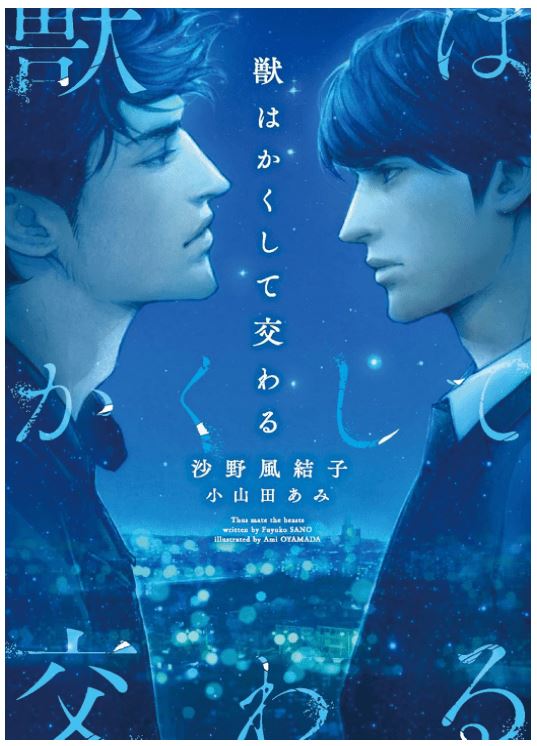
The chapter title alone is enough to make anyone uncomfortable, and I think that's completely intentional. "Open Wide" — it works on so many levels simultaneously and the author is clearly using it as a motif. On the surface, it's the interrogator demanding Kagura cooperate, forcing his mouth open. But it's also about revelation, about things being forced into the light. Kagura has been investigating a murder, digging into criminal organizations, trying to OPEN the truth. And now the truth is opening WIDE right in front of him—violent, visceral, inescapable. There's also the beast imagery running through this whole novel. The title itself, "The Beasts Intertwine This Way" — and here we are with characters in burlap sacks, men in balaclavas, captivity in a warehouse by the sea. The imagery of being stuffed into a sack and dragged around... it's dehumanizing, it reduces people to objects. But Kagura refuses to be reduced. Even bound and blindfolded, his mind stays sharp. The kendo training isn't just backstory—it's his philosophy. Honor, discipline, control. These are the things that separate him from the beasts around him. And then there's the scent element, which feels almost animalistic itself. Recognition through smell, primal knowing. The boundary between hunter and hunted keeps blurring—Kagura thought he was the investigator, the one in control, but he's the one in the sack now. Zero thought he was anonymous, but his scent gave him away. Everyone is both predator and prey in this world.
... Read More
Okay so I need to talk about this one line because it literally wrecked me. "No matter how many others you're with, you're mine. Don't think you can leave me now." And then Kagura's reaction—punching Zero in the shoulder and saying "Stop saying things that can be taken the wrong way"—but underneath all that deflection, you can feel how much he actually lets it land. The author doesn't make Zero soften his words into something palatable. He says exactly what he means, raw and possessive, and Kagura just… accepts it. Which is wild because earlier they were so guarded, so cracked between them. And here it is: the cracks fill like rain-soaked soil. That metaphor is everything. The whole chapter basically tracks this moment where action replaces explanation. They don't have some heartfelt conversation about trust. Zero just marks Kagura's neck and declares ownership, and Kagura, after all this pushing and pulling, finally lets himself be claimed. And the morning after? Waking up together, discussing prosecution purges like it's normal Tuesday small talk—that's the real romance beat for these two. Not flowers, not confessions. Just… existing in the same bed and talking about murder, and it feels like the most intimate thing possible.
... Read More
I need to talk about the atmosphere in Chapter 7 because wow. The whole scene where Sanae passes out on Kagura's floor after two cans of chuuhai is just... so specific. You can feel it. The fluorescent convenience store lighting, the low table between them, the sound of aluminum cans popping open, Sanae slurping his words and crawling across the floor like a confused sea otter. It's domestic, but it's also noir-adjacent because this is a man who works in organized crime. The contrast between that cramped apartment and the cold morgue basement they visit later? Chef's kiss. The author describes "a faint, bittersweet scent" hitting Kagura's nose before he even sees the face — that's worldbuilding through sensory detail, not exposition. Tokyo Bay at dawn, the morgue in the basement of a police hospital, the meeting room where Chief Takizaki's voice is described as "bitter" — every location feels worn-in and lived-in. The world smells real.
... Read More
Okay so this chapter starts with Kagura literally snooping through Zero's stuff while he sleeps, which is already giving me chills because it tells us so much about their dynamic. Kagura's the one asking questions, Zero's the one answering — but who's really in control here? And that smartphone lock screen moment?? Five faint dots, a smaller dot near one of the larger ones, arranged vertically like a squashed trapezoid. He feels like he's seen it before. Classic setup, right? The author is definitely planting a seed here. This isn't random worldbuilding, this is foreshadowing. Every time I see this detail mentioned again I'm going to lose it. Then it pivots into the Rong Lan reveal, and honestly the pacing here is *chef's kiss*. We go from intimate, quiet curiosity about Zero's past to suddenly dealing with a human trafficking network. The transition feels natural though — Zero brings it up unprompted, and then suddenly they're leaning across each other's laps talking about Vietnamese mafia. The physical proximity of their knees bumping on the sofa is such a small detail but it carries so much tension without any actual romance happening. They haven't even touched properly and yet... The second half drops us into the bureaucratic world of the Organized Crime Division with this petition about foreign technical trainees going missing. This is the kind of plot thread that could easily become dry info-dumping but the author grounds it by keeping it connected to the main narrative — Kagura's personal motivation is right there simmering under everything. What I love is how the story keeps expanding outward: from Zero's apartment to Rong Lan to the Eastern Alliance to Enwu. Each reveal opens a new door instead of closing one.
... Read More
Okay, let's talk about structure for a sec, because this part is doing some serious heavy lifting. We've got the present-day cat-and-mouse with Zero, all coded texts and rendezvous at Nakameguro Station, right? Classic spy thriller framework. But then—bam—Chapter 11 drops us straight into a childhood flashback with zero warning. Not even a 'years earlier' tag. Just: *'In fourth grade, he had snuck out...'* I actually sat there for a second, blinking, because the temporal stitch felt so deliberate. It's not just decoration; it's thematic foreshadowing dressed as nostalgia. The river rises, friends get in over their heads, adult interventions happen, lives redirect. Sound familiar? The author is mapping Kagura's current obsession onto his earliest memory of loss of control. That 'secret base' by the river isn't just a cute kid thing; it's the geographical and emotional prototype for where he meets Zero now. The plot isn't linear—it's spiral. He keeps circling back to the same watery edge, hoping to solve a different drowning. And that cliffhanger with the 'two figures standing side by side' under the streetlamp? That's not just a cool visual. That's the plot winking at us, saying the past has just arrived, and it's going to complicate everything. Brilliant.
... Read More
This chapter is absolutely drowning in bodily markings as symbolism, and I love it. Zero leaves scratches on Kagura's neck—the original mark, the one Kagura points out. But then the evening escalates: Kiss marks spread across Kagura's left chest, his nipple swollen and inflamed. Zero is literally rewriting Kagura's body as a text he can read. And the bitter scent rising from Zero? That's the olfactory signature of his presence, his claim, his animal nature creeping into the human space. The phone with the family photo is another loaded symbol. Zero places it face-down on Kagura's stomach—an offering, a confession of what matters to him, but also an act of covering it over. He trusts Kagura with his family, but he can't quite display it openly yet. And the title itself: "The Beasts Intertwine This Way." The author's postscript explicitly talks about the "bold uke" getting "thoroughly ensnared by the seme." Entanglement. Intertwining. These aren't just romantic metaphors. They're about two creatures whose nature is to collide, to mark, to claim, and in doing so, to become inseparable. The beast imagery isn't decorative—it's structural. Their love language is predation and surrender, and the chapter makes that viscerally clear through every bite, every scratch, every breath against skin.

Leave a comment

You must be logged in to leave comments. or
