The Beasts Intertwine This Way - Reviews

The Beasts Intertwine This Way
+Add to Custom List
Sort
Add review
... Read More
Let me just say this: the Machida scene is one of the most tense thirty seconds I've read in a criminal investigation novel. Not because of action, but because of the silence. Kagura is gripping the steering wheel on the drive back from the morgue. He just confirmed it wasn't Zero. But what if it had been? The text is brutally honest about this — "Kagura wouldn't feel guilty or dwell on it as if it were his fault. Lingering around criminal organisations involves accepting that kind of risk." That's not callousness, that's survival logic. But the reader knows better. Kagura's internal contradiction is the whole conflict: he tells himself he doesn't care, then thinks "it might be worth keeping him close," then imagines "taming that beast-like man." The stakes here aren't just about catching the Eastern Alliance — they're about how many people Kagura can stand to lose before something cracks. And Zero, wherever he is, is now a loose variable in a game involving human trafficking, foreign mafias, and a dead journalist who knew too much. Section Two is "overwhelmingly lacking information" which means they're already behind. Every day Zero survives is a day he might walk into something he can't walk out of. Or Kagura might walk into it for him. That's the tension I'm living for.
... Read More
Okay, let me just say — the world-building in this thing is insane. You have these technical trainees getting fleeced by management organizations, and now there's an entire underground network of people exploiting them? That's dark. Like, deeply dark. The fact that there are TWO groups involved — the Eastern Alliance AND Enwu — really adds complexity. It's not just some faceless evil. We're getting hints that Enwu might be a real organization, not just a cover name, which raises the stakes significantly. And then that symbol — the dots arranged like part of the Big Dipper — that connects Zero to this whole underworld somehow? Chills. Proper chills. What I love about the plotting here is how Kagura isn't just passively observing. He's actively investigating, riding his motorcycle to surveillance points, disguising himself. The subplot with the Ministry being worried about media exposure while also not wanting to reveal everything is really nuanced — it's not black and white, which makes the plot feel more realistic. And that ending with him heading to the Vietnamese restaurant to watch Rong Lan's movements? That cliffhanger energy is perfect. It makes you want to turn the page immediately.
... Read More
I need to talk about the atmosphere in these chapters because it is genuinely cinematic and I keep coming back to certain images. Picture this: the Kudan Prosecutor's Office, after hours, fluorescent lighting probably humming overhead, Kagura sitting across from Kiriyama in a conference room that should feel sterile and official but instead becomes this claustrophobic stage for something deeply violating. The author does not describe the room much but you can feel it—you can feel the long table, the way Kiriyama braces his hands against the wall to block Kagura's exit, the way the setting itself becomes a trap. And then there is Sanae, right? The scene shifts to the subway station restroom and suddenly we get this moment of warmth and humor. Sanae rushing to grab the first aid kit, calling Kiriyama a vampire, making jokes about not being tasty enough. It is such a perfect tonal shift—like the author knows you need to breathe after everything that just happened. "As if anyone would want to drink otter blood." I literally laughed out loud. That one line did so much work. It grounded Kagura back in humanity, back in friendship, back in something safe. But the most haunting image for me is the bruise. That patchy red mark spreading across Kagura's skin, the blood on his fingertips and collar, the way he keeps scratching at it on the train ride home. It is such a visceral, physical reminder of what happened. The author writes: "A powerful chill resurfaced." Not metaphorically. The reader can feel it. These scenes are shot through with this coldness, this darkness that seems to cling to Kagura no matter where he goes.
... Read More
This chapter is a masterclass in controlled escalation and I am physically incapable of not breaking down exactly how it works. Let me rewind because the structure here is so deliberate it almost looks accidental. The chapter opens on depression—the slow, heavy drag of Kagura sitting in a dark apartment, talking to an empty room, muttering about being an 'accomplice.' This is the calm before. It's quiet, almost sluggish. You could skim this part if you weren't paying attention, and that's intentional. The author is lowering your guard. Then Zero walks in. The pacing SNAPS. Suddenly every line is loaded with tension, every exchange a verbal spar. 'Spying and tailing me—you can't get me off your mind, huh?' Boom. First impact. 'Because, in the end, you're one of them.' Second impact. 'Kiriyama is a Non-Citizen.' Third impact—this one knocks you sideways. And then what does the author do? After three rapid-fire revelations in as many pages, they deliberately SLOW DOWN with Zero's backstory. This is the most risky pacing choice in the entire chapter. You've just had your heart rate spiked to max, and instead of riding that wave, the author makes you sit with a dead man's son telling you about his mother's delusions. But here's the thing—it works because the emotional intensity doesn't drop; it just DEEPENS. The pace slows but the weight increases. It's the narrative equivalent of sinking rather than exploding. The transition from the verbal confrontation to the physical scene is equally calculated. Kagura grabs Zero by the collar, leans in—and then the scene shifts. No jarring cut, no chapter break announced with fanfare. Just the next moment arriving like a surprise kiss. The zip tie reveal is perfectly paced: we see Kagura grinning, touching the restraint, declaring 'I'm the one who's going to tame you,' and THEN the camera pulls back to show Zero already bound. The reader experiences the reversal at the same moment Kagura does. After the intimate scene, we don't get relief. We get Zero looking at the ceiling and delivering the most devastating family history of the entire novel. The chapter doesn't end on a cliffhanger per se—it ends on a confession. But emotionally? It's a cliffhanger of the worst kind. We're left with Zero's mother trying to abort him, calling him a gift from a phantom prince, and Kagura barely grasping what he's feeling. That's not a stopping point—that's a wound. The chapter runs approximately 3000 words and covers: silent longing, surveillance reveal, identity twist, sexual power play, and generational trauma. Three thousand words. Five emotional catastrophes. Zero downtime. This is why I couldn't put it down.
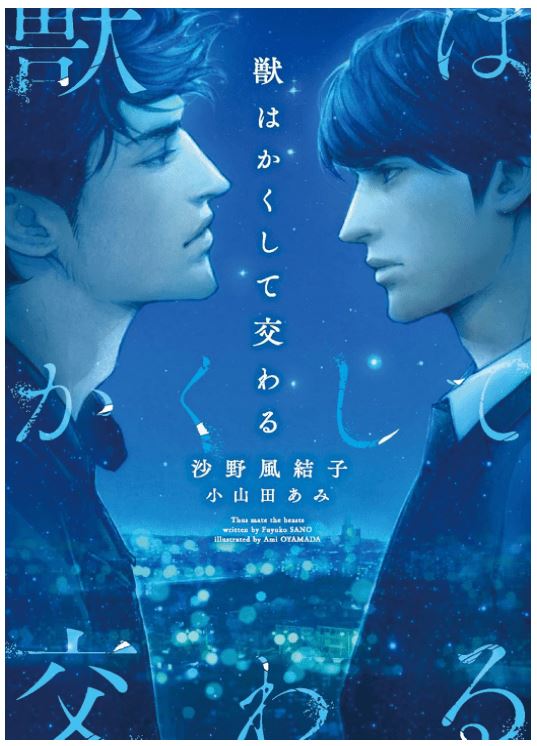
... Read More
"A businessman, sobering up with a walk along the riverbank, had been shot from a distance with a rifle." That single sentence description of the crime scene is so effective because it contrasts with everything else we know. Kagura RODE PAST that exact spot last night—he was supposed to meet Xuan there. The edogawa river is basically where his life nearly ended, but he doesn't know it yet. He sees the police tape, the onlookers, and thinks about Xuan. Not about himself. That detail says everything about this character. The apartment scene too—the thin light seeping through a gap in the curtains, the coat and shoes strewn across the floor, the clock showing six a.m. These small environmental details ground the aftermath in such a vivid, tactile way. You can feel the stiffness in Kagura's body just from reading it. The shower scene, washing away 'the grime,' is almost symbolic without being heavy-handed about it. And then cutting to Takizaki's office, the long conference table, the formal tone of 'investigation halted'—the shift from the raw, personal violence of the apartment to the cold bureaucratic space of the police station creates this incredible contrast. One world is intimate and brutal, the other is sterile and compromised. Both are dangerous, but in completely different ways.

Leave a comment

You must be logged in to leave comments. or
