The Beasts Intertwine This Way - Reviews

The Beasts Intertwine This Way
+Add to Custom List
Sort
Add review
... Read More
Can we just take a moment for the absolute DEVASTATION of that ONE paragraph? You know the one. Kagura is tied to a pillar, blindfolded, surrounded by dangerous men, and the suited one leans in and Kagura catches a scent. "Bitter... yet nostalgic." That's it. That's the whole paragraph. Two words of description and my heart just STOPPED. Because "nostalgic" means he KNOWS this scent. He's smelled it before. On Zero. And now it's on this man who is clearly NOT Zero—different voice, different everything except the perfume. This is the most intimate violation wrapped in the most devastating clue, and I don't know whether to scream or cry. Think about what this does to their relationship dynamic. Zero introduced himself in a way that made it seem like he was lying. He's using a different name. And now his scent is on the man threatening to torture Kagura's partner into compliance. Is Zero playing both sides? Did he set this up? Or is someone USING his perfume to impersonate him? Whatever the truth is, the emotional whiplash for Kagura must be INCREDIBLE. This man has been hunting Zero, trying to connect with him, and now the person closest to him (whatever their relationship is) is allegedly working with the people who just kidnapped his partner. The fact that the author chose SCENT as the reveal mechanism is so deliberate and so effective. It's intimate, it's involuntary, it bypasses logic and hits directly at recognition. No visual confirmation needed—his body KNOWS before his mind can process it.
... Read More
I need to address the structural genius here. We open with Kagura and Sanae's domestic moment—soft, concerned, almost tender. Then boom: 'Even so, the Eastern Alliance has been awfully quiet lately.' Four months of silence, folks. The author drops that line like a grenade and we immediately know something's coming. Then Kagura boards the train, finds himself in enemy territory (classic protagonist mistake), and the ambush hits fast—three bikes, two more flanking, no escape. The fight sequence isn't drawn out; it's one moving beat until the Enwu kids appear like deus ex machina but somehow earned. Then the van conversation slows everything down, forces us to sit with these new characters, digest the citizenship/non-citizenship reveal, before dropping us back into that rain-soaked loneliness at the end. It's textbook tension-release-tension but executed with such control. The chapter doesn't rush the rescue or linger too long on exposition. It knows when to accelerate and when to breathe. That final paragraph though—'He had known Haruka...' cuts off mid-thought, which is either a brutal cliffhanger or just the author reminding us that some stories don't get endings, they get interruptions. Either way, I'm already clicking to the next chapter.
... Read More
I have been sitting with this question since I finished these chapters: how much more can Kagura take before something inside him breaks? Because on the surface this is an undercover mission and the stakes are clear—information about the Eastern Alliance, about Zero's past, about dangerous criminal networks. But the real tension, the one that keeps me up at night, is internal. Every interaction with Kiriyama is a calculation. Every bite, every touch, every sickening word is weighed against the intel Kagura needs to gather. The author makes this unbearable by showing us exactly what happens when Kagura reaches his limit. He is gripping the edge of the table, teeth clenched, about to land a punch on Kiriyama's temple—and Kiriyama dodges it. Dodges it. Like this is a game. Like Kagura's rage is entertainment. The stakes just shifted from information-gathering to survival, and Kagura knows it. What makes this conflict so devastating is that Kagura chose this. He knew what walking into Kiriyama's orbit would cost him. "I'll do whatever it takes to achieve my goal"—he says this twice, almost like he is convincing himself. And that is where the real stakes live: not in whether he will succeed or fail, but in whether he will still recognize himself when it is over. There is also the Zero factor hovering over everything like a storm cloud. Every time Kiriyama marks Kagura's neck, Zero's mark is right there underneath it, invisible but present. The jealousy is building. The confrontation is coming. And I honestly do not know if I am ready for it.
... Read More
Kagura calling Sanae an "otter" hit me right in the feels. Like, on the surface he's being mean and dismissive, but read between the lines and you see something so tender. He literally keeps Sanae pinned in his head as "a little animal rather than a person" — which sounds cruel but is honestly the most Kagura way of saying "you're mine to take care of." And Sanae? This guy shows up drunk at 11 PM because he was "checking the clock," waiting for Kagura to come home, and then immediately starts calling him scary while simultaneously respecting him. The dynamic is delicious. You can tell Sanae genuinely admires Kagura for his "sense of urgency" — he's not just following orders, he chooses to be here. That's rare. And then the glasses scene! Sanae making Kagura try on his glasses and laughing because he looks like "an intellectual yakuza" — this is the kind of silly, intimate moment that makes you believe these two have built something real. Also, can we talk about how Kagura's interior monologue treats people as either useful or tolerable? He decided to "reward the useful little creature" with dinner. That's his love language apparently.
... Read More
The title alone — The Beasts Intertwine This Way — sets up the entire thematic framework and I think it's far more important than most readers will initially realize. Zero as a name is the most loaded symbolic choice in this novel. It's not just a cool alias. Zero means nothingness. Nothing. Void. The number before one. And this man who 'blended seamlessly into darkness' chose to represent himself as ABSOLUTE NOTHING. But here's the thing — in mathematics, zero is also the foundation everything else builds from. You can't have one without zero. Kagura, the detective who hunts crime organizations, meets the man who IS essentially nothing, and that NOTHING becomes the most significant force in his life. The irony is suffocating. Then there's the fog metaphor that appears when Kagura is thinking about the semi-gangs. 'It's like trying to punch fog.' To give fog form, Kagura decided to become BAIT — his own blood would 'give colour to the fog and show it clearly.' This is such a devastating image. A detective literally offering his body as pigment to make the invisible visible. And what happens? The fog is interrupted by Zero. Something else undefined, something that exists outside the system, appears to stop the bleeding. The beasts metaphor extends to how both protagonists operate. Kagura is a detective who descends into criminal territory voluntarily, hunting in the dark. Zero is literally described as a 'predator stalking the night.' They are two animals who found each other beneath a bridge on a riverbank and neither one wanted to be found — except they were. The intertwining isn't romantic yet, not really. It's recognition. Two predators who understand what the other is without needing words. And Sanae — the otter-faced rookie who reminds us that not everyone can survive in these dark waters. The contrast between Sanae's gentleness and the ferocity of the main characters highlights what the 'beast' lifestyle costs. Not everyone is meant for the shadows. Some people are built for daylight.
... Read More
Okay so let me get this straight. Kagura is a police officer. Zero is basically some underworld-connected freelancer. They've met THREE times in this apartment, each time exchanging info for sex, and neither of them has actually figured out who the other person is. This isn't a spy thriller, this is a romantic comedy that forgot to switch genres. And yet somehow it works? I keep expecting one of them to pull out a name tag and just scream. The Machida Shogo murder investigation thread is solid though. Human trafficking, underage victims, Vietnamese mafia called Rong Lan—the Brood of the Serpent. Very dramatic name drop. The plot's weaving the underworld stuff in gradually, not dumping it all at once, which I appreciate. It's the kind of slow burn where you're clicking to the next chapter just to find out what happens when the two conspiracy threads finally collide. But honestly the funniest part is Zero's line: 'I own you, and you own me. There's no need for a leash like that, is there?' AFTER deleting surveillance footage from the warehouse. That man is so unhinged I love it. He's out here building trust by literally destroying evidence. If this were a normal detective show he'd be arrested before episode three. That's exactly why the plot doesn't collapse—because both characters are operating on completely different moral wavelengths and somehow it creates this unstable equilibrium that keeps everything moving forward. What I want to know is what happens when Kagura finds out Zero is NOT just some random inform-- oh wait, they haven't even gone all the way yet apparently. The translator even commented on that. The sexual tension is doing SO much heavy lifting here.
... Read More
Let me walk through how this chapter is constructed because the pacing is genuinely masterful. It opens on Kiriyama about to punch something—a moment of violence deferred by a phone vibration. Immediate hook, immediate disruption. Then we cut to the apartment at 11pm, Zero already there, already horizontal, already pretending to sleep. The shift from aggression to stillness is jarring and intentional. The middle section builds through escalating physical contact: the phone placed on the stomach, the collar unbuttoned, the neck grab, the kiss that feels more like a bite. Each beat raises the temperature without rushing. The author knows when to linger—Zero's tongue grazing the inside of Kagura's upper lip gets a full moment. And when the chapter headnotes direct you to continue elsewhere for the mature content, that gap itself becomes part of the pacing. You're left hanging, then the next section drops you into morning light. The structure then inverts: sex → discussion of political maneuvering. The calm after the storm becomes its own kind of tension. They're lying in bed, bodies sore, and talking about prosecutor purges like it's mundane. That's the chapter's secret structural move—using the aftermath as the true climax. The emotional peak isn't the sex, it's Kagura realizing that this domesticity, this grim small talk over tangled sheets, is what connection actually looks like for them. And the final line—"Too late for you now"—mirrors Zero's earlier declaration but flips the power dynamic. Kagura claims it now. The chapter loops back on itself, and in that loop, we see how far they've come.
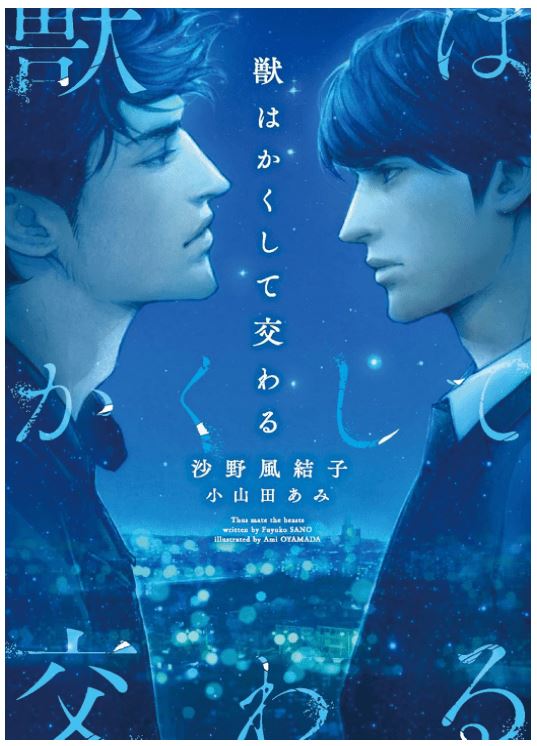
... Read More
The word pet appears again and again in these chapters and I cannot stop thinking about what it means. Kiriyama says it explicitly: "I could make you my pet" and later "A mark for my pet." This is not just about control in a vague sense—it is about ownership, dehumanization, reducing a person to something that belongs to another. And the mark on Kagura's neck becomes this terrible symbol of that ownership, this visible proof that Kiriyama thinks he possesses him. But here is where it gets complicated, because the mark also connects Kagura to Zero. Kiriyama notices it: "From the marking I saw, your partner must be a man." That mark—earned through intimacy and consent with Zero—becomes evidence that Kiriyama twists into something else entirely. The same spot on Kagura's neck that held tenderness and desire now holds violence and violation. The symbol means two completely opposite things depending on who is looking at it. Then there is the vampire imagery, which the text invites us to notice repeatedly. Kiriyama looks like one, moves like one, his lips are cold, he bites and leaves marks. Sanae even says it outright. But the vampire metaphor goes deeper than aesthetics. Vampires in literature are often about power imbalance, about predation disguised as intimacy, about the blurred line between love and consumption. Kiriyama consumes Kagura without nourishment—he takes and takes and gives nothing real in return except scraps of information about the Eastern Alliance. The marking becomes this perversion of what it means to be claimed by someone you love. "Kagura Jinya was, to Kiriyama, as different a species as humans are to animals." That line. That is the core of it. Dehumanization as the ultimate tool of power.
... Read More
"He had been unable to understand the vast, dark part of her that was most significant." First sentence of this section and I was already wrecked. The whole Haruka thing is haunting—Kagura admitting he only saw the surface, the school and the likes and dislikes, but missed whatever was actually eating her alive inside. He built this wall because he couldn't save her once, and now he's terrified of doing it again with Zero. But here's the thing that made me actually pause my reading: "The end doesn't matter." He's making a choice to get closer anyway, knowing it could kill him. That's not romance, that's devotion, and it's terrifying. Then the scene at Zero's apartment—Zero finding those marks on his neck and getting this feral, protective look on his face. "He licked you, did he?" The jealousy is so raw it hurts. And Kagura, who just wanted to tell him about the threat, suddenly has to navigate THIS? These two men, one who grabbed his throat and one who wants to mouth his bruises, both wanting something he can't fully give them. My heart can't take it.
... Read More
The dialogue in these chapters is so sharp it actually drawn blood. Look at how Kiriyama speaks—he barely says anything and every word lands like a punch. 'Don't get involved with the Eastern Alliance any further.' That's it. That's the entire threat. No elaboration, no posturing. Just a man who knows exactly how much weight his silence carries. And then his response to Kagura's comeback? Nothing. Just a darker look and a physical grab. The dialogue here is less about what's said and more about what the characters are forced to swallow. Kagura's internal voice is different entirely—sarcastic, defensive, scrambling. 'Eek' out loud when Kiriyama appears behind him. The humor is real but so is the terror. And Zero! His lines are short, growly, possessive. 'Show a bit of gratitude.' 'He licked you, did he?' There's this whole conversation where neither of them actually says what they mean. Kagura wants to tell Zero he's scared. Zero wants to ask if Kiriyama hurt him beyond the neck. They circle each other like animals, same as the title suggests. The subtext IS the text here.
... Read More
Okay so let me just say this — the way the author handles revelations in these chapters is absolutely *chef's kiss*. Zero didn't just casually spill his entire trauma dump, he framed it as a 'foothold.' That's not vulnerability, that's a boundary. Like, 'here's something so you don't come after me unnecessarily.' But of course Kagura, being absolutely useless at reading social cues when it comes to people he cares about, interpreted it as an invitation to dig deeper. And then the Big Dipper reveal — that was SO well-placed. I literally did a double take. All those earlier chapters where Zero makes random references to stars and Kagura thought they were just poetic nonsense? It was a coded family photo this whole time. The three stars in the bowl = the missing family members. Benetnasch as the mother. Alcor as Zero himself — the one that can't even be seen. And the grandfather in the coffin, already gone. This is how you do slow-burn exposition. No info-dumps, no dramatic monologues in hospital rooms. Just one guy looking at the sky and finally putting puzzle pieces together that were handed to him weeks ago. The Enwu reveal through Kiriyama's interrogation was also solid. It creates this whole layer of suspicion that Kagura is secretly compromised, which adds SO much tension for the next arc. You're now constantly wondering: does Kiriyama know more than he lets on? Is Kagura actually hiding something? Or is this all just political maneuvering?
... Read More
Okay so I NEED to talk about this chapter because the way the plot flipped on its head at the end absolutely wrecked me. Up until that scene at the prosecutors office, Kagura was riding this high of victory—Eastern Alliance exposed, forty-three men captured, human trafficking scheme torn apart. He even THOUGHT he was about to get revenge. And then Kiriyama just drops this bombshell that NONE of it was accidental, NONE of it was Kagura outsmarting him. Let me just say it: 'All of you moved just as I expected, almost amusingly so.' That line alone makes your blood run cold. Every single player in this game—Kagura, Enwu, the Eastern Alliance, the police, even the resigning prosecutors—KiriyAMA saw it all coming. He played them like instruments. The brilliance (and horror) of it is how Kagura's plan actually worked exactly as intended, and yet it was ALSO part of Kiriyama's design. The Eastern Alliance thought they were ambushing Enwu, Kagura thought he was setting a trap, and Kiriyama was watching from above, letting factions tear themselves apart. It's so layered that I had to re-read that confrontation three times. And here's what genuinely unsettles me: Kiriyama mentions he 'never once aided the Eastern Alliance.' So who IS aiding them? Because something tells me this isn't over. The author absolutely loves keeping us on our toes, doesn't she?

Leave a comment

You must be logged in to leave comments. or
