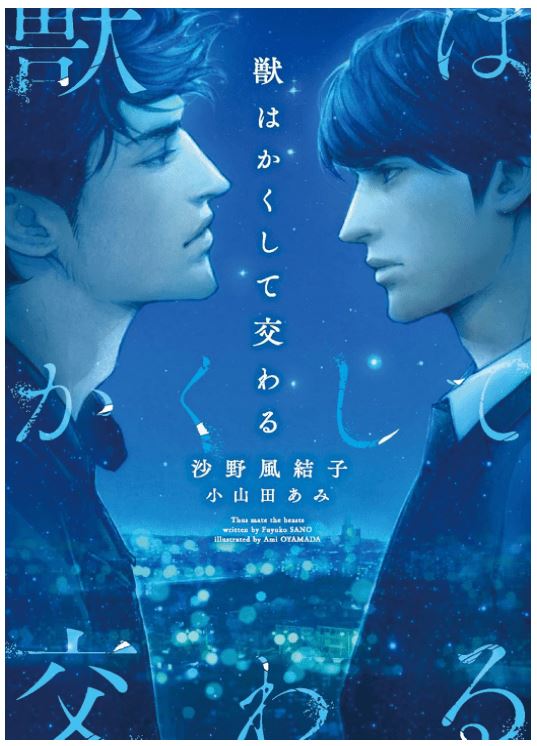
There's a line in the very first paragraph that I keep coming back to like a broken record, and I think it holds the entire philosophical DNA of this story. Kagura thinks: 'Will there come a day when he suddenly finds himself unable to open this door with this key?' This isn't just romantic anxiety. This is a metaphor for the entire world the author has built.
Keys and doors appear everywhere in this narrative, and I don't think that's coincidental. The domestic apartment—a space meant for intimacy and belonging—becomes a site of exclusion. Kagura can unlock the door but Zero has locked himself out. Meanwhile, the concept of 'family registers'—the bureaucratic documents that determine whether you're a Citizen or a Non-Citizen—function as the ultimate social key. Some people can open every door. Others were never handed one.
Zero's backstory is essentially a story about a mother who tried to keep her child hidden from the world, who called him a 'gift' from a delusion, who looked at her son and saw someone unworthy of existing in the light. 'These eyes are the prince's.' She couldn't accept him as he was—she could only accept him as a fragment of someone else's fantasy. That's the deepest form of door-locking: being loved conditionally, being seen only as a reflection of someone else's desire.
And then there's the zip tie. Let me digress for a second because this imagery is too good to ignore. Kagura carries a zip tie 'taking a page out of your book.' Restraint as intimacy. Control as connection. The zip tie is crude, temporary, almost comical compared to the necktie binding Zero's wrists—but it's also deeply symbolic. These men who spend their lives trying to bind others are eventually bound themselves. Kagura's restraint is an act of defiance; Zero's restraint is an act of surrender, and he knows it, and he lets it happen. The ceiling light above them—exposure as vulnerability.
The Earbud rolls across the coffee table. Surveillance as love language. Zero listens to Kagura's private mutterings not to manipulate him but because he can't stay away. The wireless earbud is tiny, almost invisible, but it represents the entire power structure of this world: the ability to hear what others can't hear, to know what others don't know, to be present in rooms you're not physically in.
'A Non-Citizen's way of doing things can only be understood by another Non-Citizen.' This line is the thesis statement. The novel isn't just about two men who can't let each other go. It's about two people who exist outside the systems that govern everyone else, and the only language they share is the one spoken in the spaces between doors.