The Beasts Intertwine This Way - Reviews

The Beasts Intertwine This Way
+Add to Custom List
Sort
Add review
... Read More
I need a moment. Just — a moment. "If a point of light is born in a place of only darkness, I will continue to be ensnared by it." I read this sentence five times. FIVE TIMES. Because it is the single most devastating thing either of them has ever said to the other, and it's so painfully true on every level. Zero is the darkness. He's been drowning in it since before he was born — his mother tried to abort him repeatedly, he's unregistered, his grandfather is a dead man walking in a criminal's shadow, his father doesn't exist at all. And yet Kagura Jinya is this bright, stubborn little point of light who refuses to stop seeing him. And Zero knows it. He *knows* it. And that's why he pushed him away with this 'foothold' language. Not because he doesn't care — but because he cares TOO MUCH and it terrifies him. But Kagura... bro. Oh, sweet summer child. He sees it all. The Big Dipper analogy, the missing stars, the coffin imagery — and he doesn't try to 'fix' Zero. He doesn't say any of those annoying things like 'you're not alone anymore.' He just... stands there. Looks at the sky. And decides that Zero now lives inside his chest, in his core, where Kagura can feel him breathing. That is the most romantic thing I have ever encountered in my entire life and I am not okay. Also the fact that Zero assigned his team to tail and protect Kagura while simultaneously telling him to stay away? That man is a walking contradiction and I am HERE FOR IT. The enemies-to-lovers trope could never.
... Read More
"The scent of rain drifts from his damp leather jacket, mingling with the faint fragrance of something bitter-sweet." One sentence. That's all it takes and suddenly I'm standing in that apartment with Kagura, feeling the cold dark, watching Zero walk in like some kind of storm made flesh. This author does NOT play around when it comes to atmosphere. Let me just gush about this scene for a second because I cannot—I repeat CANNOT—get over how visceral the writing is. The opening sequence where Kagura goes all the way to Nakameguro and finds the apartment empty, the beer cans untouched in the fridge—that's not worldbuilding through exposition. That's worldbuilding through absence. The hollow cold sensation in his gut? You feel that. The fact that he doesn't turn on the light because maybe if it's dark enough, Zero could still be somewhere in the room? That's devastating character work disguised as environmental description. And the apartment itself—it's described enough to feel real but sparse enough to mirror Kagura's emotional state. The sofa he left open on the right side. The coffee table he eventually throws his legs onto. The steel bed frame where Zero ends up bound. These aren't random set pieces; they're extensions of the characters' psyches. Kagura leaves space for someone who won't come. Zero arrives wet from rain because he was outside, tailing him, watching him—the wire earbud rolling across the coffee table is such a small detail but it tells us everything about Zero's control issues. The world of Citizens and Non-Citizens feels genuinely dangerous and lived-in. We don't get exposition dumps about the system—we learn it through the characters' bodies, through what they can and cannot reveal, through the surveillance and the earbuds and the zip ties. The Eastern Alliance, Enwu, Kiriyama—these aren't just organization names dropped for plot convenience. They're the architecture of a world where identity itself is the ultimate weapon and the ultimate wound. I could stare at that image of Zero lying face-up on the rough steel bed, ceiling light illuminating him, thumbs bound, for hours. It's erotic, it's vulnerable, it's prison and sanctuary all at once. This author understands that setting IS emotion.
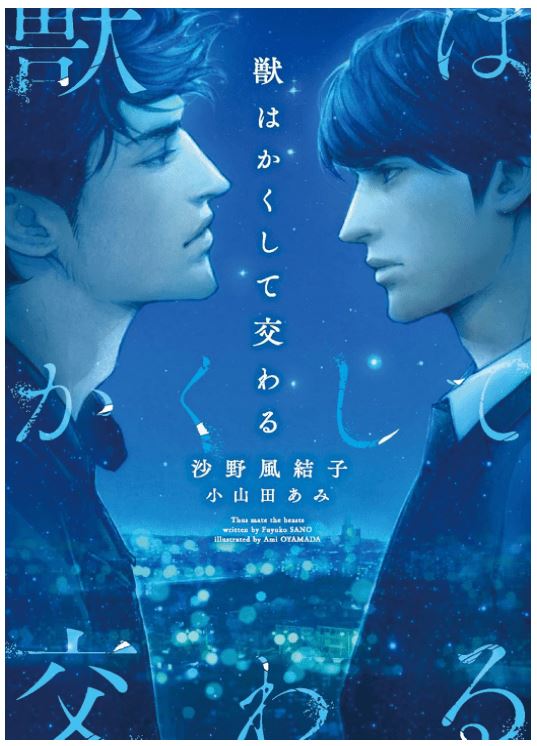
... Read More
'You're not thinking clearly right now.' That line from Zero repeats like a curse throughout the chapter, and honestly it might be the most important sentence in the entire book. On the surface it sounds like concern — this dangerous man warning another dangerous man that he's compromised. But the way Zero says it, the way he traces the sweat from Kagura's temple with his thumb, the way his voice carries 'a hint of sweetness eerily similar to how it sounded during intimate moments' — that's not advice. That's ownership. And Kagura's dialogue! His voice is so much more fragmented, more desperate. 'Don't say it like that. Xuan's not that kind of girl!' He's defending someone who barely exists outside of his guilt projection. The broken Vietnamese he uses with Xuan contrasts sharply with the sharp, clipped Japanese he uses arguing with Zero. Language itself becomes a marker of who Kagura is allowed to be honest with. With Zero he's defensive and proud. With Xuan he's clumsy and apologetic. With nobody is he just himself. The translator's note about Japanese naming conventions was genuinely useful because it reframed the entire Zero-Kagura dynamic. Without understanding that zero-san versus Jinya Kagura carries such specific weight, you'd miss how Zero is systematically dismantling every boundary Kagura has left.
... Read More
Okay so let me just say this: Kiriyama is the most disturbing character I have ever had to write about because every time I re-read these chapters my skin crawls. Like physically. Kagura has to sit across from this man, let him bite his neck, and pretend to enjoy it while internally he is screaming. But here is the thing that actually broke me—not the horror of it all but the comparison Kagura makes silently. When Kiriyama marks him, he feels revulsion. When Zero marked him? "In fact, feeling Zero's scent and lips against him had stirred up pleasure." That is not a small detail. That is the author just casually shattering your heart into a million pieces. The whole dynamic between Kagura and Kiriyama is this grotesque power play where Kagura is trying to use the situation as cover, to get close enough to learn what Kiriyama knows about Zero and the Eastern Alliance. But every time Kiriyama leans in, every time those cold lips press against his neck, Kagura feels like he has sold himself again. And that phrase—"an unpleasant feeling of having sold himself every single time"—that line stayed with me for days. It is not just physical disgust. It is the erosion of his own sense of self. Then there is Zero, who is barely in these scenes but is present in every single one through memory and through that mark on Kagura's neck. The translator literally adds a note: "He should've listened to Zero. But without Kiriyama, we won't get to see the crazily jealous version of Zero. Hahaha." Which means what? That Zero's jealousy is going to be unhinged when he finds out about all of this. And honestly I am both terrified and thrilled for that moment.
... Read More
The structure of this section is masterful in the most insidious way. It starts with Zero's car scene — high tension, physical danger, psychological domination — and then it CUTS to a phone call. A sobbing girl calling at dawn. And suddenly you're off the highway of adrenaline and dropped into something quieter and somehow more devastating. Xuan is crying. She's apologizing for calling so early. She asks to go on a date like it's the most normal thing in the world, like she's not a exploited woman trapped in a criminal operation. The pacing choice here is deliberate and cruel: we get this soft, vulnerable moment between two people who barely know each other, and then BAM — Kagura arrives home and Zero is there waiting. The chapter goes from tender to threatening in the span of an elevator ride. You never get to breathe. The author understood that if you make the reader feel safe even for a second, they'll yank that feeling away harder. And that ending! Zero chains the door. 'I'll keep you by force.' You're sitting there thinking about Xuan's dream of walking along the Mekong River with someone she loves, and now Kagura can't even leave his own apartment. The parallel is crushing — the one person who wants freedom is being kept prisoner by the man who claims to want to protect her. The structure mirrors the theme: every attempt at connection becomes entrapment, every moment of tenderness carries a threat.
... Read More
The stakes escalation in these chapters is absolutely vicious and I love every second of it. On the surface: Kiriyama now knows Kagura is investigating the Eastern Alliance independently, and he's making it clear through physical intimidation that he can and will cross boundaries. The kiss mark scene is horrifying because it's not just about power — it's about PROPERTY. Kiriyama is touching Kagura like he OWNS him, like the body is a negotiation table. But underneath that: Zero is now officially an enemy of the state-level prosecutor, and Kagura is choosing to stand NEXT TO him anyway. Every chapter it gets harder, every choice more dangerous. Zero told him to stay away. Kagura looked at the sky and said no. That's the conflict now — not just external enemies, but the internal war between self-preservation and devotion. And the timing? Absolutely perfect. Just as Kagura finally understands Zero's backstory, just as he accepts that Zero is 'in his chest,' the book immediately puts a gun to both their heads. Kiriyama represents the system — citizenship, law, institutional power — while Zero represents everything outside it. Kagura is standing in the middle, and both sides are closing in. The suspense is maintained so well because we never know which threat will strike first. Is it Kiriyama with his legal authority? Is it the Eastern Alliance with their criminal reach? Or is it Zero himself, pushing Kagura away to protect him? The answer to that question is the entire novel.
... Read More
'Since I was a child, I've always dreamed of doing that with someone I love.' Xuan's dream of walking along the river to the sea is the emotional core of this entire section, and I think it represents something much bigger than just a romantic outing. Rivers in literature always mean passage, transition, the movement from one state of being to another. For Xuan, the river represents escape — from her exploitation, from the possibility of illegal immigration, from the despair that drove Kagura's cousin Haruka to her death. But the river is also unreachable. Xuan can't just leave her night job. Kagura can't safely leave his investigation. Zero won't let either of them go. The dream of reaching the sea stays exactly where it is: dreamed, desired, but never accomplished. And that's the tragedy the author is building toward. Everyone in this story wants something that requires freedom to obtain, but everyone is trapped by their circumstances, their relationships, their own histories. The image of Xuan's face merging with Haruka's in Kagura's mind is the symbol that ties everything together. Two women, different backgrounds, same pattern of betrayal and abandonment. Kagura sees them as interchangeable projects — people he needs to save to prove he didn't fail the first one. But they're not interchangeable. They're people. And treating them as symbols of his own guilt is exactly why he keeps failing them.
... Read More
"The beasts intertwine this way" — the title alone tells you everything. Throughout these chapters, animals keep appearing as metaphors for the people around Kagura. Sanae is an otter. Zero is described as a "beast-like man." Even Kagura's view of people is zoological — he categorizes them as useful creatures or tolerable ones. This isn't accidental. The novel seems to be asking: what does it mean to be tame, and what does it mean to be wild? Kagura claims he dislikes getting close to people, yet he keeps returning to Sanae. He says he doesn't care whether Zero lives or dies, yet he goes to the morgue himself. The journal journalist Machida — dead for digging into foreign mafias — becomes another ghost haunting these pages, another beast that couldn't survive in the wild. There's also the imagery of eyes. Sanae calls Kagura's eyes "snake eyes" and it lands as an insult but also as recognition — these are the eyes of someone who sees too much, someone who hunts. The glasses Sanae forces Kagura to wear? A literal change of vision. When Kagura puts them on, he becomes something else — "an intellectual yakuza" — suggesting that identity is performative, that you can change how you're seen by changing what you look through. The whole book seems built on the question of what we choose to see and who we choose to keep.
... Read More
I need to talk about Zero for a second because THIS character is fascinating and I have SO MANY QUESTIONS. The fact that Kagura recognizes that symbol on the paper from Zero's phone lock screen tells me everything I need to know about their relationship. Kagura notices these things. He pays attention to small details about Zero. And he's clearly been thinking about what that symbol means — not just dismissing it like Sanae does. Zero's attachment to the Big Dipper imagery (or at least, part of it) suggests he has some kind of personal history or meaning attached to it. Maybe it's connected to his past, maybe it's a message he's trying to send, maybe it's something he's hiding even from himself. Whatever it is, Kagura is smart enough to connect the dots. Meanwhile, Sanae serves as this perfect counterpoint — he sees the symbol and immediately thinks "cool manga reference!" while Kagura sees something deeper. It highlights how differently these two approach the world, and honestly, it makes me root for Kagura even more. I also love the subtle way their professional relationship is evolving. Kagura is clearly taking this case personally, going beyond his duties to investigate. Is it because he cares about the trainees, or because he's worried about Zero? Or maybe both. The author is very good at not spelling it out. And Zero... where are YOU in all this? Watching from the shadows, I assume.
... Read More
Let me just say this — the author is a MONSTER when it comes to building tension and I respect it. So here's what happened: Kagura is operating as UNDERCOVER BAIT against the Eastern Alliance because the Anti-Gang Ordinance made yakuza groups too hard to touch. Semi-gangs are 'like trying to punch fog.' Kagura decided his own blood would be the color that gives that fog a shape. He went out, got ambushed, got zapped with a modified stun gun TWICE, and barely survived because some dude named Zero showed up like a dark angel from a noir film. The plot twist I didn't see coming: Zero isn't a yakuza hitman or some mysterious law enforcement. He's a FREELANCE WRITER. A journalist covering the Eastern Alliance for years. The guy has NO institutional backing. He operated entirely on his own instincts, in the middle of the night, in a riverbank confrontation, and Kagura is probably the most dangerous man in that entire area. And Zero won. Or rather, saved him. The power dynamic is flipped so hard. Then we cut to the next morning and BOOM — Section Five inquiry about Enwu. A crime organization rumored across Japan from Hokkaido to Okinawa. Human trafficking. Firearms. ZERO evidence despite years of investigation. This is clearly the NEXT major plot thread and it connects directly to Kagura's undercover operations. I can feel it. And the ending of this section with Sanae — the rookie detective who looks like an otter in a suit (I'm not making this up, the text literally says this) — he's NOTICING the bruises on Kagura's neck and getting ACTUALLY ANGRY that he wasn't told about the attack. Kagura's cover operation is compounding with personal stakes stacking up. The plot is moving in at least three directions simultaneously and none of them feel cluttered. Every thread pulls tighter.
... Read More
Okay so this whole section with Kiriyama is such a masterclass in escalation. It starts almost casual—Sanae just complaining about the prosecutor being 'chilling cold'—and then BAM Kiriyama knows Kagura's name out of nowhere. Like he was literally listening. The way he pulls Kagura by the collar with that chameleon tongue comparison is genuinely terrifying. What I love is that this isn't some dramatic villain monologue, it's quiet and controlled, which somehow makes it worse. And then he drops the Enwu question casually like he already suspects something, and the whole power dynamic between these two men just SHIFTED overnight. Kagura went from confident detective to someone who couldn't even defend his own neck without flinching. But here's what really gets me—Kiriyama isn't just some random antagonist, he's probing at the SAME connection that Zero is. Two forces circling Kagura from opposite sides, both wanting to possess or control that bond. The tension between his duty as a detective and his pull toward Zero is now also complicated by external danger. This is getting dangerous for everyone involved.
... Read More
Okay, I need to talk about Zero and Kagura because THIS scene destroyed me. They share what the text calls their FIRST KISS, and let me tell you — it's not some polished romantic moment. It's described as "almost shy, awkward, as if both were a bit self-conscious." That word "awkward" does SO much work here. Think about it: they've been physically intimate before, right? The text mentions "all the sensual encounters they'd shared" — so this kiss isn't their first time touching. But it's the first time they're being GENUINELY vulnerable with each other. Kagura is asking Zero to be his backup plan in case he dies trying to save those girls. That's a huge ask. And Zero says "Not exactly what I'd expect from you — you're a reckless guy" before kissing him. Like he's acknowledging: I see you, I know you, and I'm still in. The physical description is key here too. Zero grabs Kagura's arm, locks the door chain, holds his chin. There's this control dynamic that's almost aggressive, but it reads as protective. "You've got a serious look on your face" — Zero is reading him like a book. And then the kiss itself: "Zero pressed his lips to Kagura's over and over, rubbing them together." That repetition is important. It's not rushed. It's deliberate. What kills me is the ending of their scene. Kagura lightly punches Zero's chest and says "I'm counting on you." Zero replies with a smirk: "Yeah." That casual dismissal is SO them. They can't just say "I love you" or "come back alive" — they do it through actions, through nicknames, through this whole unspoken language. And then there's Sanae! "Calling someone weird nicknames at work is harassment now, you know." Two years apart in age but Kagura treats him like he's from a different era. That dynamic — the grumpy senior pushing the eager junior away while secretly relying on him — is so real. Kagura tells Sanae to "leave the dangerous stuff to others" but then later gives him this weighty explanation about the victims. He's letting Sanae in, just in his own confusing way.

Leave a comment

You must be logged in to leave comments. or
