Summary

... Read More

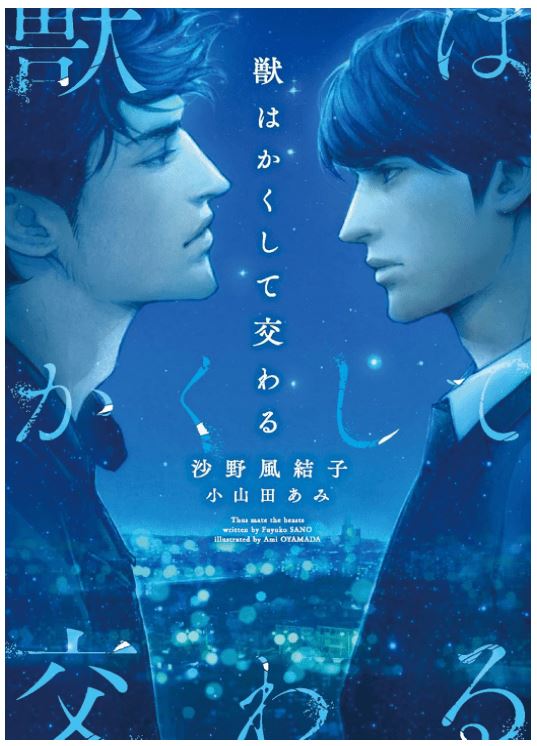
Kagura Jinya is a thirty-year-old detective in the Organized Crime Division, Section Two of the Tokyo Metropolitan Police. Despite his young age and prestigious background as a former kendo national runner-up, Kagura operates with cold detachment, viewing his colleagues as tools rather than friends. His primary motivation stems from a personal trauma involving his older cousin, Haruka, who disappeared two years prior after falling into criminal circles. Kagura believes the Eastern Alliance, a semi-gang collaborating with foreign mafias, is connected to her fate, driving him to pursue them with obsessive intensity. To gather intelligence, he deliberately acts as bait, risking his life against these groups to force the police into decisive action against the rising tide of semi-organized crime and human trafficking.

During one such undercover operation in a dark alley, Kagura is ambushed by members of the Eastern Alliance armed with modified stun guns. Just as they are about to abduct him, a mysterious man named Zero intervenes, using tear gas to cover their escape. Zero carries Kagura through the labyrinthine streets and leaves him by a riverside. Despite the danger, Kagura confronts Zero, who identifies himself as a freelance writer covering the underworld. Zero reveals he knows Kagura’s identity and history, creating an unsettling dynamic. Kagura initially views Zero as a potential informant but remains wary of his true allegiance. The encounter leaves Kagura with a lingering sense of intrigue and a bittersweet scent that becomes associated with Zero throughout their subsequent interactions.

The narrative shifts when the body of freelance journalist Machida Shogo is found in Tokyo Bay. Machida had been investigating the same criminal networks as Zero. Kagura, suspecting Machida was tracking the Eastern Alliance, begins to connect the dots between the murder, the missing persons cases, and the growing influence of foreign syndicates like Rong Lan, a Vietnamese mafia group. Shortly after, Kagura’s junior partner, Sanae Suguru, is kidnapped by the Eastern Alliance while in a police parking garage. Kagura pursues them but is overpowered, tortured, and sexually assaulted in a warehouse. During the attack, he recognizes Zero’s scent, realizing Zero has been present and observing his suffering.

Zero eventually rescues both Kagura and Sanae, using his network of underworld contacts to create a distraction. However, the rescue comes with strings attached. Zero possesses video evidence of Kagura’s assault and threatens to use it for blackmail unless Kagura provides inside information. Instead of succumbing to coercion, Kagura proposes a mutual exchange. He offers police insights in return for Zero’s intelligence on the Eastern Alliance and Rong Lan. The arrangement evolves into a physical relationship, described as a transactional bond where both men use each other for their respective gains. Kagura, driven by his need to dismantle the syndicate, rationalizes the intimacy as a necessary tool, though he finds himself increasingly captivated by Zero’s predatory nature.

As their clandestine meetings continue in a rented apartment in Nakameguro, Kagura learns more about Rong Lan’s operations, specifically a Vietnamese restaurant in Ichikawa that serves as a front for human trafficking. During his surveillance, Kagura encounters a young Vietnamese girl named Xuan, who works in a local shop. Recognizing her from the trafficking ring, he is struck by a deep emotional resonance, linking her to the memory of his lost cousin. Xuan’s name meaning 'spring' triggers painful memories of Haruka, intensifying Kagura’s desperation to expose the network. Meanwhile, Zero reveals his own motive for hating the Eastern Alliance, confirming that their interests are aligned, though he remains an enigmatic figure whose past Kagura cannot fully uncover. The story progresses as the two men navigate a dangerous partnership, balancing their mutual distrust with a growing, complicated dependency, all while chasing the shadows of a criminal empire that holds the secrets to Kagura’s personal loss.

Latest Release
DateGroupRelease
2026-09-25knoxt c36
2026-09-25knoxt c35
2026-09-25knoxt c34
2026-09-25knoxt c33
2026-09-25knoxt c32
2026-09-25knoxt c31
2026-09-25knoxt c30
2026-09-25knoxt c29
2026-09-25knoxt c28
2026-09-25knoxt c27
2026-09-25knoxt c26
2026-09-25knoxt c25

Community Reviews

Rating(3.9 / 5.0, 89votes)
5 stars
31(35%)
4 stars
21(24%)
3 stars
37(42%)
2 stars
0(0%)
1 stars
0(0%)

Popular reviews

... Read More
The dialogue in this novel is ABSOLUTELY razor-sharp and I have to pick apart why because it's one of those things that separates good writing from great writing. Zero's voice is immediate and distinct. 'No thanks for saving your life?' said with such casual insolence that it completely defines who he is in three words. He's brazen, unbothered, almost playful in the most dangerous way. And then he drops the kidnapping threat like it's a Tuesday — 'then maybe I should just kidnap you right now?' The man treats life-and-death proximity like small talk. Kagura's voice is cooler, more controlled but NOT boring. 'You really went out of your way to meddle.' 'In that case, I'll pass on that.' Every line is measured, but there's always an edge underneath. His internal reactions contradict his calm exterior constantly — he calls Zero 'brazen' while being 'involuntarily captivated.' He tries to push the man away and ends up closer. The gap between what he says and what he feels IS the character. Their exchange has this beautiful rhythm where each line is a parry and counterparry. They're not just talking — they're testing each other's boundaries, weaponizing politeness, using intimacy as a battleground. The kendo metaphor the author uses is doing double duty here because the dialogue literally functions like sword fighting. And the humor! It's dry and unexpected. 'Been writing articles about the Eastern Alliance for the past few years. It's a treasure trove of stories.' Said with actual warmth and laugh lines around his eyes, right after kneeling between a detective's legs. The tonal shift is perfect. Zero can be threatening and charming in the same breath and that's what makes him unforgettable. One line that genuinely made me laugh out loud: 'You're awfully demanding, aren't you?' when Kagura just asks for his name. The man is impossible.
... Read More
The dialogue in this book is SO distinct. Every character has a voice that jumps off the page, and it's not just about what they say — it's about HOW they avoid saying things. Kagura and Zero's conversations are this beautiful dance of almost-statements. Zero: "If you're serious about asking, then say it out loud." And Kagura DOES say it — but he frames it as a plan, not a plea. "Whether I succeed or fail, the police will try to bury what happened." He's asking for help without asking for help. Zero hears him anyway and responds: "Not exactly what I'd expect from you — you're a reckless guy." That line does triple duty: it's playful, it's admiring, and it's acknowledgment that he understands what Kagura is really asking. These two have this shorthand language where the subtext IS the text. Then there's Sanae, who breaks the pattern entirely. "Calling someone weird nicknames at work is harassment now, you know." Direct, slightly pedantic, completely earnest. He says what he means. That's why his dialogue works so well against the others — he's the only one not hiding behind implications. The narrator's voice is equally distinctive. Look at this internal monologue: "—What's the point of being a detective if I can't do anything?" Those em-dashes frame his thoughts as urgent, fragmented, almost shouted internally. It's not polished reasoning; it's raw emotion breaking through. And the humor! "I don't need an otter's help" — wait, what? An OTTER? That random insult comes out of nowhere and it's perfect. It's the kind of thing someone says when they're nervous and deflecting with nonsense. That's Kagura in a nutshell. The author also knows when to let silence speak. After the kiss, both "turned slightly, as though embarrassed." No dialogue needed. The action tells the whole story.
... Read More
I have to give major credit to the pacing here because honestly it's masterful. You go from this incredibly tense, almost action-movie sequence at Kawasaki Port—detectives moving, police cars screeching, thirty kidnapped kids emerging from a cargo container—and then it just… pivots. Hard cut to Kagura storming into the Tokyo District Prosecutors' Office. It works because the emotional momentum carries it. Kagura is still riding that adrenaline high from the port operation, still feeling triumphant, still thinking 'this is finally the time.' And then Kiriyama systematically dismantles that feeling. The author doesn't give you a breathing room between victory and devastation. One moment he's celebrating, the next he's being told he was used. The chapter structure itself is also interesting—the earlier section (Ch.77-78 ish) builds tension through information gathering and strategic planning, then the actual operation unfolds with quick, sharp prose, and then the Kiriyama scene slows right down to this claustrophobic two-person confrontation. Time limits ('my watch', 'Time's up'), confined space (the conference room), and escalating emotional stakes—it's all very deliberate. But that ending? Cutting it off right after Kiriyama leaves and Kagura strikes the table? Chef's kiss. I am NOT ready for what comes next.
... Read More
This chapter has two settings and they do SO much work. The prosecutor's office—steel tables, fluorescent light probably, this sterile cold that matches Kiriyama. Sanae calling them out for feeling like yakuza is such a sharp observation. It's like the book is saying: these people who hunt criminals have become the thing they hunt, just with better suits and worse souls. Then we cut to Zero's apartment in Nakameguro, damp hair, sweatpants, the whole visible world of him. The contrast is everything. One space is about power and violence disguised as law, the other is about vulnerability and touch. I also love the physicality of this book—the rain-dampened asphalt that's 'softer than usual,' the way Kagura quickens his pace to avoid slipping. The city feels wet and worn and real. And Kiriyama's eyes—described as 'murky, oppressive swamp' compared to Zero's 'infinite depths of night.' Two different kinds of darkness, one threatening and one seductive. The world-building isn't in exposition dumps, it's in every sensory detail.
... Read More
Let's zoom out for a minute and look at the symbolic architecture. Water is everywhere in this excerpt, and it's never just water. It's the Meguro River roaring after rain. It's the 'secret base' by its banks. It's the childhood friend swept into its current. And it's the 'nightmare' of memories Kagura thinks he's buried. The river operates on two levels simultaneously: it's the site of formative trauma (loss of control, loss of a friend, loss of innocence) and the site of present-day investigation (the clandestine meeting place). By returning to the same physical geography, Kagura isn't just being efficient; he's unconsciously trying to rewrite the ending of that childhood scene. This time, he's the predator, not the victim. This time, he's in control. But symbols resist easy manipulation. The river still rises. The danger is still there. The past is still waiting under the streetlamp. The author is suggesting that some waters are too deep to drain; you can only learn to navigate them, or drown trying. The 'two figures' under the light aren't just a plot device—they're the embodiment of that unresolved past, finally standing still instead of rushing into the current. Haunting. Perfectly haunting.
... Read More
Xuan means spring. Haruka means spring. Two girls connected by a word that should mean renewal and beauty, and neither of them gets any of that. The symbolism is almost cruel in how it operates. Spring is supposed to be about new beginnings, but in this story it's about girls being dragged through back doors and disappearing into drug circles. The pink ao dai is doing heavy symbolic work too. It's traditional Vietnamese dress—cultural identity made visible, made beautiful—and it's fluttering beneath a black down coat, half-hidden, like her identity is being concealed beneath layers of survival. She wears it to a club that's part of a trafficking operation. The contrast between that delicate traditional garment and the darkness of what she's being forced into is devastating. Kagura's moral compromise is the central theme here. He chose the case over the girl. The author doesn't let him off the hook with easy justification. 'Kagura knew it was unavoidable'—yes, but he also knows it hurts. The guilt is the point. The story is asking: what does it cost to be a detective when the people you're protecting are just kids who can't protect themselves? And then there's the grandmother's cooking, the cut side of fried chicken, the mundane domesticity of Kagura's home life. These moments of warmth exist alongside trafficking and drug abuse and disappearance. The story refuses to segregate light and dark into different worlds. They occupy the same kitchen table. Haruka smiled at him about the chicken and then her spirit had already left her body somewhere we hadn't seen yet. Spring comes, but not everyone gets to bloom.
See all reviews

Custom lists

See all custom Lists