The Beasts Intertwine This Way - Reviews

The Beasts Intertwine This Way
+Add to Custom List
Sort
Add review
... Read More
I am still not over the Kiriyama and Kagura dynamic and I don't think I ever will be. Let me just sit with this for a moment. Every interaction between these two is layered with so much history and unspoken tension that it's almost painful to watch. Kiriyama lets Kagura punch him in the face and doesn't even dodge the first time. He just takes it, lets it land, and then immediately turns it into something twisted—grabbing his collar, talking about marking him as a pet again. 'It's gone already. If I feel like it, I'll mark you as my pet again.' What does that EVEN mean emotionally?? Is it a threat? A promise? A reminder of something that happened before that I desperately need context for? The way Kiriyama speaks to him—so casual, so dismissive, yet so intimately possessive—it's devastating. He reduces everything between them to something conditional ('if I feel like it') and something owned ('my pet'). And Kagura's reaction! He throws another punch and gets dodged. He's furious, humiliated, confused, and yet he literally has no response. The shiver up his spine, the dry mouth—it's fear, yes, but also something else. Something that says he knows Kiriyama's right about something fundamental that he hasn't fully confronted yet. This relationship is so toxic and so compelling and I am absolutely addicted. Also Aizawa's comment about Machida Shogo hitting me like a ton of bricks. The dead friend, the warning to take care of the freelance guy—it all connects in ways I'm still processing.
... Read More
Okay I need to talk about Zero because this man is DANGER and I am HERE for it. Let me set the scene first — Kagura just got rescued by this completely mysterious guy who shows up out of nowhere, and instead of being grateful, Kagura is straight-up unimpressed. Like bro, the man literally pulled you out of a death situation and you're like 'I don't need to thank you when all you did was interfere.' And then THIS is what Zero does next. He kneels. On one knee. Right between Kagura's legs. Gets close enough that their breathing probably mixes. Kagura's body tenses 'like in kendo when blades clashed' and what does Zero do? He gets MORE ANNOYED like 'then maybe I should just kidnap you right now?' This is either the most aggressive flirting in the history of fiction or a very elaborate threat. I can't tell anymore and honestly I don't want to know. What makes this dynamic SO good though is that neither of them backs down. Kagura tries to push him away, but the text literally says 'the distance between them didn't increase. If anything, it got even closer.' Zero envelops him. The whole thing plays out like a fight scene disguised as a conversation. They are both predators in this moment. Two beasts circling each other and the Sexual Tension is absolutely suffocating. And then the reveal! Kagura asks who he is and Zero casually drops his ENTIRE background before he even reveals his name — H University law faculty, detective at 25, kendo champion, everything. The man is either obsessively thorough or has been watching Kagura for a while. Kagura's expression 'faltered, feeling thoroughly caught off guard' and I felt that on a spiritual level because I was also caught off guard. Who IS this man. The name drop at the end is everything. 'Zero. Like in one-two-three-zero.' Not a pen name. Just something he made up. And Kagura latches onto it anyway — 'held on to that number Zero as a symbol for the man.' This man literally disappears into darkness physically AND narratively but becomes the most vivid thing in Kagura's life. I am trembling.
... Read More
The structure here is so deliberate and I love how it works. Chapter 30-something opens with Kagura in full surveillance mode—hunched shoulders, pretending to be drunk, pouring sake at a telephone pole. It's methodical, almost documentary in tone. You can feel the grueling patience of investigative work. The author takes their time here, making us sit in that cold alley with him, experiencing the humiliation of being kicked by passersby who think he's a vagrant. That suffering builds sympathy before we even see the girl. Then BAM—pink ao dai hem. Sixteen years old, being dragged. The pace accelerates into something almost violent. He watches her disappear and then the chapter ends on his resolution: 'This is where it really begins.' That line hits differently because we've just witnessed his moral compromise. Sunday comes and he's in a down coat with a clip-on mustache, looking like a dreary thirty-something. The disguise subplot continues but now the pace shifts again—casual wandering, shop window browsing, everyday observations. It lulls you into thinking this is going to be a slow burn. Then he sees HER in a shop with a battered glass door. The pacing snap-back is ruthless. The conversation in the shop moves at this unbearable normal pace. Sweets, broken Vietnamese, polite small talk. But every line is loaded with dramatic irony because we know what happened to her. And then the name reveal. Xuan. Spring. And the Haruka flashback interrupts at that exact moment, splitting the chapter open. The structure of ending on 'Her spirit had left her' after describing Haruka's hollow stare in the hospital—that's the kind of closing image that stays with you. Two threads, trafficking and disappearance, woven through the same symbolic name, and the chapter just... stops. No resolution. Just the crushing weight of connection.
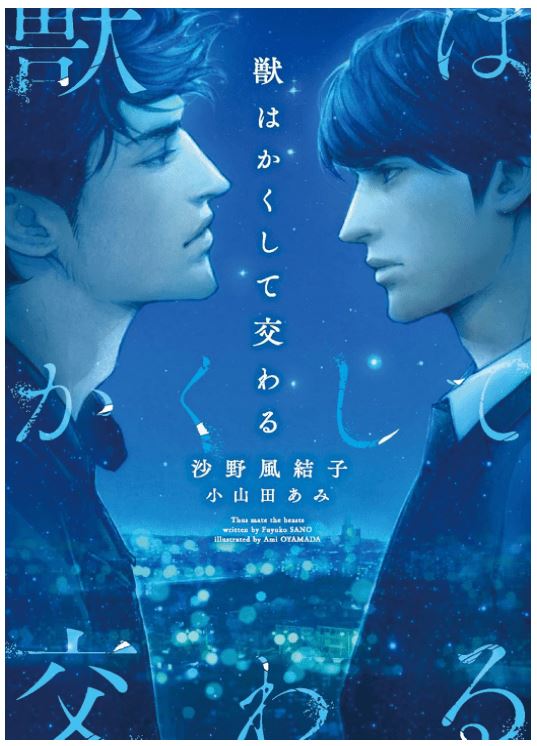
... Read More
The stakes in this book just keep climbing and I'm here for it. Let's start with Kagura's personal stake: his cousin was ruined by Toono Ryouji. That's not abstract injustice — that's family trauma driving every decision he makes. When he thinks about the human trafficking victims, he doesn't just see statistics. He sees his cousin. The text makes this connection explicit: "Until now, he'd been driven by a personal desire to destroy Toono... Yet, through Xuan, he'd come to realize that there were countless others who had suffered as his cousin did." That realization is the turning point. It's what transforms personal vengeance into genuine purpose. He's not just trying to avenge one person anymore; he's trying to prevent what happened to his cousin from happening to strangers. The professional stakes are equally high. Kagura knows that exposing the truth means the end of his police career. "No — he'd likely be risking his life." He's making enemies of politicians AND international criminal organizations. This isn't career-threatening; it's Lethal-threatening. But here's what makes the conflict so compelling: it's not just external. There's this internal battle between self-preservation and duty. "If he let self-preservation get in the way, he couldn't protect a single girl." He's choosing to be afraid AND to act anyway. That's the core conflict — not good versus evil, but fear versus courage, and courage wins every time. The Enwu raid adds another layer of conflict. Someone ELSE has already acted, and now Kagura is scrambling to respond. The victims are gone. His timeline is shattered. He has to pivot from rescue to damage control, and that shift creates this desperate energy that fuels the rest of the chapter. What I love most is that the author never lets us forget what's at stake. Every decision Kagura makes has consequences, and those consequences are mounting. That's how you build suspense — not with cliffhangers, but with inevitability.
... Read More
We keep talking about the Eastern Alliance case as the external plot, but let's be real—the real stakes are entirely internal. Kagura is playing a double game, and both sides are high-wire. On one side: the mission. Eleven years of obsession, tied to a traumatic origin he hasn't even confessed to Zero. If he fails, the past stays buried, justice stays elusive. On the other side: the man. Zero is offering information like a drug dealer, but also offering something dangerously close to genuine connection. The conflict isn't just 'will he catch the bad guys?' It's 'will he catch himself before he catches feelings?' Every physical encounter raises the stakes of emotional compromise. When he flips Zero over, he's not just trying to regain power in the bedroom; he's trying to reclaim narrative authority in their entire relationship. And when he leaves immediately after, claiming 'no hard feelings,' he's performing emotional detachment so convincingly he almost believes it himself. But the lingering scent, the trembling muscles, the nostalgic walk along the river—all of it screams that the walls are cracking. The suspense isn't just about what's in those ledgers or who those two figures are. It's about whether Kagura can survive getting what he wants without losing himself in the process. And honestly? I think he might already be too far gone.
... Read More
'The Beasts Intertwine This Way.' Just the title of this novel sets up the entire thematic framework. These two characters are operating outside conventional morality, guided by instinct rather than rules. Kagura is a police officer who meets with an underworld informant in a cold apartment with no personal belongings and engages in physical transactions. Zero is supposedly a freelance writer but clearly operates in criminal spaces and calls himself only 'Zero'—a number, a void, a creature without a proper name. The serpent imagery is everywhere and it's not subtle. Rong Lan means 'the Brood of the Serpent,' named after the serpent in Genesis that seduced Eve. Satan's descendants. This is a criminal organization that sees itself as inherently tempting, inherently corrupting—and yet the story seems to be asking whether the real temptation isn't in the criminal world at all, but in the space between these two men who are both wearing masks. Kagura's reflection about his appearance—that he looks more like a yakuza than a police officer—is crucial. The boundary between law enforcement and criminal is thinner than either of them wants to admit. Zero calls himself Zero. Kagura's identity is partially concealed too. They're both beasts wearing human skins, meeting in a den that has no owner. The warehouse video that Zero deletes—this is about trust as something that can't be recorded, captured, or preserved. The only thing real between them is what happens in the moment. Everything else can be deleted. Every trace can be erased. What remains is the arrangement itself, the intertwining. And Sanae calling himself an 'otter' in his report is honestly the most wholesome symbol in the entire text. Animals everywhere, but the otter is the one that's just happy to be alive and sending love to his friend.
... Read More
There is a scene in these chapters — honestly it's THE scene — where Kagura is lying on a riverside bank beneath a looming bridge, and the moment is SO vividly rendered that I could literally see it as a film frame. The night setting is key. Zero 'blended seamlessly into the darkness' wearing all black — leather jacket, cargo pants, ankle boots. His presence 'seemed ready to dissolve into the shadows.' But he doesn't look sickly or haunted. He exudes 'a natural ferocity, like a predator stalking the night.' This is gothic noir energy at its finest. The bridge overhead, the river below, the truck rumbling past creating just enough noise for their whispered exchange. It's claustrophobic and vast all at once. And then there's the cloudy sky motif that appears TWICE. First, after the riverbank encounter, Kagura heads to work 'glaring up at the still-cloudy sky from the previous night.' Then standing at the window of Tokyo Metropolitan Police Headquarters in Kasumigaseki, looking out at the same sky while drinking black coffee. The sky is a recurring visual anchor that ties the night scenes to the daylight — something ominous hasn't lifted. The organizational worldbuilding is also layered smartly. The Anti-Gang Ordinance (Bōhaku Ordinance) created this new ecosystem where traditional yakuza are constrained but semi-gangs operate in a legal gray zone. Foreign-related cases are increasing, which is why someone like Sanae with language skills gets assigned to the Organized Crime Division. The world feels REAL because the bureaucracy is as detailed as the criminal underworld. Tokyo itself — Kamiyacho apartments, Kasumigaseki police HQ, the riverside meeting point — all grounded in actual geography. This isn't a generic crime city. It's Tokyo and it FEELS like it.
... Read More
The pacing in these chapters is MASTERFUL. Let me break down how it works. It starts quiet — almost painfully so. Kagura punching a wall, sitting alone in an apartment, remembering sunlight. The prose slows down, lets us breathe in this moment of despair. Then Zero appears, and suddenly there's physical closeness, emotional intensity, plans being made. The pacing accelerates through their interaction without feeling rushed. "Tonight, I'm going to rescue the girls from the floor above that shop and get them to safety." — That's a commitment. The chapter shifts gears here, moving from introspection to ACTION. We get the logistics: SUV reserved, main police headquarters as destination, online publication plan. The author is giving us the roadmap while simultaneously making it clear this is suicide mission territory. Then BOOM. Aizawa bursts in with news about the Enwu raids. The pacing STOPS. Just like that. Kagura grabs Aizawa by the collar. The text says "Before he knew it" — and that's the whole chapter in miniature. Plans form, then chaos interrupts, then you're reacting instead of acting. The structure here mirrors real crisis response: you have a moment of clarity and planning, then something external happens that upends everything. The pacing doesn't let us sit in that devastation for long though — by the end, we're already moving toward the next phase: the organized crime unit conducting THEIR raids. The story keeps moving forward even when the characters feel stuck. What I love most is how the author uses scene transitions. We go from intimate bedroom moments → hallway conversations with Sanae → explosive news → strategic meetings. Each transition feels natural, like we're moving through time and space alongside Kagura rather than being yanked between disconnected scenes.
... Read More
I need to talk about this exchange because it's literally one of the most efficient pieces of dialogue I've read all year: "Why are you going so far for this?" "For you?" "Don't lie." "Half of it's true." "And the other half?" That's it. That's the whole thing. And yet my heart just did a flip. Zero's entire personality is in that one deflection. He answers with a question, he半分 admits feelings, he covers it with pragmatic alibi about aligned interests. The fact that he says "half of it's true" without ever confirming WHICH half makes me want to scream. Kagura's response — just releasing Zero's hand and moving on — is also perfect because it shows he UNDERSTANDS the game they're playing. The narrative voice itself is so distinctive. It's tightly embedded in Kagura's POV but the author lets us see things Kagura doesn't fully acknowledge. When it says "A warm feeling flared up in the pit of Kagura's stomach. It was probably a feeling of joy." — notice how he hedges? "Probably." He's not even sure himself. That's such a reliable-unreliable narrator move and I adore it. Then the chapter literally cuts to a meeting transcript vibe with "Section Chief Takizaki" and policy documents about technical trainee organizations. The tonal whiplash is intentional and it works. It reminds us that beneath all this personal tension there's a whole criminal underworld operating in the background, and the bureaucratic language makes it feel horrifyingly real.
... Read More
'So, what do you want to know?' Zero settles into the black leather sofa, his breath visible in the cold air. And then immediately Zero reaches out and uses his THUMB to catch a drop of water sliding down Kagura's chin. Like bro, we are literally discussing a murder case right now and you're being intimate? That's the energy of this entire relationship and I am HERE for it. The fact that Kagura is 'entirely unaccustomed to intimacy with another man' and still shows up voluntarily each time tells me everything I need to know about how this is going to develop. He's not doing this because he's confused or reluctant—he's doing it because he WANTS to, even if he hasn't admitted it to himself yet. There's something really quietly powerful about a character who knows exactly what they're signing up for and does it anyway. And Zero! Don't get me started on Zero. 'I own you, and you own me.' That's not a threat, that's basically a wedding vow in criminal language. The way he deletes the warehouse video instead of keeping it as leverage? He could have used it. He HAD to have known it would come in handy. But he chose not to. Why? Because the arrangement isn't about control anymore. It's already evolved into something neither of them named yet. Sanae checking in on Kagura too—'Are you safe?'—it's such a small moment but it anchors the whole thing in reality. Kagura has people who care about him outside this bizarre arrangement. It makes his choices feel more weighty, not less. I'm predicting the emotional climax happens when one of them finally says something honest out loud and the other one doesn't know how to respond. And I will be unhinged about it.
... Read More
So this fight scene is where everything shifts, right? Kagura has this advantage—he can actually hurt Zero, he lands a real hit, and for a second you think he might win. Then the umbrella breaks over a LOW TABLE. Of all things. It's almost comical how conveniently Zero uses the overturned furniture as a platform to leap forward and take him down. But here's the thing—it actually WORKS because it shows Kagura's desperation. He was gambling on finishing the fight quickly, and when that gamble failed, he had no backup plan. That's not bad writing, that's realistic. Then you have the investigation getting halted right after he gathers all this evidence. Machida Shogo is dead, the Eastern Alliance and Rong Lan are colluding, and the police superiors just... shut it down? Because wealthy buyers? This plot is so cruel in the best way. Every time Kagura thinks he's making progress, something gets pulled away from him. Xuan getting caught in the crossfire, the case getting buried, his own body being used against him—it's like the world keeps closing in. And Zero, of course, knew about the hit on the riverbank before it happened. How? That question is going to eat at me. Did he track Rong Lan somehow? Is he protecting Kagura or just controlling him? The power dynamic here is so messed up and I love it.
... Read More
Okay, I have to talk about the Enwu trio because WOW. You've got this kid Haiiro juggling knives while threatening to slice Kagura 'nice and clean,' Riki the wrestler stomping on fallen bikers like they're nothing, and Kataware in the suit who just sighs about detectives being careless. These guys are so different but they move as one unit—it's eerie and brilliant. But what really gets me is how they view Kagura. Calling him a 'Kokumin' with this mocking tone, like being a citizen is some kind of weakness. Zero told them about Enwu, told a cop—the ultimate betrayal of trust in their world—and yet they're still here, still watching over him? That says something about Zero's influence. Kagura walks away thinking 'they both carried the same purpose,' but honestly it feels deeper than that. Is it alliance? Is it curiosity? Or is it the first fragile bridge between two completely different worlds? How do you build trust when one side carries a badge and the other carries knives? I need to know where this goes because the tension is delicious.

Leave a comment

You must be logged in to leave comments. or
