Resonance Lust: Omegaverse - Reviews

Resonance Lust: Omegaverse
+Add to Custom List
Sort
Add review
... Read More
I NEED to talk about how Amane operates in these chapters because WOW. This guy is a menace and I love him for it. The dinner invitation scene is peak Amane. He doesn't just ask — he reads Kouki's face like a book. 'First came pure astonishment... light bluish-grey eyes began to sparkle... Like the sky darkening before a summer storm.' The author is giving us almost clinical observation from Amane's POV, and it's both adorable and slightly terrifying. This man NOTICES everything. And then the manipulation? Chef's kiss. He deliberately references their second resonance-induced heat with that suggestive tone, watches Kouki's throat bob, and internally curses him for leaking pheromones unconsciously. The fact that Amane is AWARE he's manipulating Kouki and DOES IT ANYWAY shows such a complex dynamic. He's not cruel — he's persistent, emotionally intelligent, and knows exactly where Kouki's buttons are. But the REAL moment is the reverse psychology attack. 'Is this something you can't even tell your partner?' That line is devastating in its simplicity. He doesn't beg, doesn't push — he withdraws, lets Kouki feel the weight of the unspoken, and watches him crack. When Kouki finally says 'Honjou-san, there's something I'd like to consult with you about' — you can feel the vulnerability there. This Alpha who's used to getting his way just handed all the power to a Beta. The partner framing is everything. Two months of cases, building trust, and Amane uses THAT as leverage. Not to hurt him, but to get him to OPEN UP. That's not manipulation for control — that's manipulation for intimacy. And I'm here for it.
... Read More
"Kou-chan, run!" Three words and suddenly Yukari goes from background character to someone who actually complicates the story. I initially wrote her off as just "the emotional obstacle" — you know, the ex who shows up to create drama. But no. She saw Amane trying to handcuff her childhood friend/lover, and she threw herself on top of him. That's not just sentimentality; that's a person making a morally messy choice in real time. And then there's Kouki, who doesn't hesitate. He hears the commotion, assesses the situation, and takes down a running suspect with a shoulder throw like it's nothing. Classic Alpha energy, sure, but the way he immediately checks on Amane after — asking "Are you okay?" before anything else — shows there's actual care underneath the capability. His follow-up line about "that thing" only happening during heat was both a tactical reassurance AND a reminder that their physical contact has consequences neither of them fully controls. The soulmate revelation hits different too. Amane outright says "There was no way. It was impossible." A Stray Omega and a top-tier Alpha? The class difference here isn't just social commentary — it's baked into how Amane experiences his own disbelief. He can't fathom someone like Kouki genuinely wanting someone like him. But Kouki keeps showing up anyway, persistent as hell. I'm fascinated by how this trio — Amane, Kouki, Yukari — forms an awkward triangle where Yukari's loyalty to Nitta directly opposes Amane's duty, while Kouki stands in the middle, capable enough to handle both threats but emotionally invested enough to care about the fallout. Nobody here is simple.
... Read More
Okay so this whole sequence is basically a setup disguised as a party scene, and I have so many questions about where it's going. Amane is ostensibly there for investigative purposes — he's a cop undercover at a high-society gathering — but the real plot engine is clearly this Shutou family drama. The party is supposedly dedicated to finding a bride for the current head, Shutou Keiki, which immediately raises the stakes and the weirdness factor. Who is being considered? Why is this happening now? What's the connection to Kourogi, whom Amane apparently intends to confront? The text drops that name like it's a loaded gun — "If it weren't for his goal of confronting Kourogi, Amane would never have wanted to set foot in such an out-of-place gathering." But then it cuts off mid-sentence. Classic tension-building move, I guess, but also a little maddening. What does Kourogi want with Amane? Is Kourogi even at this party? The structural choice to end this chunk right as Kouki starts trying to give Amane champagne feels intentional — a tiny escalation moment that's basically a narrative finger wagging "stay tuned." Meanwhile, the guest roster itself is doing heavy worldbuilding: twin sisters in matching gowns, an Omega-surrounded elderly man with a gemstone cane... this isn't just decoration, these are characters waiting to matter. The fact that Kouki is the only one who drove himself while everyone else arrived in limos is also a small but significant detail — it hints at something about his relationship with his own family that I'm not sure the author even fully understands yet.
... Read More
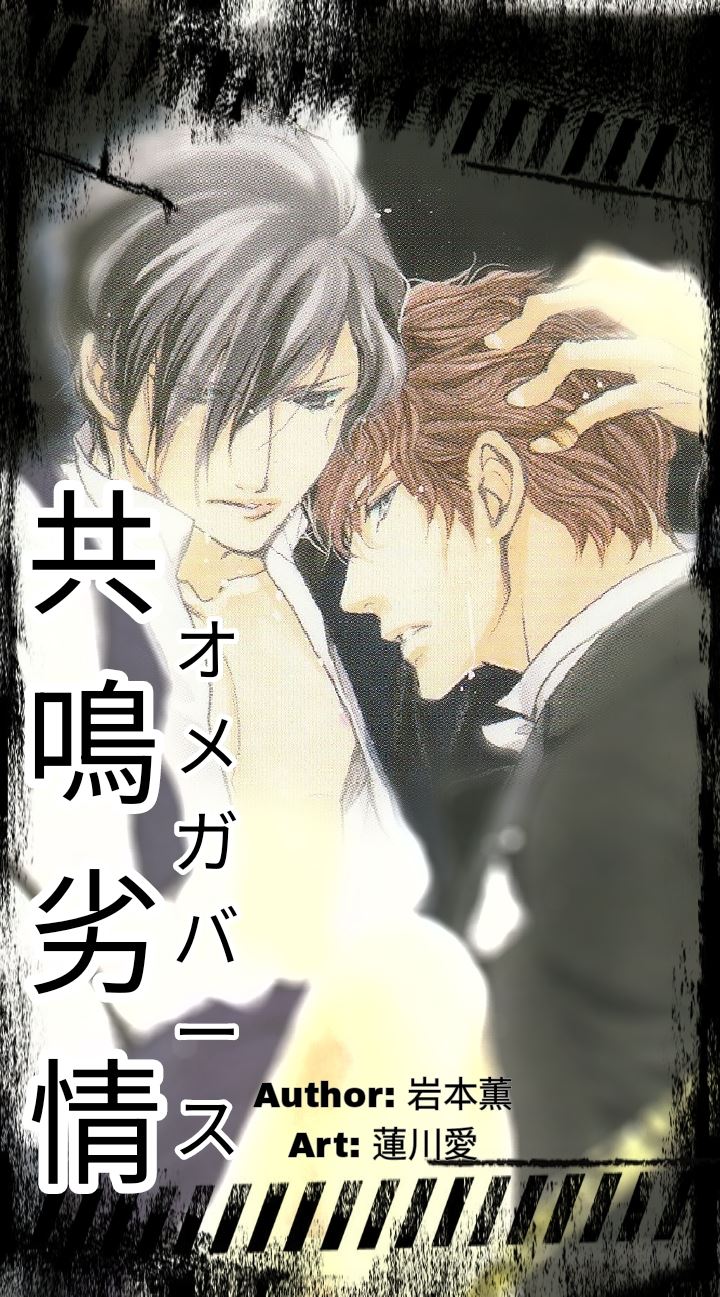
Can we just take a moment to appreciate the VISUAL BRILLIANCE of this chapter? The glass window scene? The way Amane is pressed against it, completely naked, while the garden party continues outside like some kind of distorted movie set? I SAW it. I literally saw it in my head like it was a film. The description of the beautifully lit garden, guests strolling and chatting below, completely unaware of what's happening in this lit window above them—that contrast between the mundane social event and the primal intensity inside the room? Chef's kiss. The author didn't just describe a setting; she created a living, breathing world where the party continues oblivious while two people are having their entire dynamic shattered and rebuilt in real time. And the sensory details! The cool glass against Amane's hot back. The faint sheen of sweat on Kouki's chest beneath that dress shirt. The opera pumps and silk stockings tossed aside like discarded weapons. Every garment removed felt like剥洋葱—peeling away layers until nothing was left but raw desire. The cummerbund, the cufflinks, the suspender-attached trousers—these weren't just clothes, they were barriers between who they pretended to be and who they actually were. The way the pheromones circulate through the room, the electric current running through Amane's grasped wrists when he's pinned against that glass—the atmosphere was THICK. You could feel the heat. The temperature spiked. I was fanning myself reading this. And the fact that this all happens in what appears to be a traditional Japanese estate with that beautiful garden? The setting wasn't backdrop; it was CHARACTER. The architecture itself seemed to conspire with the tension. Also: the translator noted 'this part is kinda dub con, I know…' and honestly? The setting MADE it work. The isolation of the window, the distance from the party, the fact that anyone walking in that garden could glance up and see them exposed—that vulnerability, that risk, it amplified everything. This isn't just erotica; it's atmosphere so dense you could cut it with a knife.
... Read More
The worldbuilding in this passage is so quietly effective I almost missed it. You've got this high-end residential area, towering above the rest of the city, with a concierge in the lobby and luxury cars in the underground parking. It screams wealth but also isolation—these people live above everyone else, literally and figuratively. And Mizuki's apartment? Half the living room is glass windows with a panoramic nightscape. She's successful, beautiful, famous, and she's sitting alone in this enormous space with a dog that misses her ex. The author never once says 'this world has extreme class division between Alphas and Omegas' but you FEEL it. You feel it in how Aya's death is treated versus how this case would be treated if the victim were an Alpha. You feel it in the property values, the gated parking, the contrast between Amane's grounded practicality and this elevated detachment. The world breathes through its architecture. And that elevator scene—Kouki pressing the button for the 25th floor, standing in front of the control panel, that gesture of holding the door—every detail places us in a world where status is performed through architecture and mannerism simultaneously.
... Read More
This author does NOT let you breathe and I respect it. Chapter opens with physical urgency — heat starting, pill needed, must hide. Phone rings. Door creaks. 'Who the hell are you?' CUT TO: 'It happened two months ago.' Now we're in a flashback that gives us the full meet-cute but also raises twelve new questions. Then back to present — stakeout anxiety, the ashtray memory, the walk back to the office. And what do we find? Kouki SLAMMING a laptop shut and lying about what he was looking at. Two months of buildup compressed into these few pages and the pacing is relentless. There's no filler, no unnecessary description. Every paragraph either advances the timeline, deepens a character, or raises a question. The only slight drag is the smoking etiquette lecture, but honestly it works because it's character stuff, not plot stuff, and it earns its place by showing how much Kouki has already noticed about Amane. The chapter ends mid-confrontation which is exactly the right place to stop. Need. More.
... Read More
I need to talk about how dialogue works in this book because it's doing things I didn't expect. "What the hell is that nasty hand!" — casual, crude, perfectly capturing the Alpha guy who's losing badly and taking it out on the cards. Then three lines later he's sulking with his phone, completely deflated. In two beats you get a full character arc. But the real dialogue genius is in what's NOT said. Amane's poker conversation is almost entirely performance. He says one thing, thinks another, and the narrator gives you the third layer. "Sorry, but I'm taking this win." That's not what he says at the table—that's what he's actually communicating. The gap between spoken words and true intent is where the voice lives. "I'm the one who got Kourogi's contact information." Short. Factual. But it carries so much weight because of everything we know about Amane. This isn't a boast—it's a revelation disguised as a statement. The dialogue never over-explains. It trusts you to read between the lines.
... Read More
I need to talk about Amane because THIS man. He's sitting there while Kouki recounts the worst three days of his life and what does he do? He asks gentle clarifying questions. He frowns sympathetically. He doesn't interrupt, he doesn't look away, he just lets Kouki be vulnerable in front of him. That's it. That's the character moment that got me. The dynamic between these two has been building quietly and these chapters make it SO clear why Amane matters to Kouki. Everyone else in Kouki's life—the mother who was openly hostile, the brother who tried to redirect the conversation—there's this undercurrent of disappointment or discomfort whenever his detective career comes up. But Amane? Amane literally had his hand on Kouki's arm in the earlier chapter and called out the mother's rudeness immediately. Here, Amane becomes the safe space Kouki didn't know he needed. And Kouki's response is just... him trusting Amane with this. He doesn't have to perform. He doesn't have to be the strong Alpha or the successful detective. He just gets to be the six-year-old boy who was scared and alone in a dark room for three days. The moment when the rescuing detective hugged him—"feeling his warmth"—and now Amane is there listening to him remember it—that parallel is not lost on me. The rescue detective hasn't been named yet but I need to know everything about him. He's the reason Kouki became a detective. He's the living proof that Alphas can be good. And now Kouki gets to share this memory with Amane instead of carrying it alone. I'm not okay.
... Read More
The dialogue in this section is deceptively simple on the surface—two men talking at a party, one sharing a personal story—but every line is carrying double and triple meaning. Let me pull apart a few moments that just wrecked me. When Amane asks 'That detective was probably about thirty years old at the time of the incident and was quite large, wasn't he?'—this is him testing the waters, trying to confirm what he already suspects. And Kouki's response, 'Despite that, his voice was gentle and soothing… But how do you know about him?'—he doesn't even connect the dots yet. The reader is screaming at him. Then the line that broke me: '…You won't be able to find him.' 'Because he's no longer in this world.' Three short sentences. No embellishment. No softening. Amane just… drops it. And Kouki's reaction isn't even shown—the narrative just says he was 'taken aback' and 'let out a voice louder than he intended.' The silence after that revelation is where the real dialogue happens. And later, when Kouki leaves and Amane is alone processing: 'Being kidnapped and nearly killed at six years old is an extreme trauma… Yet Kouki had turned that pain into a positive force.' This internal monologue reads like someone trying to understand why this person matters, why he should care, while simultaneously convincing himself he shouldn't. The narrative voice here is so close to Amane's perspective that you feel his walls going up in real time. The author's choice to have almost no dramatic confrontation here—just quiet revelations, internal panic, and a phone ringing to break the tension—is masterful. Everyone is holding back. Everyone is afraid. And the reader is the only one who sees the whole picture.
... Read More
"The fact that you made it for me, Honjou-san, is what matters." I need to talk about this moment because it completely shifted how I see their dynamic. Kouki sitting on that worn leather sofa in Amane's sparse apartment, accepting instant coffee like it's the finest thing he's ever tasted, and then saying THAT. The way he looks at Amane—this mix of genuine warmth and something almost reverent—it's not just flirtation. It's this deep, aching appreciation for the smallest acts of kindness. And Amane's reaction? Hegrimaces, calls it annoying, tells him to focus on work. Classic deflection. But here's the thing that got me: Kouki shows this 'strangely alluring look of sadness' for a split second before collecting himself. He's been rejected before, or at least he thinks he has, and yet he keeps showing up. Keeps bringing coffee, keeps being gentle, keeps looking at Amane like he hung the moon. Meanwhile Amane is internally cursing him as a 'stupid dog' but also carefully maintaining physical distance because he actually cares about not hurting him. These two are a disaster and I love them.
... Read More
WHAT IS WRONG WITH PEOPLE. The kidnapper pressed a twenty-centimeter butcher knife against a SIX-YEAR-OLD's throat and said "go to hell, Alpha." Let that sink in. A child who hadn't done anything wrong, who was just playing hide-and-seek after school, and this grown man decided that his failures in life were the kid's fault. The stakes here are absolute. Life or death. There's no negotiation, no middle ground. And the author makes you feel every second of those three days. No food. Only milk through a straw. Tied to the floor. The kidnapper getting more agitated as police closed in, shouting at his phone, kicking walls—Kouki is watching this man spiral and knows he's next if the ransom doesn't come through. "I'll never forget the cold feeling of the blade on my neck, and how my blood ran cold as everything went black." I read that sentence three times. THREE TIMES. Because it's not just describing fear—it's describing the exact moment when death felt real and inevitable and there was nothing anyone could do about it. But here's what keeps me up at night: the kidnapper didn't even hate Kouki personally. The text explicitly states he harbored no grudge against the Shutou family or Kouki himself. He chose him strategically—"it didn't have to be that kid. I just thought that if I were going to commit a crime, taking a child from a more famous family would have more impact." Kouki was expendable. A means to an end. An alpha target chosen because he'd make the kidnapping "news." That random cruelty is somehow worse than if the kidnapper had a personal vendetta. And now Kouki is a detective chasing down people like this. The stakes have flipped—he's the one with the badge now, the one who gets to decide who goes to jail. But does he feel safe? Does he feel like justice actually exists?
... Read More
Can we just talk about how emotionally devastating it is that Amane has to physically touch other men to get information? Like, the scene where Kourogi is basically grope-happy, caressing his hand, whispering in his ear, and Amane is just sitting there calculating exactly how much pheromone to emit while fighting down his own disgust? That right there is peak emotional torture for a reader. And the worst part? Amane isn't even angry at Kourogi. He's angry at the situation. He tells Kouki 'I tolerated his disgusting touches to find out the cause of Aya's death!' That line alone should win awards. This poor guy is using his own body like a tool, sacrificing his comfort and dignity for something he believes is bigger than himself. And then when Kouki shows up and ruins the moment, Amane's frustration explodes—but it's not really about Kouki, is it? It's about being trapped in a system where Omegas have to sell themselves just to survive and get answers. The CP chemistry between these two is intense though, even when they're fighting. There's something almost achingly tender about Kouki barging in like some protectiveAlpha just because he could sense Amane's pheromones. Yeah, it was poorly timed and kind of selfish, but the fact that he tracked Amane across a crowded venue? That's devotion. Even if neither of them knows how to express it without turning into a verbal spar. What got me the most was that line where Amane catches himself thinking about how he's had physical contact with three Alphas during this heat cycle, and how the resonance only happens with Kouki. That's the author really pulling the rug out from under us. Amane is surrounded by people who want to use him, but the one person who actually resonates with him is the one person who makes this whole situation hurt even more because they care about each other and can't figure out how to navigate it.

Leave a comment

You must be logged in to leave comments. or
