Summary

... Read More

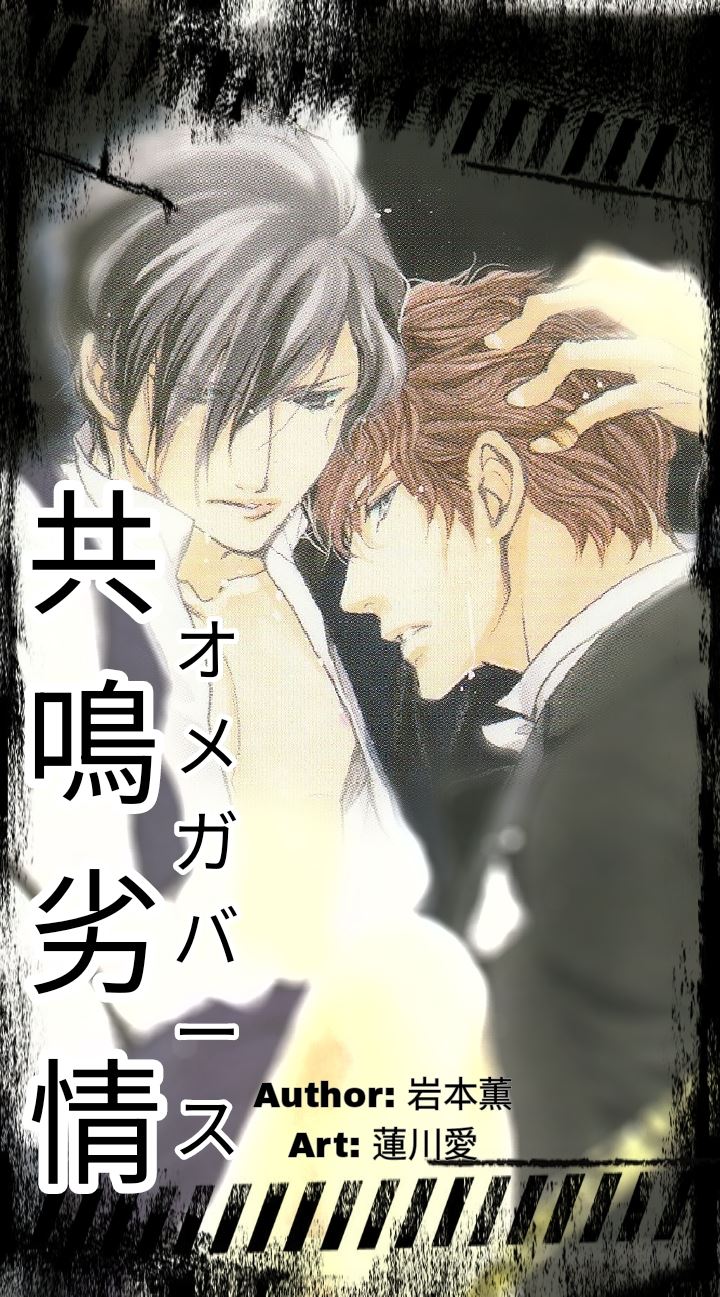
Honjou Amane lives as a detective in the Downtown East Police Station, having successfully concealed his true identity as a Stray Omega. Born in a red-light district to a Stray Omega mother who worked as a prostitute, Amane witnessed her murder when he was seven years old. The police dismissed her death as an accident, offering no justice for a marginalized woman. After his mother’s death, the brothel collapsed, and Amane fell into the slums, where he met a boy named Honjou Amane, his only friend. When his friend died of illness at age nine, Amane assumed his deceased friend’s identity and national ID number to escape the slums and survive. He educated himself, entered university, and became a police officer to protect other vulnerable Omegas from the systemic discrimination and violence they face. He takes suppressant pills to hide his Omega nature, living with the constant fear that his secret will be exposed, which would result in imprisonment and the loss of everything he has built.

Kariya Kouki, known publicly by his mother’s surname to distance himself from the elite Shutou family, is a Top Alpha and Amane’s new partner. Despite coming from one of the most prominent Alpha families, Kouki chose to become a detective rather than follow the corporate path expected of him. Their partnership begins with friction, as Amane resents Kouki’s privileged background and insists on maintaining strict physical distance due to the dangerous nature of their bond. They discover they are soulmates, a genetic connection that triggers a phenomenon called resonance heat. When they make physical contact during Amane’s heat cycle, they experience an uncontrollable surge of lust that overrides rational thought. Although they share this intense physical connection, Amane remains emotionally distant, refusing to let Kouki into his personal life or home. He views their bond as a risk to his carefully constructed cover rather than a romantic opportunity.

The central conflict arises when Kouki receives a call from his ex-girlfriend, Mizuki, an actress. She reveals that her junior, Aya, an Omega actress, died by suicide after being pregnant from a date rape six months prior. Mizuki claims Aya would not have killed herself and begs Kouki to investigate, as the police ruled the death a suicide without proper inquiry. Kouki agrees to look into the case privately, recognizing the systemic failure to protect Omegas. As he and Amane investigate Aya’s death, they uncover a network of powerful men who prey on vulnerable Omegas. The investigation forces Amane to confront the same dangers that killed his mother and threatened his friend. Kouki’s relentless pursuit of justice and his genuine care for Amane begin to challenge Amane’s belief that he must rely only on himself. However, Amane’s trauma and the perpetual threat of exposure keep him guarded, creating a tension between his growing feelings for Kouki and his need for self-preservation. The story follows their dual efforts to solve the murder while navigating the dangerous social hierarchy of the Omegaverse society.

Latest Release
DateGroupRelease
2026-09-26knoxt c72
2026-09-26knoxt c71
2026-09-26knoxt c70
2026-09-26knoxt c69
2026-09-26knoxt c68
2026-09-26knoxt c67
2026-09-26knoxt c66
2026-09-26knoxt c65
2026-09-26knoxt c64
2026-09-26knoxt c63
2026-09-26knoxt c62
2026-09-26knoxt c61

Community Reviews

Rating(3.9 / 5.0, 177votes)
5 stars
58(33%)
4 stars
51(29%)
3 stars
67(38%)
2 stars
1(1%)
1 stars
0(0%)

Popular reviews

... Read More
There's something quietly devastating about opening this chapter with 'It had been ten days since that day – a day that felt like a year's worth of trouble had been condensed into a single day.' Ten days. That's all it took to go from the worst moment of their lives to sitting in a car together, sun coming through the windshield, heading to pay respects. The drive scene hit me in the gut. Not because of drama or conflict but precisely because of how normal it feels. Amane's elbow on the open window, sea wind in his face, the summer weather after three days of rain. Life continuing. People healing. The prose is so simple here—it's not trying to make a point, it's just letting us exist in that moment. And then Kouki being openly mushy about his hero while Amane gives him 'a sidelong glare' that reads as fond rather than annoyed. When Kouki says 'That's creepy' and the narrator tells us his expression is 'dead serious, which hardly seemed like a joke'—that's the beat where I put the book down for a second just to breathe. They're okay. They're figuring it out. The ending with the sunflower garden and the daughter who's grown taller... it's tender without being saccharine.
... Read More
The pacing in these chapters is a masterclass in controlled escalation, and I have strong opinions about how the author manages reader engagement through structural choices. Let's break down the rhythm. The chapter opens IN MEDIO RES - we're already in the bathroom, already dressed (or attempting to dress), already anxious. No time wasted on exposition. The author drops us into the middle of a moment and makes us work to understand the context. This creates immediate investment because we're experiencing Amane's disorientation in real-time. The bathroom scene runs at intimate, claustrophobic pace. Short sentences. Quick exchanges. The tie-tying becomes this prolonged moment that could easily drag, but instead feels electric because every beat is weighted. The author uses sensory details - the sweet scent, the near-contact, the held breath - to stretch time subjectively while keeping the narrative moving forward. Then BAM - transition to the car. The pacing shifts dramatically. We get this sweeping panoramic description of the Shutou estate that serves as both breathing room and escalation. The author deliberately slows us down here, making us absorb the scale of what Amane is walking into. The tree-lined path, the various gardens, the annexe buildings - each detail adds to the sense of overwhelming scale. This structural choice is brilliant because it mirrors Amane's internal state. The tight bathroom = acute anxiety. The expansive estate = dread about what's ahead. The pacing controls the emotional temperature. And that final reveal - the white palace emerging from the trees - is perfectly timed. After all that driving, after all those descriptions, the destination finally appears. The author withholds the payoff just long enough to make it feel earned but not so long that we lose interest. The chapter ends on a visual note rather than dramatic action, which is an interesting structural choice. Instead of a cliffhanger line of dialogue, we get the image of that symmetrical white building. It's a pause button that says "the real test begins now" without saying it outright. This is how you control reader engagement - through deliberate pacing shifts that match emotional arcs.
... Read More
Okay so let's talk about Amane because THIS MAN is a whole project and I love him for it. His internal voice is UNFILTERED. He's thinking things like *'this smooth talker'* and *'seriously, could he be any more of an attention seeker?'* while simultaneously eating the burger Kouki got him that is literally perfectly customized to his exact preferences. The man is WRAPPED IN CONFUSION and he doesn't even know it. What I find genuinely fascinating is how Amane processes his growing dependence on Kouki. He RESISTS it. He clicks his tongue, he tells him to leave him alone, he throws the burger wrapper in the back seat like a petulant child - and then he immediately acknowledges their partnership because he KNOWS Kouki is frustrated. That's not coldness. That's someone who's terrified of needing another person but is too honest with himself to lie about it. Kouki, on the other hand, is this study in quiet persistence. He doesn't push aggressively - he just… stays. When Amane tells him not to come closer, he apologizes and backs off. But then he follows up with *'I'm worked up because if you deny that we're partners, my identity will collapse.'* That line hit me SO hard. It's vulnerability disguised as self-interest. He's basically saying *'I need you to need me'* without actually saying it. Their dynamic reminds me of two people who keep missing each other's signals - Amane shows care through action (accepting the burger, acknowledging the partnership) and Kouki shows it through words (the lecture, the confession). They're speaking different love languages and somehow it's working.
... Read More
Let's talk about how this book makes you FEEL places. Amane's apartment is rendered in this sparse, almost clinical way. The iron ladder. The loft sleeping area. The crumpled clothes. You can picture it—small, utilitarian, a person who doesn't stay long anywhere. But then you've got the poker room, which feels completely opposite: low tables, piles of chips, bodies leaning in, the charged atmosphere of men who think they own the space. These aren't just settings, they're psychological states. The most visceral moment for me was Kouki searching through those drawers. The physicality of it—fingers moving in the dark, the click of the lock, the heartbeat when he finds the shirt bundled in the corner of the loft. You're not reading about someone breaking into a house, you're IN that house with him. Every drawer pulled, every pocket checked, every second stretching. "His fingers brushed against something. Pulling it out of the pocket, his two fingers gripped a crumpled business card." Two fingers. That detail. The author could've just said he found the card, but no—we get the tactile specificity. This is how the world feels alive.
... Read More
This stretch moves beautifully between quiet brutality and sudden theatrical gestures. First, the slow burn of ignoring someone across shared space. Then the sharp dialogue—short, clipped, functional. Then the bow, which arrives like a drum hit. That rhythm works because the author lets silence do the heavy lifting before shattering it with physical action. The scene transitions are tight: bedroom to corridor to staircase to street to phone call, each step physically mirroring Amane's attempt to distance himself emotionally. Yet the emotional tether refuses to break. The pacing also plays with interruption—just as the relationship thread reaches its most exposed point, Kuroki steps in. That's classic narrative misdirection but executed cleanly. It raises questions: will the Aya case dominate? Will work become the excuse to keep them tethered? Will the partnership dissolve formally but remain personally entangled? My only critique is that I wish the internal monologue had lingered one beat longer after the twinge of pain. Sometimes the author favors forward momentum over lingering vulnerability, which is fine, but I wanted to sit in that moment a fraction longer. Still, this passage hooks hard. I'm already mentally re-reading it.
... Read More
Can we talk about Shinozaki's dialogue though, because this man is a villain-level conversationalist and I am HERE for it. "I admit, when I first heard from Kouki-sama that a colleague from the police would be attending the party, I had my concerns… But I see now that those concerns were unfounded. You are truly a striking individual." Read it again. He's saying "I thought you were trash, but you pass" in the most polite language ever invented. The way he packages prejudice in praise is actually frightening. And then he doubles down: "You're dressed so impeccably that you could hold your own even among the Alphas of high society. No one would ever suspect you were a police officer." That's not a compliment. That's a verdict. Shinozaki has assessed Amane, categorized him, filed him away, and pronounced him acceptable — all in three sentences. Kouki's voice is so different. His lines are warm, slightly naive, unselfconsciously generous. "This champagne is from a winery in our family's business network. It's delicious. I want you to enjoy the party, Honjou-san." He says this with what the text calls "a smile" — a genuine, earnest attempt at kindness that doesn't account for the power dynamics at play. The dialogue contrast between these two men in this one scene is doing so much thematic work. Amane barely speaks at all. Two short lines: "No, I'm good" and "Why are you pushing drinks on me?" He's the straight man in a comedy of manners, and that silence is its own kind of voice.
See all reviews

Custom lists

See all custom Lists