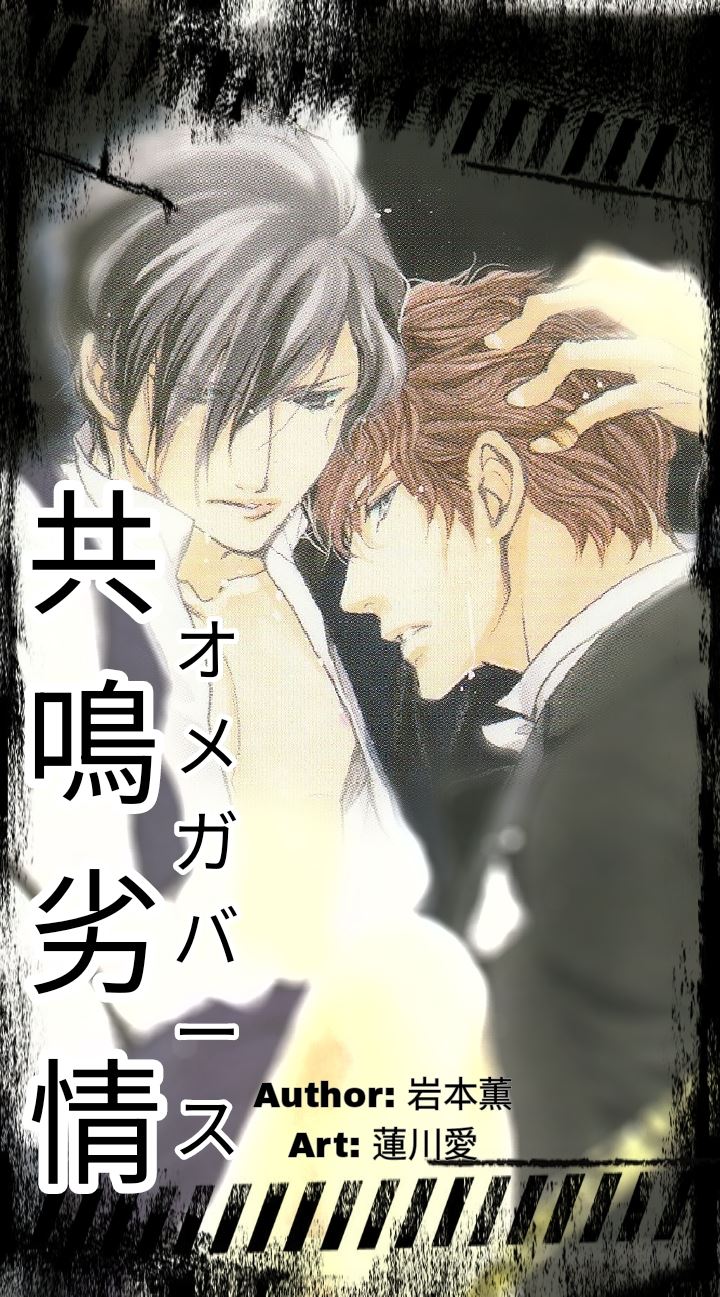
I have to discuss the dialogue in these chapters because the author's approach to conversation is refreshingly minimal and it works in their favor.
First, let's talk about Kouki's voice. When he speaks, it's usually short, controlled, almost formal. "Pardon my intrusion." "All done." "How does it look?" These aren't characters who fill silence with words. Kouki communicates through action and implication more than declaration. Even his most emotionally charged line - "I don't want to show this incredibly attractive version of you to any other Alpha" - is delivered as a murmur, almost reluctantly.
This restraint IS the character. An Alpha who doesn't need to announce his feelings because his presence announces them for him. The dialogue stays sparse because Kouki's power comes from what he doesn't say.
Now Amane's voice is different - more internally noisy, more self-deprecating. His dialogue often comes with qualifiers: "Well, it's fine, I guess." "Who knows?" He hedges, he deflects, he wraps his words in layers of misdirection. Even when he's being genuine, it's buried under performance.
But here's where the dialogue gets really interesting: the silences. The text is full of moments where characters DON'T speak. "There was a brief silence, as if Kouki was surprised by Amane's straightforward response." "Leaving behind Kouki with a conflicted expression." These narrative pauses carry as much weight as the spoken words.
The author also uses dialogue to reveal power dynamics. Notice how often Kouki asks questions? "Honjou-san... shall I help you?" "How does it look?" He's technically offering assistance, but he's also testing boundaries, gauging reactions. Amane's responses are usually shorter, more guarded. The verbal sparring reveals everything about their relationship without explicit exposition.
And that final exchange? Amane's wicked grin and deliberate provocation followed by Kouki's stalled response ("Well, I..-." / "-If he takes the bait") - this broken dialogue structure mimics the actual moment-to-moment of someone being flustered. The em-dash interruptions, the unfinished sentences - it's dialogue that feels lived-in rather than composed.
The author understands that sometimes the most powerful thing a character can do is fail to complete their thought.