Resonance Lust: Omegaverse - Reviews

Resonance Lust: Omegaverse
+Add to Custom List
Sort
Add review
... Read More
Okay, so let me just say it—Kouki is the most quietly impressive character in this entire scene. Watch what he does when Mizuki breaks down. He doesn't say much, he just takes out his notebook and pen at the start (which is such a small detail but tells you everything about his personality), then later he literally stops whatever he's doing, stands up, walks over, and says, "You were doing your best at a job that only you could do." That's it. Not some grand romantic gesture, just grounded, honest empathy. And then—he offers a handkerchief. When she refuses it and buries her face in his chest instead, he doesn't pull away. He lets her cry. The narrator even notes he decided it was better to let her cry freely. This is a man who knows exactly when to speak and when to just BE there. And then cut to Amane, sitting on the other side of the room watching this unfold and feeling this weird, suffocating emotion he can't even name. "Maybe it was annoyance? Perhaps suffocating?" THE TRANSLATOR'S NOTE SAYS "Stop hugging him" AND I AM HERE FOR IT 😭 But seriously, the contrast between these two men in this scene is everything. Kouki has history with Mizuki—they dated, he knows her vulnerability, he's one of the few people she can fall apart in front of. Amane is an outsider to that history but suddenly acutely aware of it. The author doesn't make Amane's jealousy dramatic or messy—it's described as this physical sensation, "damp cotton being forcefully stuffed down his throat." That's not rage, that's something more complex. Recognition. Insecurity. Care. He intellectually understands "that's all there was to it" and still can't control his emotions. This is going somewhere. What's fascinating is how the power dynamics shift here. Amane is presumably the prosecutor leading this investigation, Kouki is the police officer assisting, Mizuki is the witness and friend. But emotionally, Kouki holds all the cards in this moment because he has the history and the trust. Amane has... nothing. And the story makes you FEEL that nothing.
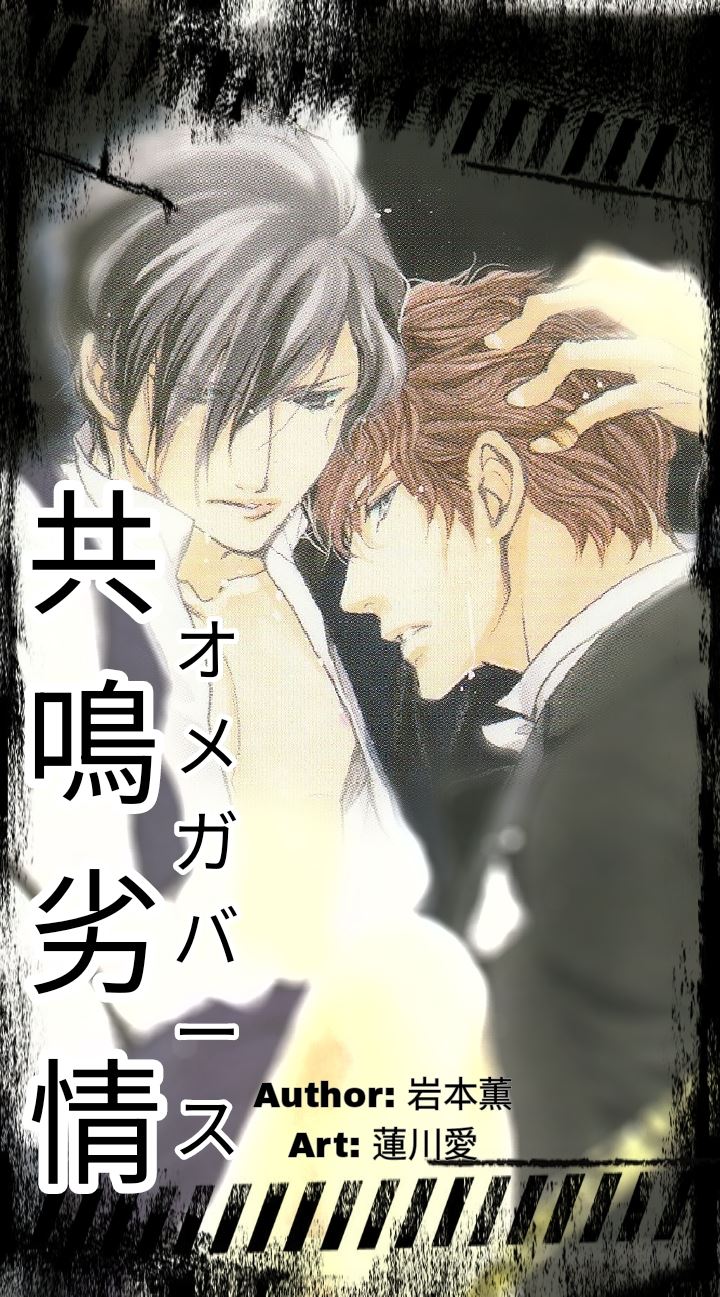
... Read More
So the apartment scene. I need to geek out about how the author uses space to tell us who Amane is without ever saying it outright. Concrete walls. Wooden ceiling. Dark aged floorboards. An iron ladder leading to a loft. A leather sofa, a wooden table, a stainless steel shelf—all from an antique store. That's it. That's the furniture list. Seven years in this place and it still feels like a holding pattern, not a home. The author even explicitly tells us WHY: he grew up in a brothel, then abandoned buildings in the slums, then a church dorm. He never had a normal family. So why would he care about interior decoration? This is worldbuilding through environment and it's SO effective. The building itself is described as 'old, somewhat run-down' but with 'individualistic residents who minded their own business'—which is exactly the kind of place Amane would gravitate toward. He wants to be left alone. He's comfortable in a space that asks nothing of him. And now Kouki is sitting in it, making it feel different just by existing there. The contrast between Amane's hollow, functional space and the emotional chaos about to unfold inside it is giving me chills.
... Read More
So let me just say this out loud: the entire plan to trap Kourogi feels like it was assembled in about five minutes and somehow nobody questioned whether it would actually work. Amane and Kouki find out the CEO is an Alpha, Kouki remembers his brother is throwing parties, and boom—suddenly they have a guest list? I know this is a fast-paced omegaverse thriller and I'm not here to pick apart legal procedure, but the ease with which they move from "how do we approach him" to "let's just invite ourselves to a shutou family party" is… aggressive. That said, the plot mechanics are doing something interesting here. The M-South Station closed Aya's case as suicide, but everyone in this story already knows suicide doesn't always mean suicide. The production company drinking party setup is the kind of classic nepotism cover that makes you want to throw the book across the room—and then immediately open it again. I appreciate that the author isn't treating the investigation as a side quest. Aya's death is the engine, and everything—every conversation, every alliance—is being pulled toward exposing whoever orchestrated that night. The twist about Kourogi being an Alpha landed for me because it reframes the whole power dynamic. This isn't just a corrupt CEO exploiting a young omega girl. This is an Alpha using his position within the very hierarchy that protects people like him. If Kouki is right about the caste system among Alphas, then Kourogi is climbing, and that makes him both dangerous and desperate—which means he's unpredictable. I don't trust easy plans when the target is that kind of person.
... Read More
What gets me about this passage is how the personal and the systemic collide without the characters even realizing it. On the surface, the external conflict is clear: someone spiked Omegas with a rape drug, Aya died, and now they're going to interrogate Mizuki. But the REAL stakes are buried underneath. Amane's entire motivation is built on the foundation of Aya's death—people like her get silenced, their deaths dismissed, their bodies treated as evidence of their own provocation. The stakes aren't just 'catch the criminal,' they're 'prove that an Omega's life mattered.' And Kouki? He's caught between his professional duty and his personal history with Mizuki. What happens if the interrogation reveals something that implicates someone he cares about? What happens if the drug ring connects back to the kind of people who live in towers like this one? Every conversation in this chapter is a landmine waiting to detonate. Mizuki's casual hospitality, the dog's excited greeting, the panoramic city view below—all of it sits on top of a foundation of violence against people who can't fight back. And we haven't even reached the interrogation yet.
... Read More
I'm gonna be real — I went into this expecting Kouki to be the stock cool Alpha love interest. You know the type: handsome, skilled, quietly devoted, zero personality quirks. But he's not. He has moments where he actually sounds like a person. Take the shoulder throw sequence. No dramatic monologue, no heroic speech. Just: he hears the struggle, he assesses, he moves. His dialogue after is short and functional — "Are you okay?" "Understood." "Honjou-san." — but the subtext does the work. He's checking on Amane while simultaneously handling a criminal. That's competence as character. But then there's the scene where Amane is staring at his hand and Kouki notices. Instead of being smug about it or making a joke, he crouches down and whispers that line about the heat. Soft. Patient. Like he's been having this conversation in his head a hundred times and has finally found the right words. Yukari's dialogue is even more interesting. "Kou-chan, run!" — that's it. No explanation, no elaborate plea. Just a desperate scream from someone who knows exactly what's at stake. And then the wailing when she realizes it's over. The shift from command to collapse tells you everything about her emotional state without a single descriptive sentence. Amane's internal monologue carries the heaviest voice, and it's consistently sharp and self-aware. He's observing, analyzing, and occasionally terrified of his own reactions. The narrative voice never loses that edge of someone who's trying to stay rational in a situation that keeps demanding he feel things he'd rather not feel. Nobody's voice blends into anyone else's. That's rare and I appreciate it.
... Read More
'Are you out of mind? I can't believe you want to break up!' — first time I read this I rolled my eyes so hard. Mizuki seemed like nothing but a spoiled ex who deserved whatever came to her. But then she calls about Aya and everything shifts. Her dialogue goes from loud and demanding to 'unusually low voice' and the text doesn't even give us her words, just the QUALITY of her voice. The author is telling us through narrative that THIS is a different Mizuki. The actress who knows how to perform every emotion is stripped of her performance. Kouki's dialogue throughout is so restrained. Even when he's internally screaming about Amane, his external voice is flat: 'I told you not to contact me while I'm working, didn't I?' Cold. Controlled. But the narration underneath is a disaster zone. That contrast IS his voice—he's the type who feels everything but shows nothing. And Amane's one line in this section: 'I only trust myself. Let me make this clear one more time. Don't touch me. Got it?' Three sentences. Three rejections. The cadence is perfect—short, sharp, final. It sounds like someone who has said this exact thing many times before and is running out of patience. The subtext is screaming: 'I am terrified and if I let you in I will die.' The translator's notes are also doing such interesting work here. '-K' injecting their own opinions ('Ugh. How convenient...') adds this layer of meta-commentary that makes the reading experience feel more like chatting with a friend who's equally invested.
... Read More
Let's talk about stakes because this story understands them on a visceral level. Amane starts with absolutely nothing—no parents, no home, no status, and he's a Stray Omega in a world that treats people like him as disposable. The police dismiss his mother's murder with zero effort. The brothel owner flees overnight. Society has already written him off before he's even seven years old. In the slums, the conflict isn't abstract. It's "eat or don't eat." The caste system among the orphans itself mirrors the wider world—he has to climb just to survive, and his advantage is something as quiet as literacy. That's the genius of how the author frames the conflict: the things that matter most aren't muscles or fighting skill, they're intellectual and strategic. "It made more sense to form a plan, assign roles, and work as a team—it was far more efficient." But what really raises the stakes is the emotional layer. Amane's entire motivation isn't just survival—it's *not becoming his mother*. He refuses the only path society offers him. That adds a psychological tension on top of the physical one. Every choice he makes is weighted with the fear of repeating her fate. And now K is in the picture—a fellow survivor who protects the physically weaker Amane while sharing his food. Two guys who've lost everything, building something together in the ruins. The stakes just got personal.
... Read More
Okay so the double-layer plot in these chapters is genuinely brilliant and I need to talk about it. On the surface you've got Kouki breaking into Amane's apartment like some rom-com standby—the awkward lockpicking, the search, the relief when he finds the business card. Simple, right? Wrong. Because simultaneously, in a completely different thread, Amane is playing a high-stakes poker game with men who already demonstrated they'd drug and rape someone for entertainment. And the poker game isn't a poker game. It's an intelligence operation. "I'm the one who got Kourogi's contact information." This line hits different when you realize it echoes through both storylines. Amane obtained something valuable, and now Kouki is going to dangerous lengths to access it. Two characters, same mission, different approach. And that hand reveal—four aces versus a royal straight flush—I literally gasped. The author sets you up to think Amane won comfortably, then flips it so brutally you forget to breathe. What does this mean for his next move? What was he actually planning? The plot doesn't just move forward, it spirals.
... Read More
The bathroom scene is visceral and deliberately uncomfortable. Wet hair, cleaning fluids, clothes still smelling of sex, the glass stall trapping heat and intimacy like a terrarium. That image—scraping out semen, the impossibility of removing it entirely—is almost grotesque in its honesty. Then the hallway reverses it completely: marble steps, crimson carpet, arched double doors, crisp formal architecture that contrasts with the sticky aftermath of the night before. The setting does so much emotional labor here. You can feel the transition from private vulnerability to public performance. Even the cigarette matters—Amane lighting Odagiri's old oil lighter, the smoke curling in a non-smoking room, that small act of defiance against order mirrors how his body betrayed him last night. The world feels lived-in because the objects carry history: the card from the Shutou family party, the damp business paper in his pocket, the heavier implication of a hierarchy where alphas and omegas negotiate power through bows and glances and pheromones. It's not just genre dressing; it's structural. The atmosphere keeps pressing in until the final line, where footsteps echo and Kuroki materializes like an editor slicing through the mood. You can practically hear the door click.
... Read More
'Your possessive puppy won't let go that easily, Honjou-san.' That translator note haunts me because it frames everything Kouki is doing. Is this loyalty, obsession, remorse, or some hybrid we haven't named yet? Look at the posture: arms pressed to his sides, body bent at a perfect right angle, head bowed low. That isn't casual apology behavior. That's ritual. That's someone performing submission to preserve a bond they're terrified of losing. Meanwhile, Amane says he wants to be a lone wolf and claims he has no reason to accept Kouki's clothes back, but watch how he still notices the damp card, still texts Kourogi, still hedges with 'Alright, Aya's case will be the last one.' He's building exits even as he agrees. That's the core tension right there: Amane's pride is a wall, Kouki's need is a battering ram. And neither of them can stop. What's weird is that the scene doesn't end with romance; it ends with work. The professionalism is the cage they both pretend keeps them safe. I keep wondering which one of them will break first—Amane's control or Kouki's pleading. Also, is Kouki actually sorry for touching him, or sorry for getting caught? The text leaves that blurry on purpose, and I respect it.
... Read More
This party scene is such a masterclass in atmospheric worldbuilding. The author doesn't just describe a fancy event—they make you feel the weight of every crystal glass, the tightness of every collar, the performative laughter hanging in the air like perfume. Amane slipping behind a large vase filled with flowers is such a perfect image: he's literally framing himself against beauty while trying to disappear. The olfactory detail matters too—the smell of champagne, the subtle scent of anxiety and ambition. And the eavesdropping snippets are brutal in their honesty: Omegas talking about maintenance work, soulmate dreams, lineage obsession. It's a microcosm of the entire society's dysfunction. What strikes me is how the setting mirrors Amane's internal state. He's surrounded by opulence but feels like an intruder, watching everyone else perform their roles effortlessly while he's stuck in a costume. The description of Kouki glowing, radiating a 'bright, positive, powerful aura' is visually stunning—it's like the room itself bends toward him, and Amane can't help but watch. But then there's the contrast: the non-smoking hall forcing Amane to drink champagne, the billiard room designated for smoking like some secret society rule. Every environmental detail reinforces the theme of boundaries—where people are allowed to be, what they're permitted to want, how they're policed by invisible lines. The author never tells us this is a dystopian omegaverse society; we infer it from the way guests discuss lineage and soulmate genetics like it's common knowledge. That's smart worldbuilding.
... Read More
Let's talk about Kouki because THIS man is a fascinating disaster. On one hand, he's literally the prince of a bloodline-obsessed Alpha family that treats Omegas like breeding stock. That's not even a metaphor — the text says it straight: "he'd take the kid and keep the Omega as a lifelong mistress. Meanwhile, the marriage partner would be chosen from a prestigious Alpha family." He grew up in this. This is his normal. On the other hand, he's trying to CHANGE all of that. With his brother. Specifically for Amane. He says "I truly want to make you, my soulmate, happy" and it genuinely sounds like he means it. Not a line. Not manipulation. He actually believes he can do this. And that's what makes him so compelling and so frustrating. He's not evil. He's just… born into an ecosystem of oppression and now he's trying to swim upstream while everyone around him is telling him this is just how things work. Amane sees right through him though and that's the tragedy. Amane literally says: "The intense bond they shared was only temporary. Once the heat passed, the cold, harsh reality between them—an insurmountable divide—would still remain." Can you blame him? No. Can I still feel bad for both of them? Also yes. The moment where Kouki grabs Amane's arm and deliberately triggers the resonance — I initially read this as violent and I still think that's a valid reading — but then the text also frames it as him having been HOLDING BACK this whole time. Like he's been restraining himself physically AND emotionally and something just snapped. Is that excuse or explanation? Maybe both. The narrator describes him as "a pure-blooded Alpha… despite his well-trained guise of a police dog, his true nature is that of a wild carnivore with fangs hidden" and honestly that comparison is SO GOOD. It captures everything about Kouki — the discipline, the training, the performance of civility masking something much more primal underneath. But here's what's bothering me: is Amane wrong about him? Because if Kouki genuinely wants to change the Shutou family from within, and he's being sincere about his feelings… does Amane's skepticism become its own kind of injustice? Or is the author warning us that believing in good intentions is exactly how Omegas get hurt? I have so many questions. Please discuss.

Leave a comment

You must be logged in to leave comments. or
