Resonance Lust: Omegaverse - Reviews

Resonance Lust: Omegaverse
+Add to Custom List
Sort
Add review
... Read More
Can we just talk about the STAKES here for a second? Because this isn't just some fluffy omegaverse trope exercise—the author has built this into something genuinely tense. Amane is on the pill. The pill doesn't work on alpha-types apparently. He has exactly one week before his resonance heat makes him completely vulnerable, and his partner—the guy he's closest to—is sitting across from him drinking bad instant coffee, looking at him with those puppy-dog eyes, completely unaware that every second of proximity is making it harder for Amane to maintain his dignity. Meanwhile they're investigating a murder. A woman named Aya who was found dead, and the police called it a suicide but these two know better. So the external stakes (solving a murder, risking disciplinary action by digging into a closed case) are running parallel to the internal stakes (Amane trying not to lose control around the man he's developing feelings for). If either thread snaps, everything falls apart. And the worst part? Neither of them can afford to lose control. Not with the case. Not with each other. The tension isn't just romantic—it's existential. What happens if Amane can't hold it together long enough to solve the case? What happens if Kouki pushes too hard and loses him forever?
... Read More
There's this one detail that I can't stop thinking about—the description of the criminal investigation department floor. Three rows of desks, eight seats each, most of them empty because officers are always out on cases. It's such a small thing, right? Two sentences. But it immediately puts me inside that building. I can see the fluorescent lights probably buzzing overhead, the worn chairs, the half-empty coffee cups left by officers who never sit still. This is a workplace where people are barely present, running on adrenaline and caffeine. It feels lived-in. Then there's the rooftop scene from their first meeting, which the text flashes back to. Amane sleeping during work hours, blowing cigarette smoke in Kouki's face, calling him 'well-bred' with this sneer. The image is so vividly mean—it's almost cinematic. You can picture the wind, the smoke curling between them, Kouki's stunned silence against this chaotic, beautiful disaster of a man. The rooftop became their origin point and it's full of such specific texture. The red-light district setting for their first real case together is another place that really sticks with me. A mysterious death of a male prostitute. Amane 'bravely plunging into deep areas.' The contrast between his delinquent exterior and his willingness to get his hands dirty in places most people wouldn't go—it paints this whole world where the underbelly of society is just part of their daily commute. The Omegaverse setting itself adds another dimension to the worldbuilding: Upper Hills versus Strays, Betas disguising as Omegas, the social hierarchy woven into the police force itself. Onizuka casually mentioning that Kouki is an Alpha who grew up in Upper Hills but deliberately associates with Omegas? That tells us so much about the social landscape in three lines. The world feels like it has weight and history, not just genre wallpaper.
... Read More
There are so many symbols stacked in these chapters I barely know where to start. The TRUE NAME thing is the big one, obviously. In this universe, knowing someone's true name seems to carry weight—spiritual, magical, intimate. Kouki treating it as a thread of hope ('Am I the only one who knows this name of yours?') is him grasping at a symbol of ownership and connection in a world where he has neither. But Amane's casual response reveals the cruelty of it: to Amane, it's just practical. 'You're my partner, after all.' The name isn't sacred to him—it's just information shared between coworkers. The asymmetry of meaning is devastating. Then there's water. Bathwater. Aya drowned in a bath after taking sleeping pills. Water as both comfort and death. Amane's Omega biology involves heats, resonance, bodily fluids and pheromones—all fluid, liquid, permeable states. His body is constantly betraying him with need. And Kouki watches him 'exuding Omega pheromones to seduce a security guard' and his 'mind feel like it was about to explode.' The imagery of water and flooding and losing control runs through everything. And the most potent symbol: visibility. Aya wanted to be 'credited first in the cast.' Amane is a Stray Omega who must remain invisible to survive. Kouki is the youngest son of the Shutou family, photographed constantly, his identity obscured for 'civilian' reasons. Everyone in this story is fighting to either be seen or to disappear, and none of them get what they want. The story isn't really about soulmates. It's about who gets to exist openly and who has to hide—and what happens when hiding becomes impossible.
... Read More
Let me just say this: the pacing in this chapter is IMPECCABLE and I am here for it. The author opens with what could have been a throwaway comedy beat - the burger, the lecture, the tongue clicking - and slowly, WITHOUT us noticing, builds it into one of the most emotionally charged scenes in the entire story. By the time Kouki drops *'my identity will collapse,'* I was NOT READY. One minute they're bickering like an old married couple and the next I'm staring at my phone going *what just happened.* Then the author completely pivots into procedural mode with the case details. For a moment I thought we were losing momentum, but that's the trick - the clinical, almost detached writing about the murder and the suspect creates a pressure cooker environment. We KNOW something is going to explode, and the longer the author stretches out the stakeout footage, the more tense we become. The chapter structure itself mirrors the narrative: it starts relaxed and conversational, builds to an emotional peak in the middle, then pulls back to let us breathe before dangling that hook about Yukari disappearing. Three beats - comfortable, vulnerable, ominous - and it all fits in roughly 3000 words. What really sells it is that the author never lets the case overshadow the relationship, and never lets the relationship slow down the plot. They feed each other. The stakeout is boring by design, which makes every small interaction between Amane and Kouki feel significant. We're meant to feel the weight of those three days spent together in that van. I stayed up way too late reading this and I have zero regrets.
... Read More
Okay so this chapter did something I didn't expect. It split into two completely parallel tracks — Kouki having a full emotional breakdown in the hallway, and Amane silently preparing spy gear like some kind of ghost. Both are reacting to the SAME situation (Aya's case), but in opposite directions. Kouki is drowning in feelings of rejection; Amane is weaponizing distance. And here's what got me: Amane HEARS Kouki's voicemails but DELETEs them. That's not just busy — that's a deliberate choice to cut off connection. Meanwhile Kouki is like "I'll help with the paperwork" thinking it'll bring Amane closer. The dramatic irony is brutal. Also the subplot with Seo is clever worldbuilding through conflict — Amane's chronic paperwork neglect putting him at risk of suspension creates real stakes. It's not just romantic tension; his job is literally on the line. What happens if he gets suspended and can't investigate anymore? That adds another layer to why he's running so hard toward danger. And the ending of this batch where Amane arrives early with a camera in his ear cuff... I'm fully invested now. This isn't a slow-burn romance, this is two people hurtling toward the same catastrophe from opposite directions.
... Read More
Okay so Amane is SO proud here and it is honestly painful to watch. He deliberately ignored Kouki's messages, charged in alone like some kind of action hero, got himself drugged and locked in a room — and then immediately realizes it was all his fault. The plot twist isn't some big reveal, it's just the quiet devastating realization that his pride cost him everything. He thought he could handle three Alphas solo. Hah. The structure of this chapter is fascinating because it almost plays out backwards in terms of tension. It starts with him waking up already trapped — we're dropped into the aftermath first — then peels back why he got there through his internal monologue. So we know the outcome before we feel the build-up, which makes everything hit harder. He's not running from danger; he's already inside it, and the dread just keeps stacking. And then the kicker — he actually thinks Kouki might show up? After ignoring every single message? The delusion of hope is what breaks me. When the door opens and it's NOT Kouki but three strangers who immediately zero in on his weakened state... that's not just a cliffhanger, that's a emotional gut punch wrapped in a plot trap. He dug this grave himself and now he's lying in it.
... Read More
I need to discuss the absolute BRUTALITY of the translator's note sandwiched between these chapters. We close chapter 50 with Amane agreeing to go to this VIP drinking party—with the translator literally screaming DON'T GO ALONE, HONJOU-SAN—and then we cut to Kouki at work. And I thought, okay, this is a reprieve, this is a moment to breathe, let's see what's happening on the investigation side. No. Absolutely not. Because what we get instead is Kouki being the MOST competent person in the room—thirty minutes, perfect work, zero errors, his supervisor literally praising him—while internally he is ABSOLUTELY FALLING APART. The pacing here is GENIUS because it mirrors how real anxiety works. You perform at maximum efficiency on the outside while everything is burning down inside. He smiles brightly. He says thank you. He excuses himself politely. And the moment he's alone in the hallway? Phone out, calling Amane, watching the numbers tick up. Seven. Eight. Nine. Twelve. And then—THE SEARCH. The chapter doesn't let up. Rooftop. Basement. Asking colleagues. Walking back to the second floor. Each location is another beat of mounting dread, and the author strings them together like a slow countdown to an explosion that hasn't happened yet. Then chapter 52 drops us right into the aftermath of Kouki's desperate plea, with the narrator casually mentioning 'still, lowering his pride and bowing seemed to work' like this is normal, like this is fine, like Amane actually agreed to stay after seeing someone beg. The pacing across these chapters is deliberately suffocating. We're given moments of false relief—Kouki doing good work, Kourogi being manipulative but harmless in conversation—and then WHAM, right back into the emotional gut-punch. I physically could not put this down. I stayed up way too late reading and I have zero regrets except that I don't know what's going to happen next.
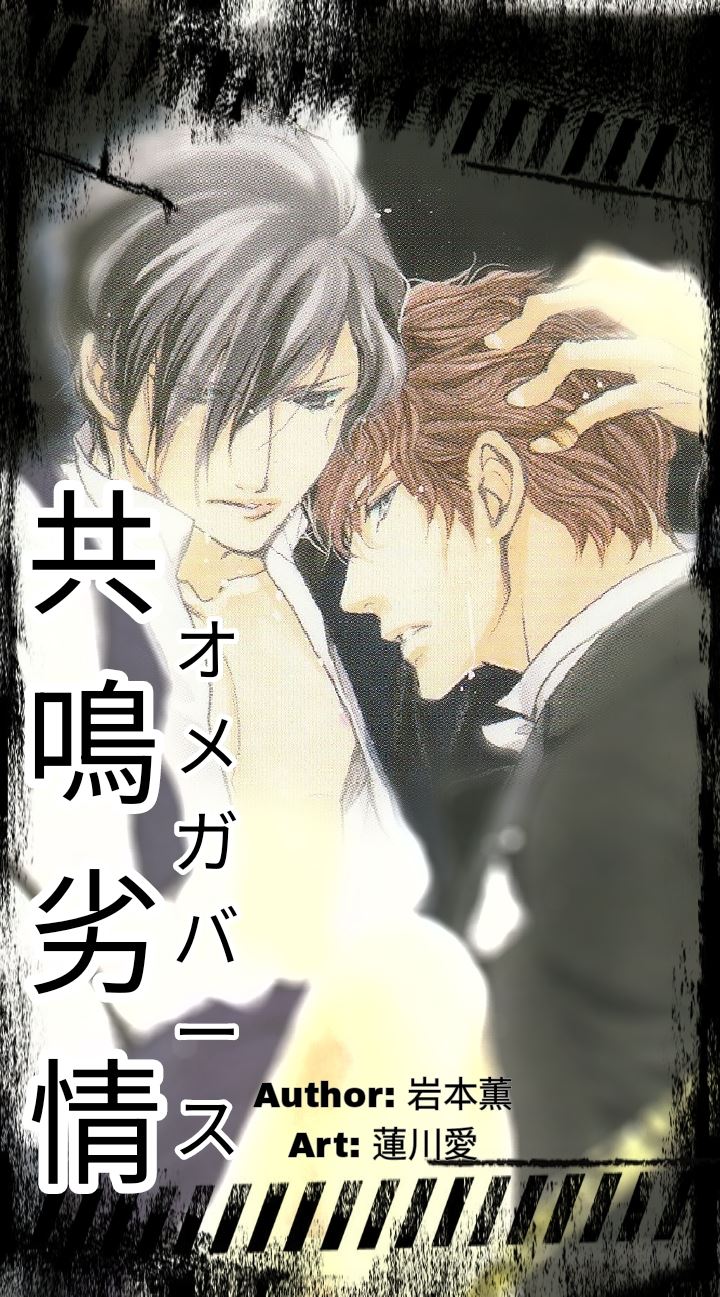
... Read More
I need to talk about the dialogue in these chapters because it is EXCEPTIONAL and the author deserves serious credit. Amane's lines are so sharp they could cut glass. When he says "Is this your intention of charity? Is this noblesse oblige?" — that's not just dialogue, that's a surgical strike. Two questions in a row, both loaded with contempt, both pointing at the exact same hypocrisy from different angles. That's a character who thinks in complete sentences even when he's terrified. His internal monologue is even better. Things like "Step aside. I'm going back." and "Just get out of the way!" — short, brutal, clipped. This is a man who has decided he is done with this conversation and he is not interested in being persuaded otherwise. His voice carries the weight of someone who has been hurt by soft words before. Compare that to Kouki's voice and you get this incredible contrast. Kouki pleads. "How can I make you believe me?" — that sentence structure is interesting. It's not "Make me believe you." It's "How can I make YOU believe ME?" The grammar reveals his desperation. He's not asking for forgiveness, he's asking for proof that his sincerity can translate across whatever gap exists between them. The narrative voice is also doing something clever here. It switches between third-person limited (mostly anchored to Amane's perspective) and these little bursts of raw internal thought marked with parentheses. Things like (My breath is hot… My body is hot… My lower abdomen is hot…) — the repetition of "hot" three times in three parallel clauses, each more specific than the last, tracing a line from general fever to sexual arousal. That's not accidental writing. That's craft. And then there's the translator's note that breaks the fourth wall entirely: "Haa… It's so frustrating…" which is honestly the reader's voice speaking through the translation. It's a small thing but it creates this intimate feeling — like someone sitting next to you whispering "I know right?" One line that absolutely made me pause: "With a pained expression, Kouki pleaded." The parenthetical stage direction embedded in narration. It's almost cinematic. I could SEE the actor's face. That's a choice that could go either way — it could feel amateurish in the wrong hands — but here it works because it keeps us grounded in the physical reality of the scene even as the emotional subtext runs deep.
... Read More
What I love about this novel is how it uses the Omegaverse setting not just as romance fodder but as a genuine metaphor for systemic oppression and class inequality. The pheromone control angle is fascinating because it's basically about bodily autonomy—or the lack thereof. Amane's incomplete ability to control his pheromones represents this fragile, half-built hope that maybe in the future Omegas could rise up and stop being vulnerable. But right now? His ability only exists so he can seduce people. It's a broken tool in a broken system. The fact that he has to use it 'sparingly and only during his heat cycle' makes it clear this isn't empowerment—it's survival tactics disguised as choice. The parties hosted by Kouki's brother are this perfect microcosm of how the wealthy use Omegas as commodities. Collecting beautiful Omegas, looking for 'soulmates' but probably not planning any real responsibility afterward. Amane calling this out when Kouki tries to talk about equality is the thematic core of the entire chapter. You can't talk about wanting a world without segregation when your own family is participating in the most blatant form of Omega exploitation. There's also this recurring motif of bodies being used—Amane's body as bait, Kourogi's hands all over him, the imagined future of Omegas becoming police officers and doctors. It's all connected. The question the story keeps asking is: who gets to control their own body, and who gets to decide what your body is for? The ending where Kouki says 'What matters more is the future, which is still uncertain' feels almost ironic given how constrained Amane's future currently is. But maybe that's the point. Maybe the future really is uncertain, and these two are fighting to make it better even when they can't see how yet.
... Read More
I need to talk about this scene because my chest physically ached reading it. Mizuki pouring out Aya's story is already devastating—you know the translator's note said she's emotional about this case and SAME. But then Mizuki hits that line: "If I... if I had just listened properly... it wouldn't have come to this." AND SHE STARTS CRYING AND COULDN'T STOP. Here's what wrecked me most: Kouki offering the handkerchief. A pure white handkerchief from his jacket pocket. This man is composed, collected, always has his notebook ready—he notices everything. And in that moment, his instinct isn't to fix it, isn't to say the right thing, it's literally just to offer something practical. A handkerchief. And when she doesn't take it and instead collapses into his chest? Chef's kiss. Not romantic in a cheesy way, but in a "these two people have history and he knows exactly how to hold someone without trying to solve them" way. Meanwhile Amane is three feet away feeling like he's drowning and the author has the audacity to make it look almost funny because it's SO real. "Annoyance? Perhaps suffocating?" Like bro, it's called jealousy and you've never felt it before apparently. The translator literally wrote "I understand you're sad, girl. I'm sad and angry too over Aya's death. But that man got his honey right next to him. Stop hugging him." and I wheezed. The fangirl energy in these translator notes is unmatched and also accurate. Also can we appreciate Anzu the cat? She goes from sleeping peacefully to worriedly whining to licking Mizuki's tear-stained hands. ANIMALS KNOW. The little details make this scene feel so lived-in.
... Read More
The pacing here is doing a lot of smart things. Chapter 3 opens with Amane's first-person narration—a childhood memory, almost idyllic, reading books, feeling safe. The prose is warm and unhurried. Then chapter 4 pivots hard into the violence of reality without warning. That structural choice mirrors exactly what happened to Amane: one day everything's fine, the next your world ends. The author makes you *feel* that disorientation rather than just telling us about it. The transition from 1st person to 3rd person POV is marked clearly but smoothly, and the translator's note about Japanese naming conventions actually helps rather than hindering—the text itself is clear enough that the note just reassures you you're on the right track. One thing I want to call out: the section where Amane organizes the orphans feels like it skips forward in time in a satisfying way. Instead of showing every brutal day of his survival, we get the result—twenty kids, a system, shared meals. It respects the reader's intelligence. The chapters end with small hooks rather than dramatic cliffhangers though, which suits the tone. This isn't a thriller pacing—it's more of a character-driven drift that pulls you in through emotional gravity. And it works.
... Read More
I want to talk about how the author layers the external investigation with the internal tension, because it's genuinely well-crafted. On the surface, this is a procedural - a man killed another man over a parking dispute, the suspect is on the run, and our detectives are playing whack-a-mole trying to track him down. The suspect Kouji Nitta has no money, no cards, nowhere obvious to hide. That creates this ticking clock vibe - he's going to make a move soon, and when he does, it won't be pretty. But the REAL stakes are sitting in that van between two men who haven't figured out what they are. Amane's entire arc here is about whether he'll allow himself to have a partner - someone to rely on, someone who knows him. The case itself becomes a mirror for their investigation: they're both circling something, waiting for the right moment to move in. The author is brilliant about maintaining tension on both fronts simultaneously. We get these cold, clinical details about the crime scene and the suspect's financial situation that make the case feel urgent and real, and then we cut back to Amane and Kouki bickering about fast food and relationship labels. The contrast actually HEIGHTENS both. The mundane stakeout boredom makes the romantic tension feel more electric by comparison. And that ending - Yukari hasn't come home since 3 AM, the suspect is probably running out of options. Something's about to happen. The author knows exactly when to tighten the screw and I am fully invested in finding out what happens next.

Leave a comment

You must be logged in to leave comments. or
