Resonance Lust: Omegaverse - Reviews

Resonance Lust: Omegaverse
+Add to Custom List
Sort
Add review
... Read More
Let's talk about that image of Aya in the bathtub. Foamy water in her lungs. No struggle. No fingerprints but her own. The author keeps coming back to this clinical, almost medical description—and then contrasts it with the raw human tragedy underneath. She was six months pregnant. She wanted this child. She was *beginning to recognize herself as a mother* and chose to end it all? That's the central question, isn't it? And the symbolism keeps building. The handkerchief Mizuki presses to her eyes—trying to wipe away tears, trying to stay composed. Then she clutches Anzu, the dog, like a lifeline. The dog becomes this symbol of unconditional love, the only thing that doesn't judge or abandon. Anzu sniffing at Mizuki's feet while she breaks down—there's something profoundly tender there. And the apartment itself. Rented by the production company. A dormitory for an actress on leave. The walls are thin enough that neighbors heard nothing. This isolation mirrors Aya's emotional state—cut off from her industry, from her manager (who abandoned her), from any real support system. She was alone with her pregnancy and her trauma and her grief. The sleeping pills are another symbol. "No over-the-counter sleeping pills listed among her belongings." Was she prescribed something? Seeing a psychiatrist? The author leaves this deliberately ambiguous—it forces us to question whether Aya sought help and didn't get it, or whether she was hiding her struggles even from herself. Then there's Amane's cigarette. The oil lighter. The smoke exhaling out the window. This is his ritual, his moment of composure, his way of creating distance between himself and the emotional weight of the case. He *cannot* engage with this on a personal level—not yet. But the narration keeps undermining him: "There's no way this top-tier Alpha would understand his empathy for the unfortunate Omega." Empathy. That's the theme lurking beneath everything. Aya couldn't get empathy from her industry. Mizuki is fighting to get empathy for her friend's memory. Amane claims not to care but keeps having these moments of genuine feeling he won't name. And Kouki's confession—"You are my soulmate"—that's empathy and connection finally breaking through. The author is asking: what does it cost us to keep our walls up? What does Aya lose because no one showed up? What might Amane lose if he never lets someone in?
... Read More
"So even among Alphas, there's a kind of caste system?" "…Yes, that's right." This conversation between Amane and Kouki is doing so much heavy lifting. On the surface it's worldbuilding—explaining that even at the top of the omegaverse food chain, there are ranks, distinctions, people who belong and people who don't. But it's also the story's thesis statement about power, legitimacy, and who gets to sit at the table. Kourogi is the embodiment of this theme. He graduated, got a master's degree, worked at a major advertising agency, and built his own company. He's self-made. And yet he's not from a family known in Alpha social circles. He's an Alpha who can never quite be an Alpha in the way the Shutou family is. That's why the party invitation works—he can't resist. Every opportunity to close the gap between where he is and where he wants to be is an opportunity he'll grab, no matter the risk. Amane's black suit works the same way symbolically. It's versatile, it's formal, it's what you wear when you need to be taken seriously. But he only owns one, and he's only worn it once. It's a costume he bought because someone told him adults wear costumes to adult events. The suit doesn't fit him the way Kouki's custom tailoring fits—that's the whole point. He's performing respectability in clothing that was never made for his body.
... Read More
Okay, I need to talk about the entire emotional architecture of this arc because it completely wrecked me. The 'no touching' condition that Amane set? I know the author put that there for a reason—forced proximity, denied desire, all the tropes—but watching Kouki endure it? Christ. He literally couldn't touch his soulmate even though he was right next to him every single day. And then today his limiter finally broke. I was sitting there like 'yes, finally' but also my heart was absolutely shattered for both of them. The way Kouki confesses 'I love you' for the first time and then gets rejected with that cold 'we're both free' line—I nearly threw my phone across the room. But what killed me was the fact that he NEVER GAVE UP. Even after that rejection, even after being treated like garbage, he stayed. He watched Amane from afar. He dreamed about holding him. The devotion was almost uncomfortable how intense it was. And then Amane letting Kourogi hold his hand while telling Kouki to stay away?! I lost it. I genuinely screamed at my screen. That scene where Kouki finds them at the box sofa and Kourogi is gazing at Amane like he's some kind of obsession—I felt his jealousy so viscerally I could taste it. The fact that Amane uses his pheromones as a weapon and then lets another man get close to him? That's not betrayal, that's something messier, something angsty that made me want to shake both of them. The translator literally wrote 'this part is kinda dub con, I know… But it's still hot.' and I was over here like 'YES THE TENSION IS DELICIOUS.' The emotional manipulation, the power dynamics, the fact that Amane knows exactly how to wound Kouki but also can't stop him—this is peak omegaverse angst and I am here for every second of it.
... Read More
Every object in this passage seems to carry weight. The spilled champagne isn't just a plot device; it's a symbol of shattered facades, of control lost and regained through表演. The garden beyond the terrace—a beautiful, walled space—mirrors Amane's own curated existence: picturesque on the outside, but closed off, manicured, dangerous. And those pheromones? They're the ultimate symbol of hidden truth. What you feel can't be lied about, even when your words are. The whole theme of "secret-keeping" runs through this like a vein. Odagiri kept one for years. Amane carries his. Now he's using secrets as weapons. The anniversary reminder ties it together: memory as both anchor and burden. The story isn't just about an Omega pretending to be something else; it's about how much of ourselves we hide, how long we can keep pretending, and what happens when the past refuses to stay buried. It's messy, it's human, and it's haunting.
... Read More
I need to talk about this paragraph because it destroyed me: "Even after sharing an intimate connection—melding their bodies and desires together—there were still insurmountable boundaries that existed in this world between the two of them." WHAT. THE. FUCK. They have already physically and emotionally merged at the most fundamental level possible, and here we are, standing at the threshold of a ballroom, and Amane is STILL afraid. Not of the people inside. Not of danger. Just... of entering a space that was never designed for him. The omegaverse setting adds this whole layer of biological determinism on top of the class divide, which makes the "insurmountable boundaries" line hit even harder because in this universe, boundaries aren't just social — they're woven into the fabric of how these characters exist. And the way the narrative contrasts their behaviors in different spaces! In D-East Station, or in Amane's spartan apartment, Kouki seems out of place. BUT HERE — in this overwhelming opulence — Kouki thrives and Amane shrinks. The roles literally reverse depending on geography, which means Amane isn't just dealing with his own class insecurity, he's dealing with the fact that the person he's closest to LOOKS MORE AT EASE in the world that excludes him. That has to feel like salt in a wound. The forced smile exchange, the whispered exchange about not drinking... all of these tiny emotional tells are doing so much work. Every interaction between them in this chapter is layered with things they're not saying. And the reader is just sitting there watching them dance around each other like it's a horror movie.
... Read More
I need a minute. The Aya section. I genuinely need a minute. Because the author doesn't even give you much time to sit with it—they dump this entire systemic horror about Omegas right in the middle of what should be a chill free-evening scene, and it completely derails you. 'You were attacked because you're an Omega. You must have led them on.' This is the internal monologue of a society that blames victims, and it's presented as ambient fact, like it's just... normal. Normal for Omegas to be silenced, normal for police to dismiss their cases, normal for their deaths to go unanswered. And Amane—this guy who just finished a brutal 48-hour case—his reason for becoming a detective isn't some heroic speech. It's grief. It's Aya. It's the Stray Omega before her. He's not saving the world, he's trying to undo the silencing of people who died screaming into a void. Meanwhile he's lying to Kouki about why he wants to go along to this visit. 'I'm free anyway.' Bullshit. He can't stay in his room. He won't let himself. And that's honestly more painful than any declared romance ever could be.
... Read More
There are layers to the conflict here and the author keeps stacking them. On the surface, it's a missing-persons-turned-murder-investigation plot — did Aya really kill herself or was she murdered? Simple enough. But then you layer on Kouki's jurisdiction problem, the risk to his station's integrity, the potential inter-station conflicts, and suddenly it's not just about finding truth. It's about career, reputation, and whether doing the right thing is worth the professional consequences. Then there's the personal stake: Mizuki's plea isn't just about Aya. It's about atonement. She explicitly frames it that way. If Kouki ignores her, he's not just failing a case — he's betraying the reason he became a detective in the first place, the sacrifice she made, the dreams they both gave up for his ambition. And Amane's conflict is entirely internal but no less tense. He's an omega in a profession dominated by alphas, managing a biological cycle that could compromise his work at any moment. The suppressant pills are a crutch with dangerous side effects, and the government might be covering up why omegas have shorter lifespans. His stakes are survival, dignity, and professional competence all rolled into one. What makes both conflicts resonate is that neither character has a clean path forward. Every choice carries real cost. That's what keeps me turning pages — not mystery alone, but the certainty that whoever makes the next move will lose something.
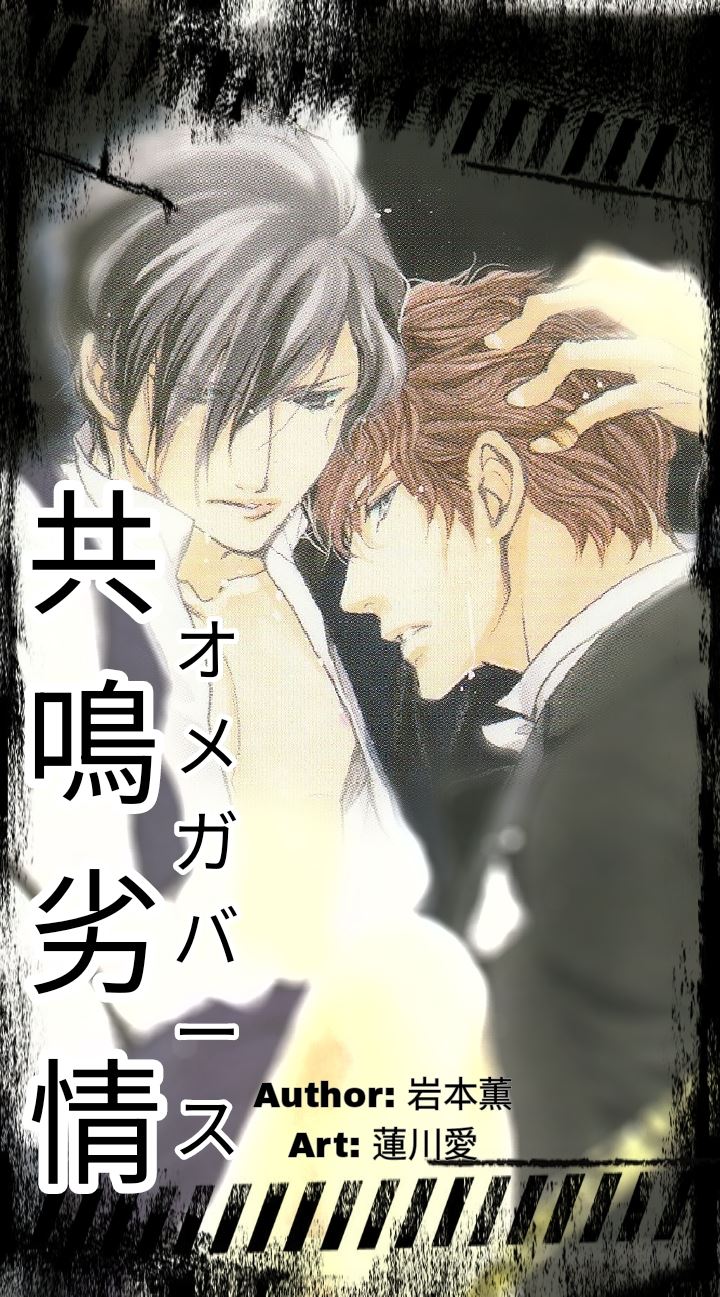
... Read More
The pacing in this section is deliberate, almost meditative, but it never drags because every moment is charged with subtext. We start with Amane hiding, observing, absorbing information—that's the setup. Then we get these rapid-fire dialogue snippets from overheard conversations that reveal the world's rules without infodumping. The author trusts us to piece it together. The transition from eavesdropping to Kouki's return is seamless; the narrative flow feels like breathing in and out. When Amane asks about going back, the question hangs in the air, and Kouki's response is immediate and firm—no hesitation, no softening. That's a structural choice that says everything about their dynamic. The chapter ends on that note about Kouki's full story, which is a classic cliffhanger but earned because we've been sitting with these characters long enough to care. I appreciated how the author balanced interiority with action: Amane's thoughts are woven into observation, not separate from it. The champagne gulp, the glance toward Kouki, the bitter remark—all these small beats create rhythm without rushing. There's no filler, no unnecessary exposition. Even the worldbuilding details arrive organically through gossip and atmosphere. It's tight, controlled pacing that respects the reader's intelligence while still delivering emotional punches when they count.
... Read More
Okay so can we just talk about how the author handles Kouki here? On the surface he's all polished three-piece suits, smooth elevator entrances, that practiced gesture of holding the door. Classic high-functioning Alpha who's got it together. But then the poodle hits him and BOOM—the armor cracks. He crouches down, his expression literally softens, he says 'It's been a while' like he's genuinely happy to see this dog. And Mizuki watches it with this wistful look. That single moment tells you everything about who he is underneath the competence. He's not just a cool detective partner—he's someone who carries real attachment, who has history with people and things. And the fact that he still comes along on this unofficial visit to his ex? That's either deeply loyal or deeply confused, and honestly I can't tell which and I'm here for it.
... Read More
"Maybe because it's lunchtime. But the store was unexpectedly crowded…" Excuse me while I lose my damn mind over this man. This line is supposed to be an excuse and it comes out sounding like a pickup line because of course it does. Of course the author wrote it this way. Kariya Kouki is the kind of character who could probably sell ice to a snowman and make the snowman fall in love with him. But here's what's actually interesting—beneath all that charm and the 'S-vibe' that the female staff are OBSESSED with, this is a guy who deliberately chose the ONE assignment that would make his parents want to disown him. Top of his class at the academy, skipped uniform duty, insisted on becoming a detective. The Shutou family is literally one of the five most prominent Alpha families, and he's out here working the slums and red-light districts like it's nothing. And Amane?AMANEEEE. This poor man has been walking a razor's edge for seven years, isolated himself completely, became a lone wolf by necessity because getting too close to people means someone might discover what he really is. And then KOUKI shows up and starts tapping on his car window like some rom-com protagonist. The dynamic I'm picking up on is deliciously tense. Amane literally thinks "I don't like him" the moment he appears, and yet here they are, forced partners. There's also this underlying question of whether Kouki knows something about Amane already. The few people at the station who know Kouki's real name and category include his partner—Amane. Did Kouki choose HIM specifically? Is there something there I'm missing? Also can we talk about how Amane's relationship with his mentor from rookie days is clearly traumatic given the parenthetical "(And until this guy showed up…)"? There's backstory I need.
... Read More
Let me just say this: the way this novel builds its world is genuinely impressive. We're not getting infodumps—we're getting the world revealed through Amane's lived experience. Start with the physical setting. D-East Station oversees the largest entertainment district, slum, and red-light district in Central City. That's a lot of darkness packed into one jurisdiction, and I can already picture the neon-lit alleyways, the rain-slicked streets, the break rooms where female staff gossip about their idol-cop partner while the actual work happens somewhere outside those walls. Then there's the olfactory layer—which is HUGE in an omegaverse. The Pills that suppress omega pheromones. The monthly heats. The way society's entire power structure is built around pheromone control and genetic hierarchy. When Amane gripped that sheet of pills in the dim hallway after seeing the elderly doctor, I could practically SMELL the relief on him. The relief of someone who finally has a tool to survive in a world that was designed to keep him down. The visual of Kouki sliding into the car like a "large wild animal" is chef's kiss. Three-piece suit, nine-head-length frame, eyes that shift from blue to grey depending on the light. He's described with the same language you'd use for a predator—refined, powerful, dangerous. And the contrast with Amane, who's been hiding in plain sight, manipulating his own biology to fit into a world that shouldn't allow him. I also love how the police hierarchy is described—a pyramid of 99% betas with a 1% alpha elite at the top. Amane has somehow inserted himself into that structure as a complete ghost, a hidden omega among wolves.
... Read More
Okay so let me just say this about Amane first—he is genuinely one of the most fascinating character writes I've come across in this genre. He's not just the 'tsundere partner' trope, he's something weirder and way more interesting. On the surface he's all sharp edges: the piercings, the slouching, the 'I don't give a shit' energy, the cigarette on the job, the whole 'shut the fuck up' energy on the roof. But then you realize every single one of those is armor. The text literally says he intentionally concealed his looks. His overbearing attitude was a shield. That hit me differently than most novels do because it's not played for laughs—it's actually tragic. And Kouki, oh my god, Kouki. I need to talk about him for a sec because his internal voice is so... honest. Not fake-honest, not 'I'm humble' honest. The narration makes it clear: 'It was Amane who had identified the hostess as their target.' 'That was only because he had followed Amane's orders.' He is not pretending. He genuinely sees his partner as the brains and himself as the hands. That power dynamic is wild for a romance novel—I mean that in the best way. Usually the quiet partner is secretly competent and pulls rank later. Here, Amane is actually competent and Kouki is fully aware of it. There's no irony, just devotion. The 'Beast Tamer' nickname from the other detectives—that scene with Seo sliding her chair over was golden, by the way. But what killed me was Kouki's actual response: '(If anything, I can't even control myself…)' He's not taming anything. He's drowning. The dynamic between them isn't predator-and-tamer, it's two people falling into the same chasm at the same time. And the fact that Amane's secret identity as a Stray Omega disguised as a Beta adds this whole other layer? He's been living a lie so long that even Kouki—someone who clearly sees through everyone's performance—had to discover the truth through resonance heat of all things. Which is both ridiculous and kind of beautiful in a very specific omegaverse way. Their bond started from a biological accident but it feels like it evolved into something real. I want to know what happens when Amane finally stops performing.

Leave a comment

You must be logged in to leave comments. or
