Little Widow [Farming] - Reviews

Little Widow [Farming]
+Add to Custom List
Sort
Add review
... Read More
You know what keeps popping into my head? The cypress branch. Chen Qing picking it up on the way back from the funeral, tucking it into his belt, and then Aunt Sun brushing it over him repeatedly like some kind of blessing or purification ritual. I think I read that three times before it clicked. Cypress trees in Chinese culture - they're evergreen, they survive through winter, they're associated with cemeteries and mourning grounds. But they're also resilient. They don't die when everything else does. I think Chen Qing is the cypress branch here. He's been planted in hostile ground, surrounded by gossipy villagers who see him as unlucky, damaged goods, too short, unable to bear children - all these things the women whispered about. And yet he's still here, functioning, caring for his mother, fetching water at night, making sure the house runs. The fact that he carries this symbol of death and mourning with him through the village, tucked in his belt, and nobody seems to notice or comment on it? That says something about how invisible he's become. How small he makes himself. How he's learning to move through a world that doesn't have space for people like him. "What if he regrets it later?" one villager asks about his mourning. What THEY don't understand is that Chen Qing's mourning isn't performative. It's survival.
... Read More
The world in this novel feels so solidly grounded it's almost painful. By the time the planting is done, the narrative tells us it's early September and the weather is starting to cool — mornings and evenings crisp, autumn rains beginning. I can literally feel that temperature shift. There's this one scene where Chen Qing is sitting in the courtyard sewing, head bowed, completely absorbed, and Aunt Sun watches him from the doorway looking toward Zhou Yuan's house which isn't far away. The spatial intimacy of it — these houses close enough to see each other, these lives overlapping on shared fields — creates a village that feels painfully real. Not some fantasy backdrop but a place where everyone knows everyone's business and the boundaries between private desire and public judgment are razor thin. The fieldwork sequences are also doing a lot of heavy lifting. Half a month of planting land, Chen Qing's leg still bothering him, moving slowly, Li Xin chatting with him from nearby. You can feel the rhythm of rural life — the seasons turning, the work demanding, the bodies getting tired. And then Meng Qi and the others showing up to help, making the work go faster. It's all so ordinary on the surface but that ordinariness is exactly what makes everything underneath it so devastating. Because this is a real world with real consequences, not some story where the rules are softer.
... Read More
There's a pattern I've been noticing in these chapters that I think is deeply intentional. Everything revolves around labor, urgency, and physical burden — and none of it is accidental. The mushrooms. They go into the mountains to gather them, they lose some in the rain, they scramble to pick them back up when Chen Qing falls. These are fragile things that represent survival — one wrong step and everything is ruined. And they're literally scattering everywhere when Chen Qing twists his ankle. The mushrooms on the ground = Chen Qing's emotional state, scattered and unprotected. Then there's the rain itself. Summer rain comes on fast but doesn't last long. Chen Qing says this calmly, almost philosophically, as if he understands the rhythm of this world. The storm passes, but the damage is done. The path is muddy and treacherous now. Life continues but nothing is the same. And the carrying — Zhou Yuan hoisting Chen Qing onto his back, taking his backpack, resting a hand on his knee. This physical act of carrying someone is the central image of the passage. Zhou Yuan carries Chen Qing physically while Chen Qing carries invisible emotional weight for the entire rest of the chapter. The medicine bottle becomes a symbol of Zhou Yuan's care — but Chen Qing interprets it as evidence of someone else's importance. The embroidery handkerchief Chen Qing finds sitting untouched by his bedside — plain white, unused since the shopkeeper's requests became too complicated. How was he supposed to stitch love stories when he can't even tell his own? That's the thematic core I walked away with.
... Read More
The dialogue here operates on two frequencies simultaneously — what characters say and what they're actually communicating through their words. The author has crafted distinct voices that reveal character through speech patterns rather than exposition. Zhou Yuan's dialogue is notably sparse. When he speaks to Matchmaker Hua, his responses are patient but firm, polite but final. "I appreciate your kindness, but I don't plan on getting married." That sentence alone carries volumes — he's not being rude; he's being clear. His silence during the water-carrying encounter speaks even louder. The absence of words becomes his voice. Li Xin's conversational style is warm, slightly boisterous, comfortable with friendship. His offer to help with the corn harvest comes easily: "Come on, we're old friends." His naturalness contrasts sharply with Zhou Yuan's restraint, creating a dialogue dynamic that maps their relationship without stating it outright. Chen Qing's speech patterns reveal his inner landscape. When he says "Thank you" about Meng Tao, it's brief but genuine. His willingness to let Li Xin help, despite awkwardness, shows his difficulty with boundaries. The line "Can't you just walk with me?" — spoken by Li Xin — reveals an emotional neediness masked as casual suggestion. Matchmaker Hua's voice is performative. She praises the house repeatedly, talks about Zhou Yuan being "quite a catch," insists he's the right age. Her dialogue performs social expectation while Zhou Yuan's silence performs resistance. Their interaction becomes a verbal duel where the matchmaker's verbosity meets Zhou Yuan's minimalism. The narration itself carries a particular tone — observant, restrained, occasionally intimate when accessing Zhou Yuan's memories. This narrative voice shapes how we receive dialogue, filtering it through a lens of quiet understanding rather than dramatic commentary.
... Read More
Okay so let me just say this: the author really understands how to take something seemingly small—a chicken!—and turn it into the catalyst for the entire chapter's drama. Sun Kang shows up asking for dead nephew's pension money. Aunt Sun throws him out. He grabs the chicken. Chen Qing chases him. Zhou Yuan steps in. And suddenly this whole family of parasites has been thoroughly defeated, all because of poultry. I love it. The pacing here is also excellent. We start with the confrontation, then we get the backstory dropped in naturally through Aunt Sun's memory—not as an info dump but as emotional context for why she's so furious. And then we pivot to the chicken meal which is basically the reward for surviving the conflict. The chapter structure is: threat → defense → resolution → domestic warmth. It's satisfying in a very specific way, like watching someone win at a board game where the stakes feel real even if they're just about food and dignity.
... Read More
Okay can we just talk about Aunt Sun for a second because this woman went from trembling in the background to slamming papers on the magistrate's desk and I am HERE for it. Earlier in the story she was all quiet suffering, taking whatever the Sun family threw at her, but the moment she saw Chen Qing sitting on that rock with tears on his face and his hair a mess? Something in her snapped. And not in a bad way. She walked into that county hall with legs that had been shaking and somehow turned every step into something fierce. "My last name is Meng! Didn't your family say that a married daughter is like spilled water?" That line literally gave me chills. She owned her name, her family, her choice. And Chen Qing—poor guy was kneeling behind her the whole time, trembling, couldn't even speak up for himself. It broke my heart a little but also made me so proud of Aunt Sun for carrying him through. Their relationship here is everything. She's not just his guardian, she's his voice when he can't find one. The way he held her hand when she arrived... it was silent but so loaded with meaning.
... Read More
I need to sit with this for a moment because the emotional devastation here is so quiet you almost miss it. Chen Qing writes these letters — well, he can't read so Aunt Sun reads them — and every single one is about Meng Tao being tall and strong and shy with girls and very filial. Beautiful words. Perfect husband material. But not one of them is addressed to Chen Qing. Not one. Five years of correspondence and his supposed husband never once said his name. And yet Chen Qing still wonders what Meng Tao looks like. Still blushes in the lonely mountains. This is the kind of emotional wound that doesn't bleed but aches forever. The sweetness of the water Aunt Sun gives him — "Its sweetness spread from his mouth into his heart. He felt warm and happy" — sits right next to this aching loneliness and it's too much. I love that the author doesn't make it dramatic. No sobbing, no screaming. Just a quiet boy drinking water in the spring sun, wondering about a man who may or may not know he exists. That's when it hit me — is Meng Tao even alive? The letters stopped two years ago. What if Chen Qing has been building his entire emotional world around a ghost?
... Read More
Everything in these chapters keeps circling back to one undeniable truth: the conflict is NOT over. The legal system punished the uncle's family, sure, but Aunt Sun knows it. Zhou Yuan knows it. The reader knows it. That old woman—the one who tried to steal Taozi's pension and then went after Chen Qing himself—she won't let this go. And Zhou Yuan's warning is chilling in its simplicity: 'I don't think this is over yet.' He sees the pattern. These people don't accept consequences. They escalate. What makes the stakes so visceral is how personal it all becomes. This isn't just about money or justice. It's about Chen Qing's body—his ankle, already bandaged and now bruised on his waist. It's about his room, his door panel loose, his wardrobe overturned, his private clothes scattered. The violation is physical and intimate. When Aunt Sun says 'They'll take it out on him,' she's not wrong. Chen Qing is the soft target, the purehearted one who wore mourning clothes and made people uncomfortable. He's vulnerable in a world that punishes vulnerability. And yet—the resolution they're building toward is somehow even more tense. Aunt Sun deciding to find Chen Qing a husband is both protective AND risky. A husband could be protection, but it could also be another kind of trap, especially since they need money and 'the more money I invest, the more I worry about attracting the wrong sort of people.' Zhou Yuan hearing this and finally breaking his silence? That's the story pivoting. The external conflict (the relatives) and the internal conflict (Zhou Yuan's feelings, Chen Qing's self-worth) are colliding. Every scene builds toward a moment where Chen Qing has to decide: does he keep looking away, or does he let someone stay? The suspense isn't just 'will the bad guys come back?' It's 'will Chen Qing let himself be safe?'
... Read More
I need to talk about Zhou Yuan and Chen Qing because the way this author writes their dynamic is everything and I am not okay. Let me start by saying: Zhou Yuan is one of the most interesting characters I've encountered recently, and his quiet moment beside Chen Qing at the brazier is the single greatest character revelation in this entire section. Here's what gets me—Zhou Yuan could have told Aunt Sun the truth. He could have said, yeah, we were in the same army but we barely spoke, I just picked up Meng Tao's body after the fighting was done. But he didn't. Instead he tells her Meng Tao died bravely and that the infantry battalion 'laid the foundation for our later victory.' He gives a grieving mother the story she needs to hear, even though it's partially a lie. That's not manipulation—that's mercy. That's someone who understands what people actually need versus what they deserve. And then Chen Qing. This boy who's never spoken more than a handful of words to Zhou Yuan, who barely knows him, decides to wear full mourning clothes for a husband he never met. When Aunt Sun tries to stop him, he says something that hit me so hard I had to put the book down: "I think of you as my real mother. If I don't wear mourning for him, should I ask you to? He won't rest in peace if he passes like this." He's performing grief for someone he never knew, but the love behind it—the love for Aunt Sun—is devastatingly real. And then Zhou Yuan walks in, lights incense, bows three times, kneels beside him, and burns paper money. No words. Just presence. He sees Chen Qing crying silently, tears falling like beads on a broken string, and he doesn't say anything comfortingly. He just... stays. Knelt there in dark clothing while Chen Qing wore white. The power dynamics shift in that single scene and I don't even know how to process it. Zhou Yuan holds all the information—he knows Chen Qing was sold into bondage, he knows about the old woman, he's clearly observing him with this intense curiosity. But he never presses. He never intrudes. He meets Chen Qing exactly where he is. Is this going to become something more, or am I reading too much into a man who just happened to be at the right place at the wrong time?
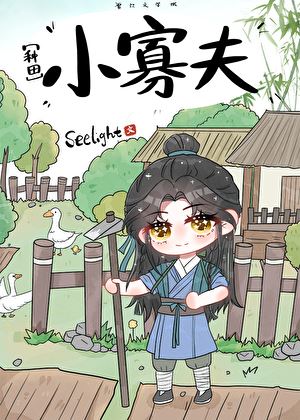
... Read More
The worldbuilding in this book is so understated but so effective. I don't mean grand castles or magical systems — I mean the kind of world where you can smell the firewood smoke and feel the cold river water on your face. Let me paint some of this for you because the author really knows how to set a scene. A rooster crowing at dawn. The crackling of firewood in the kitchen. Chen Qing washing his face with a handful of water and seeing his reflection on the water tank — rounder than five years ago but still thin, still the baby face that made traffickers pass on him. The bamboo fence he built himself. Yellow mud bricks instead of blue. Two steamed corn buns and two eggs boiled in the same pot. These aren't decorative details; they're the bones of a life. Luohe Village sits near mountains and rivers with limited fertile land, and the hillside plots are divided among villagers down to the smallest strip. The Meng family got one piece. When Chen Qing goes to gather firewood and unties the rope at his waist, I could feel that weight on my shoulders. The river has thawed. Water plants are growing along the banks. Spring is happening. This isn't just a backdrop — it's a living breathing place and somehow it makes Chen Qing's trapped existence feel even more suffocating because the world outside is so beautiful and he's still just... waiting.
... Read More
What keeps me up at night about this passage is how the stakes are simultaneously tiny and enormous. Chen Qing drew a cooking job. That's it. That's the plot point. But the author makes you feel like his entire future depends on this moment, and you can't argue with that feeling. The external conflict is clear—villagers whispering about 'two widows' bringing bad luck, the village chief who wanted to rig the lottery, the returned coffin suggesting the universe itself is conspiring against them. But the internal conflict is what gets you. Chen Qing wants to disappear. He digs his toes into the dirt floor. He wishes he could vanish. And yet he also knows they need this money. That tension between dignity and survival is the engine of the whole story. And Zhou Yuan's role is fascinating here—he's not a villain, he's just someone trying to do right by a dead friend while navigating village politics, and the fact that he insists on including Meng Tao's household shows his moral center. But even he can't fully protect Chen Qing from the consequences. The suspense isn't about whether Chen Qing will survive—he'll survive. The suspense is about what it will cost him emotionally, and whether Aunt Sun will be there when the next blow lands.
... Read More
There's this one image that keeps looping through my head—the recliner in the courtyard, visible through the window in the dim morning light. It's such a small detail but it does SO much work. Zhou Yuan fixed it for Chen Qing. He picked up tools, hammered away, and then carried Chen Qing himself and set him down in that chair like a little chick. And then later, Chen Qing wakes up and immediately sees it from his window. The object became a symbol without anyone trying. It's right there in the courtyard, silently witnessing everything—the tension, the care, the unspoken things. The wind rustling, Chen Qing closing his eyes... it's such a quiet, cinematic moment. The author doesn't overdescribe. Just the dim light, the recliner, the sound of wind. You feel the morning air. You feel Chen Qing's heartbeat slowing down. And then the Mid-Autumn Festival setup gives us the road to town, the oxcart, the supplies they're buying. There's this lived-in quality to the world—taxes being collected door-to-door, matchmakers being consulted, hair ribbons being embroidered. It's not grand or flashy. It's the texture of ordinary rural life, which makes the emotional beats land harder because they're happening in such a grounded, real space. The Sun family's potential return looms in the background like a storm cloud neither character fully names yet.

Leave a comment

You must be logged in to leave comments. or
