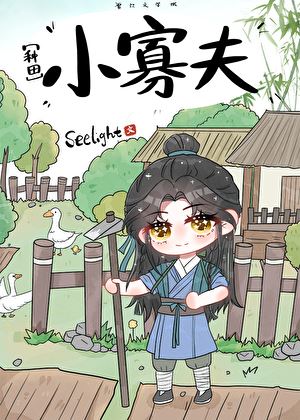
Summary

... Read More

Chen Qing is a small, quiet young man who was sold by his father to human traffickers after his father committed suicide to spare the family further humiliation. Because he was too frail and young to be sold to buyers, he ended up in Luohe Village, where Aunt Sun purchased him for three taels of silver. She promised him as the bridegroom for her son, Meng Tao, though Chen Qing had never met him. Before Chen Qing could even see his prospective husband, imperial soldiers raided the village for recruits, and Meng Tao was conscripted. Left behind, Chen Qing completed a ceremonial wedding alone and lived with Aunt Sun for five years, working diligently as her son in all but blood. Their life was simple and peaceful until消息 arrived that Meng Tao had died in the Battle of Guping Pass.

Grief-stricken, Aunt Sun nearly collapsed, but Chen Qing stayed by her side, ensuring she did not attempt self-harm. He insisted on holding a proper funeral for Meng Tao, wearing mourning clothes despite having never known him, to honor Aunt Sun’s wishes and give her son a dignified send-off. Meanwhile, Zhou Yuan, a decorated soldier and Meng Tao’s former comrade, had returned to the village. He had been granted land and chose to build his house next door to Chen Qing and Aunt Sun, claiming Meng Tao asked him to look after them before he died. Zhou Yuan hired local laborers for his construction project, including Chen Qing’s family, which brought him into frequent contact with the widowed couple.

Chen Qing is painfully shy and avoids social interactions, often blushing and stammering when forced to speak with villagers. Zhou Yuan, tall and stoic, noticed Chen Qing’s distress, particularly when village thugs Chen Si and Meng Zhuzi harassed him over the funeral arrangements. Zhou Yuan fired the two men for slacking off, angering the village chief, Chen Si’s uncle. In retaliation, Chen Si and Meng Zhuzi attempted to break into Chen Qing’s home one night to steal the pension money they believed the family possessed. Chen Qing fought back with a wooden stick but fainted from shock when Zhou Yuan intervened, brandishing his battlefield knife to subdue the intruders.

Zhou Yuan protected Chen Qing’s reputation by taking the blame for the incident, claiming the men broke into his own house. He then handed the intruders over to the authorities. When Chen Qing fell ill with a fever from the trauma, Zhou Yuan provided medicine and compensation money, creating a bond between the two. Chen Qing began to feel a complex mix of fear, gratitude, and confusion toward his neighbor. As Zhou Yuan rebuilt his life and home, the dynamic between the shy widower and the stoic veteran began to shift, moving from distant neighbors to reluctant allies navigating the gossip and hardships of rural village life.

The story explores Chen Qing’s journey from a traumatized survivor who sells himself out of duty to a young man beginning to assert his own agency. His relationship with Aunt Sun remains the emotional core, as they support each other through grief. Zhou Yuan’s presence introduces tension and potential romance, challenging Chen Qing’s desire for isolation. The narrative highlights the struggles of widows and widowers in a traditional society, where financial precariousness and social stigma threaten their peace. As Zhou Yuan firmly establishes his place in the village and defends Chen Qing from harassment, the two men’s lives become increasingly intertwined, setting the stage for further emotional development and resolution of the past traumas that have shaped Chen Qing’s quiet existence.

Latest Release
DateGroupRelease
2026-09-25knoxt c99
2026-09-25knoxt c98
2026-09-25knoxt c97
2026-09-25knoxt c96
2026-09-25knoxt c95
2026-09-25knoxt c94
2026-09-25knoxt c93
2026-09-25knoxt c92
2026-09-25knoxt c91
2026-09-25knoxt c90
2026-09-25knoxt c89
2026-09-25knoxt c88

Community Reviews

Rating(4 / 5.0, 126votes)
5 stars
40(32%)
4 stars
42(33%)
3 stars
44(35%)
2 stars
0(0%)
1 stars
0(0%)

Popular reviews

... Read More
Okay so I need to talk about Qi Shuning because this character just walked into the story and already feels like a loaded gun waiting to go off. On the surface it's a simple 'distant relative shows up hungry' setup—Blacksmith Li's mother once got a bracelet from a cousin who helped her family, and now that cousin's grandson has tracked them down. Makes sense, right? Honor the debt. But the way it's set up bothers me in the best way. Think about it: a starving scholar-type who can't do manual labor, sent to live in a blacksmith's workshop? In a post-war village where everything is hard physical work and survival? This guy is walking into a world that will absolutely chew him up. And Chen Qing is right there peeling corn with raw red fingers while Li Xin goes running to Zhou Yuan to invent a corn-peeling tool because he SAW Chen Qing suffering. Two parallel stories of people trying to help someone who can't help themselves. That's not coincidence. That's author foreshadowing and I am HERE for it. Also—the mourning period detail. Aunt Sun says "once the mourning period is over" when talking about Chen Qing getting married. Mourning for who? Taozi? This small mention drops a whole emotional bomb without explanation. Who is Taozi? How did they die? Why is Chen Qing still in mourning? I need answers and the fact that this is just casually woven into a conversation about corn and weddings tells me the author is playing the long game. The subplot about the corn tax taking priority over everything else also has me thinking. Every family is doing this same process. The war took its toll, taxes were brutal, and now they're scraping by. But Chen Qing's part of the harvest is literally his future—Li Xin noticed his fingers were bleeding and immediately went to find a solution. Meanwhile Zhou Yuan is sitting on the ground examining an ear of corn like it holds the secrets of the universe, plotting some invention. These characters are all circling around each other's problems, trying to solve them in their own ways. That's solid narrative architecture.
... Read More
OK so I need to sit with this for a bit because my chest literally hurts. The scene where Chen Qing comes back from the garden at sunset, boiling water for dinner, and hears three soft knocks at the door—that quiet, specific sound he recognizes immediately—I felt that in my bones. Three knocks. Not urgent, not demanding. Just...存在. Like he's saying I'm here without saying anything at all. Chen Qing opens the door and still won't look at him. Still can't. But when Zhou Yuan says "Thank you" in that low voice, and Chen Qing lifts his gaze just a little before looking down again—that half-second of eye contact, that's the entire romance of this book compressed into one frame. One fucking frame. Then he closes the door and finds the candies wrapped in wax paper inside the basin. His hand over them. His heart feeling tight, filled with something he couldn't quite name. What IS that something, Chen Qing? It's called longing, buddy. Look it up. And then—then the night goes from tender to TERRIFYING in three paragraphs. He hears rustling, grabs a stick, swings at an intruder, and almost dies. And right when everything peaks—Meng Zhuzi lunges at him, Chen Qing has nowhere to run, and Zhou Yuan appears behind him holding a blade that has killed on the battlefield—Chen Qing jolts so hard the stick falls and he collapses. But he didn't hit the ground. The chapter ENDS there. Right there. I SCREAMED. The most violent moment and the most vulnerable moment for Chen Qing happen simultaneously, and Zhou Yuan is the one standing between him and danger. I'm not okay.
... Read More
The opening scene hits different now that I know what's coming. Firecrackers going off for a celebration while one family's world is being dismantled. The village chief lighting strings of firecrackers — this is supposed to be joyous, right? Other soldiers came back. Families are reunited. But Chen Qing and his mother are standing in the middle of that noise completely isolated. 'Only the two of them seemed completely out of place in the noisy crowd.' This contrast is everything. The living celebrate while one house breaks. Then there's the silver pouch. Ten taels. Heavy enough that Zhou Yuan notes it 'felt as heavy as a thousand catties.' Money that buys land and food but cannot buy back a son. The porridge that gets cold and warmed and goes cold again — that's the whole emotional arc of this passage in miniature. Nothing moves forward. Nothing changes. Time just stalls. And Chen Qing cleaning the same tasks over and over, trying to 'fill the emptiness in his heart.' That's not productivity — that's desperation dressed as routine. The house will stay clean. The yard will stay swept. But the emptiness has a name now, and it's Meng Tao.
... Read More
Everything about this story screams that Chen Qing's peace is going to shatter and I can't stop thinking about what's at stake. Let me lay it out: Chen Qing is a trafficked person who sold himself for two taels of silver so his father could have a proper burial. He's small, he's quiet, he's survived by being invisible. Five years in a village where no one knows his real story. Where Aunt Sun protects him. Where the worst thing that happens is having to face Aunt Wang to borrow an ox. But the human trafficking thread is still there — it's just under the surface. And then there's Meng Tao. The husband who never wrote to him. The letters stopped two years ago. Aunt Sun checks the post office and comes back disappointed. What happened to Meng Tao? Was he drafted and disappeared? Did he find someone else? Is he dead? Chen Qing's entire identity in this village rests on a man who may not even know he exists. The stakes aren't just about romance or family — they're about survival. If his past catches up, if someone from the trafficking ring finds him, if the truth about why he's really in Luohe Village comes out, everything Aunt Sun built for him could collapse. The author makes you feel the fragility of this quiet life through the smallest details — the eggs for Aunt Wang, the careful words, the way Chen Qing forces a smile. Every interaction is loaded because he's always one mistake away from losing everything.
... Read More
There's so much underneath this chapter that I keep turning over in my head. The Sun family's whole worldview—that a married daughter is like spilled water, that a widow's choices aren't her own, that Chen Qing as a purchased person is property—that's the real villain here, even more than Sun Kang himself. And Chen Qing's documents are basically armor. The divorce decree and household registration aren't just legal formalities; they're proof that he exists as a person in the eyes of the state, that Aunt Sun fought for his identity before anyone else would. The original contract the Sun family clung to represented one kind of ownership, but the official seal replaced it with another kind of belonging. I keep thinking about how Zhou Yuan is standing outside the kneeling crowd, noticed by the magistrate as someone significant—a man who once saved a supreme commander from twenty enemies—yet chooses to stay low-key in a village. There's something symbolic there too, right? He protected Chen Qing physically, but Aunt Sun protected his legal personhood. Both are forms of defense. And that royal edict about tax waivers for veterans' households? It wasn't just plot decoration. It tied Chen Qing's safety to something larger—the empire recognizing sacrifice, honoring those who served. The personal and the political collided in that courtroom and neither side walked away unchanged.
... Read More
The atmosphere in these chapters is thick — literally. You can feel the summer heat pressing down, the sweat, the lethargy that comes with working the land in high temperatures. The author doesn't just describe setting; they make you inhabit it. Zhou Yuan's house is a fascinating architectural statement. From the outside, it's blue-brick, grand even. But inside, there's only a bed. This contrast between exterior appearance and interior emptiness mirrors Zhou Yuan himself — built, solid, but hollow within. The matchmaker's enthusiastic tour of the house while Zhou Yuan looks "out of place" creates a delicious visual irony. She sees prosperity; he sees only a structure without a home. The well scene is where worldbuilding truly shines. Two figures carrying buckets, stopping to rest, the roadside as a social intersection — this is village life rendered in motion. The physicality of labor (heavy buckets, hot sun, tired legs) grounds every interaction. When Zhou Yuan effortlessly carries two buckets while Chen Qing and Li Xin struggle, it's not just character detail; it's a statement about who these men are through their relationship to physical work. Chen Qing's room described through Zhou Yuan's memory — the bamboo curtain, cabinet, vanity, camphor wood chest — creates a vision of domestic warmth that Zhou Yuan's own space lacks. This contrast between spaces tells us more about emotional interiors than any monologue could. The wilderness memories Zhou Yuan has of digging roots with his grandmother invoke a different kind of landscape — one of survival, poverty, and loss. This geographical memory Haunts the present scenes, connecting past and place in ways that make the setting feel layered with history rather than merely decorative.
See all reviews

Custom lists

See all custom Lists