Little Widow [Farming] - Reviews

Little Widow [Farming]
+Add to Custom List
Sort
Add review
... Read More
Honestly, the atmosphere in these chapters is so thick you could cut it with a knife. I love how the author doesn't just tell us it's a poor village but makes us *feel* the damp chill of the morning, the specific anxiety of waiting outside a closed shop, the narrowness of the road where you have to press yourself against the slope to let an ox cart pass. It's so tactile. My favorite moment has to be when Chen Qing gets home and Aunt Sun sees the lunch he prepared. "The greens didn't require much effort. He just washed them, quickly blanched them in boiling water, and mixed them with coarse salt and a splash of vinegar." This is world-building at its finest. You aren't reading a generic medieval fantasy backdrop; you're tasting the sour vinegar, feeling the rough coarse salt, seeing the steam rise from a pot that's clearly seen better days. The author cares about the texture of daily survival. It's not just about plotting; it's about making a world that breathes. Then you have the shift to Zhou Yuan's perspective, choosing his land. The village head's house, the blackened dishes on the table, the specific worry about "bad luck" rubbing off on him. The setting here isn't just a physical location; it's a social pressure cooker. The houses, the roads, the coffin shops—all of it serves to press down on Chen Qing. He's trying to buy a coffin for his deceased husband, but the world is telling him he's invisible, that his grief is inconvenient, that his presence is a nuisance. The environment is actively hostile to his quiet existence. It makes me want to go over there and shake the villagers, but in the best way possible because the author has made me care so deeply about this sad, embroidering little man. The contrast between the intimate, warm kitchen scene with Aunt Sun and the cold, judgmental public roads is masterful. It creates a sense of home as a fragile sanctuary against a world that doesn't understand you.
... Read More
Okay, let me just say — this sequence is absolutely brutal and beautiful all at once. The break-in isn't just some random attack; it's the entire chain of Chen Qing's trauma detonating at once. We get the nightmare flashback, and suddenly everything clicks: his father stabbed to death by a drunk thug, the hush money offered, the husband's family taking it, Little Father beaten and broken, then suicide in the river. All of it surfaces in one fever dream. The author didn't waste a single line on exposition dumps — it's all filtered through Chen Qing's subconscious, which hits way harder. And Zhou Yuan's decision to take the intruders away from Chen Qing's property? Genius plot move. He's not just being noble — he's protecting Chen Qing's reputation as a widow in a village that would tear him apart. The line 'Even if these two only came to steal, people could be cruel. No matter what he did, he'd never be able to wash off the stain' — that's the author telling us exactly what's at stake here without dramatic fanfare. Then the village chief shows up with Chen Si's wife as his sister? Classic setup for a political complication that's going to explode later. Zhou Yuan pushing back against 'we can settle it privately' is him drawing a line in the sand — he's not playing their game. What really gets me is how tightly everything's woven. The broken-in night → Chen Qing's fever → Zhou Yuan's medicine → the village chief confrontation. Every beat pushes forward. No filler.
... Read More
The dialogue in this section is deceptively sparse, and that's exactly why it works. Zhou Yuan barely says more than ten words across these chapters, and every single one lands. 'I'll take them to my place. Tomorrow, I'll tell everyone that they came to my house to cause trouble because I wouldn't rehire them.' That's it. One sentence that simultaneously resolves the immediate crisis, sets up a lie that protects Chen Qing, and establishes Zhou Yuan as someone who thinks three moves ahead. He doesn't explain himself. He doesn't need to. Chen Qing's dialogue is mostly broken syllables — 'Father,' 'Mother?' — which is arguably the most honest writing of grief I've read. When someone's nervous system is short-circuiting, they don't form完整 sentences. They produce fragments. Aunt Sun's voice is the workhorse here. 'Aqing—Aqing—don't be scared. Mother's here.' She's performing emotional labor at maximum capacity — caring for an unconscious man, managing neighbors, improvising a cover story for Aunt Liu. Her dialogue is practical, warm, and exhausted all at once. And Zhou Yuan's lie to the intruders? 'You came to my house because you were angry about losing your jobs and wanted revenge. You planned to steal.' Cold, efficient, and the blade gleaming as he says it makes it clear this isn't negotiation — it's directed performance. He's scripting their confession for the record. The man speaks like someone who's spent his whole life choosing his words carefully because wrong words got people killed. The author's narrative voice outside of dialogue is equally controlled — observational, unhurried, letting actions carry meaning. 'He dared not look again' says more about Zhou Yuan's internal state than any monologue could.
... Read More
What are the stakes here? On the surface, it's simple: Chen Qing needs to buy a coffin or he fails in his filial duty. That's external conflict. But the real tension, the thing that makes me grip the book, is the *social* stakes. Chen Qing is terrified. Every interaction is a landmine. He hopes no one notices him on the road. He walks faster when called out. He's hyper-vigilant because in this village, visibility is dangerous. If you're poor and alone, you're a target for gossip, for pity, for exploitation. The scene with Zhou Yuan is a masterclass in low-stakes-high-tension writing. There's no sword fight, no shouting match. Just a man offering a ride and another man panicking. The conflict is internal: Chen Qing's desire for connection versus his fear of intimacy. When Zhou Yuan insists, Chen Qing's heart is probably hammering against his ribs. He knows he should just get on the cart. But he can't. He's a married man (widowed). propriety is a cage. So he creates a barrier: "Give me one coin." It's a brilliant move. By turning a favor into a transaction, he reclaims control. He sets the terms. But look at what happens: he fumbles the coin. He pulls his hand back. The warmth vanishes. The conflict isn't resolved; it's just suspended in that awkward moment of falling metal. And then the stakes are raised again by the village head. Zhou Yuan wants to build next to the Sun family. The conflict shifts from interpersonal to ideological. Superstition versus meritocracy. Gossip versus justice. Zhou Yuan isn't just choosing a house; he's choosing a side. He's aligning himself with the outcasts. That's huge. It puts a target on his back, sure, but it also marks him as an ally. For Chen Qing, overhearing this conversation must be seismic. Someone *defended* his family's honor. Someone called the villagers' prejudice "biased." The stakes just went from "will he buy a coffin" to "who is this stranger and what does he want?" I'm sweating for these guys. The author keeps the pressure cooker lid on tight. Every small interaction feels like it could shatter. Will the shopkeeper drop the price? Will the villagers ostracize Zhou Yuan? Will Chen Qing finally look him in the eye? The suspense isn't about explosions; it's about whether these broken people can find a foothold in a world that keeps trying to push them down. And honestly, that's way more exciting to me.
... Read More
I need to talk about the central theme of this novel, because it's WAY more sophisticated than a simple romance story. At its core, this book is about the tension between individual desire and social obligation. Chen Qing keeps saying "I really don't need to get married" and "why should someone have to rely on a man to live?" These aren't just romantic declarations - they're philosophical statements about autonomy. The question "why should someone have to rely on a man?" is fundamentally about gender roles, economic dependence, and the limits of personal freedom in a traditional society. But the book doesn't offer easy answers. Aunt Sun's warnings about gossip aren't wrong - they're pragmatic. In a village where everyone watches everyone else, social reputation IS survival. Chen Qing's independence is a luxury he may not be able to afford. The handkerchief in chapter 109 is a perfect symbol for this tension. It represents Li Xin's mother - absent, ill, her life cut short by illness. It represents skill and tradition (embroidery as a feminine craft passed down). It represents Li Xin's attempt to connect with his mother through craft. And it represents CHEN QING's potential future - a handkerchief that might have been meant for someone else, but instead went to Li Xin. The flower on the handkerchief being described as "a little indecent" is significant. In a restrictive social environment, even small expressions of affection or sensuality carry risk. The embroidery is both art and transgression. Then there's the imagery of roads and paths. Chen Qing taking the long way home to avoid villagers - this is literally about finding alternative routes through constrained space. The narrow road becomes a metaphor for the narrow options available to him. Can he navigate around social expectations? Or will he be forced onto the main path? The medicine that Zhou Yuan gives to Li Xin to give to Chen Qing is another symbol - indirect care, love expressed through intermediaries. It's tender and slightly pathetic, like children playing doctor with adult emotions. And Niu Niu catching bugs in the corner of the yard - this image of childhood innocence and curiosity, completely unaware of the adult romantic drama unfolding around him, provides a contrast that highlights how serious everything else is. Children play; adults suffer. The recurring question of what Chen Qing "should" do versus what he WANTS to do drives the entire narrative. Is he supposed to marry for security? For family approval? For social conformity? Or can he follow his heart even if it means facing gossip and disapproval? The egg he brings to Li Xin's house is also symbolic - simple, domestic, nourishing. It's not a grand romantic gesture; it's practical care. And that's the point: love in this world isn't expressed through poetry or dramatic declarations, but through small acts of service and presence. The title of this section could almost be: "The Weight of Being Watched." Every choice Chen Qing makes is made under observation. Every relationship is defined not just by the two people involved but by the community that witnesses them. Freedom in this context means choosing despite the gaze of others. I keep coming back to one line: "He thought they all knew how he felt." Zhou Yuan's assumption that his feelings were transparent is both confident and naive. In a village where everyone watches everyone, you'd think emotions would be obvious. But the opposite seems true - people hide behind smiles, through intermediaries, in silence. The very visibility of village life makes genuine connection harder, not easier. This is what makes the novel resonate beyond its romance plot. It's asking universal questions about autonomy, community, and the price of authenticity.
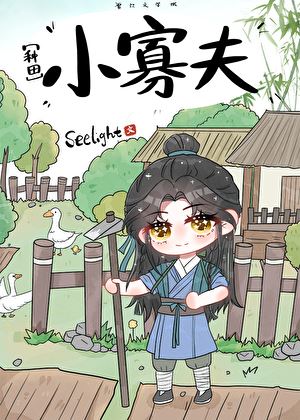
... Read More
Okay, I need to talk about this scene where Chen Qing just sits there on the floor—because yes, the chair literally collapses under him, which is almost funny in the most devastating way possible—and Zhou Yuan towers over him like some kind of gentle giant who has been holding his breath for chapters. Chen Qing asks, 'Why me?' and I just... I felt that in my chest. Not 'why are you helping us,' but 'why do you keep choosing me when I keep flinching away from you.' The fact that he brings up Li Xin like it's some unshakable fact—'But you obviously like Li Xin'—and his voice is so quiet Zhou Yuan can barely hear it. BRO. You can barely hear it and we can barely breathe. And Zhou Yuan's response isn't even dramatic, he just says 'I'm doing what I want to do. I want to help you.' But the subtext is SCREAMING. He doesn't say 'I don't like Li Xin.' He doesn't need to. He just looks at Chen Qing like he actually sees him. That moment when Chen Qing's ears turn red? I was dying. He fidgets with his waistband like he doesn't know what to do with himself. Zhou Yuan steps closer and Chen Qing feels like an enemy is approaching—except he's not running away. He's standing on one leg, holding himself up, trying to be taller. That's not fear. That's someone who's terrified of hope. And then later, Zhou Yuan drops the bomb: 'Why would you rather look far away than consider me?' CHEN QING, you absolute goose. Look far away? He's been looking at Li Xin like that's his safe option while Zhou Yuan has been carrying him—literally and figuratively—through everything. Aunt Sun even sets it up by talking about finding him a husband, and Zhou Yuan realizes he can't wait anymore. The timing is everything. Matchmaker Hua was already visited overnight. Zhou Yuan saw it happening and finally moved. I love that he doesn't announce his feelings with a speech. He just says what everyone has been circling around. Chen Qing's flinch when he hears Zhou Yuan speak? Iconic. That's trauma and longing living in the same nervous system.
... Read More
Okay, let's talk about the plot mechanics here because this section is basically a masterclass in how to show power shifting without a single explosion. Zhou Yuan didn't come to Luohe Village to make friends—he came to build something, and the moment he fires Chen Si and Meng Zhuzi, the entire social hierarchy of the place tilts. The village chief's authority was never really questioned before, but Zhou Yuan doesn't just fire two lazy workers; he makes a public example of them and then holds the chief's own bluff at knifepoint—literally. 'I took this knife onto the battlefield... I used it to behead hundreds of enemies.' That's not a threat, that's a history lesson wrapped in a warning. And the best part? He follows it up by offering the chief noodle soup like nothing happened. The tonal whiplash is incredible. It tells us Zhou Yuan is capable of extreme violence when pushed, but also of extreme normalcy when he's in control. Meanwhile, the subplot with Chen Qing quietly fetching water every night and making noodles for him is the emotional counterweight to this conflict scene. While Zhou Yuan is settling political scores, Chen Qing is settling into his role as caretaker in the most domestic way possible. Two threads—one sharp and dangerous, one soft and domestic—running parallel. And that ending? The village chief walking away defeated, Chen Qing returning the bowl, and Aunt Sun noticing things without quite understanding them yet... that's narrative foreshadowing you can taste. Something bigger is coming, and I'm here for it.
... Read More
Here's what's bothering me about this passage and I need to talk it out. The external conflict is obvious - villagers gossiping, crude jokes, Chen Qing's social vulnerability. But the INTERNAL conflict is what's actually destroying me. Chen Qing's panic attack after the funeral. Not dramatic, not cinematic. Just... quiet. Pacing around in his clothes. Listening at his mother's door like he's afraid she'll disappear too. His father already jumped into a river. Now his husband is dead in war. And he's terrified his mother will be next. That is SO MUCH weight to carry for one person who just wants to fetch water at night without being seen. And Zhou Yuan - what are HIS stakes? He lost his home, he's rebuilding from nothing, he's eating steamed buns at night because nobody brought him dinner, yet he still has enough awareness to notice Chen Qing struggling and step in. What did he lose in the war that we haven't been told yet? The author keeps the tension so low-key that you almost miss it building. No dramatic confrontations, no shouting matches. Just two broken people orbiting each other in the dark, neither fully seeing the other, both trying to survive. And I'm sitting here losing my mind. "Not long ago, his father had cooked him a nice meal and then jumped into the river." I keep coming back to this sentence. It's stated so casually. So matter-of-fact. As if this is just normal life. As if losing your entire family one by one is just... Tuesday.
... Read More
I need to just sit with the atmosphere in these chapters because the author really went to work here. The whole thing starts with this casual domestic worry — corn drying at home, mom can't gather it alone, what if it gets soaked — and then BOOM, it's pouring rain and they're half-blind on slippery mountain paths. Within seconds the scene shifts from "oh we should probably hurry" to "we are going to die on this mountain." The cave scene is chef's kiss. They're drenched, exhausted, and Li Xin is leaning on Chen Qing breathing heavy against his forehead. That's such an intimate image in the middle of chaos. Then they tumble together and laugh. Two guys covered in mud and rain, rolling on the ground laughing instead of panicking about twisting ankles and village gossip. The comedy in the darkness hits different. And the ending sequence — completely dark, reaching the base of the mountain, Aunt Sun's shock at seeing Zhou Yuan carrying Chen Qing, the ginger soup steaming in the main hall — it all plays like a series of film frames. You can SEE this. The contrast between Zhou Yuan carrying Chen Qing piggyback-style through the dark and Li Xin following behind with this strange peaceful grin on his face? Cinematic as hell.
... Read More
'If I hadn't bought you back…' She didn't even finish the sentence. Just stopped. Like the words were too heavy to carry all the way out of her mouth. I am not okay. I am genuinely not okay with how this mother-son relationship is written. Five years. FIVE YEARS since Aunt Sun took him in, and he has dedicated his entire existence to making sure she never has to worry about anything. He works himself to bleeding fingers because that's what a good son does. When she brings up marriage, his immediate response isn't 'I want to find someone' or 'I need to think about it'—it's 'I don't want to marry. I'll stay home and take care of you when you're old.' Not a single mention of his own desires. Just her. Always her. And Aunt Sun! She's not some pushy mother forcing him into marriage for some traditional obligation. She's genuinely worried. 'Do you really want to spend the rest of your life with an old woman like me?' She's afraid of being a burden, afraid he'll sacrifice his happiness for duty. That's love. That's actual, real love. But here's what keeps me up at night: Chen Qing's refusal isn't framed as childish or naive. The narrator explicitly tells us 'From the moment Aunt Sun took him in, he decided to honor her for the rest of his life.' This is a conscious, deliberate choice. He knows exactly what he's giving up. And he does it willingly. That makes it infinitely more devastating. Li Xin on the other hand… the boy can't sit still for five seconds but when Chen Qing's fingers are red and raw, he immediately bolts to Zhou Yuan. He doesn't try to fix it himself—he knows he can't. So he finds someone who CAN. That's emotional intelligence disguised as restlessness. And then he just goes back and sits beside Chen Qing like nothing happened, offering water and planning mushroom hunting trips. These two have something real between them. I'm not even shy about saying it.
... Read More
The moon in this batch is doing so much work and I'm convinced it's the most important character that isn't actually named. It appears from the very first line—'The mooncakes looked like steamed buns without any decorative patterns'—and by the end it's hanging high in the sky, illuminating everything like it's personally invested in these people's lives. Mooncakes as a symbol is almost too obvious, right? They're supposed to represent reunion. Roundness, completeness, families gathered together. But Chen Qing and Aunt Sun are eating theirs with Zhou Yuan, who has no family to speak of. The mooncakes they give to others—five for Li Xin, five for the village chief, five for Aunt Liu, two for Aunt Sun's family—these are acts of community, of maintaining bonds in a world where bonds are fragile and temporary. And the extra filling Chen Qing adds this year? That's the moment where he decides Zhou Yuan belongs in the circle. The full moon appearing 'eager to peek out from the horizon' mirrors the emotional state of every character. Everyone is hovering on the edge of something—confession, confrontation, revelation. Aunt Sun longing for her late husband and missingMeng Tao. Chen Qing wanting to deny his feelings and failing spectacular. Zhou Yuan desperate to claim something he's never been allowed to have. And then there's the Sun family's collapse. Old Madam Sun, who used to speak with 'scholarly air,' reduced to grabbing strangers' arms in panic. A family that built its status on bullying and theft now exposed in front of the entire village. The moon doesn't discriminate—it shines equally on the grateful courtyard dinner and the crumbling mansion across the village. That's the symbolism I can't stop thinking about. The universe doesn't care about your past prestige. It only cares about what you do now. 'There are still some left at home. Mom and I aren't into sweets. I'll give them to you.' Chen Qing offering mooncakes to Zhou Yuan under the excuse that they don't like sweets—this is the kind of tenderness that defines the entire story. Not grand declarations, but small acts of care wrapped in convenient lies.
... Read More
Okay, let's talk about one of the tightest plot sequences I've read in a while. The whole setup with Zhou Yuan needing someone to cook for his house repairs is the inciting incident, but what makes it brilliant is how the author layers every possible complication on top of each other. First, there's the awkwardness of Chen Qing having to work for the man whose comrade he's mourning. Then the lottery system is supposed to be fair, but you can practically feel the village chief trying to stack the deck by excluding Meng Tao's household. And then—of course, of COURSE—Chen Qing draws the red stick. The drama! The irony! The author basically sets up this whole 'fair process' and then lets it work exactly as it should, which means Chen Qing loses. Brilliant.

Leave a comment

You must be logged in to leave comments. or
