Little Widow [Farming] - Reviews

Little Widow [Farming]
+Add to Custom List
Sort
Add review
... Read More
The opening scene is a masterclass in sensory writing and I want to highlight it for a solid five minutes. Mooncakes made by hand—pressing the mold, wrapping each one, the smell of charcoal in the small oven. Aunt Sun firing up the stove, Chen Qing calculating how many mooncakes to make. The memory of last year's failed steamed cakes (soft, sugary disasters) contrasted with this year's proper baked attempt. This isn't just description; it's history layered into cooking instructions. Then the roast pork scene hits and I was genuinely salivating. 'Sear it skin-side down in a hot pot to burn off any remaining hairs. Then washed thoroughly and tossed back into the pot to be boiled. Once cooked, the pork was cut into thumb-sized chunks and stir-fried on high heat to render the fat.' This is how you write food. Not with vague adjectives like 'delicious' or 'aromatic,' but with actual process, actual technique. You can feel the heat, hear the sizzle, smell the spices building. 'The air was filled with the rich aroma of the simmering meat. Each piece in the pot was coated with thick sauce. Chen Qing's stomach growled twice.' Two stomach growls. That's it. That's all the author needed. The transition from kitchen to courtyard is seamless. Sunset, the moon peeking out, the table moved outside, three dishes and a soup under open sky. 'It was simple, but it felt like home.' Three words that carry the weight of everything Chen Qing and Aunt Sun have built together. They're not related by blood, but the home they've made is realer than most blood families in this story. And then BAM—chapter ends with the Sun family drama. Old Madam Sun with her cane, speaking with a 'scholarly air' that no longer fits her circumstances. The father of the fiancée bursting in with news that her grandson is in county jail. 'Of course he hasn't come back! He can't come home!' The neighbors poking their heads out. A family that bullied a widow and tried to steal her son's pension now facing consequences. The world suddenly feels much bigger and much more dangerous than the cozy courtyard scene suggested. The contrast between these two scenes is brutal. One is moonlight and mooncakes and braised pork. The other is accusations and fallen pride and a village turning on itself. Both are about family. Both are about consequences. One ends with a marriage proposal that makes your heart race. The other ends with a scandal that makes your blood run cold.
... Read More
'His fingers were all red'—that's all Li Xin says. Five words. That's all it took to shatter me. Let me paint you the picture the author gave us: two people sitting in a courtyard, peeling corn. Aunt Sun cutting slits with scissors, Chen Qing working alongside her. The method saves effort but 'with only two people, it still takes a lot of work.' The sheer volume of corn is staggering—'the corn piled in Zhou Yuan's yard' suggests they're processing way more than a normal family would need. Post-war prosperity, apparently. Half again more than last year's harvest. They're not starving, but they're not comfortable either. Every kernel matters. The image of Chen Qing's fingertips rubbed raw, the medicinal oil Aunt Sun gently works into his skin at night—that's the scene that lives in my head. An oil lamp, dim light, an old woman sitting beside the son she bought from some unknown past, rubbing his damaged hands like he's something fragile and precious. And Chen Qing, who won't even say he wants to get married because he's too busy being grateful for existing, just nods and says 'I'll be there soon' when she tells him to rest. The blacksmith workshop detail is fascinating too. Qi Shuning lives there because Blacksmith Li can't have the noise at home, and because 'there was an unmarried ger at home'—someone young and unmarried needs watching over the shop at night. The social rules of this world are implied through practical arrangements. No exposition dumps, just people making decisions based on their circumstances. That's worldbuilding done right. And the mushrooms! Every year after corn harvest and before winter wheat, they get two days off to hunt mushrooms in the mountains. Li Xin knows every patch. This recurring tradition gives the story such a grounded, lived-in quality. You can taste those fresh mushrooms. You can feel the coming winter closing in. This world feels real because the author shows us the calendar of labor—what gets done when, why, and what happens in the spaces between.
... Read More
Let me just say: the relationship between Chen Qing, Aunt Sun, and the ghost of Meng Tao is one of the most quietly devastating dynamics I've read in a while. Chen Qing is married to Aunt Sun, but she's been in love with someone else — someone who literally just died in battle. And Chen Qing? He showed up at the village entrance not as a mourner, but as a nervous husband trying to check if his wife's first love was really back... only to find out he's dead. What gets me is how Chen Qing handles it. He's twenty-one, married for five years, hasn't even met his wife's actual husband yet until this moment at the funeral line. When Aunt Sun starts screaming and smashing things, Chen Qing doesn't flinch. He just stands there, quiet, steady, and when she finally tries to give him the ten taels of silver and send him away, he refuses. 'I married into the Meng family. Are you throwing me out now?' BRO. That line should be carved into a monument. And then there's Zhou Yuan — tall, silent, battlefield veteran, just watching them from the outside. Is he pining for Aunt Sun? Is he just the responsible adult in the room? We don't know yet, but the triangular energy is NOT subtle and I am HERE for it.
... Read More
WHAT THE STAKES ARE IN THIS SCENE. I NEED to talk about this because the author somehow made me care about twenty taels of silver and a broken engagement AND a child's future all at the same time. Let's start with the obvious external conflict: Old Madam Sun wants money. Twenty taels. She'll take Chen Qing if she has to. She's literally trying to physically remove a boy from a home because her grandson's marriage contract got canceled. The sheer entitlement is mind-boggling. But the internal conflict? That's where it gets good. Chen Qing used to be afraid of being sold again. Remember that? He lived with that fear. Now he stands in the doorway with a stick because he knows Aunt Sun will protect him. That character arc—from terrified victim to defensive protector in three seconds flat—that's incredible writing. The stakes escalate in layers. First, it's about money. Then it's about whether Chen Qing gets taken. Then it's about whether Old Madam Sun gets hurt in the struggle. Then it's about whether Zhou Yuan has to reveal his full power. Each beat raises the temperature. Here's what really made me sweat: when Chen Qing grabs the cane. That's a vulnerable moment. He's little, the old woman is reaching for the money pouch, and he's trying to stop her. If she falls on him—if she actually hurts him—the scene would have taken a completely different tone. The author walks that line perfectly. And then Zhou Yuan. When he grips Old Madam Sun's collar, the physical description matters. "As if she weighed nothing." That's not just about strength—it's about the power shift. This woman who treated people like objects suddenly finds herself handled like one. The highest stake moment for me is probably when Old Madam Sun says "I'm disciplining my daughter!" as if she hasn't already been kicked out and told she's worthless. She's claiming authority she forfeited years ago. That's the tragedy underneath all the action—she lost the right to demand obedience long before this confrontation. I'm left wondering: what happens when Old Madam Sun realizes she can't just bully her way out of this? She's clearly not used to consequences. The fact that Zhou Yuan has military honors changes the power dynamic permanently, but will she accept that? Or will she find another way to manipulate? This conflict isn't resolved. It's paused. And that's what keeps me up at night reading.
... Read More
This batch does something I didn't expect—it splits into two completely different types of conflict and makes both feel equally urgent. The first half is domestic tension, the second is social devastation, and the pivot between them is as smooth as it is brutal. Chen Qing and Zhou Yuan's conflict is internal and romantic. What do they want? What are they afraid of? How do they say the thing without saying the thing? The stakes feel enormous precisely because they're so quiet. Chen Qing's injury—his ankle pain when he tries to stand, Zhou Yuan catching him with a 'firm hand on his waist'—this physical vulnerability mirrors the emotional vulnerability they're both avoiding. If Chen Qing gets hurt, Zhou Yuan is right there. Always right there. That's both comforting and terrifying. Meanwhile, the Sun family's conflict explodes outward. Old Madam Sun thought distance would solve problems. Three days of silence, and she's panicking. Then the father-in-law arrives with news that shatters everything: Sun Wei is in county jail. The village knows about the widow, the pension, the sold husband. 'There's no way I'm letting my daughter marry into a family like...' The sentence cuts off, but the implication is final. This family has crossed a line that cannot be uncrossed. What's fascinating is how these two conflicts mirror each other. Both involve families making terrible choices. Both involve consequences arriving whether you're ready or not. The difference is Chen Qing and Zhou Yuan are building something while the Sun family is destroying what they already had. One path leads toward the moonlit courtyard. The other leads toward the jail cell and public shame. The stakes in the first half are personal—will Chen Qing admit his feelings, will Zhou Yuan get his answer, will Aunt Sun notice and say something? The stakes in the second half are existential—will this family survive the scandal, will anyone in the village still speak to them, what happens to Sun Wei's fiancée's family? Both are compelling. Both feel real. And the transition from one to the other is so abrupt it made me sit up straighter. One moment you're smiling at a man offering to wash dishes with half a bucket of water, and the next you're reading about a family's complete social destruction. The world this story exists in is ruthless in its fairness. Good people get caught in bad situations. Bad people face consequences. And somewhere in between, Chen Qing and Zhou Yuan are just trying to figure out how to eat dinner together without saying the word that would change everything.
... Read More
Can we just talk about Zhou Yuan for a second because THIS MAN doesn't say much but he communicates in full sentences through actions and I am HERE for it. So after the housewarming celebration, he returns the basin Aunt Sun lent him. And what does he put inside? A handful of peanuts and beans, two candies, and two copper coins. Two. Copper. Coins. He's basically a child handing you a gift and pretending it's nothing personal, except his whole body language screams otherwise. Chen Qing's reaction is everything. He won't look at him. Takes the basin. Says "It's nothing." Closes the door. Then immediately puts his hand over the wax-paper-wrapped candies and stands there in a daze like his entire nervous system just short-circuited. Aunt Sun walks in five seconds later and he has to play it off like "oh this, the neighbor just returned a basin." LMAO bro you've been standing there staring at a handful of peanuts like they're the的答案 to life itself. And Aunt Sun—bless her sharp-tongued, observant heart—sees right through it all. She invites Zhou Yuan over constantly, asking about camp life, mostly to hear about Meng Tao, but also just... keeping him close. She knows something is simmering. Chen Qing pretends he doesn't, but he noticed Zhou Yuan looking straight at him through the crowd that day. His heart skipped. Just like that. What I love most is how neither of them is doing any grand confessions. It's all subtext. The vegetables Zhou Yuan sends daily. The extra stir-fry Chen Qing makes and tells himself are "leftovers." The way Chen Qing keeps watching from his window. This is what makes their relationship feel so real—these two people who can't quite name what's happening between them, orbiting each other like planets that have already decided to collide but haven't admitted it yet.
... Read More
I just finished this batch and my heart is still racing. The pacing here is *insane* in the best way. The author starts with this casual corn-hauling scene, totally grounded in daily rural life, and by the time you realize what's happening, you've been hit with a confession, a medicine-applied moment, a kitchen retreat, and an emotional cliffhanger—all in one sitting. The chapter structure does this thing where it lingers on small details (the corn drying, the chicken fat sizzling, the salted chicken being suboptimal) and then BAM, emotional devastation. Chen Qing's internal monologue at the end—"Because of his initial mistake of thinking Zhou Yuan was Meng Tao, his thoughts had been a mess ever since"—is the kind of line that makes you immediately want to turn the page. It reframes everything. What I love most is how the author controls tension through domesticity instead of dramatic events. No one is fighting. No one is dying. But the scene where Chen Qing locks eyes with Zhou Yuan and immediately flees back to the kitchen? That carries more weight than any action sequence. The author trusts the reader to feel the stakes in a simmering pot of chicken soup. And the chapter ends on that note of unresolved guilt, like a musical phrase that doesn't resolve, leaving you hanging. Perfect cliffhanger energy without being cheesy about it.
... Read More
I want to talk about how this author builds atmosphere because honestly the environmental storytelling here is next level and I need to unpack it. First scene: the cart ride back to the village. This is domestic warmth wrapped in quiet tension. Chen Qing falls asleep on Aunt Sun's shoulder, rocked by the motion. Zhou Yuan drives steadily, unhurriedly. The supplies in the back—the wood, the tools for rebuilding his house—create this image of a man planning a future, stacking materials for a home he will inhabit alone. And then Aunt Sun mentions she knew Chen Qing was withdrawn, painfully shy, unable to read social cues. Zhou Yuan's response is just "It's fine. We're all from the same village." The simplicity of that line against the physical closeness of the sleeping boy on another woman's shoulder creates this strange triangular intimacy that feels almost sacred in its mundanity. Then the funeral scene shifts completely. The yard is small, so tables and chairs are set up along the path outside the gate—five tables total. The helpers arrive early, inspect supplies, decide on the feast: three cold dishes, four hot, one soup. Efficient, practical, respectful without excess. The hired funeral workers know all the rites. Women bring eggs and white cloth. This is a community ritual, carefully coordinated, full of sensory detail—the smell of burning spirit money, the visual contrast of Chen Qing's white mourning garments against Zhou Yuan's dark clothing, the sound of Aunt Sun's weeping. But the most cinematic moment is the burial itself. A bright day. Somewhere on the mountain, a lone cricket chirps. Chen Qing walking at the front carrying the spirit tablet, gripping it so tightly his knuckles must be white. Aunt Sun beginning to weep as the coffin is sealed. The image of that cricket—small, alive, utterly unconcerned with human tragedy—against the bright daylight and the solemn procession creates this almost filmic quality that I can't shake. The author never tells us how to feel about any of this. The environment does the emotional work. The cricket. The white cloth. The hemp rope. The silence where no mourners appear.
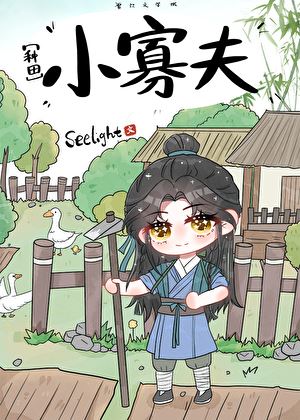
... Read More
"She would never forget that day. It rained heavily, and her family mocked, insulted, and kicked her out of the Sun household. She was left drenched and humiliated." I keep thinking about this sentence. The rain isn't just weather, it's the emotional state of the entire scene made physical. Two taels of silver—her entire life sold for less than the pension her own nephew is now trying to steal. And yet here she is, ten years later, still standing, still feeding her neighbor, still protecting what's hers. What breaks my heart most though is Chen Qing's reaction to it all. He's a bought husband, which means his position is already precarious, and yet when Sun Kang grabs the chicken he doesn't think twice about chasing after it. Not for the food—for the principle of it. "He and Aunt Sun hadn't slaughtered a chicken in years—how could he let someone his mother disliked take it away?" This man has no status, no security, no power, and he still fights. That's not bravery, that's loyalty. And the ending with Aunt Sun telling Zhou Yuan to help find a match for Chen Qing after the mourning period—she's planning his future while he's still right there in the room. She sees him as someone worth marrying off, which means she sees him as family.
... Read More
Okay so can we just talk about this dream sequence because OH MY GOD. Zhou Yuan cornering Chen Qing in his sleep and then wiping his tears? With CALLUSED hands? I am not okay. The text literally says Chen Qing didn't know why he started crying and Zhou Yuan just... wiped it away. That's intimate enough to make anyone short-circuit. And then the leaning in part—I had to pause and stare at the ceiling. But what really got me is how this mirrors the daytime scene. Zhou Yuan saying "I know you've been staring at me" in the dream feels like he's taking all the quiet, trembling moments from their earlier encounter and turning them into something almost confrontational. He's not letting Chen Qing hide anymore, even in a dream. The line "You've been watching me since the day we met" hits differently when you remember how flustered Chen Qing was earlier that morning, face red, telling Zhou Yuan to keep it down. And then Chen Qing wakes up flustered and bonks his head on the bedframe. Of COURSE. The universe has a sense of humor. That moment where he buried himself under the blanket just because Zhou Yuan laughed? That's not just embarrassment—that's the kind of vulnerability that comes with developing feelings you don't know what to do with yet. He's still reeling from the confession-ish thing Zhou Yuan did. Every little thing sends him into orbit.
... Read More
I kept noticing the clothing running through these chapters and I think it's doing something really interesting beneath the surface. Zhou Yuan gets a garment embroidered with green bamboo — and Chen Qing spends time on it himself, finishing the stitches, putting his hands into something meant to be worn by the person he's fallen for. There's something almost achingly tender about that image. And then there's Aunt Sun worrying about making a winter jacket, thinking about stuffing dried chicken feathers into the cotton for extra warmth. These domestic acts of making and mending and preparing for cold weather feel connected to something deeper about care and survival in a world that won't protect you. The repeated mention of Chen Qing as a "widow" — and Aunt Hua bluntly telling Aunt Sun that "at least he's a virgin, right?" — reduces his entire identity to his relationship status and the parts of his body society deems acceptable. There's also something haunting about Aunt Sun sending Chen Qing away from his embroidery, telling him to let someone else finish, as if she's protecting him from something he can't yet see. Every needle stitch in this story seems to represent a choice, a hope, or a quiet act of defiance against a world that wants to control who these people can love.
... Read More
I have to address what the author does with Aunt Sun's storyline and how it cuts so deep. She's at the market, happy, shopping for meat and fabric for Chen Qing's new clothes—because apparently the last thing she sewed him was TWO YEARS AGO—and she suddenly feels this wave of anxiety. "His ankle still hasn't healed." Just a gut feeling. And then she rushes home while the rest of the village is still celebrating. The author spares us the full horror by cutting away when Sun Kang's gang is already dragging Chen Qing down the road, but the reader KNOWS what's happening. That's torture. Pure, exquisite narrative torture. And then Chen Qing watching his home fade into the distance, thinking about how he'd never imagined leaving that village, and just... the sadness. Not even fear at that point. Just grief. For a home he'd finally started to build. For a life that was supposed to be his. This is the kind of emotional whiplash that makes you want to throw the book across the room and then immediately pick it back up.

Leave a comment

You must be logged in to leave comments. or
