Little Widow [Farming] - Reviews

Little Widow [Farming]
+Add to Custom List
Sort
Add review
... Read More
Okay so let me just say this first: the pacing in this batch was absolutely perfect. I've been reading along since before this confrontation happened, and the author knew exactly when to let the tension simmer and when to light the whole place on fire. Look at how the scene opens. Rain on Mid-Autumn Festival. Chen Qing and Aunt Sun sorting seeds. Zhou Yuan's seeds specifically. This is domestic tranquility—the kind of quiet moment that makes you feel safe. And then BAM, someone knocks on the door. That transition from peace to chaos is executed flawlessly. The author doesn't even need to describe the knocking. We just get "that peace shattered the moment someone knocked on the door." Two sentences. Done. The shift is immediate and visceral. What I love about the structure here is how the author controls information. We know Old Madam Sun is coming because we saw the previous chapter's fallout. But we don't know EXACTLY what she wants until she demands the twenty taels and threatens to take Chen Qing. The reveal comes in waves, not all at once. The fight scene itself is another pacing win. It starts small—Aunt Sun blocking one sister-in-law but not both—and escalates quickly. Chen Qing grabbing the stick, the old woman lunging for the money pouch, Chen Qing grabbing the cane—each beat raises the stakes slightly until Zhou Yuan intervenes and everything stops. The silence after Zhou Yuan appears is so well done. He doesn't yell. He doesn't threaten immediately. He just stands there, tall and imposing, and lets the weight of his presence do the work. Then he delivers his lines one by one, each one more final than the last. My only minor critique is that the exposition dump about Sun Wei's broken engagement feels slightly rushed compared to everything else. The author could have woven that information in more naturally rather than having it all come out in Old Madam Sun's dialogue. But honestly? That's a tiny nitpick in an otherwise masterfully paced scene. The cliffhanger ending—Zhou Yuan's threat about the Luo River—is the perfect note to leave us on. Not a full resolution, but a clear statement that the power dynamic has shifted permanently. I need to know what happens next immediately.
... Read More
I HAVE TO TALK ABOUT THIS SCENE because it's honestly one of the most satisfying confrontations I've read in a while. Let me break down why this works so well. First, the setup is brilliant. Old Madam Sun literally walks into Aunt Sun's house demanding she kneel—after everything that happened? After her own family broke into a home and tried to steal a child? The audacity is almost comedic. But here's the thing: the author doesn't make her a cartoon villain. She's genuinely delusional enough to believe she's the wronged party, which makes her more terrifying than any mustache-twirling antagonist. The twist when Zhou Yuan appears is perfectly timed. You have this chaotic struggle—two daughters-in-law grabbing at Aunt Sun, kids lunging for Chen Qing, Old Madam Sun scrambling for the money pouch—and then suddenly the power dynamic shifts. One moment Old Madam Sun is screaming about discipline, the next she's dangling in someone's grip with zero control. That's classic dramatic irony at its finest. But the real plot masterstroke? Zhou Yuan reveals he's the one who turned them in. Not Sun Cui. Not Chen Qing. HIM. And then he drops the military honors line like it's nothing. That single line changes everything about his character—we thought he was just some protective guy, but he's actually someone with actual authority and power behind him. The engagement fallout subplot is also brilliantly threaded through this confrontation. Old Madam Sun's desperation over Dawei's ruined marriage (and the five taels she spent bailing everyone out) is what drives her to physically try to take Chen Qing as compensation. That's insane logic, but it's also very consistent with a family that sees people as property. Honestly, I reread the part where Zhou Yuan says "If you're here because of those useless fools from your family, then you're barking up the wrong tree" three times. The way he casually dismantles their entire moral framework in one sentence? Chef's kiss. The only thing I'm slightly torn about is that we don't get resolution here—we just get a threat. Zhou Yuan basically says if they come back, they'll end up floating in the Luo River. Is that going to be the end of it? Or does Old Madam Sun have one more move? Either way, I'm hooked.
... Read More
Let's talk about voice because this dialogue is SHARP. First, Zhou Yuan—his lines are short, grounded, zero fluff. 'I earned it by cutting off heads on the battlefield, one by one.' 'My money didn't come from thin air.' 'You know why.' He doesn't explain himself. He doesn't justify. When he confronts the chief, he doesn't raise his voice or use flowery language—he simply states facts and lets the knife do the talking. And then, five minutes later, he's accepting noodle soup like a normal person having dinner. That tonal shift? That's character consistency disguised as casualness. Chen Qing, meanwhile, speaks almost exclusively in whispers and practical questions. 'Huh? Why?' 'The village chief can't force people...' His dialogue is functional, quiet, but when he says 'I'm not going...' to avoid the drama, you feel his restraint. Aunt Sun is the comic relief but also the emotional barometer—her lines are chatty, knowing, slightly mischievous. 'If you want to see the excitement, go have a look.' 'Then I'll go watch for you.' She's orchestrating without orchestrating. And the narration itself has a dry, observant humor: 'They thought they were being discreet, but Zhou Yuan saw everything.' That's not just plot—it's narrative voice with an attitude. The author trusts us to read between the lines. When Chen Qing flinches at the touch, there's no internal monologue explaining it. The action IS the emotion. When Zhou Yuan walks away after the nod, no feelings are named. That's confident writing. These characters don't need to announce their feelings because their dialogue and silences already did it for them. And honestly? I've never trusted a romance more than I trust these two right now.
... Read More
There's a symbolism layer running through these chapters that I didn't fully catch until rereading, and now I can't unsee it. The seeds. Aunt Sun plants them the day after Meng Tao's death. Chen Qing carries water up the mountain to nurture them. This is the oldest metaphor in the book — literally and figuratively. Life continuing after death, tending to something small when everything large has already fallen apart. But here's what makes it fresh: they don't plant them in a garden. They plant them in a little plot on the mountain, far from the house, far from the memory of what happened there. The future is being grown at a distance from the past. The wardrobe. Split in two. Most of it belongs to Meng Tao. A small corner holds Chen Qing's things. Even in death, the dead man occupies more space. But Aunt Sun's plan to alter some of his clothes for Chen Qing to wear — that's not erasure. That's transformation. The dead man's clothes becoming the living man's clothes. Identity as something passed down, not replaced. And the coffin they can't find. A month's wait. The inability to perform the final ritual properly becomes its own kind of symbolism — grief doesn't arrive on schedule. The funeral can't happen when you're ready. Life keeps moving, the carpenter keeps working, and you sit in your courtyard staring at the sky until you realize you're still here.
... Read More
I keep coming back to this idea of sharing—and not sharing—as the hidden skeleton of these chapters. The mixed grains scattered from the main beam. Peanuts, beans, candy, coins, red paper. It's a blessing ritual, yes, but it's also about distributing abundance. Zhou Yuan isn't hoarding his success; he's throwing it into the air for everyone, especially children, to scramble for. The village custom exists to bind people together through shared fortune. Then there's the basin. Borrowed, returned, refilled with small gifts. It moves between households like a vessel of unspoken care. Chen Qing cooks extra food, tells himself it's leftovers, but it's never just leftovers. The vegetables Zhou Yuan sends daily—he could buy them, he could ignore them, but he chooses to send them. Every exchange is a sentence neither of them has the courage to speak aloud. Even the mourning period is a kind of non-sharing—Chen Qing worries about gossip, about appearing improper by attending the celebration. But Aunt Sun cuts through it: "Didn't you see that Zhou Yuan doesn't care? If he did, would he have borrowed our pots and dishes?" The act of borrowing, of needing, of being needed—that's the real tradition. That's what holds a community together. And the candies wrapped in wax paper, pressed into Chen Qing's palm like a secret he can't unwrap in front of anyone—that's the thesis of the whole book, isn't it? Love as something small, wrapped carefully, offered quietly, held close until the right moment.
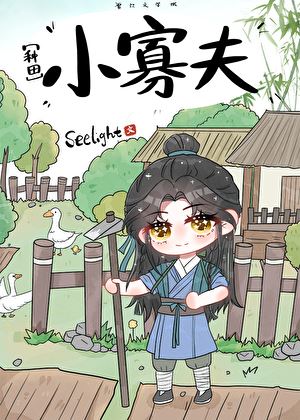
... Read More
Okay so this whole funeral sequence is fascinating because on the surface it's just... a burial, right? But the author does something really clever with pacing. You've got all this communal energy - laborers chanting, villagers gathering with coins and eggs, the feast afterward - and then BAM, once everyone leaves, the real story begins. Chen Qing pacing around his room at night, not even changing clothes. The plot pivots so sharply from public ritual to private panic. That's when you realize this isn't just a story about a man mourning his dead husband. It's about what happens AFTER the mourners go home. And then there's the parallel subplot threading through everything - Zhou Yuan building his house. At first it seems totally separate, right? Construction scenes, young men working, buying blue bricks. But slowly it becomes this undercurrent that's about to collide with Chen Qing's world. The author is setting up something and I am HERE for it. Every time Zhou Yuan appears it feels like the ground is shifting beneath Chen Qing's feet. "Poor Chen Qing came back, breathing hard." This line though. The physical exhaustion mirroring the emotional state. The author never just tells us Chen Qing is devastated - they show it through his body. That's craft.
... Read More
I have to talk about Aunt Sun because she completely rewired my understanding of this entire story. At first I thought she was just some stern older woman who bought a boy as a bride for her dead son — which sounds terrible on paper — but the more I read, the more I realize she's the most genuinely decent person in this whole book. She tells Chen Qing straight up: no rules, wait for Meng Tao, live a good life together. She makes him sweet water every morning. She fusses over his food and tells him to drink the water on the table. And when he's scared to go borrow the ox because he has to face Aunt Wang, she just... walks up the mountain herself instead of forcing him. That scene where she hands him the eggs and heads out alone? That's not a mother-in-law bullying a young bride. That's someone protecting a kid who's been through hell. The fact that she raised her own son Meng Tao alone, lost her husband young, and still took in a trafficked boy and treated him like family — "in less than three months, Chen Qing had figured out what Aunt Sun was like. She was honest with him and treated him well" — this woman is the anchor of this entire story and I think she might be the most important character here. Meng Tao hasn't even shown up yet and already Aunt Sun has more depth than half the protagonists I've read about.
... Read More
The dialogue in this batch is so distinct I could tell who was speaking with their eyes closed. Chen Qing? He doesn't really speak; he mumbles. He says "No, thank you" and "No, it's not proper" and explains himself in circles because he's terrified of offending anyone. His voice is all hesitation. When the shopkeeper asks him about romance and he "couldn't find the words to answer," that's not just narrative description; that's his voice failing him. He's socially starved. Then there's Zhou Yuan. Dude speaks in monosyllables. "I don't." "Is there a problem?" "I'm not afraid of that." But when he does speak fully, it hits like a truck. "The battlefield is dangerous, and every soldier deserves respect." That line came out of nowhere and wrecked me. It's so unlike his previous silence. It shows us exactly who he is: a man of few words, but when he speaks, it's with moral authority. He's not trying to be nice; he's trying to be right. And he shuts down the village head's bigotry in three sentences. And Aunt Hua! Oh my god, her dialogue is pure noise. "Xiao Zhou's cart is going back too. Xiao Zhou, would you mind giving Chen Qing a ride?" She's pushing, prodding, trying to orchestrate social connections that nobody asked for. Her voice is bubbly but invasive. She clicks her tongue, she smiles until her face cracks. She's the antagonist of casual social interaction. The banter—or lack thereof—between Chen Qing and Zhou Yuan is delicious. It's not banter; it's a collision of silences. Chen Qing tries to pay with a coin to avoid touch, and their hands are "so far apart that the coin fell from Chen Qing's palm into Zhou Yuan's." That's not dialogue, but it's the most communicative exchange in the whole text. It says everything about their relationship status: reluctant proximity, awkward boundaries, a weird intimacy built on avoiding eye contact. I'm obsessed with how the author uses silence and stammering as dialogue. It's so real.
... Read More
The atmosphere in these chapters is SO specific and I can't stop thinking about it. Right from the opening, we get this image of Chen Qing standing at a crossroads, holding a carrying pole, watching Zhou Yuan disappear into the distance. The houses aren't far apart but the PATH in front of them is narrow — 'another reason Chen Qing hated going out. No matter where he went, people were always too close.' This isn't just geography, this is psychology. The physical space forces proximity that Chen Qing can't handle. The evening light matters too. 'It was getting dark, and he needed to help his mother cook dinner.' There's this warmth to it — the golden hour of rural life, the smell of pork shank bone soup with winter melon and sweet potatoes and hand-rolled noodles. The text describes this meal like it's a painting: 'a big, hearty bowl.' You can almost smell it. Then there's Zhou Yuan's courtyard. Chen Qing standing there, unable to call out, hesitating at the doorway. The silence of the courtyard vs. the noise in Chen Qing's head. When he finally speaks, the text doesn't describe the sound of the yard — it describes the WEIGHT of the word 'Yuan' twisting nine times in his chest. The setting becomes internal. And the mountains. The river. The whole agricultural rhythm — busy farming season starting in two days, the Ghost Festival approaching on the 15th of the seventh lunar month. This world has its own calendar, its own pressures, its own quiet beauty. It feels lived-in, not constructed. The detail about Zhou Yuan's hunting — how he used to come home empty-handed, how he picked poisonous mushrooms before learning, how now he brings pheasants and rabbits and insists on sharing — this world-building is done through behavior, not exposition. Every object (the carrying pole, the water tank, the rabbit, the basin of soup) carries meaning.
... Read More
Let me just say this: the scene where they plant seeds and carry water up the mountain is one of the most vivid pieces of rural worldbuilding I've encountered. Not because of fancy descriptions, but because of the contrast. Up on the slope, silence and labor. Down in the village, loud voices of war veterans celebrating, Zhou Yuan negotiating house plans, the village head hovering nervously. Two worlds operating simultaneously, and the narrative doesn't flatten either one. The oil lamp scene hits differently too. "Under the dim oil lamp, he quietly watched her eat the porridge and custard." That's it. That's the whole description. But I can see it. I can see the yellow light, the steam rising from the bowl, Chen Qing perched on the floor like a guard dog. The dimness matters — it's not dramatic lighting, it's poverty. It's real. And the insects. "The endless chirping of insects filled the darkness." Night in a mountain village isn't quiet. It's loud with life. The author doesn't romanticize it. There's no moonbeam through the window or fireflies or any of that. Just noise and dark and a woman folding her son's dead husband's clothes. The physical world here is never decoration. The camphor wood wardrobe, the narrow mountain path, the Luo River, the bamboo curtains turning yellow — every detail does double duty. It grounds the emotion. You can't feel Chen Qing's grief without feeling how small his room is and how much of it is still Meng Tao's.
... Read More
The sensory details in these chapters are INSANE and I have to talk about the housewarming scene specifically because it's one of the most vivid set pieces I've read. The red firecrackers hung from the main beam. The mixed grains—peanuts, dried beans, wrapped candies, copper coins, bits of red paper—being scattered from above. The children scrambling and clapping. The elders chanting blessings. It's so specific, so culturally rooted, that I can literally SMELL the smoke and heat and hear the explosions. This isn't generic ancient-China backdrop; this is a living, breathing village with its own customs and rhythms. And the summer heat! The text keeps coming back to it—people losing their appetites, Chen Qing gathering wild vegetables before the season ends, the stuffiness driving him to crack his window open at night. That evening breeze easing the heat, letting him finally drift off—it's such a small detail but it makes the whole world feel tangible. You can feel the temperature changing, the light shifting from harsh midday to golden sunset to dark night. The contrast between the warmth of the celebration and the chill of the break-in attempt is masterful. One moment you've got firecrackers and laughter and Aunt Sun pressing peanuts into Chen Qing's hand, and the next it's silence, rustling, and a wooden stick swinging through dark. The village setting doesn't just hold the story—it shapes it. These are people who know each other, who gossip, who share meals, who also harbor grudges. The world feels dangerous precisely because it feels so safe.
... Read More
I keep thinking about the handkerchiefs. Chen Qing's embroidery is exquisite—"Each bird and blade of grass looked alive"—but the shopkeeper tells him the patterns never change. They're hard to sell. Isn't that a metaphor for his life? He's stuck in a pattern of grief, of subservience, of trying to survive within the rigid structures of his village. He can't innovate because he's too tired, too poor, too afraid. The repetition is a survival mechanism, but it's also a trap. He's embroidering the same birds over and over, just like he's living the same days of mourning and errands. Then there's the coin. The one coin he pays Zhou Yuan. It's such a small object, but it carries so much weight. It's the distance between them. He'd rather pay a stranger than accept a kindness that implies equality. He withdraws his hand so the warmth disappears from the coin. That's the core theme here: the desperate preservation of dignity in a world that wants to strip it away. Chen Qing is a widowed son-in-law living with his mother-in-law. He's already considered "bad luck" by association. The coin is his way of saying, "I am not a burden. I am a transaction." And the coffin. The search for a coffin is the overarching symbol of his grief and his duty. He needs one, but they're all sold out. The only ones left are "expensive, golden nanmu coffins priced at thirty taels—far beyond Chen Qing's reach." The golden nanmu represents the unattainable ideal of a proper funeral, a dignified end. He can't afford dignity. But then Zhou Yuan appears, and he chooses the house next to the "cursed" Sun family. He rejects the superstition. He finds value where others see pollution. The theme is clear: respect isn't bought with gold nanmu; it's given through human connection. Zhou Yuan's defense of the fallen soldiers—"every soldier deserves respect"—is the thematic anchor. It's about seeing the humanity in those the world has written off. Chen Qing is written off. Aunt Sun is written off. Zhou Yuan refuses to write them off. It's beautiful and heartbreaking.

Leave a comment

You must be logged in to leave comments. or
