Little Widow [Farming] - Reviews

Little Widow [Farming]
+Add to Custom List
Sort
Add review
... Read More
What strikes me about this section is how the author builds plot not through dramatic events but through the accumulation of small, revealing moments. The narrative threads here are deceptively simple — a conversation about marriage prospects, a sick neighbor recovering, a walk to fetch water — but they weave together something far more complex. The Zhou Yuan subplot is particularly masterful. His refusal of Matchmaker Hua isn't just a romantic rejection; it's a character-defining moment that reveals his independence, his past trauma, and his emotional unavailability. When he says "I don't plan on getting married," there's weight beneath those words. We know from his backstory that he lost his grandmother, that his relatives betrayed him, that he carries his own soil from her grave to this new village. The plot doesn't need fireworks when it has this kind of psychological depth. Meanwhile, Chen Qing serves as the emotional anchor. His awkwardness with Li Xin's insistence on helping, his discomfort with direct confrontation, his quiet observation of Zhou Yuan — these details map out a protagonist who is navigating community dynamics with gentle caution. The scene where he tugs at Li Xin's sleeve to hush him reveals how carefully he reads social territory. The Ghost Festival mention regarding Meng Tao is a brilliant plot device — it introduces mourning, memory, and community obligation without slowing the narrative. It also subtly connects Chen Qing and Li Xin through shared history while contrasting with Zhou Yuan's isolation. What I find most compelling is how the author structures proximity. These three men keep crossing paths — at the well, on the road, near houses — creating a sense of a small world where everyone watches everyone else. The plot tension lives in what remains unsaid between them.
... Read More
I need to talk about how sparse the dialogue is and how effective that is. "You and Taozi never even met. This marriage doesn't count." — Aunt Sun, trying to rationalize, trying to negotiate with death itself. This is a woman who just lost her son and her first instinct is to find a legal loophole. That's not comedy. That's grief speaking in broken sentences. Then Chen Qing's response: "No, Mother. We were married. We have a marriage certificate." Flat. Factual. No anger, no weakness. Just the truth held up like an object between them. I love that he doesn't try to comfort her. He just states what is. Later: "Let's just live out our days as best we can." After spending the afternoon staring blankly at the sky because they couldn't find a coffin. This is the most devastating line in the entire passage. She doesn't say "we'll get through this." She doesn't say "he would've wanted us to be happy." She says: survive. That's all. No poetry. No uplift. Just the raw math of staying alive when everything hurts. The narrative voice matches. It's observational, almost documentary. The author doesn't tell you how to feel about any of this. Chen Qing doesn't monologue about his emotions. He acts. He guards the door. He carries water. He boils tea. The dialogue stays at the surface and the meaning pools underneath. This is the kind of writing that trusts the reader.
... Read More
This sequence is peak plot escalation. You start with a quiet, almost cozy opening—Chen Qing embroidering alone in the courtyard, ankle healing, the village emptying out for the Mid-Autumn Festival—and then BAM, the door gets kicked in. The Sun family doesn't just threaten anymore; they come prepared with a plan. Finding the contract under the straw, dragging him out while everyone's at the market, hiring a carriage on the main road to seal the deal. That's not impulsive violence—that's calculated. And the fact that Sun Kang is specifically worried about Zhou Yuan returning? That tells me everything I need to know about how this power dynamic is shifting. Zhou Yuan isn't just a neighbor anymore; he's the one variable Sun Kang can't control. The rescue itself feels almost too perfect though—a little convenient that Meng Qi had military buddies ready to mobilize on such short notice, but I'll allow it because the emotional payoff lands.
... Read More
What keeps you hooked in scenes like this isn't just whether the good guys win—it's whether they win before something irrevocable happens. Every time Sun Kang opened his mouth, the stakes climbed. First it was kidnapping, then the robbery charge, then BOOM, the original contract threatens to reclassify Chen Qing as property again. My palms were sweating. And Zhou Yuan's internal panic when he realized the agreement might have been real? That wasn't narrated with big dramatic language, just a quiet "Zhou Yuan was stunned" and suddenly I was leaning forward in my seat. The magistrate's recognition of Zhou Yuan added another layer—who is this quiet village guy, and why does even a county official know his name?—but the real tension was always about Chen Qing. He barely spoke the entire court scene. No speeches, no last-minute cleverness. He just knelt and trembled while women and one very dangerous-looking man fought for him. When they finally walked out and his ankle was swollen "like a steamed bun," that detail hit harder than any battle wound described with gore. It's the small, mundane damage that reminds you how close they came to losing. Five men getting fifty lashes each and three months in jail feels satisfying, sure, but the actual victory was smaller and deeper: a document with an official seal, a fingerprint pressed in ink, and a boy who finally got to go home safe.
... Read More
The pacing in these chapters is doing some serious double-duty. You start with this TENSE scene—Zhou Yuan confessing his feelings in Chen Qing's courtyard, Chen Qing too flustered to even look at him, fingers tapping nervously on the pillar. The author could have let this breathless moment linger for pages but instead... Zhou Yuan just fixes the chair, sets Chen Qing down, and leaves with 'Think it over!' like he's done his business and called it a day. Then BAM—immediate tonal pivot to comedic disaster. Chen Qing hides under the blanket and falls off the bed. The whiplash is intentional and it works. The author understands that after emotional intensity, you need release, and sometimes that release is a grown man getting mad-laughed at by the person he's pining after because he knocked his head on a bedframe. The chapter structure also plays with time beautifully. Night becomes dream becomes morning becomes the road to town. The Mid-Autumn Festival mention at the end gives us a temporal anchor—this is building toward something. A gathering, a celebration, a moment where all these unresolved tensions might come to a head. The pacing never drags because every scene shifts the emotional temperature, and the quiet moments (Chen Qing at the window, staring at the recliner) are given just enough space to breathe without overstaying their welcome.
... Read More
The stakes in these chapters are quiet but they're REAL. On the surface, nothing urgent is happening. Chen Qing isn't in danger. Zhou Yuan isn't threatened. The farming season is just... coming. But underneath, every single element is pressing down on these characters. Chen Qing's financial situation is precarious. Six taels. Twenty copper coins a month. Three acres of farmland and 'God's mercy.' If the weather turns bad, if his mother gets sick, if the farming season goes wrong — they have no buffer. And yet he's saving his own money to 'do something' for Meng Tao. The stakes here are spiritual as much as material. He's trying to honor the dead while barely feeding himself. His social isolation is a slow-burning conflict. 'He couldn't keep doing this' — his mother's words about him hiding in the house. The narrow path where he can't walk past Zhou Yuan without panicking. The fact that he only seems alive around Li Xin but clearly gravitates toward someone else entirely. This is a young man trapped between who he is and who he needs to become. And Zhou Yuan's conflict is just as sharp, just less visible. He hunts alone. He cooks badly. He notices everything about Chen Qing but has no language for it. When he says 'I want to burn incense for Meng Tao,' is he seeking connection? Testing the waters? Genuinely memorializing a friend, or finding an excuse to talk to Chen Qing during a meaningful ritual? The highest stakes scene is thirty seconds long: Chen Qing standing in a courtyard, holding a bowl of soup, unable to say a single complete sentence, while the person he cares about watches him from the doorway and asks what's wrong.
... Read More
I need to talk about Zhou Yuan because this guy is absolutely fascinating and I have opinions. First of all, the dirt-in-mouth moment??? That is not something you recover from casually and I am living for the fact that Chen Qing's internal reaction was just… "Chen Qing: …" like he's seen this before and is mildly impressed. Also the money stuff! Zhou Yuan refusing to stay for dinner because he's afraid Chen Qing will try to pay him? That's such a specific kind of character detail. It tells us everything about Zhou Yuan in one paragraph—he's not just poor or careful with money, he has a principled stance about not owing anyone and not letting others owe him. But then the most telling moment for me was when Aunt Sun brought him the chicken anyway and he came out to meet her. He didn't hide the bowl. He didn't pretend he didn't want it. He just accepted it with this quiet dignity. Meanwhile Chen Qing keeps positioning himself physically behind Zhou Yuan during conflicts—which says something about where his instinctive sense of safety lives—and Zhou Yuan keeps appearing exactly when Chen Qing needs him. Their dynamic isn't spelled out, it's shown through action and I respect that enormously.
... Read More
Can we just talk about how distinct Aunt Sun sounds compared to everyone else? From the very first line of her dialogue—'You lot with your poison tongues are always jealous of others' good fortune!'—you know this woman does not suffer fools. Her dialogue has rhythm, it has heat, it has no filter whatsoever. Meanwhile Chen Qing speaks in these soft, clipped sentences. 'I was going to scold them back. But since you came, I didn't.' That's it. That's his entire personality in one line. And Zhou Yuan? His voice is calm, measured, almost bureaucratic. 'Is there any family that hasn't been notified?' 'Could I trouble you to send word again?' He's the straight man in every scene, and it makes Aunt Sun's explosions land even harder. The narration also has this wonderful dry humor woven through it—like when the village chief 'naturally didn't dare object' after Aunt Sun glares at him. The author's voice trusts us to understand the power dynamics without spelling everything out. And Chen Qing's internal monologue when he's thinking about whether to participate in the lottery—that brief moment where he calculates 'it's honest work, and we could really use the money' before feeling awkward again? That's character revelation through thought process, not description.
... Read More
I'm going to be honest — the first few chapters moved so slowly that I almost put the book down. And then I kept reading anyway because something was pulling me in. The author has this incredible patience with the narrative. Day by day, meal by meal, chore by chore. Chen Qing wakes up, eats breakfast with Aunt Sun, borrows the ox, plows the field, gathers firewood, weeds the garden, drinks sweet water. And in the space between all these ordinary moments, the story builds this enormous tension. Why? Because we know Chen Qing's backstory in flashes — the father who fed him one last meat meal before jumping into the river, the grandmother who only offered burial if he became someone's concubine, the two taels of silver he sold himself for, the wedding ceremony he completed alone with a rooster in his arms. The pacing works because every mundane moment is shadowed by this history. The author is saying: look at this quiet life, now remember what it cost to get here. The chapter transitions are seamless — no hard breaks, just life flowing forward like the Luo River. By chapter four, when Aunt Sun runs into another villager gathering grass and the dialogue cuts off mid-sentence, I was already reaching for the next page without thinking about it. The suspense isn't in explosions; it's in the silence between sentences.
... Read More
The dialogue in these chapters is deceptively minimal but absolutely precise. Let me just say this: the author trusts the reader way more than most writers do. Look at how Zhou Yuan speaks — he says very little, but every line carries weight. "Don't worry. It's just a cold and a fever." Simple, practical, but underneath it there's this enormous calm that Chen Qing so desperately needs. And Chen Qing himself? His dialogue during the emergency is fragmented, panicked — "Mom, Mom..." and "I was so scared..." — which feels completely authentic for someone in crisis. But the most remarkable dialogue scene is almost entirely silent. The ginger exchange. Chen Qing grabs a piece of ginger, says "Go back and make ginger soup," and Zhou Yuan responds by squeezing his hand, pulling him into a hug, and saying "Go get some sleep." Three lines of actual spoken words and an entire conversation happens between them. The subtext is roaring. I also appreciated how Aunt Sun's voice is distinct — she's practical, slightly teasing, and deeply perceptive. "When you're old, even getting caught in the rain feels like you're about to die" is the kind of wry observation that makes her feel like a real person, not a plot device. The narrative voice itself has this warm, restrained quality that matches the emotional tone perfectly.
... Read More
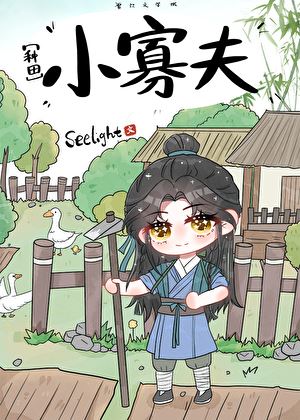
I've been thinking about corn a lot since I finished this section. Not just the literal corn—they're peeling it, sorting it, paying taxes with it, selling what's left—but what it represents. Chen Qing sorts the kernels into three piles: largest and fullest for seeds (the future), pest-free for his family to eat (survival), and the rest for taxes (obligation to the state). This is literally how he organizes his life. Everything is categorized by utility, by duty, by what comes next. There's no 'just for fun' pile. No 'maybe I'll keep some for myself' pile. Even his own sustenance is chosen based on quality, not desire. The war had made land taxes as high as 15%. Life was tough. But the weather has been favorable, and now taxes are expected to drop. The world is slowly recovering, and Chen Qing is catching up with it—peeling corn, saving seeds, planning ahead. He's a man who cannot stop preparing for a future he may not get to enjoy. Then there's Qi Shuning, the scholar who wants to study but physically cannot survive in this world. He carries a bookcase on his back like a turtle shell, pale and starving, eating voraciously and crying while he eats. The old world of scholarship and refinement has no place for him anymore. Meanwhile Chen Qing—uneducated, probably—has built something real through labor and loyalty. What does it mean that one can read but cannot feed himself, while the other cannot read but cannot stop caring for others? The corn peeling tool Zhou Yuan is designing—that's the symbol I keep coming back to. Someone inventing a way to make Chen Qing's suffering easier. Not curing the underlying problem (why is he working himself to oblivion?), but reducing the friction. A small innovation in a world that mostly runs on endurance. Maybe that's the theme: we can't fix everything, but we can make the unbearable slightly more bearable. One cracked corn kernel at a time.
... Read More
"Mother..." Chen Qing looked at her, afraid to let her out of his sight. This one line. This is everything. I kept coming back to it because it perfectly captures what this whole relationship is — a young man who was literally sold into servitude, now bound to a woman who became his chosen family, and after five years of quiet devotion, the roles have somehow reversed. She takes care of him, he guards her. Not romance. Something messier and more real. The part that wrecked me was remembering that backstory — Aunt Sun found him being trafficked, people sneering that he wasn't worth three taels of silver, and she bought him anyway. Five years later he's sitting on her doorstep in a fetal position, dozing off between panic attacks about whether she'll do something stupid. He doesn't even sleep in his own room anymore. That's not obligation. That's love that learned how to survive. And then she notices him there, sees his face still carrying traces of youth, and instead of pushing him away or telling him to be a man about it, she just squats down and touches his head. No dramatic speech. Just: "Go rest. I'll make breakfast." The power dynamics in this relationship shift so subtly you almost miss them. At first it's clear who's in charge — she's the matriarch, he's the purchased husband. But by chapter 10, he's the one making decisions, planning funerals, carrying water up mountains at dawn. And she follows his lead without losing an ounce of authority. That's rare in fiction. Most authors can't write a healthy elder-young dynamic without slipping into melodrama or undermining one character to elevate the other.

Leave a comment

You must be logged in to leave comments. or
