Fallen Idol Group - Reviews

Fallen Idol Group
+Add to Custom List
Sort
Add review
... Read More
Okay so this whole episode is built around a hidden camera setup and honestly the way it unfolds is kind of brilliant. You've got Zhu Lianzhen completely flustered taking a staged phone call, Tan Qing watching him like a hawk, and then the big moment where Tan Qing drops all these loaded questions under the guise of casual conversation. And the genius part? The reveal that the entire thing was just a test segment doesn't come until the very end when staff members knock on the door. By then the reader is already sweating because we're invested in the tension between them. The plot doesn't need dramatic explosions or cliffhangers here — the stakes are entirely interpersonal and the author handles that with restraint. Every beat builds on the last: the fake call, the accidental eavesdropping accusation, the wrist grab, the apology in the car. It's a tight structure and it works because the real conflict has always been underneath the surface, waiting for the right pressure to surface.
... Read More
Okay so this whole chapter is built around a parallel structure that I cannot get over. We open with Xue Chun literally falling apart backstage after a performance screw-up, manager patting him on the head saying 'it's not that big of a deal,' and five paragraphs later we're watching Acemon's entire concert like it's being projected onto a screen in my living room. The contrast is brutal and I love it. What's interesting is how the author uses Xue Chun as our gateway character. He's the one sitting in the wings watching them, which means we're getting the performance described through someone who actually knows what it takes to stand on that stage. When he thinks about blaming the audio system later, it's almost funny because his own group couldn't even handle basic live performance pressure. Meanwhile Acemon just... absorbs everything. The audience chaos, the technical demands, the sheer physicality of it all—and they deliver. And then that ending. Tan Qing abandoning the high note, pulling out his in-ear monitor, and making some expression at the audience. Zhu Lianzhen's reaction—'So it hadn't been a mistake'—is such a perfect beat. The plot doesn't resolve anything here, which is exactly right. We're left wondering what that expression was, what the audience did, and whether this intentional choice was some kind of signal. The chapter ends mid-sentence even ('Abandoning the high note just...') which I think is deliberate misdirection, like the performance itself cut off. Beautiful structural choice.
... Read More
I need to talk about the visual writing in this chapter because the author is NOT playing. The opening shot—Tan Qing posting a moon emoji at 3 AM after a late shoot, and then Zhu Lianzhen immediately liking and unliking within three seconds—this is such a perfect establishment of their current state. They're reaching for each other across a digital void and pulling back before anyone notices. But the centerpiece, the absolute MASTERPIECE of this chapter, is the hotel room nap scene. Let me break down why it works so well: First, the setting itself is a joke played on Zhu Lianzhen—he arrives expecting some Kowloon Walled City slum documentary, gets a chain hotel with a buffet instead. The "old rundown apartment" was a tourist set. This misdirection mirrors their entire relationship: Zhu Lianzhen has been constructing narratives about Tan Qing's suffering that simply aren't accurate, and it's almost funny how wrong he's been. Then the light. Summer in Ronggang, harsh sun, curtains not fully drawn, a slice of daylight landing directly on Tan Qing's face. The author writes: "In the still room, Tan Qing's breathing seemed to deepen." That sentence does so much work. It's quiet. It's intimate. It makes you hold your breath. And then the mosquito arrives—a tiny, insignificant creature that becomes the entire emotional catalyst for the scene. Zhu Lianzhen fanning it away with a script, Tan Qing waking into sunlight and confusion, the phone buzzing with a battery notification at the exact moment tension peaks. This is film-direction-level writing.
... Read More
I need to talk about Tan Qing because this character is absolutely killing me in the best way. Here's a man who drove through the night, sat beside a hospital bed for twelve hours straight, didn't sleep, didn't say much, and then casually walked out the next morning like it was no big deal. Ah-Xu literally called him a ghost. And honestly? That's the most accurate description I've ever seen. But the thing that wrecked me was the scar scene. Tan Qing touching Zhu Lianzhen's arm, feeling that faded scar from a performance injury, and just quietly absorbing it. No dramatic speech, no grand gesture. Just fingers on skin and a question about other injuries that made Ah-Xu internally scream. This man catalogues every wound on the person he cares about and never says a word about it. And then the breakfast scene — Zhu Lianzhen trying to brush off whatever happened last night as sleep talk, and Tan Qing's response: You don't remember any of it? Not defensive, not angry, just... quiet devastation. He's sitting there having eaten his seafood wontons like nothing happened, but his eyes are doing the talking. The dynamic between these two is built entirely on what they DON'T say. Every sentence is a minefield. Tan Qing leaving and then immediately coming back when Zhu Lianzhen calls him? That's not obligation. That's something else entirely.
... Read More
I need to talk about this exchange because it is absolutely iconic and I cannot stop thinking about it. Zhu Lianzhen: "Was that a guilty laugh just now?" Tan Qing: "No, I just saw something funny," turning his phone screen toward him. Then the phone screen shows a completely irrelevant Harry Potter meme. This is Tan Qing deflection as an art form. He doesn't get caught, he doesn't explain, he just pivots so fast Zhu Lianzhen can't track him. And the funniest part? Zhu Lianzhen sees through it immediately: "Tan Qing was just trying to change the subject. His expression snapped back to serious." But the real gem is this line: "Recording someone's drunken behavior—wouldn't that be taking advantage of them? I couldn't possibly do something like that." Tan Qing says it with complete composure, and the narrator tells us his mouth twitched upward. So he's lying. He knows he's lying. Zhu Lianzhen knows he knows. And neither of them addresses the truth directly. That is the most natural dialogue I've read in years—two people having a conversation where literally everything important is happening beneath the surface. Zhu Lianzhen's voice throughout is also beautifully distinct. He's sarcastic, defensive, quick to accuse but slower to believe. When he says "You're denying it so confidently—did it not occur to you I might've recorded it that night?" you can hear the exact cadence of someone who's been burned before and is testing the ground this time. The author isn't just writing characters who sound different—they're writing characters who think differently, and the dialogue reveals that architecture.
... Read More
I need to talk about Zhu Lianzhen and Tan Qing because my heart cannot handle this level of passive-aggressive emotional warfare. Let me be clear: I was fully invested in their entire dynamic from the beginning, but this chapter? This is peak. The way Zhu Lianzhen deliberately avoids him at every turn — different flights, leaving events early, his Moments being completely blank — and then Tan Qing just sits there and asks, dead calm: "Xiao Zhu, do you really hate me that much?" I literally gasped. Like, out loud. In my apartment. At 11 PM. Nobody understood what was happening. But here's what got me — the flashback to when Tan Qing first joined the group and Zhu Lianzhen called him a "copycat" because he actually tried to be friendly. The irony is SO thick I could spread it on toast. Tan Qing took genuine interest in his taste, remember what Zhu Lianzhen casually mentioned, and tried to connect, and Zhu Lianzhen interpreted it as pretentious behavior. Years of this. Years of misreading each other. And the car moment — when Tan Qing says "I prefer working with you guys" and literally looks straight at him through the headlights — Zhu Lianzhen can't even handle eye contact. He turns away and runs. That's not indifference. That's something way more complicated. Also: Tan Qing didn't drink on purpose so he could drive him home. HE PLANNED THIS. I swear the author is trying to kill me.
... Read More
'Every time I came back late at night without my key and saw you getting up to let me in, I felt really bad.' 'You didn't do that on purpose, right?' This single exchange contains the entire thesis of the novel. The locked-out-key scene is introduced almost casually but it's literally the foundation of everything. Zhu Lianzhen has always wondered whether Tan Qing's kindness was genuine or a calculated move—and this suspicion colors every interaction between them. And then Tan Qing's response when pressed: 'So that's how you see me.' That's not defensiveness, that's grief. Someone he cared about reducing his entire affection to a transaction. The recurring motif throughout this text is PERFORMATIVITY. Tan Qing is an idol—a profession built entirely on curated presentation. Zhu Lianzhen calls him a 'poser' like it's an insult, but then immediately proves he understands the performance because he's complicit in it too. The dream sequence takes this further: a moth (ugly, dismissed) transforming into a butterfly (beautiful, admired) only in the presence of someone who knows how to hold it gently. Koty screams about bugs while Tan Qing creates something magical. The transformation only happens when someone stops treating it like a problem. Who performs for whom, and who gets to be seen when the performance ends? That's the question this chapter is really asking.
... Read More
'I happen to be out right now. I'll drop by your place in a bit and bring you some medicine.' That line. Just that one line. It's such a Zhu Lianzhen thing to say—casual, practical, completely deflecting any hint of genuine emotional investment. He could have said 'I was worried and wanted to check on you.' He could have been honest. Instead, he wraps his concern in the packaging of convenience. 'I happen to be out.' As if this isn't the most deliberate, caring thing he's done in weeks. And the text exchanges between them? Chef's kiss. Absolutely perfect. Zhu Lianzhen's messages start formal—'How high is your fever?'—and slowly become softer, more practical, more personal without him seeming to notice. The progression from 'Then I won't disturb your rest' (edited to 'we'll talk when you're up') to actively coordinating medicine delivery and food shows a character who's terrible at expressing care verbally but excellent at expressing it through action. That's not just good dialogue—that's characterization through subtext. Tan Qing's voice is quieter but no less distinctive. 'Can't sleep. Sigh.' Three words and an emoji that says everything. And then later, after Zhu Lianzhen finds the keys and confronts him: 'What's wrong?' That puzzled smile. That non-answer. That deflection so smooth it might as well be practiced. It's the kind of dialogue that makes you want to shake the character—or admire their survival instincts. The narration itself has a wonderful rhythm too. Short sentences mixed with longer, more descriptive ones. The internal monologue—'But what if he really just passed out for good?'—feels authentically Zhu Lianzhen. Practical, worried, slightly self-deprecating. He doesn't romanticize his own actions. He acknowledges that someone like Tan Qing 'scored full marks in self-care' while he himself 'failed at basic life skills.' That's humor, that's vulnerability, that's voice. And the silence between the dialogue? That's where the real work happens. When Zhu Lianzhen asks about the keys and Tan Qing just eats his congee—that silence is louder than any confession could be. The author understands that what characters choose not to say is often more important than what they do say. Every exchange feels lived-in, natural, like eavesdropping on people whose relationship has decades of history compressed into a few carefully chosen words.
... Read More
I have been waiting FOREVER for Tan Qing to do the crying scene and the author did NOT disappoint. Let me set the scene: fifteen-second countdown in the comments, Koty shoves Zhu Lianzhen right into Tan Qing's personal space, and then Tan Qing just… looks at him. No music, no prop, no trigger story. Just eye contact across a room full of cameras and the entire chat is typing “fifteen, fourteen, thirteen” like they're watching a bomb defusal. And then—both eyes, simultaneous, like a faucet opened. Not a sob, not a twitch, just Tears. Like he's been holding them since chapter one and finally decided to let them out. I am SOBBING. The way Zhu Lianzhen froze, the way he tried to avoid eye contact because he KNEW this was dangerous territory, and then Tan Qing just unloaded on him with raw vulnerability while five hundred thousand people watched. That's not acting. That's something else. And then the worst part—Tan Qing closes his eyes, squeezes out the last drops, and turns around like NOTHING happened. Like he didn't just weaponize his own tears in front of the entire group. Zhu Lianzhen's heart was at 80 and trembling. I could feel it. Every beat. The author understands something most writers miss: the most emotional moments aren't the loud ones, they're the quiet ones where someone lets their guard down for exactly fifteen seconds and then puts it right back on. I need a minute.
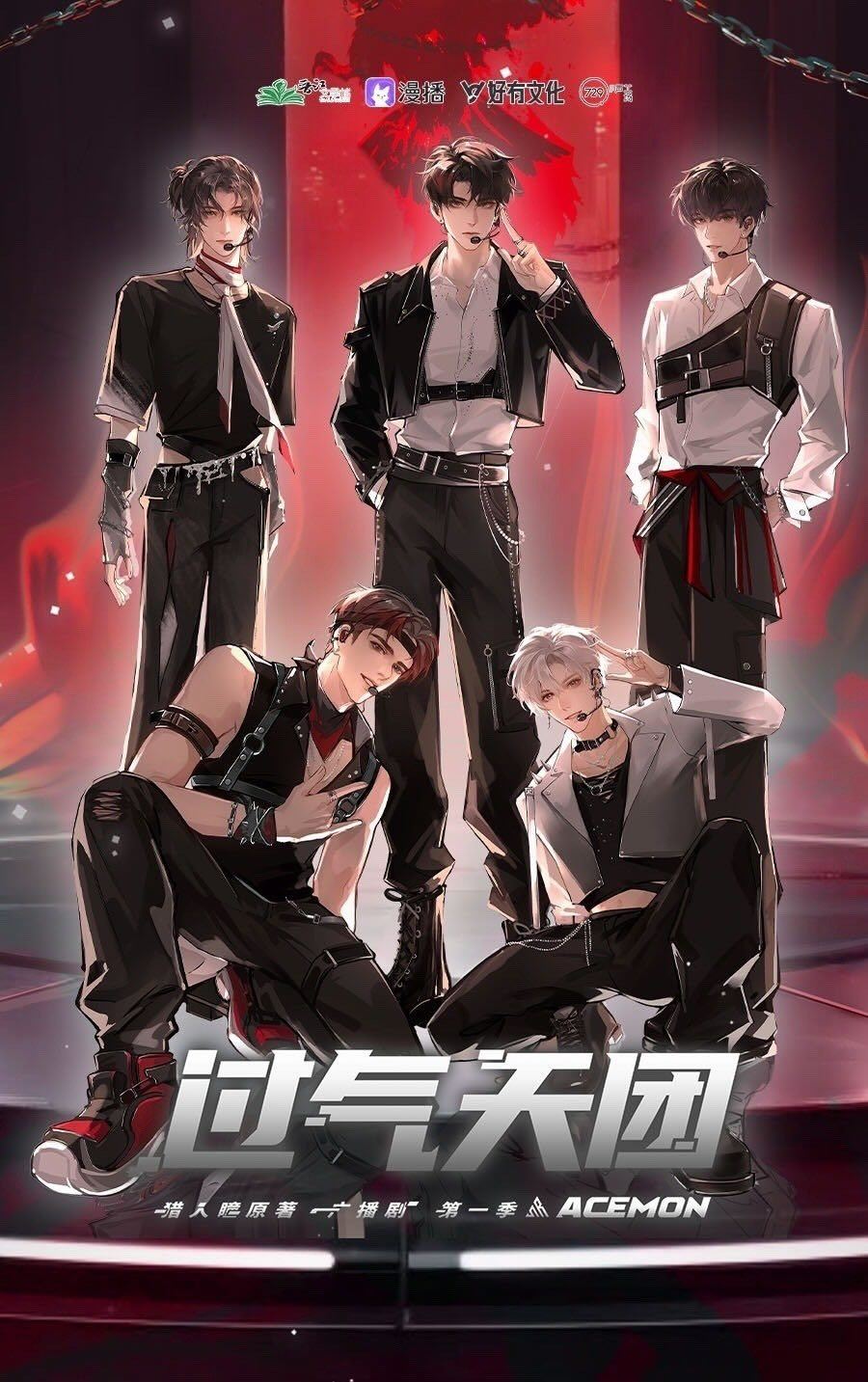
... Read More
I have to address how natural these conversations feel because normally in novels dialogue either sounds like people are reciting essays or it's all witty banter that nobody actually says. But this? This is how people who are tired and stressed and trying NOT to fight actually talk. Zhu Lianzhen: "Can't you tone it down a little in front of so many people?" Not dramatic. Not accusatory. Just exhausted. And Tan Qing's response is even better—he doesn't argue, he just wraps an arm around his waist and murmurs an apology that has "not a trace of guilt on his face." That detail alone tells you everything about their dynamic. Tan Qing genuinely doesn't understand why Zhu Lianzhen is upset because to him, leaning in was just... flirting. It's not performative to him, it's natural. That's the disconnect. And then the best line in the whole passage: "So does that mean I can't kiss you anymore?" Said so casually after being told he can do whatever he wants OFFSTAGE. It's like he heard the permission but the subtext is 'why does it have to be conditional?' You can feel the loneliness underneath three words. Even the casual stuff is loaded. "You owe me a kiss" whispered before they leave. That's not a demand, that's a promise. These two communicate entirely through implication and the author nails it. Nobody says what they actually mean and yet we understand everything.
... Read More
Let me tell you about stakes. The entire chapter is built on a conflict that is simultaneously internal and external, personal and existential, and the terrifying part is that BOTH characters know exactly what they're afraid of—they just can't name it out loud. On the surface: they made an agreement. Ground rules. Stay friends. Don't cross the line. Simple, right? But the moment Tan Qing touches Zhu Lianzhen's chest and feels his heartbeat, the stakes explode. Because now the conflict isn't about following rules—it's about what happens if they BREAK them. What does Zhu Lianzhen stand to lose? Everything. His carefully constructed distance, his control, the facade of friendship that keeps Tan Qing in his life without the risk of losing him completely. If he admits what he feels, he loses the safety net. If he doesn't, he's lying to the one person who matters. What does Tan Qing stand to lose? He's the one crossing the line, which means he already has something to lose. His patience. His composure. The possibility that Zhu Lianzhen truly only sees him as a friend. "You're the one who decided to keep your distance, but you're also the one who keeps caring about me without knowing where the line is. You really are good at making things hard for me." This is the thesis of their entire conflict. Zhu Lianzhen created the problem by pulling away, but he can't stop himself from reaching out. The tragedy isn't that they don't want each other—it's that wanting each other feels like the only thing that could destroy them. And the chapter ends without resolving ANY of it. Just Zhu Lianzhen standing there, heart racing, unable to lie but unable to tell the truth. The stakes have never been higher, and they've never been more paralyzed.
... Read More
Let me tell you about tension. Real tension isn't fireworks and dramatic confessions. It's Tan Qing holding Zhu Lianzhen so tightly there's no space to lean away, and Zhu Lianzhen feeling his face heat up and still not pushing him off. That's the kind of stakes that keep me up at night. Because what are they actually risking here? It's not just 'will they or won't they.' It's: what happens to two people who have already built a fragile equilibrium if one of them decides to stop pretending? Tan Qing says 'I won't come near you again' — and the unspoken fear is that Zhu Lianzhen might actually let him walk away. The stakes escalate beautifully after that too. Zhu Lianzhen recovers from food poisoning (Koty's fault, clearly some ongoing conflict there), does a livestream, and now the whole fanbase is shipping them while the actual characters can barely speak honestly to each other. The external chaos mirrors the internal mess. Every comment section war, every casual interaction between Zhu Lianzhen and Fu Rong, every yell from Koty — it all raises the pressure. And the real stakes? That moment when Tan Qing says his matters aren't worth mentioning. What happens when someone who has nothing left to give finally meets someone willing to receive it... and both of them are too scared to make the first move?

Leave a comment

You must be logged in to leave comments. or
