Fallen Idol Group - Reviews

Fallen Idol Group
+Add to Custom List
Sort
Add review
... Read More
Okay so the plot twist here isn't some big shocking reveal but it absolutely got under my skin. Zhu Lianzhen hallucinating the whole world turning into Koty after eating poisonous mushrooms is peak dramatic irony because he basically said things last night that he now wants to pretend were just sleep talk. And Tan Qing? He heard all of it. Let that sink in. What I love about this section is how the author layers the truth behind the hallucination. Zhu Lianzhen keeps insisting it was all unreal, that his brain couldn't tell what was true or false. But the reader knows better — the emotions he expressed during those hallucinations were real even if the scenario wasn't. That's such a clever narrative trick. And then there's the structural parallel to that concert night mentioned earlier. Same hospital vigil, same silent watching, same distance between them disguised as propriety. Back then Tan Qing had no valid reason to visit. Now he does. But the awkwardness hasn't changed one bit. The author is slowly building this tension where proximity and silence speak louder than any confession could. Also the detail about Ji Yunting missing all the signs while Tan Qing noticed everything from the audience? That says SO much about who actually pays attention to Zhu Lianzhen. Plot-wise it's a small moment but it lands like a hammer.
... Read More
I need to talk about Zhu Lianzhen because honestly? He might be the most emotionally intelligent person in this entire story and I am here for it. So Tan Qing is spiraling over whether to visit his dying father, and what does Zhu do? He doesn't just offer empty comfort. He doesn't say 'you should go, family is everything.' He actually *thinks* about it. He considers: Tan Qing rarely says no to anyone—he handles unreasonable fan requests with grace, he's accommodating to a fault. If he can be that kind to strangers, how could he possibly refuse a dying family member? And yet—he's hesitating. That means deep down, he doesn't actually want to go. And then Zhu sends him that message: "Someone who truly cares about you wouldn't put you in a difficult position." DAMN. That is such a sharp, honest, protective thing to say. He's essentially telling Tan Qing that his father has already hurt him by keeping this secret for twenty years, and now showing up only when he's dying doesn't erase that. Zhu isn't being cruel—he's being *clear*. And the fact that Tan Qing replies with just "Mm" and then "I'm coming back" tells me everything. He needed someone to give him permission to prioritize himself, and Zhu did exactly that. Their dynamic is so underrated. Zhu Lianzhen sees Tan Qing in ways nobody else does. He notices the rainwater on the floor, he remembers Tan Qing never mentions his family, he picks up on micro-expressions. Meanwhile Tan Qing just trusts him enough to be vulnerable in text form—proper punctuation, no emojis, serious tone even when he's confused. That trust means something.
... Read More
The visual language in these chapters is insane. The opening scene at the venue — Tan Qing leaning close to Zhu Lianzhen's ear over loud music, his hand on Zhu Lianzhen's shoulder, whispering something that cuts right through the noise. That physical closeness contrasted with the emotional distance between them is such a rich image. And then the cold fireworks exploding on stage, Koty's mouth wide open, the big screen flashing their names. The whole thing feels like a movie. I'm not even exaggerating. Then the dorm at 2 AM — all the members trudging back, too sober to celebrate properly because they want to feel every second of it. Pei Qiao covering the bill, the hotel party going into the early hours. It's warm and crowded and communal. But the final image is so different. Dark room. A square glass on the table. Faint smell of alcohol. Hallway light cutting through the slightly open door. Tan Qing sitting alone. The visual shift from the bright stage to this dim, quiet room is basically the entire emotional arc of the chapter condensed into lighting. The world of this story feels incredibly specific too — the music industry hierarchy, the difference between Music Platform and the other festivals, how idol groups are perceived by professional voters versus the public. None of it is explained through exposition dumps; it's all woven into the scenes naturally.
... Read More
This section is structured like a slow burn that suddenly catches fire and I have opinions. The first half—everything with the mirror setup, the group chat coordination, Zhu Lianzhen interacting with the mirror day after day—moves at this almost domestic pace. It's slice-of-life energy. He trains the cat. He talks to a mirror. His bandmates mess with him from another room. Nothing urgent happens and that's the point. The author is letting us settle into the normalcy of Zhu Lianzhen's world so that when the birthday livestream hits, everything shifts. The transition is so smooth I almost didn't notice it happening. One moment he's asking the mirror about battery life and the next he's sitting on a sofa waiting for a 'birthday surprise' and the genre has completely changed. What I love about this pacing choice is that the birthday livestream itself has two movements. First, the members are on screen telling him about the special edition EP and the documentary—this is fake-out normal, business-as-usual idol stuff. Then the TV switches and suddenly we're in the dressing room footage and the entire tone shifts from celebration to investigation. The pacing inside that reveal is also masterful. It doesn't dump everything at once. We see the bus scene, then the dressing room, then the mirror lighting up, then Zhu Lianzhen's real-time reaction as he pieces it together. Each beat lands separately. And the chapter ends right on that climax—him watching himself on screen, the mirror getting a solo close-up—without resolving anything. That cliffhanger is everything. Also worth noting: the author uses the livestream chat as a kind of Greek chorus. The fans spamming in five different colors, calling him 'bossy lady,' throwing emojis—that's the outside world intruding on an intimate private moment, which raises the stakes without the characters having to say a word about it. The pacing here isn't just about speed, it's about layering. Private prank, public livestream, fan reaction, personal realization—all happening in the same compressed timeframe. Brilliant control.
... Read More
There's something almost unbearable about that hidden room behind the bookshelf. A square space, dim yellow light, a memorial portrait, fresh flowers bought daily, and beneath the table—a silent accordion. The image of that abandoned instrument is doing so much heavy lifting here. His mother wanted him to sing. He had the voice. He had the talent. He simply didn't care. And because he didn't care, he went to lessons every weekend, and on one rainy morning, he looked up and saw a boy on a skateboard. That accordion is a monument to everything Tan Qing's mother wanted from him—a future he didn't choose, a path he didn't walk, a life that branched off and disappeared into silence. And now Zhu Lianzhen, the boy he met on those stairs, is living the artistic life Tan Qing's mother wanted for him. Is there irony in that? Am I reading too much into it? Maybe. But the fact that the author placed an unused musical instrument in a hidden room directly connected to a life-altering encounter is not coincidental storytelling—it's architecture. Then there's the skateboard scene itself. Zhu Lianzhen falls, recovers with a flourish meant for an audience of one—and that audience pretends not to see. The entire novel seems built on these moments of near-connection, of people performing bravery or indifference while something real almost breaks through. Every time Tan Qing says something careless, every time Zhu Lianzhen accuses him of something he won't deny outright, it's the same pattern: almost confessing, almost touching, almost saying what needs to be said.
... Read More
Okay so let me just say this: the moment Zhu Lianzhen finds those keys in Tan Qing's medicine drawer is genuinely one of the best plot turns I've read in a while. It's not some big explosion or a dramatic confession—it's quiet, domestic, almost accidental. And yet it hits like a freight train. The whole chapter is built on a reveal structure that I honestly think is brilliant. You start with surface-level concern: Tan Qing is sick, Zhu Lianzhen notices through social media, he rushes over, takes care of him. It feels like a domestic fluff piece at first—the kind where someone gets sick and their friend (or more?) comes to nurse them. Then halfway through, when Zhu Lianzhen is cleaning up the shattered bowl and serving a second bowl of congee, something shifts. The temperature of the scene changes. You know it before he does. And then—boom. The keys. His own key, with that cross-shaped scratch, sitting in a medicine drawer next to a mercury thermometer. The author doesn't even make a big deal out of it narratively. Zhu Lianzhen just asks, matter-of-factly, 'Why is it with you?' And Tan Qing's response—eating congee, ignoring him, then offering that puzzled little smile—is devastating in its casualness. Did he hide it on purpose? Is he pretending not to understand? Or does he genuinely not see why this matters? The subplot of their shared past—the dorm, the shared room, the forgotten keys at midnight—suddenly becomes the central tension. And I think what makes this work so well is that the author never explains too much. We get enough to feel the weight of it, but we're still left with questions. Why did Tan Qing keep it? What does it symbolize for him? And crucially—what will Zhu Lianzhen do with this information? This is the kind of plot movement that doesn't need fireworks. It just needs one small object in one specific drawer, and suddenly everything changes.
... Read More
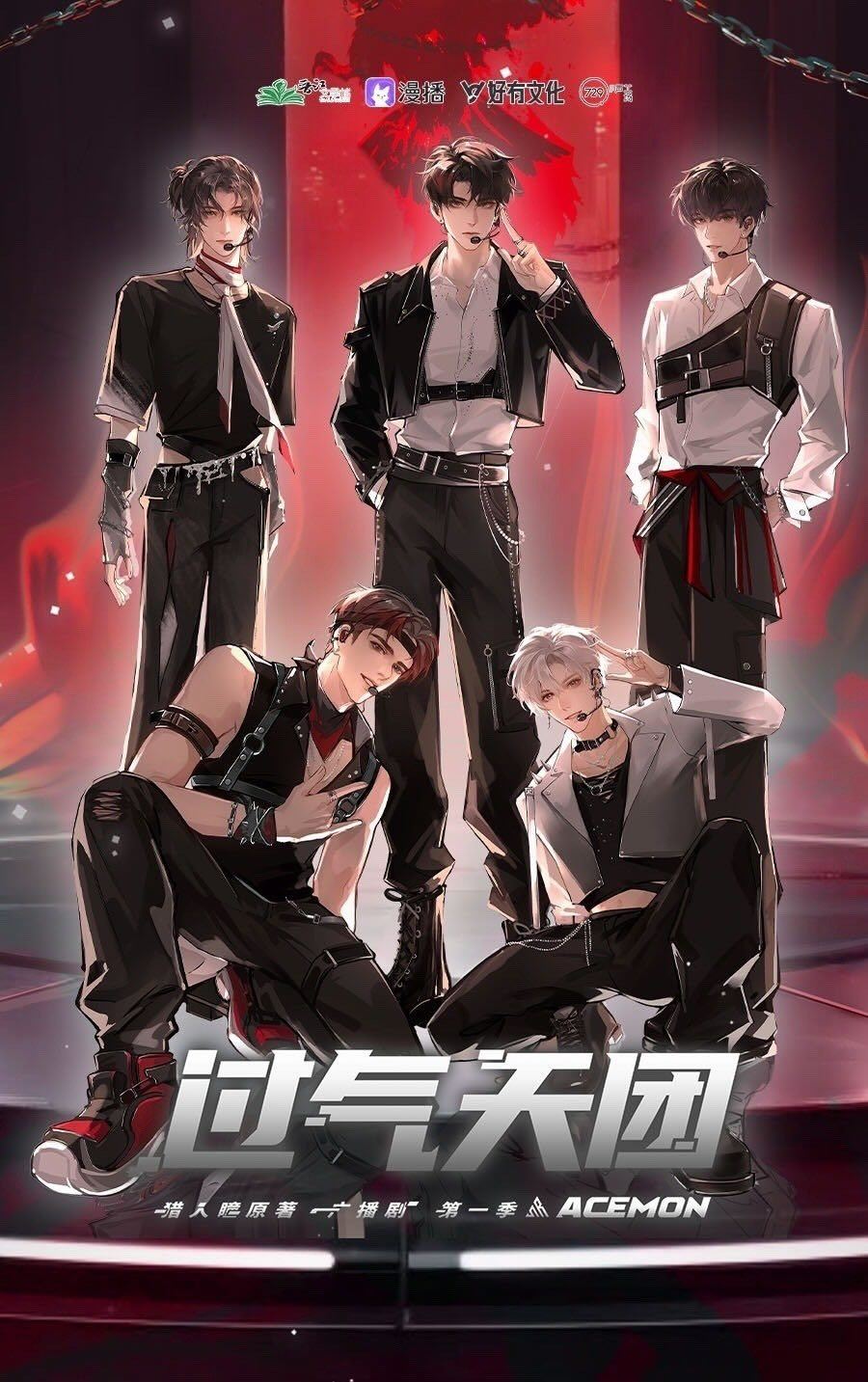
Okay I need to just sit with this chapter for a second because the worldbuilding here is absolutely immaculate and I am not sure my nervous system can handle another reread. Let's start with the classroom itself. It's already wrong before anything supernatural happens — it's full of plastic mannequins instead of students, which is this deeply unsettling visual of a school that should be alive but is instead filled with frozen, expressionless figures staring blankly ahead. The author doesn't overexplain this. They just present it as the normal state of affairs, which makes it infinitely worse. Of course there are mannequins. Of course the teacher is looking for an eraser. Of course the rules of hide-and-seek apply here. The mundane details ground the horror so effectively that by the time the teacher's head starts jerking like a broken mechanical doll, your brain has already accepted the impossible. "Her voice grew rougher, and her head jerked stiffly as if some mechanical part had gotten stuck. Then it spread to her shoulders, arms, wrists, and legs… every joint in her limbs twisted in unnatural directions." This description is so precise and so visceral. You can see it. You can hear it. The gradual transformation from human teacher to something else — it's not sudden, it's incremental, which means you're watching it happen in real time with no ability to look away. And the repetition of "Why don't you know?" is this incredible auditory detail that loops like a corrupted recording, each iteration slightly more distorted than the last, building to this final lunge that just completely shatters whatever fragile normalcy was left. The storage cabinet under the stairs is another perfectly chosen hiding spot. It's tight, dark, claustrophobic — and critically, it has that sweet smell that Tan Qing notices immediately. The environment tells you everything: you're in danger, you're trapped, and you're not alone. The bells around the corner creating that ticking-clock tension while Zhu Lianzhen holds his breath — this is cinema-level scene crafting. And the classroom on the second floor, with the parabola equation on the blackboard, is this devastating contrast. Math. Normal school work. The most ordinary academic task imaginable — placed on a board in a haunted school where people are turning into ghosts and mannequins are coming alive. The dissonance between the mundane and the horrific is what makes this world feel so deeply unsettling. Zhu Lianzhen even notices it himself: "Even though they had solved the question, neither of them knew where to use the clue." The game mechanics are woven so seamlessly into the environment that the setting itself becomes the puzzle.
... Read More
I need to talk about this hug. Not just because it happened, but because of what it revealed. Tan Qing literally says 'I won't come near you again' as a threat... but it reads like a plea wrapped in a threat wrapped in a test. And Zhu Lianzhen? He hesitates. He doesn't push him away. The text says 'the correct course of action was obvious' — and then shows us that obviousness means nothing when you're looking into someone's eyes. What killed me was the follow-up. Tan Qing changes the subject to food poisoning advice like absolutely nothing happened. Composed. Collected. And Zhu Lianzhen calls him out: 'Why do you never talk to me about your matters?' The silence after that line is louder than any dialogue could be. 'They're not worth mentioning.' That's Tan Qing at his most broken — not dramatic, not theatrical, just quietly convinced his own pain has no value. And Zhu Lianzhen leaves without saying the thing he clearly wants to say. I'm still mad about this moment. They could have fixed so much right there.
... Read More
Okay so this chapter hit me like a freight train because I am OBSESSED with the fever subplot reveal. Let me just... process this. Zhu Lianzhen had this whole memory gap from nights ago when he was sick, right? He thought he was completely out cold after being discharged from the hospital. But Tan Qing SHOWED UP at midnight. In the rain. No umbrella, cap pulled low—basically dressed like he didn't want to be recognized. And he went UPSTAIRS INTO ZHU LIANZHEN'S ROOM and stayed there ALL NIGHT. And Zhu Lianzhen never woke up. Never knows what happened. This is the single best narrative misdirection in recent memory. Ah-Xu accidentally lets this slip while they're chatting about something else entirely, and then watch Zhu Lianzhen's mind go absolutely wild: "Could it be that after we broke up, he held a grudge against me and drugged me?" BRO. You really thought that? And then Ah-Xu's response is literally: "At the very least, he should've slipped you an aphrodisiac and gone for it!" I SCREAMED. The author uses humor here so perfectly to cover up the fact that THIS IS THE MOST ROMANTIC SECRET EVER. The structure of this reveal is genius. First we establish their breakup and Tan Qing's cold silence—no birthday message, no contact. Then BAM, the midnight visit drops like a bomb. It completely recontextualizes everything we thought we knew about Tan Qing's 'coldness.' He wasn't ignoring Zhu Lianzhen because he didn't care. If anything, he cared TOO MUCH. And now Zhu Lianzhen has this gnawing curiosity mixed with panic, and we as readers are dying to know what happened in that room. Then there's the secondary plot thread with the Weibo follows—the endless cycle of following and unfollowing. This mirrors their emotional push-and-pull perfectly. Every time he follows, he regrets it. Every time he unfollows, he follows again. It's the most relatable digital-age heartbreak behavior I've ever seen in a novel. And that ending! The hotpot gathering where he walks in and Tan Qing is ALREADY THERE, having apparently known he would come, handing him a towel before a word is exchanged. The author is building this slow-burn tension like a master. Three chapters into this arc and I am NOT OKAY.
... Read More
On the surface, this chapter is funny and light — idols doing a photoshoot, teasing each other, giving interview answers. But underneath all that comedy, there are real conflicts simmering, and the stakes keep rising in ways the text never explicitly states. The biggest tension I see is between memory and present reality. Fu Rong explicitly says going solo was the most relaxing time of his life. Tan Qing mourns the simplicity of their trainee days. Zhu Lianzhen理想izes the Asia tour peak. Each of them is looking backward because the present doesn't satisfy them equally. The conflict isn't dramatic — nobody is yelling or plotting betrayal — but it's there, and it's exhausting. Then there's the external conflict: the paparazzi. They're everywhere, watching, recording, trying to find leverage. The fact that the gossip magazine's editor-in-chief concluded there's 'absolutely nothing they could use' is both a victory and a vulnerability — it means Acemon is disciplined, but it also means the pressure to maintain that discipline is relentless. Fu Rong's 4 AM trash bag ritual isn't just quirky — it's evidence of how deeply the surveillance affects their behavior. The concert question is where the stakes become personal. When the editor asks about the next concert and Zhu Lianzhen says 'we don't know either,' that's not just an evasive answer. That's the sound of a group that may or may not have a future, delivering that truth with the casualness of people who have already accepted it. What are they risking? Eight years of history. Their careers. Each other.
... Read More
The hidden camera is such an obvious symbol but the author uses it in ways that go beyond the surface reading. It's not just a plot device for a reality show scenario — it represents the fundamental impossibility of authenticity in their world. Everything Zhu Lianzhen does is performed, even the things he thinks are private. His phone call was staged, Tan Qing's concern might be staged, and even their arguments are potentially content for an audience. The recurring motif of performance versus reality runs through this entire section. Tan Qing explicitly mentions 'putting on a thoughtful expression' and 'adjusting his expression' before returning to the lounge — he's directing himself as much as he's directing Zhu Lianzhen. There's also this brilliant line where Zhu Lianzhen realizes Tan Qing's advice sounded 'almost official,' like he was speaking for the fans and manager rather than as a friend. The question the text keeps asking is: when can these characters ever be genuine with each other, if everything they do is being watched and measured and turned into something for consumption? Even the apology in the car feels like another performance, a perfectly crafted moment designed to make Zhu Lianzhen feel like he has no ground to stand on.
... Read More
Everything in these chapters is circling back to what happened in Iceland. The delayed ring, the reworked earrings, the fact that they never made it there in the first place—it's all threading together. The birthday livestream chaos serves as both comic relief and a reminder that these guys operate under constant surveillance. Zhu Lianzhen can't even wear a meaningful gift where fans might see it. Then the next day, Pei Qiao intentionally pairs him with Tan Qing for the car ride, saying "With Tan Qing there, he can remind you of the time" like he knows exactly what's going on and is facilitating it. The manager is basically a wingman. Meanwhile Zhu Lianzhen is still driving around with those earrings in his pocket, not daring to put them back on. Plot-wise, this is the calm before whatever storm comes next—everything feels suspended, intimate, and fragile all at once. The tension is unbearable and I love it.

Leave a comment

You must be logged in to leave comments. or
