Fallen Idol Group - Reviews

Fallen Idol Group
+Add to Custom List
Sort
Add review
... Read More
Okay so this entire chapter is basically one elaborate trap after another and I love it. Tan Qing clearly orchestrated Zhu Lianzhen coming to visit him—he admits it himself with this smug little laugh like it's no big deal. But here's the thing that got me: Zhu Lianzhen realizes he's been baited, yet he would still do it again. The plot doesn't just hint at romantic tension, it wraps it in this clever game of cat and mouse where the 'mouse' happily walks into the trap. And then—BAM—the livestream scene. They're literally measuring heart rates while pretending not to care about team spirit, and Ji Yunting's heart spikes twenty beats when he says he'd rather bump into his teammates occasionally than see them every day. The reveal is SO good. The author has been building this layer of 'everyone says they don't care but their bodies betray them' for chapters and it finally pays off. What I love is how the subplot with Naisi the cat ties in—Fu Rong, who can barely tolerate people, is gentle with the animal. It's a small detail but it tells us everything about who these characters actually are underneath the group performance. The author is playing 4D chess with the plot structure, and I'm here for it.
... Read More
The opening line is brutal—'Idols who fall in love should be beheaded.' That's not a hook, that's a chainsaw to the throat. You don't get to read something that violent and not immediately want to know what's happening. And then we're dropped into Weibo drama, paparazzi photos, the whole nightmare of celebrity scandal culture, and within three paragraphs I'm already invested in Zhu Lianzhen's headache of a day. What I love is how the author uses the dating rumor as both plot device AND emotional trigger simultaneously. Tan Qing's scandal isn't just news—it's personal. It's the thing that makes Zhu Lianzhen's finger repeatedly press the power button on his phone. It's why he slams the car door hard enough to startle his assistant. The pacing here is genius because every external event (the rumor, the trending topic, the fan war) is filtered through Zhu Lianzhen's internal reaction, which means the story never slows down even when it's just him sitting in a car. The transition from Pei Qiao's office to the hallway to the elevator to the vending machine feels almost accidental, like fate orchestrating the encounter. Two years of avoidance, and the universe conveniently places them in the same lobby at the same moment. Classic structure—build tension through near-misses and internal monologues, then deliver the payoff in a single shared space with a beverage dispenser. And that ending? 'Clearing his throat, he met Tan Qing's gaze, making an effort to...' CUT. Just cut right there. The author knows exactly what they're doing. They've spent four chapters building this electric distance between two people who clearly cannot stop orbiting each other, and then they leave us Hanging. I need to know what Zhu Lianzhen was ABOUT to say. I need to know what happens next. I am not ready for this to end.
... Read More
I need to talk about the pacing here because this chapter is a masterclass in slow-burn tension construction. The author doesn't rush. They don't need to. Every beat lands because we've earned it. Let me break down the structure because it's almost architectural in its precision. The chapter opens with social media—a digital distance that immediately establishes the emotional gap between these two characters. Zhu Lianzhen is watching Tan Qing from afar, noticing details others miss. He zooms in on the thermometer. He likes the post. He hovers. This is the 'before' state—something is wrong, but it's contained within screens and comments and silent judgments. Then the pivot: Zhu Lianzhen makes the decision to go over. And this is where the pacing gets really interesting. The transition from 'scrolling and worrying' to 'standing outside the door with medicine and a gift box' happens in roughly two paragraphs. It's swift but not rushed. We understand the urgency without being told explicitly. The author trusts us to feel it. Once inside Tan Qing's apartment, the pace slows dramatically. Cooking rice. Washing the bowl. The sound of porcelain shattering. These are small, almost mundane moments—but they're charged with something. The domesticity becomes a kind of tension itself. You're waiting for the other shoe to drop, and the author keeps letting you sit in that anticipation. 'Ten minutes later, Tan Qing took the initiative to message him again: Can't sleep. Sigh.' This line is perfect pacing. It's a breather—a moment of lightness that makes the heavier moments hit harder later. And then—the keys. The discovery happens almost casually. Zhu Lianzhen is looking for a thermometer, opens a drawer, sees keys, recognizes them. No dramatic music. No internal monologue spiral. Just a question: 'Why is it with you?' And Tan Qing's non-response. The chapter ends on that question, which is the perfect structural note. Not a full revelation, not a complete answer, but a crack in the surface that changes how we see everything that came before. The pacing from start to finish is deliberate, almost meditative—and that's exactly why the ending lands so hard. The author spent all this time making us feel comfortable in the domestic warmth, only to pull the rug out with three words: 'Why is it with you?' What does that key represent to Tan Qing? What has he been holding onto? And what will this discovery mean for their future? I need to know, and I suspect I'm not the only one.
... Read More
I need to sit down. The way this chapter handles emotion is absolutely ruthless in the best possible way. Let me start with the small things because they matter. Ji Yunting getting flustered over his fourteen-year-old emo post—"I never wrote that!!!"—and then Koty's deadpan "Not gonna lie—it made me cry" is the kind of sibling energy that makes me want to scream with warmth. These five have been together seven and a half years and the comfort level is just... chef's kiss. They can roast each other mercilessly because they know it doesn't stick. Zhu Lianzhen bringing up the Ultraman forum incident as retaliation? Perfect. That's the kind of detail that tells you they actually PAY ATTENTION to each other. But then. Then. The third question hits and suddenly the whole temperature of the scene shifts. "Zhu Lianzhen's expression stiffened slightly." That's it. That's all the author gives us and I'm already rearranging my entire understanding of this chapter. Why did he stiffen? What does he feel about Tan Qing that he doesn't feel about the rest of the group? And the question itself—Tan Qing gave him a gift and he didn't have one ready—sounds almost trivial on the surface but the author chose to make it the turning point of the scene. Something about the way this is building makes me think the real emotional core of this story isn't the group dynamics (though those are beautiful) but whatever complicated thing is happening between those two specifically. The affection between all five of them is clear and warm, but Zhu Lianzhen and Tan Qing? That's the knot I can't untangle and I am HERE FOR IT.
... Read More
Okay so here's the thing about these two that absolutely killed me—Zhu Lianzhen literally drives across town on his day off just to pretend to take photos for Pei-jie, and the second he walks into that hotel room, ALL of it shows. He's sitting on this tiny sofa watching Tan Qing sleep, worrying about whether the guy put on sunscreen, making up increasingly absurd excuses when caught fanning a mosquito away like some weird rom-com lead. And Tan Qing? He knows exactly what's going on. That line—"I haven't seen you in days, and for some reason, I'm a little nervous right now"—is the most honest thing either of them has said, and the worst part is Zhu Lianzhen immediately assumes it's guilt. He can't even let himself believe that maybe Tan Qing was just nervous because he misses him too. The power dynamic here is so beautifully inverted. On the surface, Zhu Lianzhen is the one visiting, the one with the "responsibility" from Pei-jie. But control-wise? Tan Qing has had him since the moment he smiled at him across the room. Every single interaction, Zhu Lianzhen is performing normalcy while visibly sweating underneath it. The mosquito scene is peak character revelation—most people would just swat it. Instead he picks up a script and gently fans it away. This is a man who would rather read lines through quantum speed reading than admit he was just trying to keep his ex comfortable.
... Read More
'Holy crap, so handsome. No more calling him mei—I'm calling him ge!' I cannot get over how vividly the author captures this livestream atmosphere. It's not just described — it's rendered. The colored comments (yellow and white for fan support), the way Zhu Lianzhen scans ten lines and picks out one specifically to embarrass himself, the casual cruelty of fans who love their idols hard enough to roast them mercilessly. And then there's the physical space: Zhu Lianzhen in his plain black shirt, the camera, Fu Rong leaning against the sofa playing on his phone, Koty's voice calling from another room. You can see this. You can hear this. The author doesn't need paragraph-long descriptions — a few details and the whole world clicks into place. What I love most is the organic chaos. This isn't a staged performance. This is real life bleeding through a screen. The comment section becomes its own character, with shippers going to war, fans making unhinged declarations ('I want to be Fu-laoshi's dog'), and Zhu Lianzhen reacting in real time. It's cinematic without being pretentious about it.
... Read More
This batch moves in this really deliberate rhythm that I need to unpack because the author is clearly playing with contrast as a structural tool. It opens with a quiet, almost nostalgic reflection—Zhu Lianzhen thinking about Tan Qing's kindness, feeling a pang of guilt. Very inward, very soft. Then it cuts hard to the magazine interview, which is bright and performative, all surfaces and quick exchanges. Then the dorm scene, where the mood shifts again—exhaustion, bad takeout, the mundane reality of idol life after the glamour. The bathroom moment is the pivot point. Everything slows down. The body wash fragrance, the towel, the hairdryer, the mirror reflection of two bathrobed men. It's intimate without being explicit, and then immediately deflated when Zhu Lianzhen grabs the hairdryer and asks about Tan Qing's movie like nothing happened. After that, the pacing accelerates again—the photos arrive, the descriptions of the shoots, the magazine launch, the social media interaction. By the time we reach the meme war, the entire emotional arc has built to this point where two characters who can't handle real conversation are having the most emotionally revealing exchange of the entire batch through pictures of animals. The chapter ends mid-GIF, which is either a brilliant cliffhanger or the author just running out of space. Either way, it works.
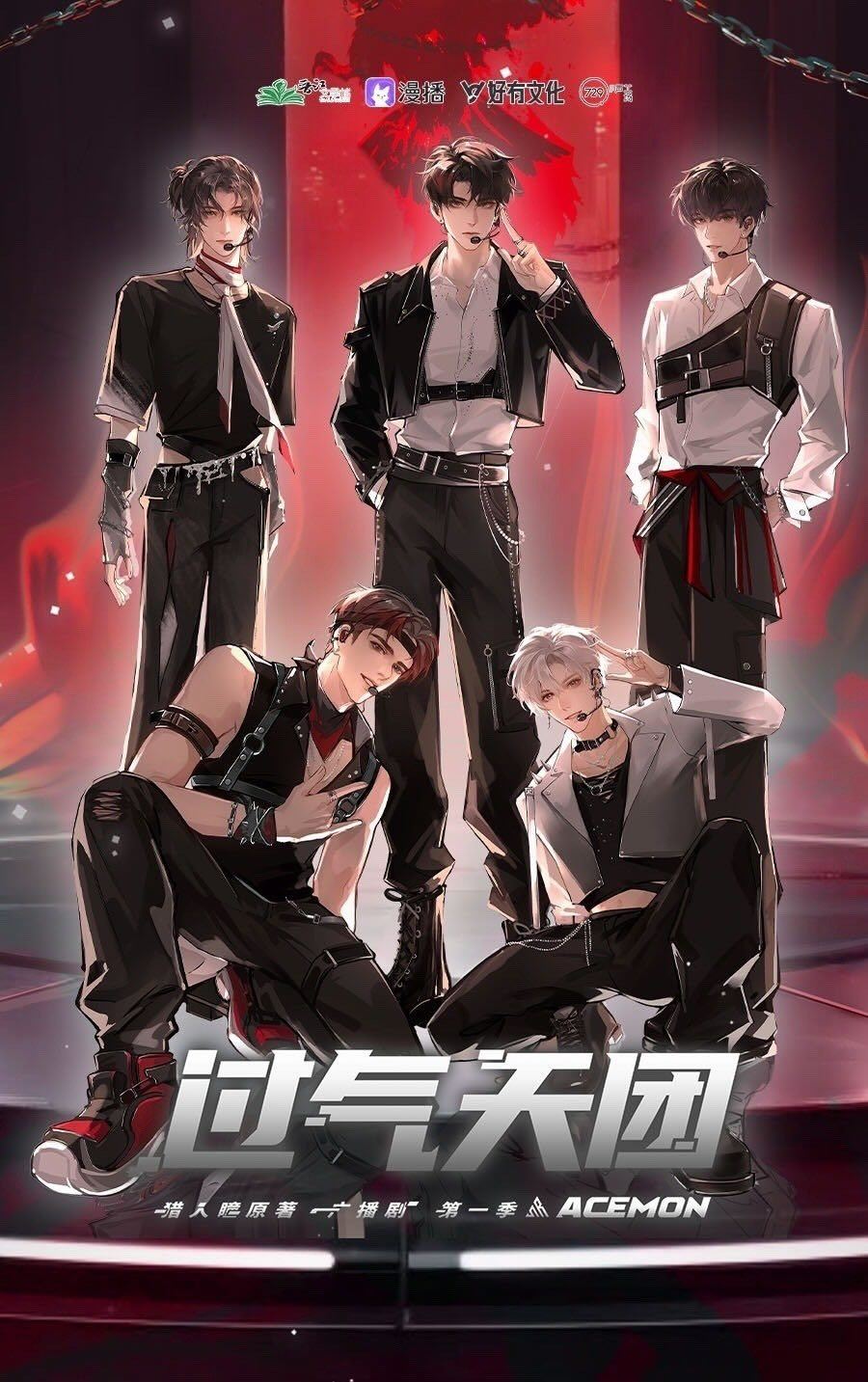
... Read More
The tension in this chapter isn't just good—it's dangerously good. Let me break down what's actually at stake here, because on the surface it's two guys talking in a room, but underneath it's an earthquake waiting to happen. Zhu Lianzhen's external conflict: he needs answers about a night that haunts him. Someone broke into his home while he was vulnerable—sick, feverish, asleep—and sat in his room all night doing… what? The ambiguity is torture. He came to Tan Qing's dorm at midnight specifically to find out, which means he's been carrying this question for months. Maybe years. His internal conflict is even worse: part of him hopes the answer is innocent. Part of him fears it isn't. And part of him—God help him—hopes it's something else entirely. Because when Tan Qing leans in and that kiss almost happens, Zhu Lianzhen doesn't pull away. He HOLDS HIS BREATH. His body betrays him before his mind catches up. Tan Qing's stakes are higher and darker. If the truth comes out, everything changes. The teamwork, the proximity, the carefully maintained boundary that lets them share dorms and cameras and interviews without anyone suspecting. He risks losing the one person who actually matters by telling him everything. So he lies. Calmly, consistently, beautifully. But here's what terrifies me: Tan Qing is drinking himself into honesty. Three bottles in one hour. He lets Zhu Lianzhen into his space, into his home, into a conversation he's been dodging. The alcohol is lowering his defenses, and Zhu Lianzhen is sharper than he thinks. The conflict isn't resolved—it's accelerating. The ultimate stake? If either of them moves, if the tension breaks, everything collapses. Their careers, their friendship, possibly the group itself. And yet they can't stop getting closer. That's not just romantic tension—that's existential risk.
... Read More
So the Big Award drop and honestly I did NOT see this coming in the way I thought I would. Everyone was already predicting A-Group would lose — the comments section is full of people saying they're just there for show, that they haven't had a full year of promotions, that it's obviously rigged — and then Lock-M wins and the internet EXPLODES. What's interesting is how the narrative handles this loss. It doesn't treat it as a crushing defeat for A-Group. Instead, we get this beautiful cutaway to Zhu Lianzhen's face while Tan Qing watches him, and then the real drama unfolds not on stage but backstage between Pei Qiao and Jiang Hong. Jiang Hong's performance as the gracious winner is so perfectly calculated that even the narration acknowledges it — "anyone watching would think he could joke like this because he was close with Pei Qiao." But Pei Qiao's internal reaction is pure eye-roll energy. She remembers their history together, the shared company that went bankrupt, the creative differences that split them. Now they're rivals representing rival groups. The award itself is almost secondary to what it represents — the shifting tides of the industry, the new generation replacing the old, and A-Group's precarious position despite their massive popularity numbers. And then the cliffhanger about the villa address?? I was already suspicious but now it's confirmed and I am SCREAMING.
... Read More
I need to talk about how these guys operate as a unit because it's genuinely fascinating and I'm not just saying that. Starting with the group chat before we even see the prank unfold—Tan Qing reaching out on his own WeChat instead of through the official group, Ah-Xu immediately knowing it's about Zhu Lianzhen. That right there tells you everything about how these relationships work. There's a hierarchy of information, a closeness that isn't evenly distributed. Then you have Koty being the self-aware one who knows he's being filmed and plays along anyway, saying 'Someone save him!' like it's no big deal. That's not just comic relief, that's character. He's aware of the game and he participates in it willingly. But the real standout for me is Zhu Lianzhen himself. Watch how he handles the mirror scenes. He's genuinely confused but also proud—he wants to SHOW off the voice feature, he calls his bandmates downstairs like 'come look at this weird thing I found.' He's not paranoid, he's curious and social about it. And then that moment where he says 'sometimes you don't seem that dumb for an AI' and the whole room freezes—that's when the mask cracks a little. He senses something is OFF but he covers it by talking about his shoes. That's survival instinct. That's someone who knows when to play along even when his gut says otherwise. And the birthday video reveal? The way he watches his own reflection on screen, putting together clues from the variety show footage—that's a character who processes things visually, who connects evidence in real time. The relationship between all five of them feels real because none of them are just 'the funny one' or 'the serious one.' They shift roles depending on the scene. Koty becomes the observer, Tan Qing becomes the manipulator, Ji Yunting reads the script like a pro. Zhu Lianzhen is always the center but never the only one with agency. Which honestly makes this feel less like a prank and more like a family dynamic where everyone knows their role and sometimes flips it.
... Read More
"If you were in that situation, you definitely would've done the same." — "—Anything you can do, I can do too." I keep coming back to this exchange. On the surface it looks like banter. Tan Qing saying something mildly challenging, Zhu Lianzhen brushing it off. But read it again. Tan Qing saw him suffer through monitor pain for seven years and yet still performed without breaking. And his response wasn't gratitude or vulnerability — it was competition. As if enduring pain together is some kind of contest they're tied in. That's the whole QingZhen dynamic compressed into two lines. Neither of them can just SAY what they mean. Zhu Lianzhen can't admit he bought in-ears for Tan Qing specifically. Tan Qing can't admit he noticed the pain and was worried. They orbit each other through sideways gestures and deflected conversations. And then there's the whole CP ship situation spiraling out of control. Zhu Lianzhen reading those Weibo posts about his waist tattoo while his heart sinks? That's not just embarrassment — that's the terror of having your private moments turned into public content without your consent. And Tan Qing, who essentially ORCHESTRATED that moment by messing with his ring and pulling up his shirt, just laughs it off. Of course he does. He's been feeding the QingZhen fire this whole time and now it's a bonfire. The emotional tension here is delicious because nobody is being direct about anything. Every feeling is filtered through someone else, expressed indirectly, denied openly. That's what makes it ache.
... Read More
The stakes in this chapter are doing double duty and I love it. On the surface, you've got the obvious external conflict: Acemon might actually be making a comeback after two years of silence, and the company is trying to manage five members' conflicting choices. That's huge for fans and for these characters. But the REAL stakes are internal and interpersonal, and they're suffocating. Zhu Lianzhen is sitting there crushing a pomegranate juice can because Tan Qing played him like a fiddle—with the dating rumor, with the ambiguous phrasing, with everything. He walked right into a trap and Tan Qing didn't even have to try hard. The emotional stakes between them are insanely high right now. Zhu Lianzhen thinks Tan Qing deliberately let him believe the worst, that the whole 'congratulations, too soon' exchange was calculated misdirection. Meanwhile, Tan Qing has been watching him this entire time, analyzing his voice, his pauses, his tells. He knows Zhu Lianzhen can't lie to save his life. So what does Tan Qing want from this recording? Is it leverage? Protection? Something else entirely? The tension is razor-thin—every conversation between them feels like walking across a frozen lake and you're fairly certain it's going to crack.

Leave a comment

You must be logged in to leave comments. or
