Fallen Idol Group - Reviews

Fallen Idol Group
+Add to Custom List
Sort
Add review
... Read More
I need everyone to understand what just happened in those final comment exchanges because this is one of the most unhinged and beautiful romantic developments I have ever witnessed. Zhu Lianzhen posts a hot fox-spirit magazine selfie. Tan Qing comments with a picture of a BABY FENNEC FOX and says '@AcemonZhuLianzhen come look.' A baby animal. In a public comment section. After a hot photo. What is this energy. And then Zhu Lianzhen responds with a SNOW LEOPARD eating meat. Then Tan Qing sends a GIF of a fennec fox getting its nose booped. And Zhu Lianzhen fires back with a snow leopard with food stuck to its nose looking absolutely derpy. This is not a normal interaction. This is two people who cannot say what they mean so they're communicating entirely through adorable wildlife photography and fans are losing their minds in the comments. One fan literally asked: 'is this how they flirt in public?' AND THE ANSWER IS YES. That's exactly what this is. They're building this whole private language through internet memes and animal pictures while pretending it's just jokes. Meanwhile the readers are watching this unfold and we are ALL witnessing something tender and ridiculous and i love it.
... Read More
Let me just say this: Tan Qing might be the most terrifyingly composed character I have ever read. Watch him in this chapter. Three bottles of cognac, alcohol making his voice hoarse, contacts drying out his eyes, and he is still—STILL—calculating every word, every pause, every physical movement like a chess player thinking five moves ahead. Compare that to Zhu Lianzhen. This guy comes over at midnight with a question, and you can practically hear his internal gears grinding. He asks directly because he's tired of subtlety, but watch how he studies Tan Qing's face the entire time. He's not just looking for answers—he's looking for cracks. And Tan Qing gives him absolutely zero. The bed scene broke me. Tan Qing traps Zhu Lianzhen between his arms. Traps. Then leans in. Zhu Lianzhen's eyelashes TREMBLE. He holds his breath. This is the moment readers have been waiting for, and Tan Qing just… stops. On his own. Walks away. And then eats a camellia petal like it's nothing. What does that say about their dynamic? One man is desperate for truth, the other is guarding it with his life. But here's what kills me—I think Tan Qing WANTS Zhu Lianzhen to figure it out. The fact that he gets drunk enough to let this conversation happen at all means something. The alcohol loosened his tongue but not his control. That man is a fortress. Meanwhile Zhu Lianzhen is just… emotionally overwhelmed. He can't even process the kiss-that-wasn't-a-kiss. His internal monologue is just "what kind of nonsense was that" while his body is freezing in place. These two are going to kill each other, and I am HERE for it.
... Read More
The atmosphere in this chapter is absolutely immaculate and I have to appreciate how the setting mirrors everything that's happening emotionally. We start in a meeting room—sterile, corporate, documents being passed around, nails tapping on tables. It's all business. Pei Qiao is in full producer mode, laying out schedules and threats about concerts, making sure everyone stays focused. Then the scene shifts to this nightclub where the weather forecast is predicting an approaching blizzard and the cold winds are HOWLING through Ronggang. Can you feel it? The contrast between the sterile meeting room and the dark, hazy club is perfect because it represents the transition from the professional facade they all maintain to the messy, complicated reality of what's actually going on between them. The nightclub itself—flashing lights, deafening music, no private rooms available—they picked a corner far from the dance floor just so they could hear each other talk. That detail alone tells me everything about this group: they're trying so hard to connect, to communicate, but the world around them is constantly pulling them apart. And Fu Rong in that hazy lighting with his hair tied up, radiating this androgynous magnetism that attracts unwanted attention... the visual imagery is cinematic. I could literally see this as a film. The cold water in the restroom, Zhu Lianzhen washing his face, trying to clear his head—this whole chapter is drenched in atmosphere and I'm here for it.
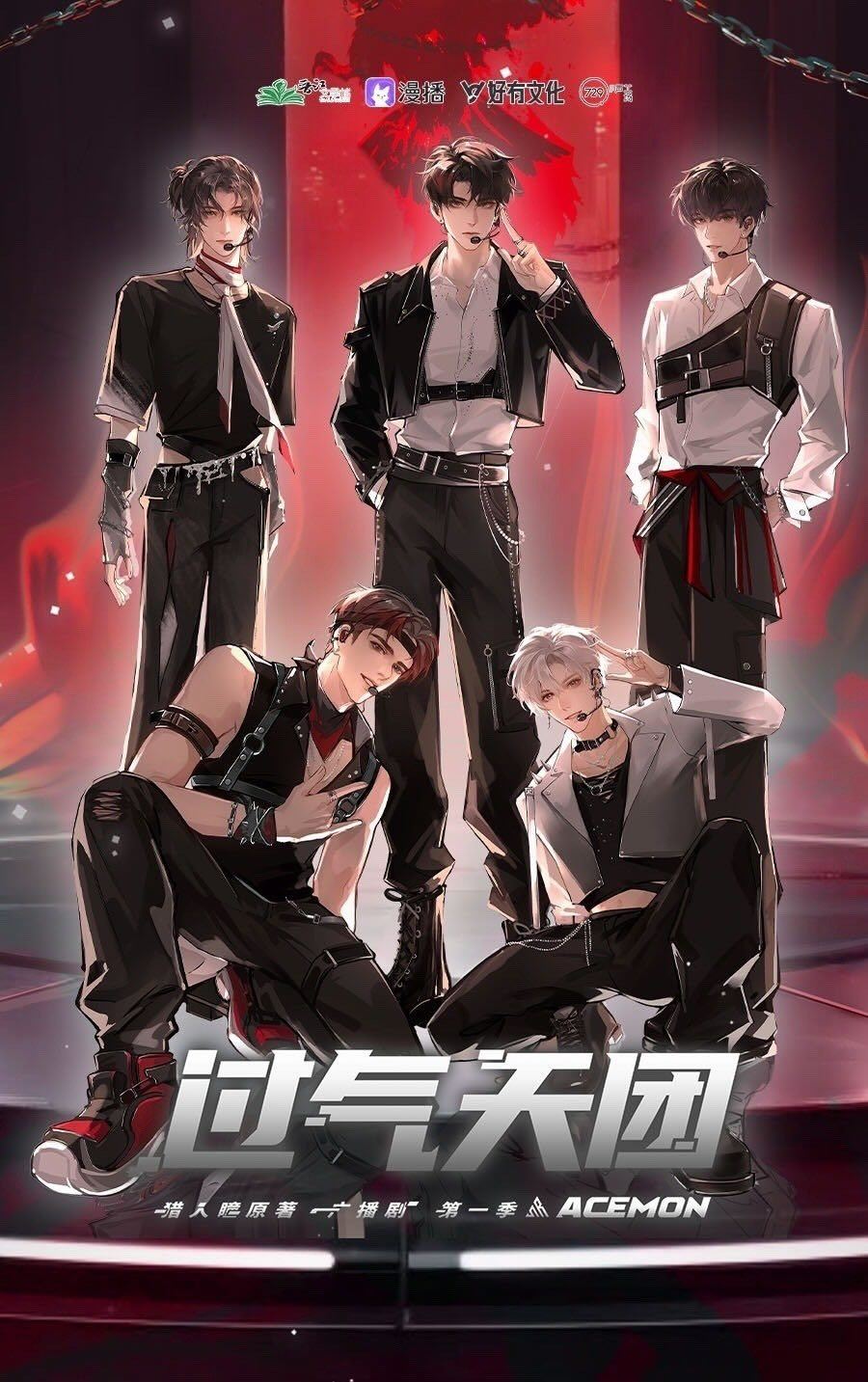
... Read More
Let me just say: the pacing in these chapters is chef's kiss. We start at a dinner — relatively grounded, conversational, three friends talking about life choices. Normal stuff. Then it transitions to the car ride, which is where everything actually happens, and by the end Zhu Lianzhen is cornered in a moving vehicle with the person he's been running from for years and there is literally nowhere to escape. The structure is brilliant because it mirrors the relationship itself. The dinner conversation is surface-level — Ji Yunting's relationship drama, light banter about careers and dreams. But underneath, every line is aimed at Zhu Lianzhen and Tan Qing. The car scene strips away all pretense. No audience. No buffer. Just two people in a warm box in a freezing city, and the tension builds from awkward silence to the kind of honesty that only comes when there's no one else around to perform for. The chapter ends on that devastating question from Tan Qing and then the narrative immediately cuts to Ah-Xu's perspective asking "You really hate Tan Qing that much?" which is the perfect structural beat — it externalizes what the reader is already thinking, confirms that Zhu Lianzhen's avoidance is visible to everyone, and then drops the narrative hook that makes you immediately want to read the next chapter. The author never rushes the big moments. The car ride lingers. The silence stretches. You feel every second of it. And then boom — confrontation.
... Read More
This chapter is obsessed with things that are lost, hidden, or deliberately erased—and I think that's the whole point. The earphones. A gift. Lost. Found by the person who gave them. The owner too proud and panicked to claim them. They're not just Bluetooth buds; they're a symbol of a connection that exists but remains unacknowledged. Zhu Lianzhen would rather let them sit with Tan Qing than face the interaction required to retrieve them. The stalker's data. Erased. The old photos. Wiped clean. The author keeps coming back to this idea of controlled deletion—what gets removed, what gets preserved, and who decides. The company deleted evidence. Tan Qing confirmed the deletion. Zhu Lianzhen was kept in the dark. Information is power, and the withholding of information is itself a form of protection—or control, depending on your perspective. The CP name. "QingZhen: True Affection." Fans attached meaning to something the company never intended. The public narrative about these two men exists independently of what they actually feel. That's a commentary on celebrity culture—how audiences project stories onto real people and call it affection. But also, is it really projection? The fans saw something real, even if they didn't know what it was. And then there's the unfollow. Two people who were connected digitally choosing to sever that visible bond. But the algorithm doesn't forget. The trending topic remembers. The ghost persists. I think the deepest theme here is about visibility. What gets seen, what gets hidden, what gets performed for the public, and what stays between two people in the dark. Zhu Lianzhen and Tan Qing are living in a world where nothing stays private for long, which makes every quiet moment between them feel both impossible and essential.
... Read More
The dialogue in these chapters is so deceptively simple that it's easy to underestimate, but it's actually doing an incredible amount of work beneath the surface. Take Tan Qing's line: "When you were passionate, it was like you didn't know when to stop." On the surface, it's almost playful—two old friends reminiscing. But read it again and it's loaded with meaning. He's not just talking about gift-giving. He's talking about everything. The way Zhu Lianzhen loved him before, the intensity of it, and then the implied contrast with whatever came after. And Zhu Lianzhen's internal response: "Then what about when I was indifferent?" He doesn't say it out loud, but the reader gets it. That's the whole tragic arc right there—in one unspoken question. The narrative voice allows us into his head at exactly the right moments, giving us the subtext that the characters themselves can't or won't articulate. The flashback dialogue is equally revealing. Tan Qing saying "Xiao Zhu's right. It was my own lack of common sense"—this is the most heartbreaking line of obedience in the entire passage. He's a new trainee, someone everyone already suspects was shoved in by connections, standing in front of his teammates and taking blame for something that wasn't his fault. And Zhu Lianzhen's internal monologue afterward—"Of course it's not my fault. Didn't it occur to you to ask someone else?"—reveals that Zhu Lianzhen still hasn't fully processed his own cruelty. He's defensive even in hindsight. The casual banter about feeding the cat and going back to the dorm sounds so ordinary, so mundane, but it's wrapped around all this unprocessed emotion. That's the author's voice—never explaining, always trusting the reader to feel what's underneath.
... Read More
Okay, can we just talk about this scene where Tan Qing watches Zhu Lianzhen skate down those stairs? Like, think about the framing. Tan Qing is already drawn to him instinctively—he pauses mid-step, forgets to keep walking—and then Zhu Lianzhen falls, does this whole elaborate dance-move recovery to save face, and Tan Qing just...pretends he didn't see it. That is such a Tan Qing move. He notices everything but covers it with indifference. And then it says they kept running into each other every weekend before they even formally met. So those were probably their first real encounters, right? The moments that built whatever foundation this has into something complicated. I love that the author shows us the origin story like this—two guys who've clearly shaped each other's lives without either of them ever fully admitting it out loud. The whole thing with Zhu Lianzhen liking all of Tan Qing's posts and Tan Qing pinning their chat window without realizing it? That's the kind of detail that makes my heart actually ache. These two operate on different wavelengths. Zhu Lianzhen questions everything because he's terrified of being hurt, and Tan Qing says he wouldn't record drunk behavior and his mouth twitches in a way that suggests he absolutely did. That tiny motion—that is the entire history of this relationship in one gesture.
... Read More
What are the actual stakes here?表面看: tooth pain resolves, variety show goes forward, fan wars continue. But the real conflict is existential—Zhu Lianzhen and Tan Qing have broken up but can't stop orbiting each other, and every shared space becomes a battlefield of glances and avoided eye contact. The stakes aren't about winning or losing; they're about whether either of them can survive pretending they don't want to try again. The fan conflict over Fu Rong's gender represents larger stakes: in the idol industry, you don't get to be human. ‘Following idols was for personal enjoyment and no one had the right to dictate how others engaged' sounds progressive until you realize these same fans will destroy anyone who steps outside their preferred narrative. Zhu Lianzhen watches this toxicity from inside the machine—he's both observer and participant, which is its own special hell. Ji Yunting's stakes are different but equal: he ‘was supposed to join a dating show' but Pei Qiao ‘terminated it on my behalf.' The contract was ‘finalized last year.' This is about consent in an industry that treats people as property. When he flips off Koty and says ‘get yourself castrated first,' that's not just banter—that's a man fighting for agency in a system that's been castrating him professionally since graduation. And Zhu Lianzhen's tooth pain? The anesthesia ‘wore off' and pain ‘spread across half of his face.' Sometimes the body knows what the mind refuses to admit.
... Read More
The atmospheric details in this chapter are surprisingly vivid for what is essentially a 'day in the life' episode. Let me start with the studio scene — gusts of cold wind carrying dust sweeping in from outside, the staff leading them deeper into the building until they reach a room that is 'just barely warm.' This tiny detail does more worldbuilding than paragraphs of exposition. It tells you this is a professional operation with resources, but also one that isn't perfectly climate-controlled. It grounds the whole thing in physical reality. Then you've got the individual vignettes of each member's week, and honestly some of them read like short films: Ji Yunting sitting on a street corner at midnight selling candied hawthorn after buying them all from an old lady. There's something almost magical realism about this image — this successful idol, completely drunk, peddling frozen snacks to strangers at midnight. It's cinematic in a way that doesn't feel staged. Fu Rong at 4 AM moving trash bags between different bins like he's committing a crime or performing some kind of ritual. The reporter's note 'I'm scared I'll be the next thing he throws out' is darkly funny but also paints this image of a man whose paranoia is so visible it infects everyone around him. Zhu Lianzhen's 'glowing with sunshine' holiday schedule compared to everyone else's chaos. The fact that even his normalcy is performative — he's being careful because Tan Qing warned him about paparazzi — adds this layer of永久的 vigilance to their lives. The magazine studio with its cold wind and the concept of 'wild beauty' paired with animals — it all creates this world where these people are constantly performing, even when they think no one is watching.
... Read More
The pacing in this section is absolutely relentless and I love it. It starts as pure comedy — Koty charming girl groups, Fu Rong roasting him, the whole seat arrangement being a joke — and then within the span of a few paragraphs it pivots to something genuinely tense. The lip gloss wiping scene is where it happens. One moment it's silly banter, the next it's this charged intimate moment caught on camera, and the narrative doesn't give you a breather. It immediately cuts to the online reaction, then to the award announcement, then to Pei Qiao's backstory with Jiang Hong, then to the villa cliffhanger. There is NO downtime. The author understands that reader attention is a currency and they spend it wisely. Even the award announcement itself is handled with perfect rhythm — the buildup with the nominees, the pause before the winner is revealed, the immediate social media fallout. And the transition from the public spectacle (the awards, the trending topics) to the private confrontation (Zhu Lianzhen asking about the villa) feels organic, not rushed. The chapter ends on exactly the right note — Zhu Lianzhen mid-question, Tan Qing revealing more than he intended, and the reader left absolutely desperate for the next chapter. This is how you structure a chapter sequence. Every beat earns its place.
... Read More
This section is such a masterclass in tonal whiplash and I need everyone to understand what the author just did here. We start with something light—Zhu Lianzhen watching his own childhood video, making jokes about backup dancers—and then suddenly we're in Tan Qing's study, opening a bookshelf that reveals a memorial room. The shift is so jarring it basically stops your heart for a second. One paragraph you're laughing at a boy being cocky on camera, the next paragraph you're staring at a black-and-white photo and an unused accordion. And it's not just random drama for shock value. The author uses this structure to do something brilliant: we see Tan Qing's private grief immediately after we see Zhu Lianzhen's public persona. The contrast is devastating. This kid who acts like everything is nothing? He goes home to a room that exists only to hold a memory. And the accordion—his mother wanted him to sing, he had talent but no passion, and because of that lack of passion he never quit and ended up meeting Zhu Lianzhen. Fate dressed as coincidence. Then we cut back to the present with Zhu Lianzhen's WeChat notification explosion. The pacing here feels like the author is pulling strings you didn't know were there, yanking you from one emotional register to another without warning. By the time Pei Qiao's phone argument echoes down the hallway, you're so emotionally disoriented you don't even notice the new conflict starting until it's already upon you.
... Read More
I am not okay. I am literally not okay right now because Koty is the funniest character to ever exist and I need everyone to understand this. Let me just lay out the evidence. This man's voice note says 'Here comes the surprise!' in ENGLISH — not even fluent English, just that specific energy of someone who learned exactly three phrases and is committed to using them. His messages are a masterclass in desperate attention-seeking: 'I'm at Terminal 3. Why aren't you guys here to pick me up?' Oh… so many people here… I'm way too popular.' WHO TALKS LIKE THIS? This man is a Berlin University of the Arts graduate with 'striking features from his Chinese-German heritage' and yet his personality is pure chaotic gremlin energy. The contrast is COMEDY GOLD. And the group chat naming? 'A Warm Welcome to the Legendary Koty's Return to His Beloved Second Home' WITH TWO GLITTERING STAR EMOJIS. The audacity. The commitment. The sheer unearned confidence. I love him. I love him so much. But what really made me laugh was Tan Qing's response. After HOURS of silence, he replies: 'Sorry, just saw this. You're back in China? Get some rest.' And then immediately follows up with 'Is this a bug? Why did my private chat turn into a group chat?' and LEAVES. That is the most Tan Qing thing ever. He shows up, delivers one polite sentence, exposes the group chat disaster, and disappears. Not a word wasted. And the nickname situation! 'Kissy' — which the author translates from the Chinese nickname — and Koty is BESEECHING Tan Qing like 'You're the best. At least you're not rejecting me.' Meanwhile Tan Qing spent two years not even following him on social media and this guy is crying over a minor interaction. The character voices in this book are SO distinct. You can tell who's speaking without reading the tags.

Leave a comment

You must be logged in to leave comments. or
