Fallen Idol Group - Reviews

Fallen Idol Group
+Add to Custom List
Sort
Add review
... Read More
The dialogue in these chapters is doing exactly what good dialogue should do — everyone is talking past each other. Tan Qing: "When did you buy it?" (Translation: why did you keep it?) Zhu Lianzhen: "That area's pretty average." (Translation: I'm trying not to freak out) Tan Qing: "I just didn't want it to become someone else's home." (Translation: I still love you and I've been keeping our space alive) And then the phone call with Zhu Lianzhen's mom is comedy gold in the most painful way. "You two should date properly and not argue so much" — his mom has absolutely zero concept of what's actually going on between them, and Zhu Lianzhen's flustered attempt to explain fanservice CP culture is both hilarious and heartbreaking because he can't tell her the truth even if he wanted to. The dialogue between Zhu Lianzhen and Tan Qing afterward is even better because it's mostly silence and implication. "Close the door" — three words that contain an entire conversation about whether Zhu Lianzhen should stay or leave, whether Tan Qing wants him there or wishes he'd go away. Ji Yunting nearly rambling during his acceptance speech is such a perfect character detail too. All that restraint drops the moment they're on stage and he just... blanks. The human behind the idol persona showing through.
... Read More
There's a line — just one line, really — that perfectly captures the entire dynamic between these two characters, and it comes when Tan Qing tells Zhu Lianzhen to give the camera a smile and Zhu Lianzhen responds with 'I charge extra for smiles.' That's it. That's the whole relationship in three words. Deflection as affection. Humor as armor. Zhu Lianzhen will literally negotiate his affection instead of just giving it. The dialogue in this section is deceptively simple. On the surface, it reads like casual variety show banter — the kind of thing you'd expect from any Idol House-type program. But there's this undercurrent of real history in every exchange. When Tan Qing says 'Xiao Zhu, give us a smile,' there's an intimacy in using that nickname that wouldn't land if these two were just colleagues. When Zhu Lianzhen says 'Someone in this house has to die tonight, or I won't live to see another year,' it's funny, yes, but it's also him projecting his genuine overwhelm onto the absurd premise of a murder mystery. He's not actually threatening anyone. He's saying 'I can't handle this level of exposure.' Koty's voice is distinct too — he's the hype man, the instigator, the one who narrates everything with fake enthusiasm: 'Ohhh—Kissy made it himself! It's definitely gonna be super, super sweet—' The dashes, the trailing off, the deliberate teasing. He exists to push buttons, and the narrator tells us explicitly that he does this for the thrill, not because he cares. 'If he ever found out they had actually dated, he'd probably be so shocked he wouldn't eat for three days.' That line is hilarious and also a little cruel, because it means Koty is treating real history as content. The narration itself has this great observational quality. It doesn't romanticize the moments — it just reports them with dry precision. 'Zhu Lianzhen wanted nothing more than to vanish from the face of the earth and escape this public execution.' That's not flowery language. That's exactly how Zhu Lianzhen experiences the world. And the fan comments! God, the fan comments are a masterclass in alternative narrative voice. They're chaotic, fragmented, full of slang and urgency and misdirection. '[Attached screenshot: Took it off my monitor with my phone. There's some glare, not super clear, but the title says it all.]' This is storytelling from the margins — the audience inside the book telling their own story while the main characters are too busy living theirs to notice.
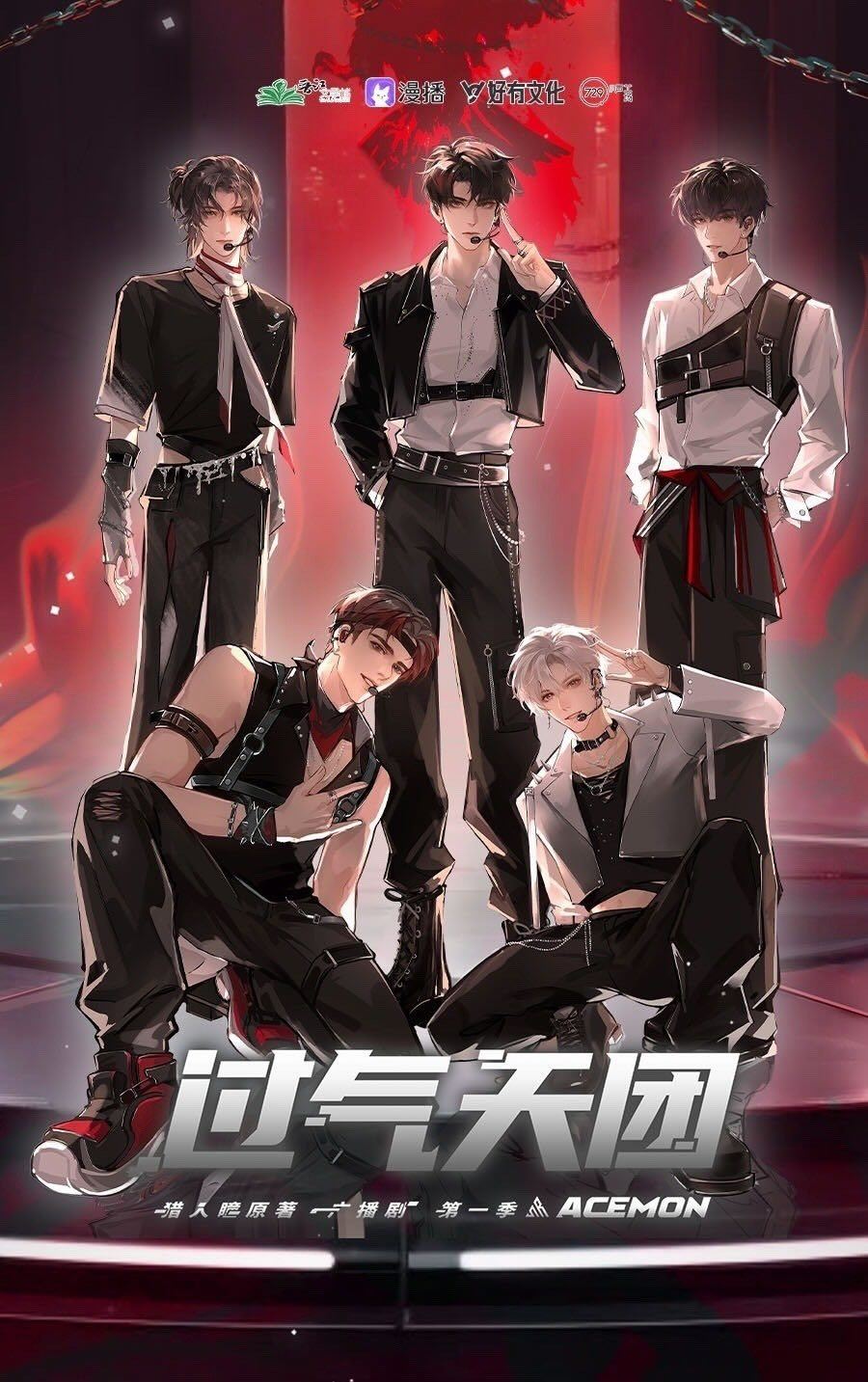
... Read More
Okay I need to talk about the Changsha concert scene because it is genuinely one of the most vividly staged sequences I've read in a while. The visual of Tan Qing in this black Rococo-style suit, looking like a living sculpture, versus Zhu Lianzhen slowly descending in a giant cage above the stage—this is not just described, it's choreographed. You can literally see the lighting, the fabric, the chains, the blindfold. And then the improvisation happens. Tan Qing pulls him down and bites his neck. The fake fangs pressing against warm skin, the wetness in his eyes from overwork making him look hauntingly soft, the smear of crimson on Zhu Lianzhen's face. I swear the author wrote this scene like a film director. Every beat lands. The cold sharp teeth, the teasing, the soft final bite, the whispered sound that made the audience lose their minds. This one moment transformed from a rehearsed vampire ritual into something that looked dangerously intimate. And the worst part for Zhu Lianzhen? He'd deliberately sabotaged the makeup to get petty revenge, and it made Tan Qing look EVEN MORE captivating. That's some next-level irony right there.
... Read More
So on the surface this is a boy group survival story. But honestly the actual tension isn't about who wins the show anymore. It's about two people who have this enormous unspoken history and they keep brushing against it like cats in a small room. Think about it—Tan Qing stood below the stage the entire competition, watching Zhu Lianzhen like any ordinary fan would, but he was so absorbed he forgot they were even teammates. He never told Zhu Lianzhen. That silence is loaded. Then flash forward to the dorm, and the whole dynamic plays out in tiny skirmishes: the bowl incident, the DVD argument, Koty being a menace. But every time those two are on the same stage or in the same frame, there's this undercurrent. The vampire scene especially—Tan Qing improvised without telling him. Zhu Lianzhen had no choice but to play along, closing his eyes and pretending to endure it while his pulse was probably going wild. That's the real stakes here. Not who gets the most votes. It's what happens when you realize the person who watched you from the crowd is the same person who can make your world tilt on a dime. And Fu Rong just sitting there watching it all with that sneer, knowing something's going on but refusing to name it. The story keeps making me hold my breath waiting for someone to say the quiet part out loud.
... Read More
I need to talk about how the author weaponizes pacing in this section because it is absolutely brutal and I love it. We start with this incredibly intimate, aching internal monologue — Zhu Lianzhen's denial, his fear, the raw realization that his own lie has consumed him. The prose slows down. Every sentence is weighted. You can feel the silence between him and Tan Qing stretching across two years of unsaid things. And then— Suddenly we're in an airport lounge. Fans are screaming. Weibo comments are flying. Someone posted that 'sharing a flight is basically the same as getting married' comment and I genuinely laughed out loud because the tonal whiplash is INSANE. The author takes us from heart-wrenching emotional honesty to absolute absurdity with Koty's group chat chaos. One minute I'm emotionally compromised from Zhu Lianzhen's internal spiral, the next I'm reading messages like 'It makes your eyes look like Disney characters!' from a guy the narrator himself calls 'dumbass.' The scene with Koty spamming everyone and Fu Rong leaving and Tan Qing leaving and eventually it's JUST KOTY ALONE in a five-person group chat?? I could not stop laughing. But here's what makes the pacing work: the author doesn't let you stay in the comedy. Right after the last group chat message, we're cut back to the meeting room where Zhu Lianzhen sits across from Tan Qing and lock eyes with Fu Rong who's wearing a mask indoors. The comedic release is immediately followed by this heavy, unresolved tension. The chapter ends on that note — and honestly? I needed to lie down. The structure here is almost musical. Sad → funny → sad again. It mimics how real life actually feels when you're dealing with emotional turmoil. You laugh, you cry, you exist in both simultaneously.
... Read More
There's something deeply symbolic about the drinking culture in this chapter and I can't stop thinking about it. Everyone at this table is either drowning their sorrows or celebrating something they don't want to admit they're celebrating. Ji Yunting becomes this wild, unpredictable version of himself when drunk—normally quiet and well-behaved, now causing chaos. Koty uses alcohol as fuel for his gossip engine, probing for information about Fu Rong's past relationships like it's his JOB. And Tan Qing? He refuses to drink. Not once. When Koty keeps offering him glasses, he just smiles politely and says 'It wouldn't be good if we all got drunk. Someone has to stay sober.' On the surface, that sounds like responsibility. But read between the lines and what do you see? Tan Qing is the only one fully present, fully aware of what's happening around him. He's the observer, the protector, the one who sees everything. The group's comeback represents another kind of sobriety too—they've been apart for two years,各自 building separate lives, and now they're forced to face each other again. The business plans on the table aren't just about music; they're about survival. About proving that despite everything that's happened, despite the broken relationships and unspoken grievances, this group can still function. Zhu Lianzhen's internal monologue about Tan Qing being short on money is interesting because it shows how we project our own understanding onto people we care about. We tell ourselves practical explanations for their choices because the emotional truth is too painful to acknowledge. And Fu Rong, isolated in his corner, mask adjusted, eyes devoid of warmth—what is he hiding behind that mask? The chapter doesn't answer these questions and honestly, I don't think it wants to. That's the beauty of it.
... Read More
I want to talk about the spaces in this story because the author uses environment like a weapon. Every location that could be intimate gets corrupted by the outside world. The concert stage—thousands of people watching, cameras everywhere, but also that one beam of light that shines down on them making the moment look STAGED. Like the universe itself is framing them for destruction. Then the dressing room—supposedly private, supposed to be their safe space—and even there, footsteps in the hallway make them freeze. The hallway becomes this liminal torture zone where they're close enough to touch but not allowed to. And Zhu Lianzhen's storage room—packed with gifts from brands and collaborations, all organized by year, all these objects representing relationships with the public that he has to maintain. The shelves are full of things people gave him that he had to pretend to cherish, and somewhere in there is the one real thing he can't even remember. The contrast between the bright lights of the concert and the dim, cluttered storage room is basically the entire theme of the book visualized. Public brilliance, private mess. And that one scene where Tan Qing unbuttons his shirt and wraps his arm around Zhu Lianzhen's waist while staff walks in right after—they're practically drowning in the infrastructure of their fake lives. Every room they're in is designed for performance, not for being human. That's not just setting, that's the whole story.
... Read More
Okay so can we just talk about Tan Qing for a second?? The guy is a whole ecosystem of suppressed feelings and I am HERE for it. Let me tell you—the pomegranate juice and broken glass thing. Zhu Lianzhen is lying to himself when he thinks their breakup was peaceful. He keeps replaying it in his head like some kind of guilt loop, wondering if he handled it poorly. But Tan Qing? Tan Qing installed thirty fucking cameras in that house and literally watches the footage on repeat until he deletes it. That's not someone who's moved on. That's not someone who doesn't hold a grudge. That's someone who built an entire surveillance state just to preserve the memory of the other guy picking up broken glass. And then the most devastating line drops casually in the middle of a conversation with the director: "But I'd prefer if the other couldn't sleep, thinking about me all night." Said with a smile. Said about a CHARACTER in a movie they're filming. But Zhu Lianzhen is the one who can't sleep at 3 AM overthinking their breakup, and Tan Qing is the one watching old footage while pretending everything is fine. The role reversal is everything. The person who appears calm and composed is the one consumed by it. The person who stayed up all night is the one who pretends he's fine. I also need to address the food truck incident because this is peak Tan Qing behavior—Zhu Lianzhen tries to do something nice anonymously under the group name and Tan Qing immediately figures it out and DMs him. Not refusing the gesture, not being cool about it, but immediately engaging. Like he wanted the excuse to talk to him. And Zhu Lianzhen's assistant literally calls him out for using the group's name to sneak in his own agenda. These two are so painfully transparent with each other and yet they're doing the absolute most to pretend otherwise. Also the Xu Qing scene?? She's sitting there talking about young actors being talentless and Tan Qing is just nodding along having a completely different existential crisis, and she asks him if studying acting was his choice and he says: "Thinking what others think, feeling what others feel—during those moments, I could completely forget my own worries." That is the single most Tan Qing thing I have ever read. He uses acting as an escape from himself and Xu Qing has no idea how accurate her assessment of the industry really is.
... Read More
Let me just say — the dialogue in these chapters is absolutely chef's kiss. Each character has such a distinct fingerprint on how they talk. Koty is the chaos engine, absolutely gleeful in his teasing: "Did you kiss him?" delivered with zero filter. Fu Rong is the deadpan assassin — her line "Being caught having a nice chat with you is straight-up scandal material" is one of the funniest things in the whole book and she says it with the emotional range of a brick. Ji Yunting is the responsible one always worried about optics, constantly nudging Koty to cut the chatter. Zhu Lianzhen has this defensive energy in his dialogue, especially when he's flustered — "I wiped it myself by accident!" reads as the verbal equivalent of a cat hissing at its own reflection. But Tan Qing — oh my god, Tan Qing's dialogue is the quietest and the most powerful. Three words: "I wouldn't be that rough." That's it. That's the entire response. No heat, no embarrassment, just flat calm delivery that somehow hits harder than any dramatic confession ever could. And then later when he explains the villa situation, he's all matter-of-fact efficiency — giving information, asking questions back, never showing vulnerability. The contrast between how Tan Qing speaks to everyone else versus the subtext of what he's actually doing (buying his bandmate's house, living there, wiping his lip gloss on livestream) is what makes this book so good. The dialogue does so much heavy lifting.
... Read More
I'm still processing the pacing of this chapter. We open with what feels like a minor crisis—Xue Chun crying, a botched vocal take, the manager being dismissive—and then somehow the author transitions into a full concert experience that reads like a feature film sequence. The buildup is masterful. The crowd noise, the fansite leader explaining light signs, Tan Xiao figuring out her support banner. All of this is world-building disguised as casual chatter. And then—BOOM—the eagle appears on the big screen and the drumbeats start and suddenly we're in the middle of a performance that's described with enough detail to make you feel like you're there. What's remarkable is how the author controls the rhythm of the reading experience to match the rhythm of the music. Short sentences during the intense parts. Longer, flowing descriptions during the falsetto harmonies. The text itself seems to tempo-shift. 'Shake, shake, shake. Let me shake it down.' You can feel the beat in those words. But the pacing genius is in how the author uses Xue Chun's perspective as a pressure valve. After each peak of the performance, we cut back to him—his disbelief, his manager's whispered commentary, his internal crisis about being 'free to be himself.' This prevents the concert description from becoming just set dressing. It grounds the spectacle in character emotion at every turn. And that ending... the chapter literally breaks off mid-thought. 'Abandoning the high note just...' The sentence hangs there like the note Tan Qing refused to sing. You want to keep going but the chapter won't let you. Perfect.
... Read More
This line. This single line. Tan Qing says it so casually, with this slight rise in intonation that makes it sound almost playful, but it lands like a freight train. 'Then haven't I already died once for you?' What does that even mean?? Was there an actual death? A career death? An emotional death? The ambiguity is absolutely delicious. Zhu Lianzhen has no answer for it and his fingers literally curl into fists. And then the author immediately cuts to the commotion at the press conference—like Tan Qing weaponized that moment and then moved on before Zhu Lianzhen could process it. The dialogue throughout this chapter has this incredible push-and-pull rhythm. Zhu Lianzhen tries to be sharp and deflective—'I was just feeling sorry for you'—and Tan Qing just absorbs it all with this gentle, unreadable politeness. Their voices are so distinct: Zhu Lianzhen is reactive, edged, trying to cover his tracks; Tan Qing is measured, almost bored, but every line carries underneath weight. The way Tan Qing calls him 'Xiao Zhu' at the end, all warm and affectionate, while simultaneously having just dismantled him emotionally? Chef's kiss. The author's voice here is sharp enough to cut glass.

Leave a comment

You must be logged in to leave comments. or
