Fallen Idol Group - Reviews

Fallen Idol Group
+Add to Custom List
Sort
Add review
... Read More
The way this author builds space is genuinely cinematic. I want to talk about how every room tells a different story. The study is the centerpiece here—it's this layered, living archive of a relationship. The perfume display cabinet beside the bookshelf, all different shapes, described as looking "more like pieces of art than everyday items." One bottle resembles "a transparent heart in slumber." That image alone—Kingdom of Red Hearts by McQueen, discontinued, rare—contains so much meaning about what Zhu Lianzhen gave and what Tan Qing preserved. But the real masterstroke is the hidden shelf. That narrow track above the bookshelf that looks like "a simple decorative trim if you didn't look closely." It's the perfect metaphor for everything in this story. The memorial photo of Tan Qing's mother exists in the same space as a room full of gifts from Zhu Lianzhen. Both are hidden. Both are carefully concealed behind what appears to be ordinary decoration. The fact that Zhu Lianzhen had to physically pull the shelf open to discover it mirrors how he's only now beginning to see the depth of what existed between them. And the light! The morning sun filling the house, the pale golden light on furniture edges, the open window with summer breeze. These aren't just descriptions—they're emotional temperature gauges. This is warmth after illness, brightness after shadow, and it makes everything that follows feel even more fragile, like this domestic peace could shatter at any moment.
... Read More
Okay so I need to just... sit down after this chapter because my heart is literally racing. Tan Qing basically confessed with jewelry and Zhu Lianzhen has no idea. Let me just vent about this scene because I cannot. The way Tan Qing shows up on the terrace with this velvet box, and Zhu Lianzhen is already spiraling internally thinking it's a ring—like of COURSE he thought that, we've been building toward THIS moment since Iceland was mentioned. And then the reveal? Earrings. But NOT just earrings. "It's on your ear." TWO WORDS. I SCREAMED. The ring he ordered before Iceland never got delivered, so he had it REMADE into earrings. He kept it. He kept it this whole time and transformed it into something Zhu Lianzhen wears every day without knowing. How is that not the most romantic gesture in modern fiction history? Zhu Lianzhen taking them off immediately after Tan Qing leaves though—OOF. He's terrified because he can't risk fans seeing it, and also maybe terrified of what it MEANS. This push-and-pull between them is everything.
... Read More
Okay so let me just talk about this cake explosion moment for a second because honestly I laughed out loud. Zhu Lianzhen is cutting the cake — you can feel the tension building, right? He grips the knife, expects it to be soft like normal cake, and then BOOM. A balloon explodes underneath all that cream. It's such a perfect comedic set-piece. But what I love is how it functions dramatically too. Everyone's laughing, Tan Qing is completely unfazed (of course he hid the balloon), and Zhu Lianzhen gets cream all over himself. The comedy escalates naturally into something almost tender when he shoves cream onto Tan Qing's face and Tan Qing just lets it happen, even licking the cream off with that tongue tickle moment. And before all that, there's this subplot thread with the hidden camera footage going viral. Zhu Lianzhen shouting "Am I handsome?" at his phone to Siri is peak humiliation, and the way the fandom reacts to it — people screenshotting, arguing whether he was actually sitting on Tan Qing's lap or just near someone — it's brilliant narrative layering. You have the livestream audience inside the book reacting to the same footage we're watching. The comment section comments become almost a Greek chorus. "Someone in this house has to die tonight, or I won't live to see another year" — Zhu Lianzhen says this half-jokingly and half-seriously after being put through the wringer, and Tan Qing just covers his mouth like "shut up, you're embarrassing yourself." It's funny but it also tells you something about Zhu Lianzhen's state of mind: he's performative, he's dramatic, and he's also genuinely flustered by all this attention on him and Tan Qing together. I also want to mention how Koty functions as the catalyst for almost everything. He's the one who turns up the volume during the mirror scene, he's the one who teases CP stuff during the cake moment, and the narrator explicitly tells us he's just entertainment-seeking, not actually invested in anyone's feelings. This is important because it means Koty doesn't understand the real history between Zhu Lianzhen and Tan Qing. The reader might suspect they dated — those comments online are literally asking about remarriage — but Koty is clueless. That dramatic irony is doing heavy lifting here. The plot doesn't resolve anything big in these chapters, which I appreciate. No confessions, no big revelations. It's all pressure building, all the small moments accumulating into something the reader can feel but the characters haven't fully acknowledged yet.
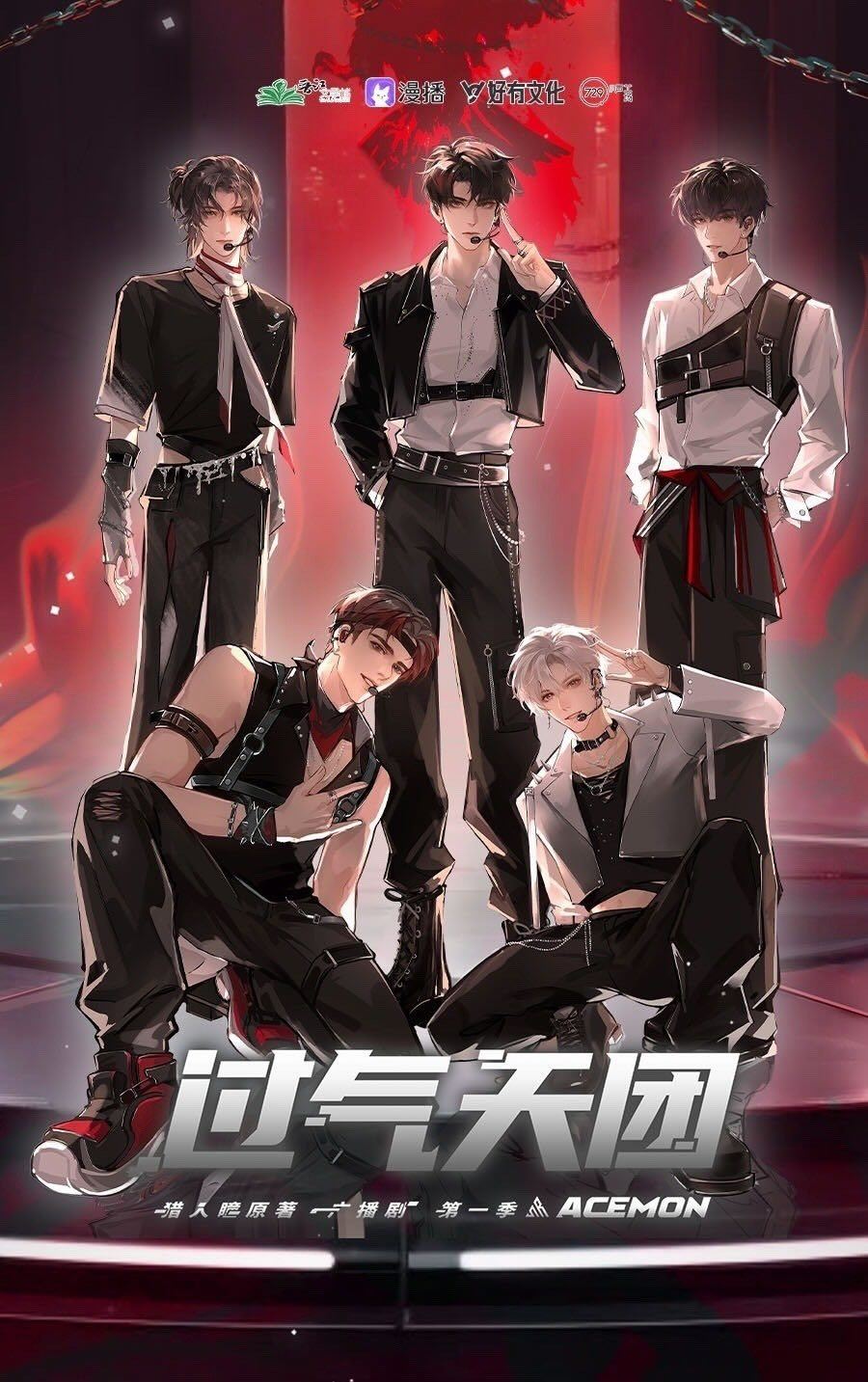
... Read More
Okay, so I need to talk about that opening line because it genuinely stopped me cold. "What would happen if I kissed you right now?" — Tan Qing just blurts this out in a private moment with Zhu Lianzhen, mic already off, leaning in close. This isn't some grand confession scene with dramatic lighting. It's quiet, almost casual, which somehow makes it hit harder. And then the narrative immediately pivots to the group dynamic and industry world-building, which is a bold structural choice. The author doesn't linger on it but plants it like a seed. Later, when we see Zhu Lianzhen's reaction (or lack thereof) to the Lock-M imitator, and when he recalls those old days... the kiss line keeps echoing beneath everything. It's the kind of detail that recontextualizes the whole story on a reread. The main plot is clearly building toward Music Class as a major set piece — live performance, no backing tracks, idols exposed. That's high stakes by default. But what I love is how the author wove the personal subplot (Tan Qing and Zhu Lianzhen's history) into the professional world so seamlessly. The two storylines feed each other instead of running parallel. Also, the Lock-M manager silencing the hallway scene? That's not just flavor text. It establishes the power hierarchy that Acemon is about to disrupt when they blast rock music right back. Plot threads everywhere.
... Read More
The dialogue in this chapter is absolutely chef's kiss and I need to break down why. First of all, Zhu Lianzhen and Fu Rong opening exchange: 'I need to filter the air when sharing a room with you people.' 'Then stop breathing.' Two lines. That's it. In two lines, you know these two have been bickering since elementary school and absolutely refuse to change. It's charming in a toxic way that I cannot get enough of. Then Pei Qiao calling them out—'Are you guys elementary school kids?'—and honestly she's not wrong. But the real magic happens with Fu Rong and that harasser. The guy slides up, gets rejected, and Fu Rong's response is just absolutely lethal. 'Get lost.' 'Are you a man or a woman?' 'A man.' 'But I can still be your mother.' THE AUDACITY. The way the dialogue shifts from hostile to hilarious to terrifying in three lines is masterful writing. And Koty's German slang—'digga'—adds this casual, international flavor that makes the world feel bigger and more lived-in. But my absolute favorite exchange has to be Tan Qing and Zhu Lianzhen in the restroom. Zhu Lianzhen is splashing water on his face, probably trying to sober up or at least feel less tipsy, and Tan Qing just appears and says the most mundane thing possible. 'That's tap water. You shouldn't drink it.' No drama. No emotional buildup. Just this quiet, almost parental concern wrapped in a completely normal statement. The author's voice throughout is sharp, witty, and devastatingly observant. Every character has a distinct way of speaking—Koty's loud and invasive, Ji Yunting's emotional and uninhibited, Fu Rong's razor-edged and minimal, Tan Qing's deceptively calm. It's effortless characterization through dialogue and I'm shook.
... Read More
The author just casually drops the most cinematic imagery and I am here for it. Zhu Lianzhen scrambling up those stairs, every step slick with ice, sliding back to the starting point no matter how carefully he moves—that's pure visual storytelling right there. You don't need a single line of exposition to feel how trapped he is. And then the phone screen literally ripples like water and the numbers FLOAT OUT. Not glitch, not pixelate—float. Like they're alive and trying to escape. Zhu Lianzhen actually reaching for them is the kind of detail that makes you pause mid-scroll.
... Read More
The stakes in these chapters are deceptively simple on the surface but genuinely nail-biting underneath. Let me explain why. On the external level, Zhu Lianzhen is juggling multiple pressures: his solo tour after the group suspension, his academic work (that thesis stuck at 500 words), and the public spectacle of his Weibo follow/unfollow war. Each of these threads represents a different facet of his identity—artist, student, celebrity—and they're all converging at once. The stakes feel real because they're mundane. Anyone who's tried to balance work, school, and a crumbling relationship will immediately recognize the suffocating pressure. But the INTERNAL stakes are where this chapter truly earns its tension. Zhu Lianzhen doesn't just want Tan Qing back—he needs to understand what happened that night. The unanswered question is a hook buried deep in his chest. Every time he almost falls asleep, it resurfaces. Every social media interaction feels like a probe into uncharted territory. The suspense isn't about whether they'll get back together—that's almost irrelevant. The suspense is about TRUTH. What did Tan Qing do in that room? Why didn't he say anything? Does Zhu Lianzhen even WANT to know? The group's potential reunion adds another layer of stakes. Ji Yunting's comment about not wanting the group to make a comeback isn't just subplot—it's a ticking bomb. If the group reforms, the power dynamics between all four members will shift violently. Zhu Lianzhen and Tan Qing's personal drama will become public property. And the most terrifying stake of all? The hotpot scene ends with Zhu Lianzhen saying something that gets cut off mid-sentence: "So, at the end of the day, you just don't want the group to make a comeback, right?" The chapter ENDS there. No resolution. No reaction from Tan Qing. Just the bubbling pot and three people sitting in silence. The cliffhanger isn't dramatic—it's devastatingly quiet. And that's exactly why I can't stop thinking about it.
... Read More
'That's tap water. You shouldn't drink it.' Two words. Two completely ordinary words. But delivered the way Tan Qing says it—calm, matter-of-fact, with that underlying current of caring—he basically just handed you a masterclass in how to show you love someone without saying anything. Zhu Lianzhen was splashing water on his face, probably half-drunk and lost in his own head, and Tan Qing just... appears. Grabs his collar gently enough to make him stand straight, then delivers this mundane warning like it's the most important thing in the world. Meanwhile, everyone else at the table is either completely wasted or causing chaos. Koty running his mouth, Ji Yunting bawling into someone's shoulder, Fu Rong sitting alone in his corner like a storm cloud. But Tan Qing stays sober. He always stays sober. And I'm not buying the theory that he's just doing it because he's short on money. The way he watches over this group, the way he positions himself away from the center of attention but somehow always ends up exactly where he needs to be—that's not just obligation. That's devotion. And then there's Fu Rong, who can't stand to be touched by anyone, literally punches people, and then spends the entire night isolated. Zhu Lianzhen finds himself laughing at Fu Rong's comebacks in the restroom, and that's the moment it hits you—there's something real there, something that predates whatever happened between Fu Rong and whoever. Or maybe it's just the alcohol. God help us all.
... Read More
Can we just appreciate for a second how each person's voice is completely distinguishable without any narration telling us who's who? Let me break this down because I'm obsessed. Ji Yunting's defensive energy is so specific—he's the leader, he's trying to maintain dignity, and he fails spectacularly. "My masterpieces are the songs I've written!" This is a man clinging to his professional identity while his teenage diary entry is being read aloud. The desperation in "Aren't any of you going to ask me what I think?" after everyone else has already decided? That's not just comic relief, that's characterization. He's used to being followed and it hurts when he isn't. Zhu Lianzhen is the brash one, definitely. But watch how his dialogue changes tone when the topic shifts to Tan Qing—he goes from loud and teasing to physically reactive ("expression stiffened"). The dialogue does the heavy lifting there; we don't need narration to tell us something's different. Koty's voice is instantly recognizable—the superstitious jokes, the quick pivots when things get eerie, his genuine emotional moments like crying over the Qzone post. His line "Don't scare me like that" after Qingming Festival is both funny and revealing. He's the emotional barometer of the group. Fu Rong? The one who observes. "So disgusting" about the Qzone post, analyzing the lighting in the photo, calling out Ji Yunting's guess as 'the one that looks most normal.' Minimal dialogue but maximum impact. He's the dry commentator who sees everything. And Tan Qing, quiet thinker. "Let's go with B" and "Let's go with C"—he speaks little but when he does, the group listens. The tragic irony is they DON'T listen to him here, and the author keeps highlighting that. The dialogue flow is so natural it reads like eavesdropping. No one sounds like they're performing.
... Read More
okay so I need to talk about the red carpet scene because it genuinely got me "Tan Qing quickly noticed. 'Cold?' ... Tan Qing shifted half a step closer, blocking most of the wind blowing directly at them." this was one of those moments that looked completely casual on the surface but when I read it again it hit different. everyone in-universe sees it as fanservice - even Zhu Lianzhen thinks so, accepting it with a clear conscience because he assumes Tan Qing is just doing it for the cameras. but what if he isn't? what if the thing that makes it actually sweet is that Tan Qing did it instinctively, without even thinking about the cameras being there and then the worst part - Zhu Lianzhen leaning closer. not because he wanted to, but because he accepted the fanservice framing. he let himself be cared for inside a lie they both agreed to tell the perfume line earlier was also unhinged in the best way. "It's not really your kind of scent" - TAN QING REMEMBERS HIS PERFUME PREFERENCE. who does that as just a teammate?? the fans are literally losing their minds over this and honestly I don't blame them I can't tell if Zhu Lianzhen is protecting himself by treating everything as performance or if he's genuinely that convinced there's nothing real underneath. either way it made my chest hurt a little
... Read More
Let's talk about the cake. Not just because it explodes dramatically — though that was glorious — but because it's shaped like a Hami melon, which is Zhu Lianzhen's favorite fruit. Tan Qing made this cake by hand. He picked every ingredient himself. He designed it to look like something Zhu Lianzhen loves, and then he hid a balloon underneath it as a surprise. The entire cake is an act of devotion disguised as entertainment. And then it explodes. Cream everywhere. The perfect shape destroyed. The hidden balloon revealed. Zhu Lianzhen stands there covered in it, and instead of being upset, he immediately shoves cream back onto Tan Qing's face. Destruction becomes reciprocity. You give me chaos, I give you chaos back. That's their love language, apparently. There's also the motif of hiding and exposure running through all of these scenes. The hidden camera. The mirror. The phone screens. The fans screenshotting and zooming in on details. Zhu Lianzhen wants to vanish — 'wanted nothing more than to vanish from the face of the earth' — but everything about this livestream format is designed to do the opposite. Every angle is covered. Every embarrassed expression is captured. The red circle highlighting his panic in post-production is almost cruel in its precision. But then Tan Qing covers Zhu Lianzhen's eyes with his own hands. 'Loosened his fingers just enough to peek.' Control over what gets seen. Protection mixed with permission. That's the whole theme right there — the tension between wanting to be seen and needing to hide, between exposure and intimacy. The fan comments reinforce this too. They're watching a livestream, trying to piece together what's real and what's staged, what's accidental and what's intentional. 'Move along. OP's clearly been sent by Ms. Pei to scam us.' Paranoia about authenticity in an era of curated content. But the emotional truth comes through anyway, regardless of whether anyone is staging it or not. The fans may be wrong about the technical details (sitting vs. lying, camera angles), but they're right about the feeling. 'Was gonna look on Weibo for a high-res pic to repost, but turns out Zuige's anti-piracy settings on the livestream are pretty tight.' Even the piracy warnings become part of the worldbuilding — this is a universe where every moment is potentially recorded, distributed, dissected. There's no privacy. There's only what you choose to reveal, and to whom.
... Read More
I need to just talk about this one exchange for a second because it wrecked me: "I think I have the same coffee machine." "That's the extra one you bought and gave me." And then: "That tableware set inside looks beautiful." "…You brought that too." How does the author fit so much into three lines of dialogue?! This is the entire history of their relationship crystallized into household objects. Every item in Zhu Lianzhen's kitchen is a physical remnant of Tan Qing's presence, and Zhu Lianzhen literally cannot bring himself to throw any of them away. Read that paragraph again about the hoverboard and earphones and pillows—these aren't just gifts, they're anchors. The narration says it outright: traces of him remained everywhere, like a slow invasion called 'habit.' HABIT. Not love, not grief, not anything clean and simple—HABIT. Which is somehow more devastating. Because habit means it's ongoing. It means Zhu Lianzhen is still living inside a space that was designed by someone who isn't there anymore, surrounded by evidence of care that he refuses to discard. And Tan Qing walks in and immediately starts identifying every object he once gave, making it feel like home. Zhu Lianzhen snaps at him—"You sure know how to make yourself at home fast!"—but it's clearly a performance. He's not actually annoyed. He's terrified. Because if Tan Qing makes himself at home here, then maybe the boundary between past and present is thinner than either of them has admitted.

Leave a comment

You must be logged in to leave comments. or
