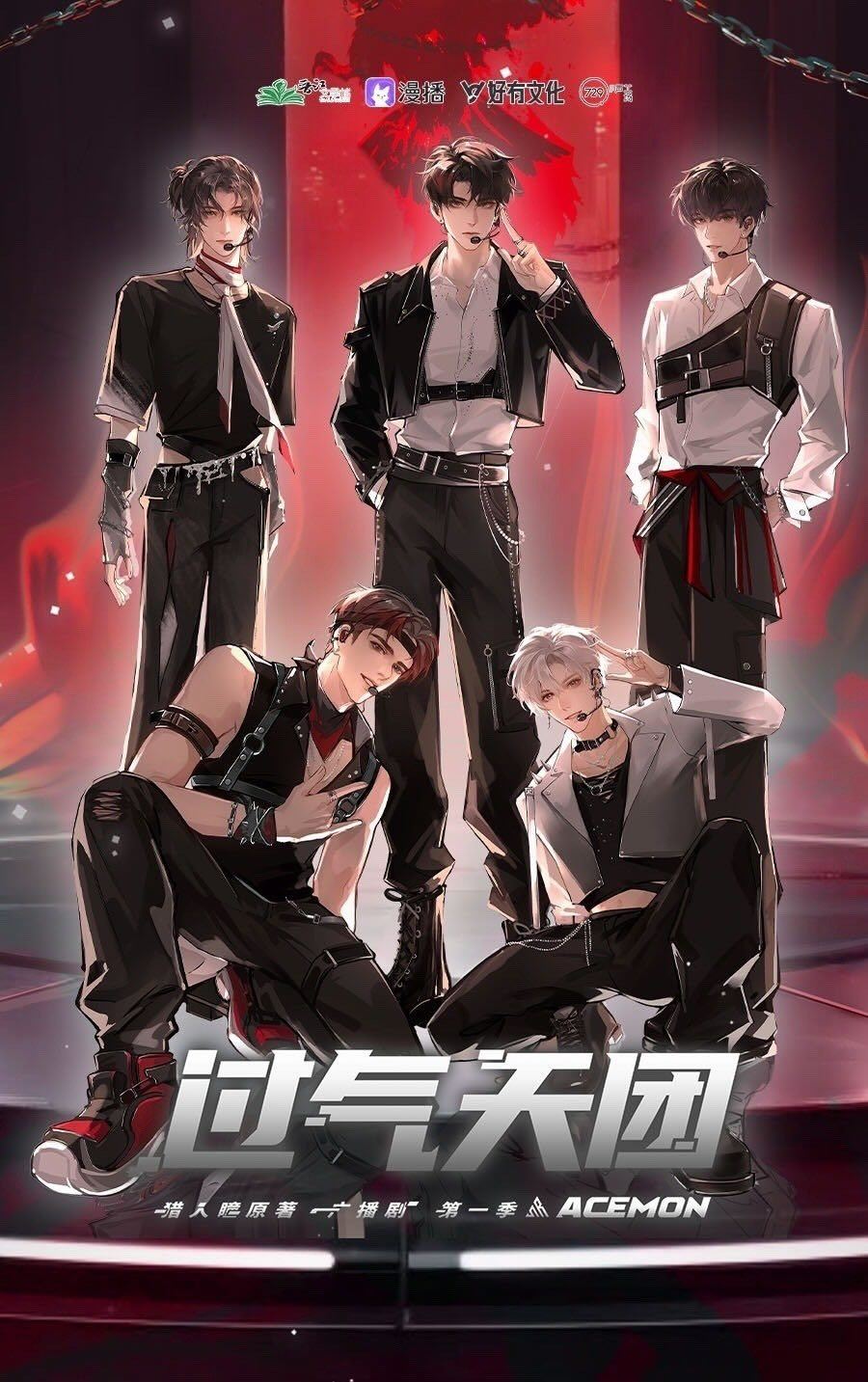
Okay so let me just talk about the hair scene for a second because it is VISUAL POETRY.
Zhu Lianzhen sitting motionless for several hours while his hair gets bleached—the image alone is kind of brutal. Hours of stillness. Just sitting there. Then the reveal: 'an ivory-white base overlaid with a metallic sheen of light pearl blue.' I need this described in a screenplay because the stylist literally calls it 'candy wrapping' and says no one else in the industry could pull it off. The writer is telling us something important here—Zhu Lianzhen is one of a kind, visually and narratively.
The practice room scene too. Mid-March, spring beginning, all things coming back to life. The environmental detail isn't accidental. Spring = renewal, rebirth, things waking up from dormancy. And right then, these two are frozen in place, refusing to move forward, negotiating emotional minefields while the world outside literally renews itself. The contrast is deliberate and it stings.
The hotel room gathering—Koty complaining about rules, Fu Rong making that dark joke about cutting heads off, Zhu Lianzhen sitting with his eyes closed bored out of his mind while everyone else is animated and loud. The spatial arrangement tells us everything about where Zhu stands emotionally: detached, observing, not fully present in the group dynamic even when surrounded by people.
And then the online forum section at the end—jumping from the intimate practice room to the sprawling digital public sphere, the trending topics, the comment threads speculating about A-Group's return. The worldbuilding expands from personal to cultural in one sweep, showing us that these characters exist in a ecosystem of public perception that constantly pressures them. Music Class as 'battle of gods,' the blank mystery slot, the speculation—this isn't just background, it's the pressure cooker they're living in.
Every setting choice serves the emotional arc. That's tight writing.