Fallen Idol Group - Reviews

Fallen Idol Group
+Add to Custom List
Sort
Add review
... Read More
Let's talk about how the author controls the tempo here because it's genuinely masterful. Chapter 177 starts almost sleepy—domestic scene, Zhu Lianzhen helping in the kitchen, Tan Qing washing vegetables, a simple dinner with sea salt and pepper. Very calm. Very ordinary. You settle in, think this is going to be a slow chapter about recovery and friendship. And then Tan Qing gets a phone call and the entire narrative shifts gears. The transition is almost invisible but also jarring. One moment they're eating, the next Tan Qing is gone. Then we're in a car in a storm. The pacing accelerates—we get the five-hour drive compressed into a few paragraphs, the hospital arrival, the confrontation with Tan Xiao, the media camp outside. All of this happens fast, mirroring Tan Qing's rushed, breathless state of mind. Then the text message exchange with Zhu Lianzhen slows everything down. Long messages, pauses, deleted typing, the weight of unsent words. This is the emotional core of the passage and the author gives it room to breathe. We feel Tan Qing's hesitation in real time. And then—just when you think the chapter is about to resolve with his decision—the scene cuts to the hospital ward and Tan Ruisheng's monologue. The pacing slows again, almost to a crawl, as the father speaks in fragments. Each memory is a small beat: the cake, the hide-and-seek, the early development. And then the final line drops and the chapter effectively stops dead. The structure is: calm → disruption → acceleration → intimacy → revelation. Four movements, each one pivoting on the last. This is how you keep a reader from putting the book down.
... Read More
What I love about this passage is how many layers of conflict are happening simultaneously and none of them get resolved — they just stack on top of each other. On the surface there's the obvious external conflict: Zhu Lianzhen is hiding a secret relationship and the hidden cameras make genuine privacy impossible. But then there's the group's career hanging in the balance, the threat of disbandment that Tan Qing conveniently reminds him about. And underneath all of that is the internal conflict between Tan Qing and Zhu Lianzhen — unresolved feelings, old hurt, the constant power struggle of who controls the narrative between them. The author keeps the tension razor-sharp because none of these threads are allowed to drop. Every time Zhu Lianzhen thinks he's escaped the pressure, Tan Qing finds another angle to press on him. The wrist grab is the perfect physical manifestation of this — it's controlling, it's intimate, and it's inescapable. What stands to lose here isn't just a romance subplot, it's their entire careers and whatever fragile trust they've managed to rebuild since reuniting in February.
... Read More
this batch is a masterclass in pacing manipulation. let me break down why I couldn't put it down the chapter opens with what reads like light banter - the sour candy comment, the team dynamics, the fake girlfriend discussion. it feels breezy. almost comedic. but underneath everything is running on a different timeline. the Celebrity Observer episode airs early due to 'overwhelming audience demand' - the fandom layer is accelerating, pulling the story forward faster than the characters control then the tonal pivot. Ah-Xu's message about the villa. suddenly the comedy drops away and we're in investigation territory. the author doesn't warn you - just shifts gears and you're suddenly reading about a house purchase, a middle-aged woman buyer, a return address that shouldn't exist. this is the narrative equivalent of someone smiling at you while checking their phone behind your back after that relief comes the red carpet - visual, sensory, public. the awards ceremony establishes stakes externally (career achievement, public recognition) while internally the tension hasn't resolved at all. Zhu Lianzhen still doesn't know about the villa. Tan Qing still hasn't explained the earphones. the wind moment happens in this bubble of normalcy that feels fragile precisely because we know what's underneath the author trusts the reader to hold multiple timelines at once. past (where they lived together), present (the fanservice performance), and future (whatever the villa investigation leads to). that's how you maintain engagement across chapters
... Read More
Let's talk about stakes for a second because this chapter quietly raises them in ways that aren't obvious until you're already emotionally compromised. On the surface, Acemon winning the Best Music Award is the big external conflict resolution — they've been underdogs, people doubted them, and now the industry has to take them seriously. Ji Yunting's speech going blank on stage perfectly captures the weight of that moment. This isn't just an award; it's validation after years of being dismissed as "idol group music." But the REAL stakes are the quiet ones. Tan Qing buying that apartment and refusing to sell it. His confession to Zhu Lianzhen at the concert venue — those words he chose so deliberately. The way Zhu Lianzhen spends the entire night oscillating between celebrating his own success and suddenly becoming hyper-aware that Tan Qing has nobody to share it with. The confrontation at Tan Qing's door is the chapter's emotional climax and it's devastating in its simplicity. Tan Qing is drinking alone at 3 AM. He doesn't even seem surprised to see Zhu Lianzhen. Just says "close the door" like he's been expecting him. Or like he doesn't care anymore. What are they赌ing here? Their careers, yes. But also whatever fragile thing is growing between them now. Every time they get close to something real, the timing is wrong or someone says the wrong thing or silence takes over instead. And yet Zhu Lianzhen keeps checking on him. Keeps being unable to let it go.
... Read More
I need to talk about how each character's voice is distinct because the author is genuinely playing 4D chess with dialogue here. Fu Rong's line—'The only way is to cut your head off'—is such a specific voice. Dark, casual, delivered as a laughing interjection. That's not everyone's joke. That's Fu Rong's joke. The humor is morbid and quick, which tells us everything about his personality without any narration. Koty's panic about his neck tattoo being blurred—'That won't do. I'll cover it myself'—sounds like someone who's used to controlling his image, slightly neurotic but self-aware. His monologue about considering tattoo removal and then deciding against it because it 'hurts like hell—like having several layers of skin peeled off' is funny and deeply personal at the same time. This guy has presence through dialogue alone. Tan Qing is the real masterclass though. His voice is cool, measured, occasionally sardonic, and deployed with surgical precision. 'It can't be covered'—three words, deadpan. 'Mm.' His verbal tics are minimal but distinctive. When he says 'Keep going' while clearly not paying attention, or when he smoothly adds the third rule about not using fanservice as excuse for private desires—each line is perfectly calibrated. He speaks less than everyone else but dominates every conversation. And Zhu Lianzhen's voice! His internal monologue is anxious, analytical, self-correcting—'That was what he said, but...' He catches himself mid-thought constantly. The external dialogue is more controlled, but the narration reveals someone whose mind is always two steps ahead of his mouth. The fanservice rule exchange specifically—'Where was I?' 'Cooperation from both of us'—this is comedy written by someone who understands that the funniest moments come from people desperately trying to sound professional while everything beneath the surface is chaos. The rhythm of their back-and-forth has this almost musical quality. Pause. Beat. Recovery. Each line lands because the author knows exactly when to let silence do the work.
... Read More
I keep coming back to the sensory details of this apartment because it's not just a setting — it's an active presence in the story. The code still works on the first try. That small detail establishes that someone has been maintaining access to this space without Zhu Lianzhen knowing. The floor is "spotless, clearly cleaned not long ago" but the shards remain in the exact location where Zhu had smashed them during their breakup. That's not neglect — that's ritual. The geometric abstract paintings described as "cheap prints, likely bought in bulk" initially read as decor choices, but they become framing devices — literally — for the cameras. The visual progression from normal apartment → broken glass memory → clean apartment → hidden cameras is a slow reveal that transforms the space from lived-in to surveillance state in real time. And then the pomegranate juice cans with last month's production date, the freezer fully stocked with ice. These domestic details are what make it chilling. A normal abandoned apartment would be dusty and forgotten. This one is FRESH. Cared for. The painting above the bed, the living room wall pieces — all connected, all concealing. Tan Qing's final line about hoping the house "never sees anyone again" reframes every domestic detail as either maintenance or evidence collection. The worldbuilding here doesn't need descriptions of cities or cultures — one apartment, preserved like a time capsule, tells you everything about Tan Qing's psychology.
... Read More
This whole awards ceremony sequence is one massive worldbuilding masterpiece and I'm still recovering. The author doesn't need to describe the venue in detail because the seating arrangement TELS you everything — A-Group in the front row with camera access, other idol groups in the back rows "barely visible when the camera panned past them." That single detail establishes the entire hierarchy of the industry in one sentence. Then you have the livestream delay mechanic which creates this incredible layer of dramatic irony — we, the readers, experience the same five-minute lag as the online audience, watching the comments roll in real-time as people notice Tan Qing wiping Zhu Lianzhen's lips. The comment sections themselves are a worldbuilding tool of genius proportions. You get the full spectrum: die-hard fans, casual observers, haters, speculators, people whose only goal is to tear things down. The shift in tone when Lock-M wins versus when the Tan Qing/Zhu Lianzhen moment leaks is handled with such precision. And Pei Qiao's backstage conversation with Jiang Hong — the fake smiles, the calculated compliments, the eye-roll once she turns away — this is the entertainment industry at its most predatory. Jiang Hong's history with Pei Qiao (same company, same bankruptcy, split over creative differences) adds layers of institutional memory to the world. This isn't just a fictional awards show, it's a fully realized ecosystem with history, power dynamics, and grudges that go back years.
... Read More
I need to talk about Tan Qing because this character is everything. Think about it — in literally every scene, he's the calm center. Zhu Lianzhen is panicking, screaming, covering his eyes, scrambling off couches. Tan Qing? He puts a gentle hand on Zhu Lianzhen's head, ruffles his hair, says 'Very cute, Xiao Zhu. Look at yourself.' And then he just... stays there. When Zhu Lianzhen shoves cream on his face, he doesn't dodge. He narrows his eyes and lets it happen. When their lips almost touch from the cream, the camera cuts away at the exact right second. This is a man who has absolutely no interest in maintaining his composure around Zhu Lianzhen but somehow maintains perfect composure everywhere else. There's a line where Zhu Lianzhen tries to shrug Tan Qing's arm off his shoulder and Tan Qing 'naturally took a step back' — that word 'naturally' matters. He's practiced at this. He knows exactly how much space to give and when to close it again. And Zhu Lianzhen — oh god, Zhu Lianzhen. He's all reactive energy. Every time something happens to him, he explodes outward: yelling at the TV, threatening to make someone die, grabbing cream and attacking Tan Qing like a wounded animal. But the moment Tan Qing's tongue licks cream off his palm? He freezes. Electric shock through his whole body. He pulls back immediately. His fluster is so visceral. I keep coming back to that fan comment: '[He wasn't just sitting on a lap, he was basically lying in his arms.]' The fans see it. We see it. But these two characters are operating on entirely different wavelengths. Tan Qing is already committed — look at the melon cake, look at how he positions himself behind Zhu Lianzhen on the couch, look at the way he watches him with this quiet amusement. Zhu Lianzhen is still in full defense mode, hiding his face, making jokes, threatening violence. The most telling detail is probably the cake design. Tan Qing picked every ingredient specifically for Zhu Lianzhen. Hami melon is his favorite fruit. He made it by hand. And when Zhu Lianzhen threatens to give Koty the stem, Tan Qing laughs and steps back to give Zhu Lianzhen more space in the frame. He's accommodating him. Supporting him. Even when Zhu Lianzhen is being difficult. What I find most compelling is that neither of them has said anything about their past. The comments online are speculating about remarriage. But in the room, it's all subtext and physical proximity and the kind of comfort that comes from having known each other before. Tan Qing doesn't need to explain anything. Zhu Lianzhen doesn't need to admit anything. They just... exist in this space together, and the audience is left to read between every single line.
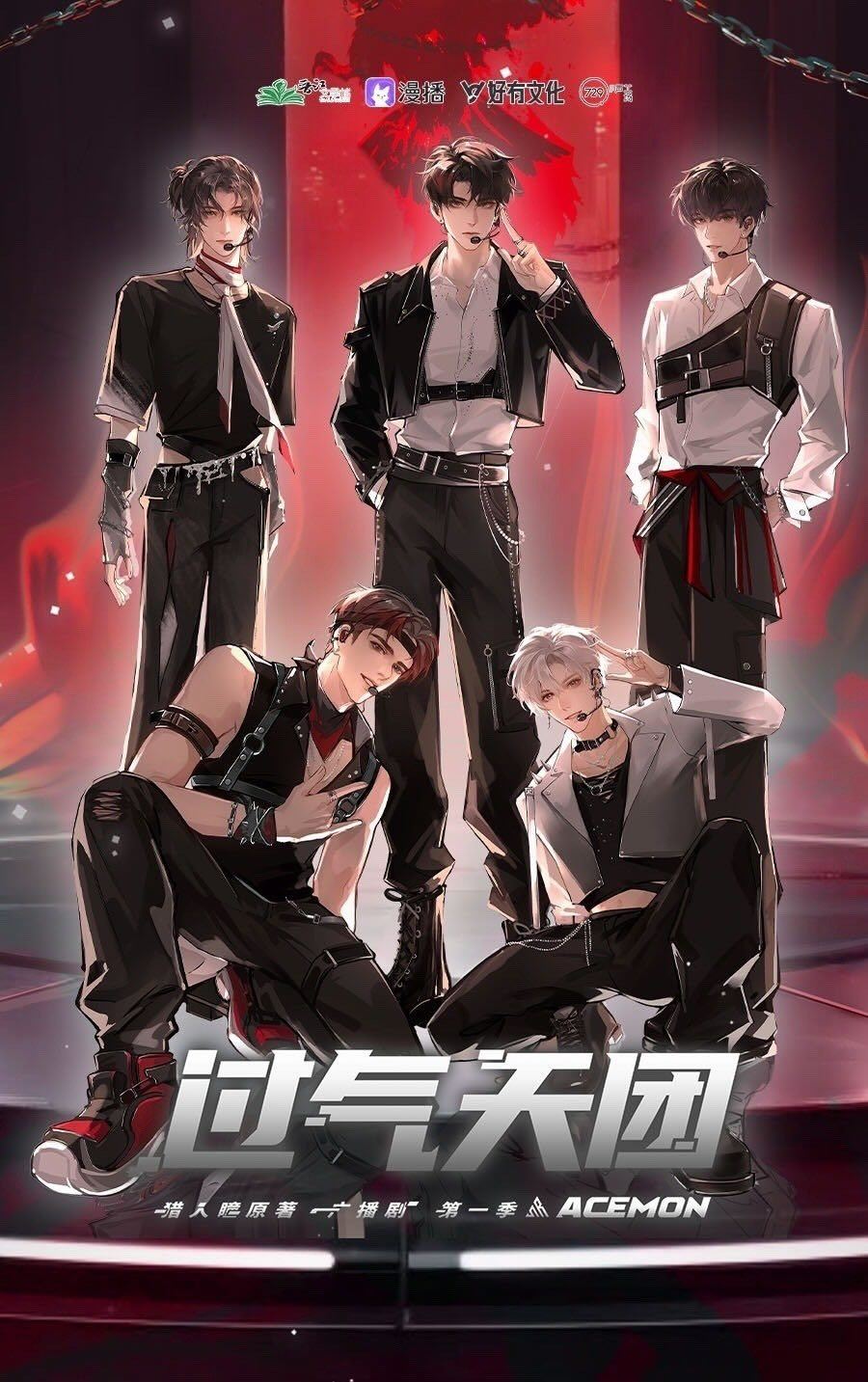
... Read More
Okay so I need to talk about this whole segment because it's doing SO MUCH simultaneously and I love it. On the surface, it's just a variety show quiz where the members get embarrassed by their pasts—classic fun format, right? But underneath that, there's this thread about the abandoned school that keeps pulling at me. Remember how Qiu Hao literally pressed his lips together and said 'Better not talk about that today' when asked why the school closed? And then Koty immediately jumps to 'don't tell me someone died here' and Zhu Lianzhen deliberately says 'It's Qingming Festival today' like he's being intentionally provocative? That's not just flavor text. That's a plot device being planted right in the middle of what's supposed to be lighthearted entertainment. The contrast is what got me—this warm, funny scene where they're bickering about Ultraman forums and plane-eating wishes, and then BAM, the shadow of something dark hangs over the whole location. I also can't stop thinking about how the questions themselves are structured. First it's embarrassing personal stuff (Ji Yunting's emo Qzone post), then it's playful couple memories (the plane incident), and then suddenly it pivots to something potentially serious with Zhu Lianzhen and Tan Qing. The third question cuts off at 'Wh' which I assume is 'What did he say?'—and the fact that Zhu Lianzhen's 'expression stiffened slightly' before it even finishes? That's not a setup for a joke. The plot is clearly building toward something, and I have a feeling the abandoned school and the relationship between these two characters are going to intersect in a way I'm not ready for.
... Read More
The pacing in this batch is masterful. It starts with internal reflection—Zhu Lianzhen's thoughts on his father's criticism—then shifts to physical action (mother's visit, returning to Ronggang). The pacing quickens when he meets Tan Qing at the door, then slows into the dumpling-making sequence, which is detailed but not tedious. Each step—kneading, punching, chopping, boiling—has a rhythm. The humorous pause when Zhu Lianzhen punches the dough ('Hyah hyah hyah!') breaks tension, then returns to quiet conversation. The fireworks scene is a mini-climax: anticipation, failure, resignation. Then the ending—eating dumplings, discussing holidays, the unspoken questions about Tan Qing's family—feels like a gentle exhalation. The author controls reader engagement by balancing loud moments (dough-punching sound effects) with silent ones (both ignoring the Gala). Transitions are smooth: from balcony to dorm, from kitchen to outside. There's no rushing; even the brief dialogue about winter break homework serves character development. The chapter ends on an incomplete note—'Not exactly. No way it'd be just because of that,' Zhu Li—leaving us hanging, which is perfect pacing for serialization.
... Read More
Okay so let me just say — the structural move from the hug scene to the livestream scene is genuinely brilliant and I didn't expect it at all. You've just had this incredibly charged, slow-burn moment between Tan Qing and Zhu Lianzhen where everything is hanging by a thread, right? And then bam — Zhu Lianzhen recovers, puts on a plain black shirt with an unbuttoned collar, and suddenly we're in livestream territory with fan comments flying everywhere. But here's what's smart: the emotional arc doesn't reset. Zhu Lianzhen is clearly still processing what happened. He mentions Koty casually — 'I'll make him treat me for a whole month' — but the subtext is he's looking for normalcy, for distraction. And the livestream gives him that, except it doesn't really work, because of course it doesn't. Then Fu Rong shows up, Koty yells from another room, and suddenly there's this whole web of relationships orbiting around Zhu Lianzhen. The plot is doing something interesting here — it's expanding the world while keeping the central tension alive. We're not done with Tan Qing. We're just giving the story room to breathe.
... Read More
The physical stakes are simple—food poisoning from wild mushrooms, potentially dangerous but resolved quickly. But the emotional stakes underneath are where this passage really gets tense. Every interaction between Zhu Lianzhen and Tan Qing after the hospital visit is basically a landmine field. One wrong word and someone might accidentally say the thing they've both been avoiding. Zhu Lianzhen asks the question that breaks my heart: "Do you think if it had been one of the others who got sick, Tan Qing would've done the same?" This isn't curiosity. This is him already knowing the answer and dreading confirmation. And Ah-Xu's reaction—stopping, looking at him strangely, wanting to say something but holding back—tells him everything he needs to know without saying a word. Meanwhile Tan Qing is out here acting like their current relationship is "just regular teammates" while literally staying up all night watching over him. The cognitive dissonance is giving me whiplash. He told Zhu Lianzhen that line at the hospital and then immediately proceeded to do absolutely nothing that a regular teammate would do. The fact that Zhu Lianzhen is trying so hard to rationalize it instead of confronting the reality is both frustrating and so painfully human.

Leave a comment

You must be logged in to leave comments. or
