Fallen Idol Group - Reviews

Fallen Idol Group
+Add to Custom List
Sort
Add review
... Read More
I want to talk about how the author uses physical space to tell emotional stories, because this chapter is a masterclass in environmental storytelling. The elevator scene is the centerpiece, obviously. A narrow, confined space. Single-direction lighting that makes Tan Qing's features look sharper but his expression softer. Zhu Lianzhen backing into the corner like he's physically trying to create distance. The doors opening and closing becoming a rhythm of approach and retreat. This is a scene that feels like a movie—every beat visual, every gesture framed. You can SEE this. The author doesn't need dialogue to tell you these two men are in emotional freefall. Then there's the contrast with the earlier office scene—Pei Qiao's office, bustling with activity, questions flying, Weibo scrolling. It's cluttered and loud, the opposite of the elevator's quiet claustrophobia. The author moves us from public to private space at exactly the right moment, forcing Zhu Lianzhen and Tan Qing into a situation where they can't perform for anyone else. Just each other. And the ending—the house, the sofa, Ah-Xu's casual suggestion about buying new earphones, the snowfall outside getting lighter. The external environment mirrors Zhu Lianzhen's internal state: the storm is clearing, but he's still frozen. The snow imagery throughout the chapter is doing work too. Cold outside, warm inside, the liminal spaces between. The setting of a corporate entertainment company—with its PR machines, trending topics, stalker problems, and fan service demands—creates this pressure cooker atmosphere where personal emotions can't survive unchanged. The world itself is an antagonist.
... Read More
There's this thermometer in the story—actually two thermometers, if you count the infrared one and the mercury one hidden in the drawer. But I think the real thermometers here aren't measuring temperature at all. They're measuring something else entirely. Zhu Lianzhen zooming in on that blurry digital display, trying to read the numbers—that's him trying to quantify how much he cares without actually saying it. The temperature becomes a proxy for emotional distance. 38 degrees. 'Just a slight fever, I'll be fine soon.' But is he fine? The whole chapter suggests otherwise. And then the keys. Oh god, the keys. Those keys are the most loaded object in this entire passage, and the author knows it. They're not just keys to a dorm room—they're keys to a shared history, to a version of themselves that existed before everything changed. The cross-shaped scratch on his own key, preserved by Tan Qing like a relic. This isn't hoarding; this is memorialization. Think about what a key symbolizes. Access. Belonging. The ability to enter and exit at will. Tan Qing keeping Zhu Lianzhen's old dorm key isn't just sentimental—it's an act of preservation. He's keeping a door open that supposedly no longer exists. The smart lock on his current apartment replaces the old keyed entry, but Tan Qing hasn't locked that door metaphorically. He's been carrying the key around, presumably for years, in a drawer next to his medicine. Like it's something he might need. Like he's prepared for a scenario where Zhu Lianzhen shows up unexpectedly. Which, spoiler alert, he does. The congee itself is symbolic too—comfort food, domestic care, the kind of thing you make for someone you're trying to take care of without quite knowing how to say it. Zhu Lianzhen rummaging through Tan Qing's fridge, making egg toast for himself because he 'hadn't even had a glass of water before leaving the house'—that's selfless in the most casual way possible. He doesn't think about his own hunger. He thinks about whether Tan Qing can eat something light. The apartment versus the dorm—that's the theme right there. The present versus the past. The curated, organized, lock-code-controlled present versus the messy, shared, key-driven past where Tan Qing would get up in the middle of the night just to let someone in. Different kinds of intimacy, different kinds of access, different kinds of care. And somewhere in between those two versions of home, something was lost—or maybe something was never properly said.
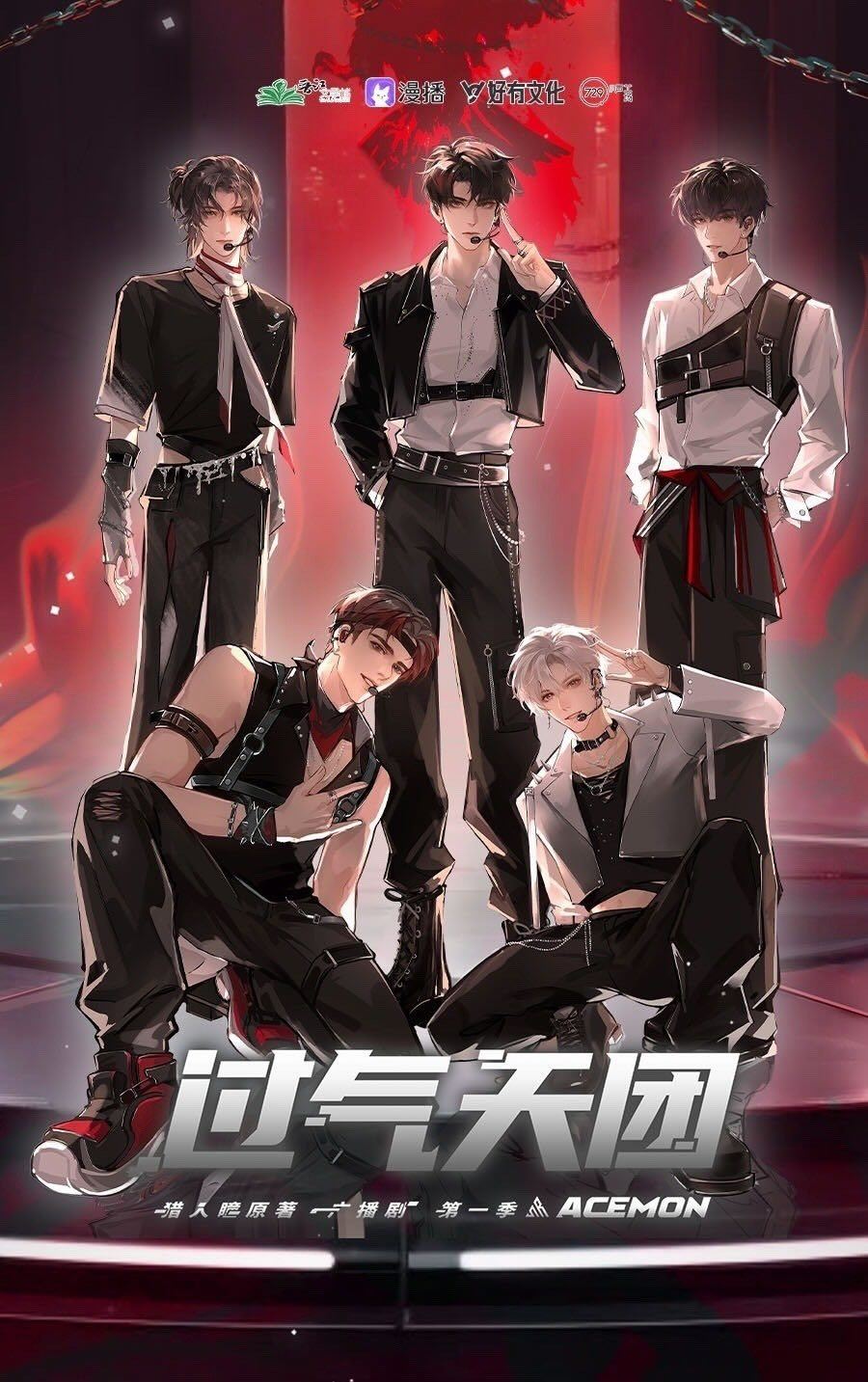
... Read More
Let me just say — the author knows exactly how to string scenes together here. You go from a high-tension live performance with Tan Qing hiding pain, to a quiet backstage moment where Zhu Lianzhen makes that decision to order the in-ears, to the comedy gold of the van mistaken-identity scene, to the slow burn of Zhu Lianzhen going home and spiraling over Weibo. That's four complete narrative beats in roughly three thousand characters and it does NOT feel rushed at all. The transition from the van scene to Zhu Lianzhen messaging Tan Qing about his sister is particularly smooth. One moment he's furious at a 'stalker,' the next he's awkwardly broaching the topic of teenage fans and shipping culture, and Tan Qing's immediate reply — 'Is shipping something shameful? Why should I stop her?' — lands like a punchline that also advances the relationship tension. But what really controlled my pacing was the gradual reveal. We don't immediately know that Tan Xiao is Tan Qing's sister. We don't immediately know the QingZhen sign means what it means. The author lets Zhu Lianzhen (and therefore us) piece it together in real time, which means the embarrassment hits at the exact right moment. By the time Ah-Xu suggests 'let's just switch cars,' I was already cringing for everyone involved. The Weibo ending works as a chapter hook because it pivots from personal awkwardness to something bigger — the tattoo rumor mill, the escalating ship culture, the loss of control over their own images. It leaves you wanting to know what Zhu Lianzhen will do next, and whether Tan Qing is going to keep setting him up like this.
... Read More
Okay so let me just say—the earbud thing was genuinely one of the sneakiest plot maneuvers I've read in a while. Tan Qing was posting in his Moments looking for the owner of lost earbuds, right? And we thought it was this genuine, innocent moment. But then Zhu Lianzhen brings up 'my earbuds' and it turns out TAN QING KNEW ALL ALONG. He knew exactly who lost them and deliberately played this whole 'looking for the owner' game. This is such a delicious plot twist because it recontextualizes the entire earlier interaction. Everything about Tan Qing's behavior—the casual conversations, the lingering stares, the way he said 'really' when Zhu Lianzhen mentioned losing the earbuds—suddenly clicks into place as deliberate manipulation, but not in a bad way. It's more like... romantic strategy. He's been playing the long game and Zhu Lianzhen had no idea. The bigger plot thread here though is the ex-boyfriend dynamic unraveling. Zhu Lianzhen admits he hid Tan Qing from his social media ('Hide from him' was still checked), which is such a specific, modern detail that makes their history feel real. And then he tries to cover it by saying 'I set that ages ago and totally forgot'—but we all know that's not how forgetfulness works. The fact that this small digital detail becomes a turning point in their relationship arc is genius writing. A tiny checkbox being unchecked carries more emotional weight than any dramatic confession scene could. And then—just when you think the chapter is done warming up the romance subplot—it swings HARD into thriller territory with the snow scene. One minute we're watching two exes awkwardly flirt, the next there's a man doing backstroke in freezing slush and everyone is horrified. What is happening to this book.
... Read More
Let me just say this upfront: the stakes in this chapter are devastatingly low-key and that's what makes them so high. Nobody is dying. Nobody is confessing. There's no dramatic confrontation. And yet I felt like my chest was being squeezed the entire time. The external conflict is simple—idols can't publicly admit romantic feelings, especially not with each other. The heart rate monitors make it practically impossible to hide anything. Every time someone asks Zhu Lianzhen a relationship question, it's not just awkward small talk—it's potentially career-threatening. When Koty sets up the gender-swap scenario, he's essentially asking Zhu Lianzhen to publicly define his romantic preferences while surrounded by his bandmates, on a livestream, with millions of fans watching. If he says the wrong name, the wrong thing, the wrong implication—it's over. But the INTERNAL conflict is where this chapter really hurts. Zhu Lianzhen knows Tan Qing was using emotional memory to cry. He KNOWS that actors have to reopen old wounds to do their job. And his immediate thought is: did those wounds include me? That's the conflict right there. He's terrified that Tan Qing's performance was genuine because it was fueled by feelings for him, and he's terrified that it wasn't because that means Tan Qing doesn't think about him at all. Then Tan Qing says "He's never liked anyone before" and Zhu Lianzhen can't help but mentally refute it. Even though it was said on camera, even though it was probably calculated—his first instinct is to reject the idea that he's been invisible to Tan Qing. That's the stakes. Not career, not scandal—just the raw, desperate hope that maybe, somehow, he matters to this person. The chapter ends with Tan Qing asking "Why would you think that? Do you believe you've done something to—" and then it cuts off. The author refuses to complete the sentence. The stakes are highest in the thing that was never said.
... Read More
"At the very least, Tan Qing should feel lucky to have someone like me as a teammate." ---this thought from Zhu Lianzhen hit me so hard I actually had to put the book down. Because it's TRUE. This whole chapter is basically Zhu Lianzhen orbiting around Tan Qing's pain and not knowing how to touch it without making it worse. Mother's Day. He calls his mom, they chat for over an hour, she tells him to save his voice because she's rushing off to dim sum with friends. Warm, easy, normal. Then what does he do? Immediately checks Tan Qing's Weibo to see if he posted anything. Searches for the keyword Mother's Day. Finds nothing from this year or any previous year. And instead of saying anything, he just… understands. Doesn't push. Just holds that knowledge gently. Then he shows up anyway. Not with words. Not with pity. With a camera and a script and the weakest excuse in TV drama history. And Tan Qing sees right through it and says it anyway: "But since you're coming, I'll wait for you." TWO LINES. Two lines carry more weight than entire scenes of declaration in lesser novels. The scene where Zhu Lianzhen watches him sleep and the sunlight hits his face—"Did Tan Qing put on sunscreen before his nap?" That's love. That's the specific, mundane, devastating kind of love that only exists between people who used to know everything about each other.
... Read More
"As the chilly air entered his nose, Zhu Lianzhen couldn't help but shiver. Tan Qing quickly noticed." this tiny detail - the cold wind on a spring evening - opens up the entire world of the book. we're in Ronggang, early spring, temperature still dipping. the season matters because it mirrors the state of things: thawing but still cold, not fully warm yet. Acemon is in that in-between space where fame is real but fragile the red carpet scene is worldbuilding at its most efficient. you get the prestige of the event (one of three major music awards), the physical discomfort (standing in cold wind for hours), the media machinery (reporters snapping photos), and the power dynamics (surrounded by veteran singers who treat them as special treats) - all in a few paragraphs but what really makes this world feel alive is the fandom layer. the forum comments aren't decoration - they're the ecosystem these characters breathe in. the QingZhen shippers analyzing hand touches and perfume comments at 32:07, the casual sexism disguised as humor ('newlywed wife'), the fans who see through the fanservice to something real - this internet culture IS the world. it's not commentary on the world, it's the world itself the villa with its fake return address, the company car arriving exactly at 10 AM, the stylist spraying temporary silver-white dye - every detail signals a life entirely managed, scheduled, performed. there is no off-stage. that's the atmosphere this book creates and it's suffocating in the best way
... Read More
Let me trace the conflict architecture in this section because the tension buildup is genuinely impressive. On the surface, the external conflict is straightforward—new audiovisual regulations threatening the show, Koty's tattoo visibility, the mystery guest slot on Music Class. These are manageable plot problems. But the author keeps layering deeper conflicts underneath, and that's what makes the stakes feel genuinely high. The tattoo verification scene is a microcosm of the larger conflict. Zhu Lianzhen wants certainty—he needs to know whether Tan Qing kept or removed his tattoo, because that symbol matters to him personally. Tan Qing controls the revelation, choosing when and how to share that information. The power dynamic shifts in three seconds: Tan Qing goes from defensive to dominant just by unbuttoning his belt, and Zhu goes from investigator to flustered person looking away. Who holds the power here? Who wanted this moment more? Then the fanservice negotiation—on the surface a professional discussion, but really a proxy battle for control over their public narrative versus their private reality. Every rule Zhu proposes is a boundary. Every rule Tan Qing adds is a counter-boundary. The third rule about not using fanservice as cover for private desires is Tan Qing's way of saying: I know what you're really trying to do here, and I'm drawing the line too. And that line—'What if one of us wants to get back together?'—that's the stake explosion. The entire relationship arc condenses into one question that neither of them can answer honestly. Zhu deflects with 'don't flatter yourself.' Tan Qing deflects with 'good, I wouldn't want us to make the same mistake again.' Both are lying. Both know the other is lying. The stakes have never been higher because the thing they're both avoiding is the thing both of them want. Meanwhile the Music Class mystery guest subplot—the blank slot, the trending A-Group concert clip, the public speculation—adds external pressure that mirrors the internal tension. Everyone outside is waiting for something to happen. The question is whether these two will let it happen before the moment passes them by.
... Read More
Okay so the Aston Martin Rapide is not just a car in this story and if you think that you are missing everything. Tan Qing says he's "grown attached" to it and refuses to replace it, and Zhu Lianzhen immediately counters with "I'm the type who always goes for something new. Once I get tired of something, I replace it." This conversation is not about cars. It is absolutely not about cars. I repeated that line three times because I needed it to sink in. The earphones too — earlier in the story, Tan Qing found Zhu Lianzhen's lost earphones and posted them as a lost-and-found. He kept track of something Zhu Lianzhen discarded. He holds onto things. Zhu Lianzhen discards them. And the music — the song playing in the car, Tan Qing asking what it is, then revealing he was afraid Zhu Lianzhen would think he was copying him again. That fear is decades old. Two years of friendship and that instinct hasn't changed. Zhu Lianzhen still carries the label of someone who copies, who is fake, who is not genuine. But Tan Qing — Tan Qing has been the one listening, remembering, trying to bridge the gap this whole time. The cold northern winter night is also doing heavy lifting. Frozen faces, stiff atmosphere, a warm car that won't quite thaw what's between them. The environment mirrors everything they can't say out loud. The author is very good at this, honestly.
... Read More
There is a line in this chapter that DESTROYED me. Zhu Lianzhen's internal thought: he often felt that the closest synonym to "True Affection" was "a haunting ghost." Just sit with that for a moment. A CP name that the company didn't even promote—just fans latching onto something real and unfiltered—has become, for Zhu Lianzhen, a ghost. Something that haunts. Something he can't escape no matter how hard he tries to build walls and go two years without speaking to the other person. The romantic tension between these two is not subtle. It never has been. The moment where Tan Qing's warm touch covers the back of Zhu Lianzhen's cold hand—"Zhu Lianzhen held his breath"—that's the kind of detail that tells you everything without saying anything. Their bodies remember each other even when their mouths don't. And then there's the whole situation with the earphones. Zhu Lianzhen lost a gift from Tan Qing. He couldn't even bring himself to admit it to Ah-Xu directly—he just said "someone gave them to me." Two years have passed and he still hasn't processed that gift, hasn't thrown it away, hasn't replaced it without reason. The earphones became a physical object carrying emotional weight, and when he sees Tan Qing's Lost and Found post, his entire world tilts again. Is this romance? Is it friendship? Is it something neither of them has put a name to? The text doesn't commit, and honestly, that's what makes it so good. The reader gets to sit in the uncertainty right alongside Zhu Lianzhen. The CP fans out there are shipping them hard, Pei Qiao is casually orchestrating their fanservice without understanding the minefield she's walking into, and these two are stuck in this elevator of unspoken feelings going up and down for literally no resolution. My heart cannot handle this.
... Read More
The livestream setup is such a brilliant narrative device. You have these five guys sitting on a sofa with sensors strapped to their chests and fingers, and the audience can literally WATCH their heart rates spike in real-time. It's like a psychological horror movie but for idol groups. The visual of five split-screen graphs, each a line climbing and falling with every awkward answer, is so cinematic. I can picture the monitor glowing in the dim studio, the crew watching in horrified fascination as Ji Yunting's graph suddenly jumps twenty points. And then there's the contrast—the sterile technical setup versus the messy, unfiltered human emotion underneath. The author also does this lovely little thing where they cut to Koty spraying water from the terrace with a hose, just casually interrupting the intense car conversation between Zhu Lianzhen and Tan Qing. It's such a tonal shift! One moment you're deep in philosophical relationship anxiety, the next you're getting hosed by a cat named Koty who's apparently the group's unofficial chaos agent. These scene transitions are so deliberate. The physical space matters too—the car, the dorm, the studio with its cameras and wires and sensors—all of it creates this pressure cooker atmosphere where the characters can't hide. Even the comment section scrolling on screen adds this extra layer, like we're watching a live broadcast within the story. Modern storytelling at its finest.
... Read More
OK so the entire plot of these chapters revolves around this ONE gift that Tan Qing wants back and Zhu Lianzhen can't remember what it is. And the thing is, the author doesn't tell us what it is either. We're literally guessing alongside Zhu Lianzhen—could it be a love letter? A photo? A videotape? And the most brilliant part is that Tan Qing says it's "something that purely represents the past" and that opening it would make things complicated. This is the central mystery of the chapter and it's so perfectly constructed because it mirrors the entire relationship. Their whole thing is built on the past—on something real that happened between them that they can't really talk about in the present. The gift IS their secret relationship basically. It's tangible proof of something that exists outside the rules and the cameras and the carefully constructed idols they perform as. And Zhu Lianzhen's inability to remember what it is? That guilt? That's the story right there—he let something important slip because he was too busy surviving the schedule, and now he's terrified to open it because he's afraid of what it might mean that he forgot. The plot doesn't need explosions or betrayals. This tiny unopened box carries more dramatic weight than most novels' entire climaxes.

Leave a comment

You must be logged in to leave comments. or
