Fallen Idol Group - Reviews

Fallen Idol Group
+Add to Custom List
Sort
Add review
... Read More
Okay so this food poisoning arc is honestly so much more than just a "guy gets sick" subplot—it's doing heavy lifting here. The whole thing starts with Zhu Lianzhen hallucinating that the world turns into Koty, which is both hilarious and kind of devastating because obviously he called Tan Qing first. Who do you call when you're losing your mind? The person you've been ignoring your feelings for. That's not coincidence, folks. But what I love is how the author layers the reveals. We get Zhu Lianzhen's fragmented memories, then the hospital scene where Tan Qing casually drops "just treat it like sleep talk too"—which is clearly a lie, because we all know he was up all night. Then later when Ah-Xu admits she doesn't actually know what Tan Qing did, and Zhu Lianzhen's own question to her about whether Tan Qing would've done the same for someone else... that's the plot doing what it does best, which is making you feel everything while pretending to just be casual observation. And Fu Rong! Of course Fu Rong is the only one who sees through it all. "With that kind of attitude, what else could he be? Flirting?" Bro really just said it out loud. The fact that Zhu Lianzhen still doesn't get it is both painful and adorable.
... Read More
Okay so this entire chapter feels like one long exhale that suddenly catches in your throat. The gaming scene starts off so relaxed—like, genuinely the most laid-back day since they reunited—and I was fully convinced we were heading toward some wholesome friendship recovery arc. Then the Pocky happens and my jaw hit the floor. Tan Qing bites the other end and says 'let's start over' like he's talking about a video game score, but everyone in the room knows exactly what he's actually saying. The author is incredibly clever about how the plot keeps doubling back on itself: first there's the whole thing about Tan Qing deliberately losing the game so Zhu Lianzhen wouldn't have to touch him, which seems sweet but is also kind of devastating because it means Tan Qing was protecting him from something he himself clearly doesn't mind. And then immediately after this raw, vulnerable moment where Tan Qing drops his guard completely, the scene shifts to the Celebrity Observer producer showing up. That contrast is brutal—here's Tan Qing being unexpectedly honest, and the very next beat is someone wanting to observe him like a lab specimen. The plot is basically setting up a situation where all his carefully maintained ambiguity will be tested under real cameras. I have so many questions about what they're planning to put him through and whether he'll finally break that perfect composure.
... Read More
I keep coming back to the structural genius of this chapter and how the author layers conflict on top of conflict like geological strata. On the surface, there's the external conflict: a drunken idol causing a scene in public, a blizzard making travel dangerous, the practical problem of getting everyone home safely. But the REAL stakes are internal and they're ticking like a bomb. Tan Qing has just re-entered Zhu Lianzhen's life. He's in his apartment. He's cooking for him. He's talking about feelings from eight years ago as if they never expired. And Zhu Lianzhen is doing everything in his power to NOT acknowledge what's happening by focusing on cat food and avoiding eye contact. The stakes here aren't life-or-death in the traditional sense—they're emotional survival. What if they both admit how they feel and ruin the delicate balance they've maintained since the breakup? What if they DON'T admit it and this moment passes like all the others? The blizzard outside is a perfect mirror for the emotional storm inside: roads closed, visibility reduced, everything uncertain and dangerous but also beautiful in a terrifying way. And the fact that they're alone, overnight, in a space filled with artifacts of their shared history—that's the author maxing out the dramatic tension without a single explosion or confrontation. The conflict isn't that something bad will happen. The conflict is that something GOOD might happen, and neither of them knows how to survive that.
... Read More
'WE USED TO BE A THING!' He inexplicably felt his face heat up. That exclamation mark is doing MORE work than most authors devote to entire paragraphs. The shift from a whispered confessional to a sudden shout — you can feel Zhu Lianzhen's composure cracking in real time. He's been building up to this conversation, planning to give his assistant 'precautions' before the group resumes activities, and somehow it comes out as an accidental explosion. That's not scripted dialogue, that's someone whose body is betraying his rehearsed calm. Ah-Xu's voice is equally distinct. 'Holy shit.' 'I've seen houses collapse, but I've never seen one rise from the ground like this!' 'So back then, every time you guys were doing fanservice, you were actually getting paid to date?' Each line has its own rhythm — casual, comedic, genuinely curious — and it never sounds like the author inserting exposition through her mouth. She's a real person reacting in real time. The CEO Chu scene has no direct dialogue but the summarized exchange between Zhu Lianzhen and Tan Qing hits like a punch: 'Why didn't we try to figure it out together?' vs 'Other than breaking up, do you have a safer and more effective solution?' These aren't polished speeches, they're the raw verbal sparring of two people who know exactly which words will hurt the most. And the final note — 'Blunt words always had a sting to them' — that's the author's narrative voice stepping in, and it's perfectly calibrated. Not overwrought, not preachy, just a quiet observation that lands because we've just witnessed it.
... Read More
Okay so let me just say this whole hidden-camera-prank arc is genuinely one of the cleverest setups I've read in a while and not just because it's a fun gimmick. The way the author builds the plot around the smart mirror is actually really layered. You have the literal plot—the band setting up a prank where Zhu Lianzhen thinks he has a weird AI mirror—and then you have the meta layer where we as readers are watching him watch himself being watched. And get this: the mirror only talks to HIM. Everyone else stands in front of it and gets nothing. That detail? That's not just a funny bit, that's the author making sure the audience knows Zhu Lianzhen is isolated in this experience even while his bandmates are sharing it together. The tension ramps up perfectly too. Every time he says something slightly suspicious like 'sometimes you don't seem that dumb for an AI,' you can feel the people behind the monitors holding their breath. And then the birthday livestream reveals the whole thing—it's not just a mirror prank, it's also footage from their variety show day, meaning they planned this across MULTIPLE days and MULTIPLE locations. That's a lot of moving parts held together without the plot feeling messy. The reveal scene on TV where he watches himself on screen, realizing piece by piece what happened, is peak 'I need to sit with this for a minute' moment. Also honestly the line "You really know how to judge by appearances" hit different when I realized he was talking to the mirror but the author was really talking about the whole situation. The plot doesn't overexplain, it trusts the reader to connect dots. Which is exactly what Zhu Lianzhen is doing in real time. Brava.
... Read More
The dialogue in this chapter is deceptively simple on the surface but I genuinely think it takes a writer who understands subtext at a near-supernatural level to write conversation this dense with unspoken meaning. Let me just catalog the best exchanges because there are SO MANY: "He's in the way. Throw him in the trunk." —Zhu Lianzhen immediately establishes his voice as sharp, impatient, physically expressive even when irritated. Classic. Then Tan Qing's line to Zhu Lianzhen in the car: "Xiao Zhu, can I stay over tonight?" I love that he uses the diminutive Xiao Zhu even now, even after whatever breakup happened. It's intimate without being romantic on its face, which makes it infinitely more romantic. The kitchen scene is where the dialogue really shines though. The back-and-forth about the coffee machine, the tableware, the juicer—each one is a tiny volley in a game neither of them wants to admit they're playing. Zhu Lianzhen's retort "Who else would give me something so useless?" has this perfect blend of affection and abrasion that screams long-term relationship damage. And Tan Qing's response "This kitchen kind of feels like I rented it out to you" is both funny and heartbreaking simultaneously—he's saying his presence is so baked into this space that it looks like he never left. The narration around their cooking flashback is also worth highlighting: "One day, my cooking will surpass yours!" —this line from years ago echoes so perfectly against the present moment where they're eating together again. Dialogue as time machine.
... Read More
Let me tell you something about this author's dialogue approach—I'm obsessed. Nobody says what they actually mean. Not once. Everyone is circling, tiptoeing, performing casualness while their entire nervous system is short-circuiting. Take Ah-Xu, the assistant. Her lines are perfect comic relief but also serve a purpose—she's the audience surrogate, the one person who notices when Zhu Lianzhen is being unusually sharp and tries to defuse it. 'Boss, you're trending.' Two words and suddenly we're reminded that this entire private moment is happening inside a fishbowl of public scrutiny. But the REAL dialogue masterpiece is between Zhu Lianzhen and Tan Qing. Listen to how restrained it is: 'You have business at the company?' 'Mm.' That's it. That's the entire exchange. Tan Qing could have said anything—'I needed to see you,' 'I heard about the rumor,' 'I've been thinking about us'—and he says Mm. He says NOTHING. And Zhu Lianzhen, who just spent two years avoiding this person, who clearly has a thousand questions, responds with the most boring small talk imaginable. Pei Qiao's scenes are different entirely—her voice is sharp, practical, the voice of someone who has to manage fragile egos and even more fragile careers. 'How many times have I told you to be cautious with your words and actions?' She sounds exhausted, and that exhaustion tells us everything about the entertainment industry's pressure cooker environment. The narrative voice itself is worth praising—third person limited, hovering just behind Zhu Lianzhen's shoulder, catching every micro-expression and involuntary gesture. We're never more than a thought away from his irritation, his curiosity, his refusal to admit any of it.
... Read More
I need to sit down. The moment where Tan Qing's hand brushes against Zhu Lianzhen's chest and he feels his heartbeat—that is the single most devastating three sentences in recent literature and I am not okay. "the back of his hand brushed against Zhu Lianzhen's chest, faintly feeling his heartbeat." Just that. No confession, no grand gesture, just Tan Qing pressing his hand there like he needed to verify something and Zhu Lianzhen's body betraying him in the most honest way possible. And Zhu Lianzhen's reaction? He grabs Tan Qing's wrist and pushes it away. Not because he doesn't feel it. Because he feels it TOO MUCH. Every time he says "you crossed the line," what he's really saying is "I can't handle how much I want you to stay." The whole conversation is coded language for things neither of them will say out loud. The Weibo scene before that already set everything in motion—Tan Qing asking "You still think you can like girls?" with this flat, almost casual tone, but his eyes saying something totally different. And Zhu Lianzhen immediately going defensive: "What does that have to do with you?" The shame is palpable. He knows. He knows that the answer isn't about liking girls or not liking girls—it's about only being able to like ONE person, and that person is standing right in front of him. "Even if that friendship was just a fragile facade, at least it could protect them." That line broke me. Friendship as armor. That's not stability—that's terror dressed up as maturity.
... Read More
There's a pervasive theme running through these chapters about the difference between what is visible and what is concealed, and it operates on so many levels simultaneously. The study itself is this metaphor—an outward appearance of normalcy (books, puzzles, records) hiding deeper truths (the memorial photo, the accumulated evidence of a romantic history that was never spoken aloud). The gifts are particularly rich symbols. Zhu Lianzhen's method of expressing love is through objects—he's "shy about saying things outright, so he preferred to give things the other person could see and touch." But Tan Qing's method of receiving love is through preservation. He keeps everything. The perfumes, the puzzle pieces, the records. Each gift becomes a relic, a monument to a version of Zhu Lianzhen who was capable of passion and attention. The fact that the study "feels like something I rented out to you" speaks to this—Zhu Lianzhen is everywhere in Tan Qing's space, but he's not IN it. He's present as objects, as traces, but not as a person. The memorial photo of Tan Qing's mother behind a hidden shelf is perhaps the most powerful symbol in the passage. It represents everything that is sacred and concealed in Tan Qing's life—grief, family, loss—tucked away behind decor, accessible only to those who know where to look. And the key Zhu Lianzhen picked up absentmindedly? It's described as "junk," but it's a key. Keys open things. Keys unlock access. The narrative is practically screaming that Zhu Lianzhen is holding something that could open doors he hasn't even noticed exist yet. The father issue hangs in the background too—these chapters are saturated with absence, with people who are there but not truly present, with love expressed through objects because words failed.
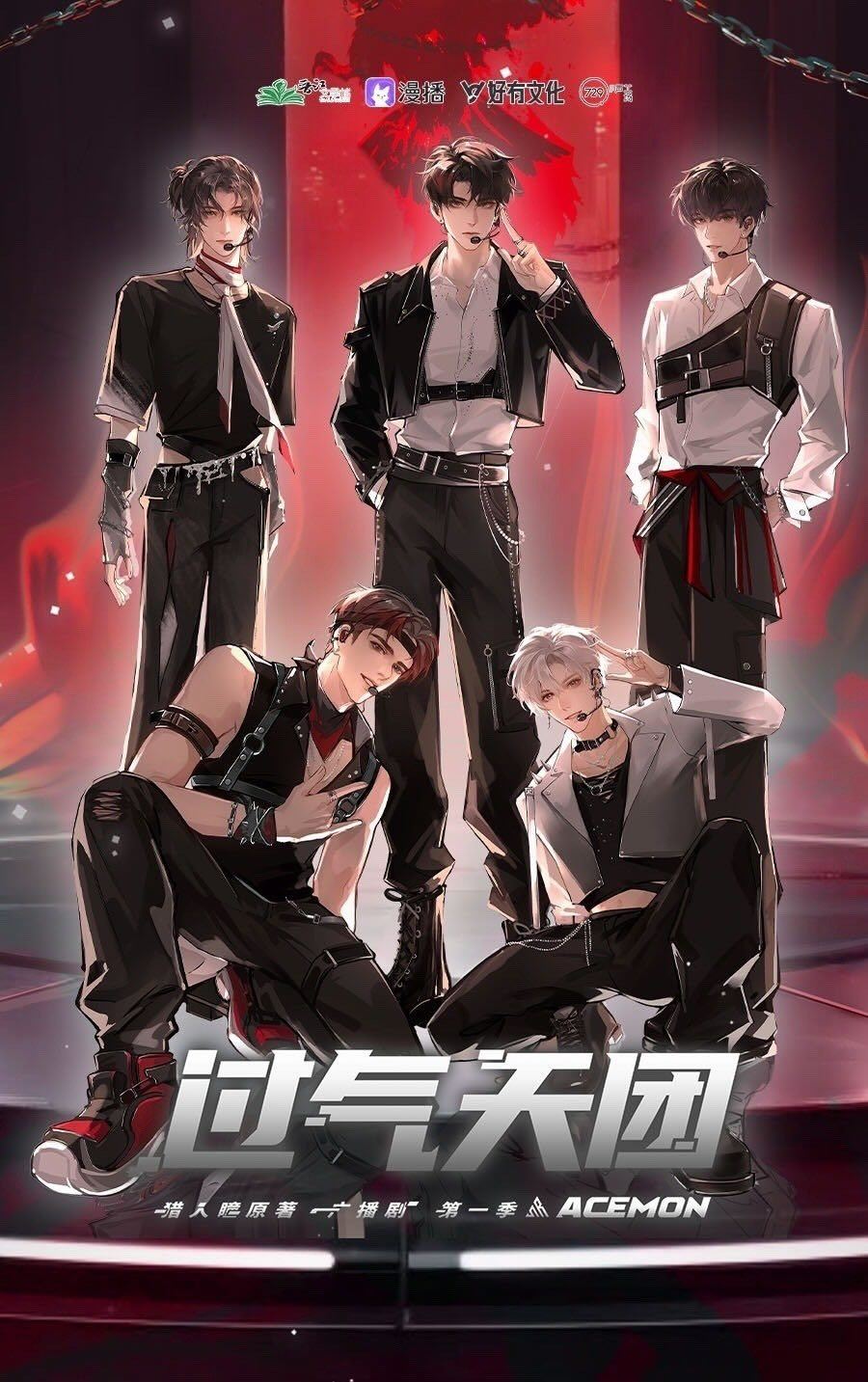
... Read More
Let me just say this first: the transition between the two fansign events is masterfully handled and I'm still not over it. You have the first event which is basically nonstop tension—the fan confrontation, the security breach, the aftermath at the dorm, the hand-washing, the absurd Koty dialogue. It's a lot. It's overwhelming in the best way. And then the author just goes "two days of rest, they headed to another city." No fanfare. No dramatic pause. Just two sentences and suddenly you're at the next event. I love that. Most authors would pad this out with internal monologues or filler scenes, but nope. Two days. Move on. And then the pacing inside the second fansign itself is so much quieter, almost tedious in its everydayness—staff arranging tables, people swapping seats—and that's what makes the moment when Zhu Lianzhen asks "What's the deal with you insisting on sitting away from me?" hit so much harder. The tension was always there, simmering, and it finally boils over in a conversation that could've happened anywhere. The author understands that not every scene needs to be an earthquake. Sometimes the ground just subtly shifts beneath your feet and you don't realize it until you're already falling.
... Read More
I've been thinking about this passage nonstop: "The sound of running water in the bathroom had been going on for a long time. Fu Rong had been washing and disinfecting his hands over and over again." This isn't just character detail. This is thematic architecture. Fu Rong's germaphobia has always been established as part of who he is, but after the incident on stage—that man rushing toward him, Koty intercepting it—the hand-washing becomes something else. It's not just about cleanliness anymore. It's about contamination. It's about trying to scrub away the violation of having been in that space, having been that close to someone who wanted to touch him against his will. The water keeps running. He can't stop. And meanwhile, everyone else is eating dinner, making jokes, living their lives. Fu Rong is trapped in this private cycle of purification that no one else can access or truly understand. There's also the seat-distance symbolism running parallel to this. Tan Qing deliberately positioning himself far from Zhu Lianzhen isn't just practical—it's a physical manifestation of the boundaries being drawn everywhere in this story. The crowd wants separation. The industry wants separation. The fans want clean, consumable narratives without the messiness of actual intimacy. Even Zhu Lianzhen's correction from "I want to be with you" to "sit with you" shows how language itself gets sanitized, how desire gets folded into safer, palatable forms. Two different kinds of distance, two different kinds of washing, happening simultaneously.
... Read More
There's this one detail that keeps looping in my head and I need to unpack it: the perfume. Not because it's important to the plot—though it absolutely is—but because it represents the entire aesthetic of this world. Someone sprayed synthetic fragrance onto Zhu Lianzhen's clothes to make a reality show feel more authentic. A production team invested in the texture of deception. And Tan Qing, who has apparently never been surprised by anything in his life, caught it immediately. The setting is this shared dorm space that functions as both home and laboratory. Cameras are planted everywhere—hidden lenses turning a living space into a panopticon. The hotel room where Zhu Lianzhen spent the night exists as a liminal space between truth and performance. The staircase where they encounter each other is narrow, intimate, forcing proximity that the cameras will capture from angles neither of them chose. I keep thinking about how the author describes the group's internal dynamics through spatial metaphors. They're crowded together—seven people in a room throwing out ideas, bouncing off each other—but the production setup ultimately separates them. Individual tests. Individual rooms. Individual performances. The communal energy of the meeting dissolves into isolated surveillance. And then there's the perfume itself, hanging in the air between Zhu Lianzhen and Tan Qing on that staircase. A manufactured scent meant to signal 'this man has a girlfriend,' but instead becoming the very thing that signals 'something is wrong here.' The environment betrays the performance. The air itself knows. It's a small detail. Probably the smallest one in the entire chapter. But it's the one I can't stop thinking about.

Leave a comment

You must be logged in to leave comments. or
