Back to My Dad’s Youth - Reviews

Back to My Dad’s Youth
+Add to Custom List
Sort
Add review
... Read More
Let me just say this upfront: the stakes in this chapter are MULTILAYERED and the author stacks them like someone building a house of cards right before a hurricane hits. On the surface, there's the bank card with 400,000 yuan. That's not pocket change for a high schooler. Shi Yuan's dad just got out of lock-up and if he finds out his son has money while his sister is in the hospital? That's not just trouble, that's life-destroying trouble. We've been told this man is "worse than a beast" and the author makes sure you never forget it. But then—immediately after the card scene resolves—Fu Xuexue appears outside the window, being harassed by Chen Shao and his crew. Chen Shao says something that reads as predatory entitlement: "Since when are pretty girls smart, huh?" and then invites her to his ski resort "this weekend." The fact that her own brother Fu Yongping BLOCKS her path instead of helping is a detail that should NOT be overlooked. Where is HE in all of this? And then a voice ROARS from nearby and Chen Shao gets shoved. The chapter ends mid-action, with Fu Xuexue frozen in shock. The tension here is excruciating because we're watching threats close in from every direction—family danger, street danger, and the boys inside the shop now forced to react. The author doesn't give you relief. You were barely settled from the card discussion before the next storm hits. This is how you keep readers up past midnight.
... Read More
There are so many symbolic layers in these chapters that most readers probably miss on a first read, and I had to go back and reread because the imagery is that dense. The empty seat in Lin Wangye's history class. At first it reads as just a detail — Lin Shen's gone, so the seat is empty. But it functions as this visual metaphor for absence and anticipation. The void where someone should be. And then we learn that absence led to the fight, the hospital, the encounter. Nothing is wasted. The wall that crumbles. Lin Shen tells the story like it's funny — 'the stupid wall must've been a hundred years old — it crumbled like dry cookies' — but think about what that means. This fragile barrier between two worlds literally falls apart, and both of them tumble into the ditch together. The wall was never坚固. It was always going to collapse. And the history lesson about Emperor Xuan of Han — imprisoned during a witchcraft scandal, raised in the palace unrecognized, only later revealed as royal blood. That's not just classroom filler. That's a mirror. Hidden identities. People who don't know their true place. Recognition delayed but inevitable. The past repeating itself in miniature. Even the hospital gown and the cast on Shi Yuan's leg — vulnerability as revelation. You can only truly see someone when they're taken down from their pedestal, stripped of their composed exterior. Lin Wangye sees the real Shi Yuan for the first time in that hospital bed, and it changes everything.
... Read More
I need to talk about the sensory texture of this scene because the author builds atmosphere like nobody's business. Let me start with the most striking image: Lin Shen waking up from a nap with 'the crease from his sleeve had left a red mark on his cheek, and he groggily twisted his body away, clearly annoyed.' That red mark. That specific detail. You can feel the sleep-crush on his skin. The author didn't need to write 'he was tired' — the sleeve imprint told the story. Then the classroom atmosphere shifts. The text says 'most of the students were either reviewing or chatting with their friends. The sudden noise caught everyone's attention, and dozens of eyes turned toward the love letter.' You can picture it — the lazy post-lunch energy, the scattered conversations, then collective attention snapping toward the fourth-row desk like the camera panning in a film. This isn't just a setting; it's a stage. The love letter itself is described with such specific sensory detail: 'lily scent.' Three times we return to that smell. First when Lin Shen notes it, then when Lin Wangye 'yanked the letter, which still smelled faintly of lilies, back from him.' The scent becomes a recurring motif — the girl's presence lingering on paper, her hope made olfactory. It's haunting in a mundane way. There's also the visual comedy of Lin Wangye slinking back to his seat 'with his tail between his legs' after encountering the math teacher. The whole class laughing. The image of him pulling out his math book 'as if preparing for a final battle like a general about to march into war' — this contrast between epic language and pathetic reality is where the scene's humor lives. The lighting, the spatial arrangement, the social dynamics of the classroom all feel lived-in. We know who sits where, who fears whom, who's close to whom. Lin Shen is always watching from the side. Fu Xuexue turns around in her seat to comment. The math teacher is 'the god of numbers,' a title that alone tells us everything about his reputation. And that ending — the homeroom teacher entering with someone, the class erupting into cheers, Lin Shen's pen freezing mid-spin. The camera pulls back, we see the whole room reacting, and then the text abruptly cuts. It's like a film director calling cut right at the most dramatic moment. The absence of resolution is itself a kind of atmosphere — the anticipation IS the mood. This classroom exists. I've been there. I can see the desks, smell the perfume, feel the afternoon light, hear the whispers. The worldbuilding isn't in grand descriptions of the city or the school — it's in these accumulated sensory details that accumulate into something almost physical.
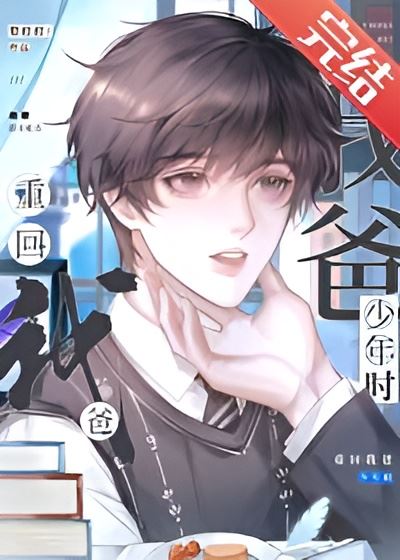
... Read More
I need to just sit with this one image for a second. The guy under the streetlamp, head down, smoking a cigarette. It's such a simple scene on paper but the author managed to paint it so vividly. Lin Wangye sees this silhouette and for a split second it overlaps with his memory of his father in his thirties—young, solitary, carrying something heavy. That visual parallel is absolutely devastating and I swear I felt it in my chest. "The night wrapping around them like a heavy curtain." My god, that line. And then his breath forming mist in the cool air. The sensory details here are so specific and grounded—the glass door of the internet cafe, the shift from day staff to night shift, the casual familiarity everyone has with Lin Shen. You can feel the city around these characters, not as background decoration but as something alive. And then the subversion! After all that moody cinematic buildup, they end up at a street food stall with an elderly couple running a spotlessly clean cart, two trays of skewers, chili oil on one side and clear broth on the other. It's like the story takes this dramatic turn and then says 'actually, let's just eat some cheap skewers.' I love that. It makes the world feel real—real life doesn't stay in dramatic poses, it cuts between moments of weight and moments of mundane comfort. The contrast between the almost movie-scene streetlamp moment and the cramped plastic bowl street food setup is what makes this setting sing. It's neither glossy nor grim—it's just lived-in.
... Read More
The pacing in these chapters is basically a masterclass in tonal whiplash done right. You start in Lin Wangye's head, deep in conspiratorial mystery territory—parents, cover-ups, impossible timelines. It's heavy, it's serious, it's the kind of stuff that makes you pause and think. And then—bam—suddenly he's asking about girlfriends and the whole mood shifts into comedic awkwardness. Lin Shen's internal panic about whether this kid is crushing on him? Hilarious. The way the narrative drops this lighter material right after heavy exposition keeps the reader from getting bogged down. But here's what I really appreciate: the author never lets the comedy fully relieve the tension. Even when they're joking about inappropriate thoughts and mysterious men, there's an undercurrent of genuine loneliness. Lin Wangye is searching for his mother. Lin Shen is deflecting because intimacy scares him. Both characters are using humor as armor, and the pacing lets you feel both the joke and the wound simultaneously. Then the exit from the internet cafe, the dark street, the streetlamp, the father reveal—all of it builds almost imperceptibly. By the time Lin Wangye is lecturing about regret medicine, you've traveled from intellectual mystery to emotional vulnerability without any jarring transitions. And ending on the food stall with those skewers? Perfect. The story takes a breath, lets you exhale, and sets up whatever comes next. It's pacing that trusts the reader to keep up without ever exhausting them.
... Read More
So the chapter does this thing where it splits into two completely separate threads and somehow both work perfectly. First half is this late-night phone call chaos — Lin Shen spiraling about Lin Wangye's secret relationship, Lu Chengxuan being clinically calm, the whole thing moving at breakneck speed. Then suddenly we're in a classroom, a full week has passed, and Lin Wangye is staring at a grade sheet. The transition is jarring but I actually think it works because it gives you breathing room. You just went through Lin Shen's panic attack and then BAM — quiet morning study period. Lin Wangye raising his hand and volunteering "It's me!" when the teacher is obviously talking about someone else had me laughing out loud. It's such a small moment but it tells us everything about where he is mentally. He's not panicking about the relationship anymore, he's focused on his exam results, his future. The author uses this pacing trick of giving us relief between tension spikes, and it keeps the story from feeling exhausted. Also the ending with Lin Shen asking for five bucks to buy Maidong and play one more match? That's the perfect button. After all that heavy emotion, we get this dumb, everyday moment that reminds us these characters are still just... living their lives. The chapter doesn't take itself too seriously even when the stakes feel high.
... Read More
The setting here is deceptively simple—an almost-closing ice jelly shop—but it functions as a brilliant pressure cooker for everything that's happening. Late night, few customers, the owner piling toppings until the bowl nearly overflows. There's a visual symmetry between that overflowing sweetness and the overflowing emotional weight at the table. The square table forces proximity: Lin Shen and Lu Chengxuan against the wall, Shi Yuan beside Lu Chengxuan so he can watch Lin Wanye. The seating map itself tells a story—Shi Yuan's careful observation, Lin Wanye's oblivious joy, the two older boys holding space without speaking. This isn't a grand dramatic set piece; it's a mundane storefront where life-changing decisions happen over dessert spoons. The contrast between the cheerful environment (the boss grinning, Lin Wanye's excited poking) and the heavy话题 (leukemia, blackmail, family estrangement) creates a strange, intimate realism. You can practically taste the cold jelly and the salt of unshed tears. It's a snapshot of found family in the most ordinary of stages.
... Read More
Okay so let me just say — this section is absolutely PACKED with plot reveals and I am SCREAMING. The fact that Lin Qianqian was already arranged to marry some rich businessman around the same time Lin Wangye's grandfather died?? That's not coincidence, that's conspiracy. Who set this up? And the timing — Lin Wangye literally just realized this, and he's sitting there going 'what the hell is all of this' which is such a relatable inner monologue for someone thrust into dangerous adult scheming while still technically a teenager. The stakes just went UP massively. His strategy though — getting closer to his own aunt to break the marriage from within — that's actually kind of brilliant? Or at least desperate in a way that makes total sense for a kid who has no real power. It's a 'small fish trying to stop a tsunami' situation and I'm here for it. Also the subplot thread with the black cat charm is NOT going to be random. Qu Liuliu giving her a whole bunch of DIY pottery and this one special crooked cat charm — that little detail is going to matter. I can feel it in my bones. The author dropped it so casually but it's clearly planted. And honestly the fact that Lin Shen is sitting on his sister's designer bag and scratching it is the perfect chaotic energy to have right before everything falls apart.
... Read More
I have to talk about the sensory details here because they hit different. The author drops you right into that biting winter chill without even trying that hard. When it says the wind 'stung your face and left your bones aching cold,' I literally felt that in my own bones. It's not just set dressing; it raises the stakes for Lin Wangye's little daily marathon. He's out there suffering so Shi Yuan gets warm food, and the cold makes every trip feel like an act of devotion. And then there's the hospital scene itself—it's sterile, yeah, but the lunchbox becomes this tiny pocket of warmth and domesticity in a place that's supposed to be impersonal. But the real visual mind-blower? The snowmen. I swear I laughed out loud reading about those little frozen sculptures sitting in a fridge compartment. Who keeps snowmen in a fridge for ten years? It's such a bizarre, specific image that makes the world feel alive in a weird way. Lu Chengxuan's room isn't just a backdrop; it's a storage unit for frozen childhood moments. The generator detail is the cherry on top—someone literally rigged a whole power setup to keep ice from melting. It's domestic horror and domestic tenderness mixed together. I keep thinking about that image: two tiny snow figures with bottle-cap hats, preserved in the dark, while everyone else is out there living their lives. It gives the whole setting this weird, magical realism vibe without breaking the realistic tone. Just stuck in my head now.
... Read More
Okay, let me just say: the author completely played me. On the surface, this passage reads like a tense family reunion with a dash of romantic tension, but once I stepped back and actually looked at the scaffolding holding it all up, the real machinery hit me. Lin Wangye is panicking internally because he sees a future where his father and Lu Chengxuan team up, and in his mind, that alliance is catastrophic. But here's the thing—it's not just some abstract dread. The narrative immediately pivots from his mental spiral into a series of micro-aggressions and physical gestures at the food stall. Every move Lin Shen makes, every glance Lu Chengxuan throws, feels like a chess piece sliding across a board. And then—BAM—the police show up. But the true twist isn't the arrest itself. It's how the arrest recontextualizes everything. Lin Shen dragging Lin Wangye into his jacket, the awkward three-legged race across the frozen street, the silent judgment from Lu Chengxuan—it all suddenly reads like foreshadowing, like fate was herding them toward this exact collision. The author didn't just throw a cop in for shock value; they built the entire emotional trajectory toward that moment. It's tight. It's deliberate. And I hate how much I love it.
... Read More
This entire passage revolves around naming—and nothing is accidental. 'Shi Yuan' means time, like 'Sui Nian,' but carries different weight. Shi Yuan's grandfather gave him a name wishing for 'abundance every year, peace with every passing season.' But Lin Wangye fixates on something deeper: the 'Yuan' character, the abyss. 'Shen Yuan.' The deep abyss. And suddenly he's spiraling about his own father, Lin Shen, and whether there's some cosmic coincidence binding these names together across lives. The chocolate scene is equally symbolic. Breaking in half—two pieces, two people, one shared experience. Shi Yuan takes half, Lin Wangye keeps half. It's communion disguised as snack time. And when Shi Yuan's ears burn afterward? That's the physical manifestation of shame, desire, confusion—all the emotions he can't quite name or control. The heat rising up his neck mirrors the 'abundance' his grandfather wished for, but it's a different kind of abundance now. Not wealth or peace. Something messier. More dangerous. The sketchbook itself is a symbol of uncompleted potential—half-finished designs, loose lines, spur-of-the-moment ideas that never matured. Just like their relationship right now. Raw, unpolished, but alive with possibility. When Lin Wangye suggests adding birds to break the creative block, he's not just helping with art—he's helping Shi Yuan see new possibilities, fly somewhere he hadn't imagined. The Song Dynasty painting becomes a bridge between past and present, between tradition and innovation, between two men who keep finding each other across time.
... Read More
There's a painting on the wall that I can't stop thinking about. Lin Wangye sees the Scott 'Fields' series—those iconic landscapes—and his immediate reaction isn't aesthetic appreciation. It's economic terror. He calculates the value, imagines breaking it, wonders if he'd be indentured for life. The painting is simultaneously beauty and threat, wealth and weapon. It's a domestic object in a home that also functions as a cage made of money. But the real symbol is the computer. Lin Wangye's desktop appears with a smug message: 'Your startup speed has beaten 98% of computers nationwide.' And his joy isn't from gaming potential—it's from access. In this new world, he is a person without resources, without identity, without a phone. The computer is his lifeline to information, and information is the only currency he has left. The search for 'Shi Yuan' yields nothing. A famous designer who doesn't yet exist in this timeline. The red-highlighted results that lead nowhere become a metaphor for Lin Wangye's entire condition: he carries knowledge that the world around him has no record of. He is a walking archive of a future that hasn't happened yet, and the internet—the great repository of human knowledge—has absolutely nothing for him. Then the Lin family history. lin pengcheng, an ordinary worker who got lucky with demolition compensation and built an empire. The partnership with the Lu family. The inevitable fracture. All of this is backstory that functions as prophecy—Lin Wangye is about to re-enter a world where his adoptive family destroyed another family, and now he's sleeping under the roof of the people who won. The theme here isn't revenge or redemption. It's memory as burden. What do you do when you remember everything and everyone else is starting from zero?

Leave a comment

You must be logged in to leave comments. or
