Back to My Dad’s Youth - Reviews

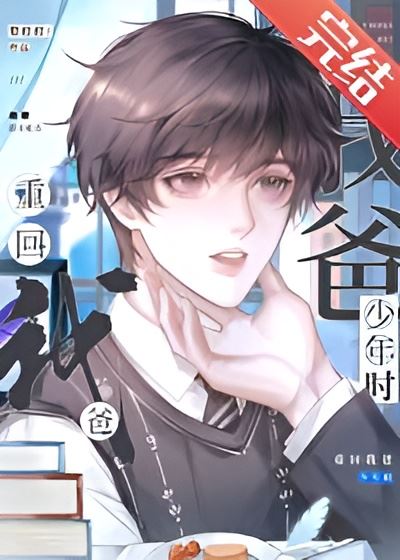
Back to My Dad’s Youth
+Add to Custom List
Sort
Add review
... Read More
"No way! Let them keep sealing you away. I don't want people staring at you all the time!" That's Lin Wangye at his most unfiltered. Not the polished guy from Shi Yuan's past-life memories who seemed calm and composed, always in control. This is raw jealousy wearing confidence like armor. And Shi Yuan's response? Just "Alright, whatever you say." Three words. Complete submission. The fact that he doesn't even understand why Lin Wangye cares about his appearance but gives in anyway—that's character voice right there. Practical. Generous. Uncomplicated in his devotion. The Lu Chengxuan scenes are dialogue minimalism at its finest. "Busy." That's his entire emotional landscape in one syllable while internally processing that he walked in on someone kissing his family's property. The intercom press, the glance at red lips, the immediate pivot to business topics—professional deflection as survival mechanism. "Relax, kissing's not a crime." Shi Yuan again, voice low and raspy, pulling him closer even after the interruption. Command disguised as comfort. And Lin Wangye changing his tone about the proposal—"No rush! It's so late already, you should get some rest"—when obviously he's been nervous the whole time. The kid literally cannot hold a straight conversation when authority figures are involved. Perfect. So perfect.
... Read More
So the author could've just written four people sitting around chatting, but instead they chose to put them at a board game table and let the game itself become the stage for character conflict. That's honestly pretty clever. The entire scene runs on a mini arc: boredom → mahjong disaster → flying chess rescue → Lin Shen vs Lin Wangye rivalry → alliance formations → cliffhanger ending. And within that tiny framework, there are actual plot mechanics happening. Lin Wangye's sneaky move nudging his plane forward? That's not just comic relief — it establishes him as someone who'll bend rules when pushed. Lu Chengxuan's calculated refusal to join Lin Shen's team? Foreshadowing right there, folks. The scene ends mid-sentence with Lin Wangye about to make his final pitch — classic chapter cliffhanger. The author understands that even in a seemingly casual slice-of-life moment, you can layer in character decisions that will matter later. Also the mahjong-to-flying-chess pivot is a great beat. Everyone freezes when mahjong appears because none of them know how to play — it's a genuine obstacle, not just setup for a joke.
... Read More
The structural choice in these chapters is wild and I need to unpack it. You open with Lin Qianqian's emotionally charged hospital scene — tension rising, romantic possibility sparking, her about to confess about her fiancé when the elevator interrupts. Classic midpoint-of-conversation cliffhanger. You think you're settling into a romance subplot, right? And then — BAM — we're on a bus to a snowy mountain with Lin Wangye and the chaos crew. The tonal whiplash is intentional and it WORKS. One moment you're leaning in for the Dr. Bai tension, the next you're laughing at Lin Shen's mental breakdown over bedroom arrangements. The author trusts you to adjust. But then the AUTHOR'S NOTE hits and everything shifts again. "Lin Wangye is a variable in this current timeline—you can think of him as a bug in the system." "The pre-rebirth storyline will continue to unfold as originally intended. Lin Wangye won't be going back." This is the kind of structural gut-punch that recontextualizes everything you've read. The mountain trip isn't just a fun side adventure — it's the last hurrah before the timeline snaps back. Suddenly every laugh and every bed-sharing panic takes on this bittersweet weight. The pacing isn't just about keeping you turning pages; it's about managing emotional temperature across two parallel storylines that are slowly converging. The chapter ends on another mini-cliffhanger — Lin Shen considering sleeping on the couch rather than share a room with Lu Chengxuan, and the sentence literally cutting off mid-thought. "Lin Shen had no choice" — and then nothing. I am not ready for what comes next.
... Read More
Okay so let me just — the plot mechanics here are honestly kind of genius. On the surface, this chapter is about Fu Xuexue transferring to Class A. Simple enough. But then you have Shi Yuan ALSO transferring, and the way the author layers these reveals is so satisfying. First the class erupts over Fu Xuexue leaving, everyone is shocked because Class A was supposedly full, and then Lin Wangye is sitting there wondering how she even got in — which is the reader's question at this point. The author plants that seed of mystery without making it feel manipulative. Then comes the corridor scene where Shi Yuan confesses. He didn't just transfer because of grades — he transferred because "7th class has you." That is such a clean pivot from what the reader expects. Everyone assumes it's an academic decision, but it's actually an emotional one. The reveal that he intentionally held back during the mock exam to give Fu Xuexue room adds another layer — he's not just smart, he's calculating in a way that serves his friends. That line about being a "academic master controlling the scores" had me cackling. The subplot about Class A being full and then having exactly one spot open for Fu Xuexue (which turns out to be because Shi Yuan took the other spot) is tight plotting. No loose ends, no convenient coincidences. Every piece fits.
... Read More
Okay I need to just... sit with this for a second. "A gentle kiss landed on the boy's forehead, as light as a feather." THAT LINE. I read it three times. Three TIMES. Because it is so deceptively simple and yet it contains the entire emotional architecture of this whole fucking relationship right there. Let me explain why this kills me every time. First, think about how the scene is built. Lin Wangye is exhausted, falling asleep in someone's arms, and the narration tells us explicitly that "the breaths close by were reassuring." Reassuring. That word does so much heavy lifting. This isn't just physical proximity — this is safety. After everything, after whatever trauma or hardship brought him to this moment, he can finally let his guard down. And then Shi Yuan. Stayed awake all night watching him sleep. Didn't say a word about it when Lin Wangye brought it up later — had to make up some BS excuse about the bed being small. Classic. Absolutely classic deflection. He couldn't even say the simple truth: that he couldn't stop looking at him, that holding him was the only thing keeping him anchored. "Good night, sweet dreams." Not romantic. Not dramatic. Just... soft. The kind of soft that makes you want to scream because it's so undeserved and yet so perfectly deserved all at once. This is what good emotional writing looks like. Not grand declarations, but whispered promises in the dark.
... Read More
This chapter handles conflict really well because it operates on multiple levels simultaneously. On the surface, there's the immediate conflict: Lin Shen pushed Shi Yuan and now Shi Yuan is in the hospital with a broken leg. But the stakes go deeper than a simple apology. Lin Shen was acting impulsively because he thought Sister Liu might be harassed - so there's the question of whether his motivations were justified even if his methods were reckless. Lin Qianqian puts it bluntly: 'What if Sister Liu really was being harassed by some creep?' and 'You're lucky. If it had been concrete instead, you'd be six feet under by now.' The physical danger is real. Then there's the interpersonal conflict between Lin Wangye and Lin Shen - not adversarial, exactly, but tense. Lin Wangye is determined to make Lin Shen take responsibility: 'You put someone in the hospital — shouldn't you apologize in person?' This isn't just about propriety; it's about accountability. Lin Shen can't just brush this off with a casual 'fine, I'll go once I'm feeling better.' He needs to actually face the consequences of his actions. But what really raises the stakes is the emotional conflict. Lin Wangye is caught between loyalty to his friend and recognition that his friend did something wrong. He's also dealing with his own feelings about Shi Yuan - attraction, guilt that he never noticed him before, and now a sense of responsibility to make things right. The conflict isn't clean; it's messy and human. The author maintains tension by not resolving anything quickly. Lin Shen hasn't apologized yet. Shi Yuan's injury is still fresh. Lin Wangye is still processing everything. Each scene adds a new layer of complication rather than simplifying the situation. And the ending line - 'Paying your debt' - leaves us wanting to know what happens next. Will Lin Shen actually apologize? How will Shi Yuan react? The stakes feel real because the characters' relationships are genuinely at risk.
... Read More
Let me just say—the atmosphere in these chapters is Immaculate. The author doesn't over-describe anything but somehow every scene feels fully rendered. Like the history classroom moment where Wangye gets called out, the teacher's attitude flipping from stern to soft in two seconds flat, the class reaction. You can SEE it. It's so mundanely realistic that it grounds everything else. Then you've got the internet cafe training sessions, the Heroes of Glory game craze ("90% of people playing it"), the Phantom Wail team poster getting featured in official game news. This world feels ALIVE. It's not just a backdrop—it's a living breathing ecosystem that affects how characters move through it. But the scene that really sold me was the love letter sequence. Lin Wangye walking out of the supermarket with Jiang Bowen, arms around each other's shoulders, each holding a grilled sausage, and then this long-haired girl blocks their path, blushes furiously, shoves him an envelope decorated with pink stars drawn in colorful pens, and runs away. Jiang Bowen's immediate "Ah-ha!" tease. Wangye carefully putting it in his pocket without a single wrinkle because of course he would. His genuine confusion: "I'm not a delivery guy. Why can't they just give it directly to Lu Chengxuan?" This is such a specific, grounded, almost anime-esque moment that feels completely natural. The school gossip about them possibly being half-brothers, the rumor mill turning Wangye into campus celebrity status rivaling the actual heartthrob... it all paints this incredibly vivid picture of what it's like to be a new transfer student who accidentally becomes famous. The ordinary and the extraordinary coexisting seamlessly. The author understands that worldbuilding isn't just about setting descriptions—it's about how information moves through a community, how reputations form, how people react to someone unexpected.
... Read More
The sensory world-building in this chapter creates an atmosphere that feels lived-in and specific, transforming what could have been a generic hotel room into a space charged with romantic and comedic potential. The opening image—that empty doorway of the bedroom feeling "like dead yellow leaves swirling down in the wind"—is remarkable for how much it accomplishes in a single comparison. It captures the emotional desolation of the moment, the way sudden exposure leaves everything feeling bare and vulnerable. This is not just setting description; it's emotional landscape rendered through natural imagery. The winter break timing reinforces this feeling of isolation, of being trapped somewhere beautiful but disconnected from normal life. The hotel itself becomes a character. The author establishes that this is an ancient-style town with traditional Chinese theming, yet the hotel has clearly adapted to accommodate Lu Chengxuan's preferences—sausages and steak appearing alongside chicken congee, the five-star treatment tailored to individual tastes. This detail accomplishes multiple things: it shows Lu Chengxuan's status and the care he receives, it establishes the hotel's attentiveness, and it subtly reinforces that he and Lin Shen are important enough to be catered to, which makes the accidental bedroom scene feel even more intrusive. The visual composition of scenes is almost cinematic. Lin Wangye frozen in the doorway holding a cup lid, the fallen thermos at his feet, his rapid-fire bowing and retreat—this is choreographed like a silent film. Then later, the scene shifts to Shi Yuan undressing with complete casualness while Lin Wangye transforms from curious eavesdropper to mortified statue, hands over his face, ears bright red. The author uses physical comedy with the precision of a director blocking a scene. Lighting plays an important role too. The ceiling lights creating a gleam in Lin Wangye's eyes as he stares, the intimate domestic lighting of a hotel room at dawn or early morning, the soft shadows of a bedroom doorway that obscures rather than reveals. These lighting choices create atmosphere that ranges from comically exposing to intimately revealing. The winter setting serves both literal and metaphorical functions. It explains why they're staying longer, why they're dressed in layers and bathrobes, why their movements carry that shuffling quality of cold-weather discomfort. But it also creates a sense of enclosure, of being sealed inside together away from the wider world, which intensifies every emotional interaction.
... Read More
‘Who's calling who Dad?' ‘I'm calling you Dad. So which one of us is the son?' ‘You're my son. So which one of us is the Dad?' ‘You're my Dad. So which one—' Four or five rounds in, Lin Wangye hadn't won a single one. This exchange is so perfectly captured, so effortlessly weird, that I had to laugh out loud. These two have been playing this exact same game since the beginning of the story, and yet it never gets old because the rhythm is so deeply internalized. It's not really about winning or losing—it's about the ritual. The way Lin Shen pops open a beer and decides ‘just eating and drinking felt kind of boring' and then immediately roped his son into a competitive tongue-twister? That's character voice right there. And Lu Chengxuan's line—‘It's literally right outside the door'—when told to go buy the rice cakes? That's the most Lu Chengxuan thing ever said. He offers to send someone. He doesn't understand why he needs to do it himself. The dialogue in this chapter never shouts, never explains, never overreaches. It just exists, clean and sharp, like these people have been speaking to each other for years and don't need punctuation to be understood.
... Read More
Lin Shen's dialogue is absolutely the highlight of these chapters. The man talks like someone who thinks he's in a wuxia novel but is actually just an internet cafe regular in 2003 China. "I'm not close with the boss, but I'm close with his son. You get it? It's all about connections, bro." The wink. The grin. The absolute confidence in his own networking abilities despite having none of the credentials. This is a father who clearly used to be charming and extroverted, and Lin Wangye is getting a glimpse of the man his father was before life made him distant and work-obsessed. And the dialogue between them has this incredible generational ping-pong energy. Lin Shen speaks in exclamations and slang, always performing, always slightly exaggerated. Lin Wangye speaks in restrained observations and internal commentary, always holding back, always calculating what to reveal. When Lin Shen asks "Did you forget your password?" after Lin Wangye struggles to log in, the father is genuinely concerned while the son is internally panicking about the fact that his account literally doesn't exist yet. The gap between what they're saying and what they're thinking is where all the humor lives. The cashier girl watching from the counter adds another voice to the mix—silent but observant, her interest growing as the scene unfolds. She's basically the audience surrogate, witnessing something tender and weird without fully understanding it. The author doesn't give her dialogue, but her presence shapes how we read the father-son interaction as something almost performative, something being watched and judged.
... Read More
There's this one moment in chapter 109 where the entire theme of the story comes crashing down in a single conversational pivot and I have never felt so seen by a novel. Lin Wangye asks if Shi Yuan is happy. And Shi Yuan reframes the question from happiness to survival. ONE WORD. "Is happiness really necessary for survival?" That's not a deflection — that's a window into a whole lifetime of struggle. The fact that survival is the frame of reference at all tells us everything about what Shi Yuan has endured. The static electricity works as symbolism here too, honestly. It's invisible energy building up between two people until suddenly — SNAP — it becomes visible, tangible, unavoidable. You can't pretend it didn't happen. It jumps across the gap whether you wanted it to or not. That's exactly what's happening between these two. The feelings are there, charging up, and eventually they're going to arc across no matter how much either of them tries to contain it. And then there's the question of time. "I'd really love to waste my time on you." Waste. That's such a loaded word for someone like Shi Yuan, whose time has always felt scarce and precious. He says his time is "too precious to waste even a second" — and yet Lin Wangye is offering to waste it anyway, freely, gladly. It's an act of devotion that transcends logic. It's saying: you are worth the expenditure. You are worth the slackening of every guard, every plan, every survival mechanism. The contrast between past and present Shi Yuan matters too. Lin Wangye realizes the composed adult was always this way — even at seventeen, he was already carrying everything. That means the trauma isn't recent. It's foundational. It shaped him before he even had a chance to be a kid. And that realization must devastate Lin Wangye on some level he can't fully articulate.
... Read More
I am NOT okay with this scene. The static electricity moment between Lin Wangye and Shi Yuan is easily one of the cutest things I've ever read and I need everyone to understand this immediately. Lin Wangye tries to create the spark himself, dramatic like a magician building suspense — "The ancient and powerful God of Joy was slowly awakening" — and it FAILS. Of course it fails. He's a disaster. And then Shi Yuan, who has been quietly observing the whole thing with what the text calls a "low, warm sound" of a chuckle, decides to take over. He rubs Lin Wangye's hair to build up the charge, then taps his nose. SNAP. A real spark this time. This is literally Shi Yuan being playful. This is a man who carries the weight of past lives and trauma and somehow still finds room to mess with someone's hair and make them laugh. The intimacy of it destroyed me. He's creating the spark for Lin Wangye — literally giving him the magic back. And right after the spark, Lin Wangye says the most vulnerable thing: "I'm a happy little puppy, and I wanna be your friend!" He's basically bare-handed, offering his heart on a platter, calling himself dumb and silly and happy, and asking only to be Shi Yuan's FRIEND. Not lover, not partner — friend. As if that's enough. As if that could possibly be enough when everything about the way he looks at Shi Yuan suggests it absolutely is not. Shi Yuan's response? He just keeps being gentle. He lets Lin Wangye be ridiculous. He participates in the bit. That's love language, people. That's how you show someone you care — by letting them be a happy little puppy and never making them feel silly for it.

Leave a comment

You must be logged in to leave comments. or
