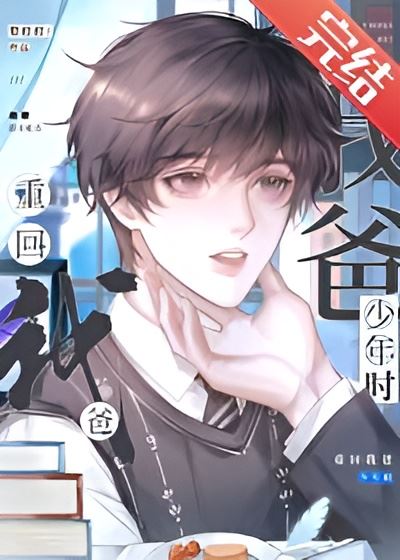
Every character in this chapter has such a DISTINCT voice and I need to talk about it.
Lin Shen's dialogue is pure chaotic dad energy. 'Unbelievable! I call you and you don't come — I actually have to come fetch you myself?' That's not just dialogue, that's a personality. You can hear the exasperation, the false outrage, the underlying care disguised as annoyance. And then his pivot from fury to 'ALRIGHT CUT THE DAD TALK YOU'RE DRIVING ME NUTS' is so natural it hurts. These are real people talking.
Lu Chengxuan is the straight man archetype and he delivers every line with perfect deadpan efficiency. 'I'm keeping order. Can't skip evening self-study. Are you coming back with me?' No drama, no fuss, just functionally polite and slightly bewildered by the sleepy Lin Wangye. His brief exchange with Shi Yuan—'When did he fall asleep?'—carries this weight of someone who knows exactly what he's walking into but chooses to play it cool. Subtle. Effective.
But Lin Wangye? Oh my god. His dialogue is layered in the BEST way. When he says 'Because I want to stay with you' to Shi Yuan—that's the kind of line that hits different because of HOW it's delivered. The text says his voice carried 'a hint of playful sweetness, like honey dripping from a spoon.' It's intentionally disarmingly sweet, and the fact that it WORKS on everyone (including the reader) is a testament to how well-written this character is.
Then there's the food scene where he casually tells his own father to leave: 'Did you eat?' 'Just did.' 'Great, then if you've got nothing else to do, you can head back.' This is peak dialogue comedy. It's so matter-of-fact, so ruthlessly efficient in its politeness. Lin Shen's internal screaming is implied through his actions (staring, disbelief, then fleeing) rather than spoken, which makes it funnier.
Shi Yuan's dialogue is famously sparse—he says very little in this entire chapter—but every line counts. 'Hungry?' and 'It's fine. Given the situation, I get why you reacted the way you did' are both perfectly calibrated. One shows his quiet way of caring, the other his graceful deflection of conflict. His silence is louder than most people's monologues here.
The narrative voice itself deserves mention too. The author has this tendency to describe inner states through physical metaphors—emotions 'sinking, slow and uncontrollable,' voices carrying 'warmth that seemed to go beyond just friendship.' It's poetic without being purple, which is a difficult balance to strike. The tone throughout is this warm, slightly bittersweet observation of people navigating messy relationships with varying degrees of awareness and intention.