Back to My Dad’s Youth - Reviews

Back to My Dad’s Youth
+Add to Custom List
Sort
Add review
... Read More
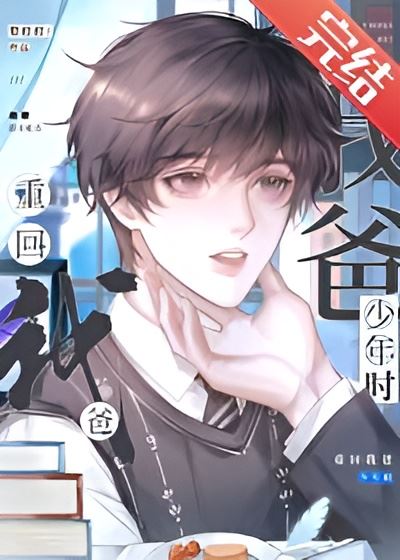
Okay so this scene where Lin Wangye feeds Shi Yuan the chocolate stick—WHAT. Is happening. Right. First of all, the man holds it up, Shi Yuan reaches for it naturally, and then Lin Wangye TWISTS AWAY like some kind of chaotic gremlin. My heart. But then he pokes it against Shi Yuan's lips and makes him open his mouth? And the way the chocolate snaps in half, half in one mouth, half still in the other hand? That visual is IMMACULATE. Like, you can't make this sh*t up. It's got that whole romantic tension thing going on but it's disguised as playfulness, which honestly makes it worse. Better in a way. The worst way. Shi Yuan's ears burning afterward—classic tell. He's usually so composed, like whatever happens doesn't rattle him, but Lin Wangye has this way of getting under his skin without even trying. There's something about how Shi Yuan just freezes for a second before complying, like he's weighing whether to refuse or just give in, and he chooses to surrender. That's telling. That's huge. And earlier when Lin Wangye was spiraling about the name thing, wondering if his dad and Shi Yuan were involved in some past life—honestly? I'm still not sure what the truth is there, but the fact that he could even consider it shows how much chemistry is building between these two. The name 'Shi Yuan' carrying echoes of 'Shen Yuan,' the abyss, Lin Shen... it's all there. Lin Wangye's panic at almost catching himself thinking about his own father being involved is both funny and deeply unsettling, but that's exactly what makes this dynamic so electric. These two are orbiting something dangerous and they don't even know it yet.
... Read More
This chapter is a masterclass in comedic timing and misdirection. The plot doesn't rely on grand dramatic revelations but instead builds entirely around a single, beautifully orchestrated misunderstanding that spirals outward like a stone dropped in water. The setup is deceptively simple: Lin Shen hurts his ankle, forcing an extended hotel stay. But the author uses this as merely the foundation to construct a Rube Goldberg machine of awkwardness. The inciting incident—Lin Wangye walking in on an ambiguous moment—becomes the fulcrum upon which the entire chapter pivots. What follows isn't just one misunderstanding but a cascading series of them. The plot structure here is brilliantly nested. There's the surface misunderstanding between Lin Shen and Lu Chengxuan that Lin Wangye misinterprets. Then there's Lin Wangye's own romantic subplot with Shi Yuan, which the reader observes unfolding alongside the chaos. And woven through both is the meta-narrative of Lin Wangye's theories about everyone else's relationships, which turn out to be completely wrong but dramatically hilarious. The most satisfying plot mechanism is how the author plants information for the reader that the characters don't have. We know Lin Shen was just washing his face. We know they weren't doing anything scandalous. But Lin Wangye has this alternative reality constructed in his head, and watching him narrate events that never happened is pure comedy gold. The resolution is equally clever—not a confrontation or clarification, but deliberate avoidance. Both pairs decide to act like nothing happened, which is somehow more tense than any argument could have been. The chapter ends on a note that promises more complications, with Lin Wangye's accidental innuendo about stamina leaving Shi Yuan processing something entirely different from what was intended. The plot feels cohesive because every comedic beat grows organically from character motivation rather than authorial convenience. Lin Wangye's suspicions come from his personality. Lin Shen's bluntness comes from his established character. Even the hotel setting serves the plot by forcing proximity that amplifies every misunderstanding.
... Read More
Let's talk about that lunch scene and how it functions as a pressure valve for everything building up. Lin Shen practically trips over himself trying to bring up Xu Suinian's hospitalization, and Lu Chengxuan—of all people—cuts the whole conversation dead by standing up and saying 'I'm full.' That is NOT a normal exit. That's a surgical strike. You can tell he knows something, and he's actively shutting down the information leak before it spreads to Lin Shen or anyone else. Then the bomb drops at the internet cafe: three hundred thousand for leukemia treatment. The plot pivots so fast from a slice-of-life meal scene to a full-blown crisis, and I swear I gasped. What hits me hardest is how the narrative threads converge here. Xu Suinian's illness—which we barely knew existed until now—is suddenly the gravitational center pulling every character toward it. Lin Wangye's secret knowledge of the future, his desperate need to change things, his crumbling realization that some things money can't buy even with 20 years of hindsight—all of it collides in one devastating moment. The author's timing is brutal. Right after we see this warm family moment, the rug gets pulled. And that ending with Lin Wangye crying in Lin Shen's chest and Lu Chengxuan locking eyes with them? I need the next chapter immediately. Cliffhanger done right.
... Read More
Can we just appreciate how distinct these voices are? Lin Wangye speaks in bursts. Everything is immediate and loud and unfiltered. 'I'll make this much again for dinner!' 'Of course I don't want to!' 'I'm full of energy!' He doesn't just say things; he performs them. His dialogue is all action. Even when he's being sweet, there's this frantic energy behind it. And Shi Yuan? He's the anchor. His lines are shorter, calmer. 'Running back and forth like this is too much.' 'Stop messing around.' He's the straight man to Lin Wangye's chaos, but it's never mean. It's protective. The contrast is everything. And the best part? The dialogue reveals the relationship dynamics without any narration telling us how they feel. When Lin Wangye asks, 'Are you just not letting me bring the cauliflower because you don't like it?'—that's not just a question about food. That's insecurity disguised as stubbornness. And Shi Yuan's response? He doesn't just say 'no.' He flips it: 'If you were me... would you be okay with that?' That's not arguing; that's empathy. He makes Lin Wangye feel the weight of his own actions. And then the necklace moment—'You gave it to me,' Lin Wangye says instantly. No hesitation. That's voice. That's someone who holds onto proof of connection. But the real standout is the text exchange at the end. Lin Shen's voice is completely separate. 'Mix my ashes with baby formula. Shake well. Scatter into the Atlantic.' That is comedy gold. It's dark, it's absurd, and it's so specific. It shows a friendship that's comfortable enough to joke about death and diapers in the same breath. The author's dialogue writing is top-tier because everyone sounds like a real person, not a character in a book. I want to be friends with all of them.
... Read More
The stakes here are life and death, but rendered with terrifying banality. Lin Shen's illness isn't introduced dramatically; it's listed matter-of-factly alongside high blood pressure and smoking habits. This is how real crises emerge—not with fanfare but with quiet accumulation of warning signs we pretend not to notice. Lin Wangye's internal conflict is beautifully layered. He worries about his father's health while simultaneously grappling with unresolved feelings for Shi Yuan. These aren't separate anxieties; they reinforce each other. The fear of losing his father connects to the memory of losing Shi Yuan's presence. Both represent love that feels fragile, something he might lose to time or circumstance. External conflicts mirror internal ones. The Lin-Lu family rivalry isn't just business competition; it's emotional warfare disguised as marketing strategy. Those contrasting promotional posters, the exposed discount tactics—this is personal hatred wearing a corporate mask. The author makes clear that these public feuds have private roots we haven't fully uncovered yet. What raises the tension is the helplessness. Lin Wangye's smashed phone isn't just an inconvenience; it's symbolic of his inability to protect what he loves. He can research family history, he can worry about health risks, but he can't communicate, can't intervene, can't prevent. Meanwhile, Lin Shen faces daily financial precarity while presumably dealing with his own health unawareness. The stakes escalate quietly but inexorably. Each chapter adds another layer of worry without providing relief. Will Lin Shen's health deteriorate before his son can reach him? What secrets about the parental rift will surface? How much can ordinary people endure before breaking? The author maintains suspense not through cliffhangers but through this accumulating sense of impending collision—between fathers and sons, past and present, love and loss.
... Read More
This chapter does something wild — it starts with the most mundane gossip possible and by the end Lin Wangye is being offered a whole new family identity. Let me trace how that works. It begins with those two students outside the internet cafe sharing teenage drama. A little girl? Both Lu Chengxuan and Lin Shen are after the same girl?! And Lin Wangye is the girl?! This is comic relief gold, totally light and silly. We're supposed to laugh. Then suddenly the conversation pivots — no transition, no warning — to household registration, adoption law, and whether he should legally become a Lu family member. One scene bleeds into the next and I was genuinely whiplashed in the best way. The author doesn't pause to process the weight of what just happened; Lu Chengxuan drops this enormous life decision casually while Lin Shen is finishing his game. That pacing choice — treating earth-shattering news with the same energy as lunchtime — is brilliant. It makes the story feel lived-in, like real life where catastrophes and comedy happen on the same Tuesday.
... Read More
There's this one moment—well, this entire section—that just hits different. New Year's Eve morning. Lin Wangye wakes up alone in this MASSIVE Lu family villa, and the house is completely silent. Not a single staff member in sight. Even the usual four or five maids are gone for the holiday. For a kid who grew up with a maximum of two maids, this place must feel like stepping into another species entirely. "Rich families really lived differently." Such a simple line, but it carries so much. He's not bitter about it—he's just observant, cataloguing the differences between his world and the one Lu Chengxuan has pulled him into. The detail about Uncle Liu being the only one still around, his daughter studying abroad, the casual exchange of greetings—that's worldbuilding through character interaction rather than exposition dumps. We learn everything about the Lu household's social hierarchy without a single paragraph of analysis. Then the scene shifts entirely. Wangye bursts out of the gate like a released prisoner, launches himself into Shi Yuan's arms, and suddenly the world shrinks down to something intimate and warm. The market trip, the hand-holding, the koala climb, the ear-tug, the spontaneous kiss. These details—the canned luncheon meat sandwich, the bus ride from the hospital, the ticking clock before fresh ingredients sell out—these are the textures of ordinary life. The author builds two contrasting worlds here: the Lu family's gilded emptiness versus the Lin/Shi Yuan world of crowded markets and modest kitchens. Both feel equally real, equally valid.
... Read More
The first thing that hits you about this chapter is the atmosphere. You can literally smell those two internet cafes. The black one upstairs with sealed windows and unbearable smoke—Lin Wangye covering his nose and mouth like he's fleeing a crime scene. Then you step across the street and boom, Qingsen Internet cafe with clean air, comfortable heaters, and actual ventilation. That contrast isn't accidental. The author is building a world where geography tells you everything about the people who run these places. The first cafe is shady, illegal, cramped. The second is legitimate, welcoming, almost warm. And Lin Shen—the future cold billionaire—is behind the counter of the good one. The details are so specific too. The attendant leaning casually against the counter. The raised desk that obscures the gamer until you step close. The way Lin Wangye instinctively holds his breath when entering because of trauma from the last place. These aren't decorative descriptions, they're functional worldbuilding. You feel the era without being told what year it is. Minors sneaking upstairs through back doors. People not having computers at home. The whole texture of early 2000s Chinese gaming culture is right there in the smells, the layouts, the social rules. What really sells it is the sensory specificity. The smell of smoke that won't escape. The cold that Lin Wangye feels walking briskly in thin clothes. The sudden warmth and clean air of the second cafe hitting him like a wave. It's cinematic without being purple. Every environmental detail serves character or plot. The sealed windows literally trap the father and son in a moment where they can finally talk. I kept re-reading the part about Lin Wangye recognizing his father just from the profile because that line about appearance carrying traces of youth gave me chills. The world feels lived-in, not constructed.
... Read More
"And so did everyone else. Does anyone here know how to play mahjong?" I keep coming back to this moment because I think it's quietly significant. Four people who can apparently handle serious life situations but sit helplessly around a mahjong table like it's alien technology. It's almost comical but also... it says something about these characters being out of their depth in ordinary moments. The flying chess that follows is a children's game, essentially. These people are reduced to playing games meant for kids because the adult entertainment options aren't available to them. There's a kind of vulnerability in that — stripping away whatever competence they normally display. But also, the game itself becomes a microcosm of their larger dynamics. The board is a battlefield. Planes taking off and getting shot down. Running back to base. Strategic positioning. It's war by another name. And Lu Chengxuan having the most planes on the board while participating the least? That's a character statement. He doesn't need to be loud to hold the advantage. The hotel setting — remote, expensive, isolated — adds to this feeling of being cut off from the normal world, where the only stakes are imaginary airplanes and the only conflicts are self-imposed. Maybe that's the point. Maybe underneath all the action and plot, this story is about people figuring out who they are when there's nowhere else to go.
... Read More
The dialogue in this chapter is ridiculously good and I need everyone to understand what I mean by that. Let's start with the obvious one: "Kiss your little puppy." What a line. It's flirtatious, it's slightly ridiculous, it's Lin Wangye being unapologetically himself even in a moment of vulnerability. And the way Shi Yuan responds—just smiling, leaning down, actually doing it—says everything about their dynamic without a single word of exposition. Then the conversation about the necklace. The pacing here is masterful. Short exchanges. Pauses. The weight of silence. "Where did you get this necklace?" — just three words that carry the emotional gravity of the entire chapter. And Lin Wangye's response: "I've always carried it with me." A sentence that is technically true and completely meaningless. The author knows exactly what they're doing. Every line of dialogue is doing double or triple duty—advancing the plot, revealing character, building tension. Even the mundane stuff like "Want more?" / "Yes." isn't just about water. The subtext is always there, buzzing under the surface like a live wire. And the narration? It's lean. It doesn't over-explain. It trusts us to read between the lines. That's rare. That's excellent craft.
... Read More
The visual contrast in this chapter is insane. You've got this dark street, people struggling, Fu Xuexue being manhandled and screaming into silence — it's already claustrophobic. And then a LINE OF PRIVATE CARS comes roaring into the intersection and suddenly the whole thing is lit up like daylight. I swear I could see this as a movie. The headlights sweeping across everyone's faces, the trained fighters emerging like an army, the way Jess immediately spots Lu Chengxuan unharmed and almost KNEELS in relief. It's dramatic without being cartoonish. The interior of the van is another scene I keep coming back to. Seven-seater, plenty of room, but the seating chart tells you EVERYTHING. Lin Shen and Lu Chengxuan in front — the two who just took down a whole crew. Fu Xuexue behind Lin Shen, probably still processing that she was about to get hurt and now she's riding home with the person she tried to get hurt. Lin Wangye deliberately avoiding the seat behind Lu Chengxuan and taking the last row, which is where Shi Yuan sits. That deliberate seat choice? That's not nothing. That's someone making sure he doesn't have to sit near the person he's starting to feel something for, which of course means he absolutely wants to. The darkness of the street versus the artificial brightness of the cars, the confined van interior, the way the narrative moves from wide shots to intimate close-ups — this author knows how to paint with scenes.
... Read More
The nickname situation in this chapter is actually so much deeper than it seems at first read. Lin Shen calling Lin Wangye "wild dad"—that term, it's internet slang, right? Like when someone carries a teammate in a game? But it lands completely differently here because Lin Wangye is literally his father, and he's internally losing his mind over it. "Isn't this just... outrageous? I've already lived my life once, don't make me age even faster!" This is comedy gold but also kind of heartbreaking if you think about it. And then there's the pivot. Lin Wangye, who's been holding himself together since his father's death, hears his dad say "godfather" and just... cracks. The way Lin Shen reacts to those tears is so real though—he doesn't know what to do, he's awkward, he pats his shoulder and says "what's it look like? People might think I've been bullying you." Classic emotionally stunted dad energy. He's not cold, he's just a guy who doesn't know how to handle vulnerability, especially from his own son. But what really gets me is Lin Wangye's own words: "If you keep calling me that, I'll start thinking of my dad. I haven't had a father since I was little." He's lying about that half—he clearly has a father right in front of him—but the emotional truth is that he MISSES his father. That's the whole relationship dynamic compressed into one broken moment. The father who was always working, always absent, but somehow still the foundation everything else rested on. And now his son, across time itself, is choosing to stay close.

Leave a comment

You must be logged in to leave comments. or
