Summary

... Read More
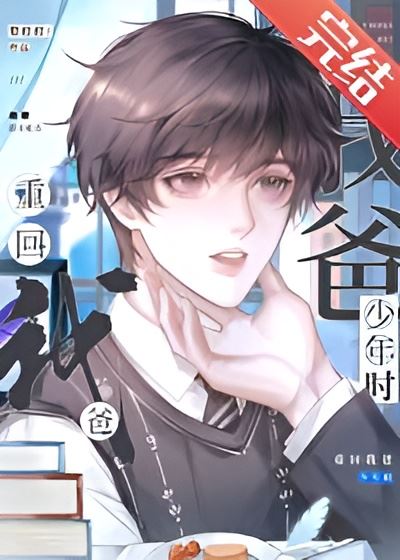
Lin Wangye is the only son of Lin Shen, a prominent businessman who passes away suddenly, leaving Lin Wangye devastated and ill-equipped to handle the family empire. At the funeral, he faces public humiliation from relatives who view him as incompetent, while his emotional anchor—a person abroad—is unable to attend in time. Overwhelmed by grief and shame, Lin Wangye drives aimlessly and is killed in a car crash caused by a tanker truck.Upon regaining consciousness, Lin Wangye finds himself in Ningchang City twenty years in the past. He realizes he has traveled back to the year before his own birth, inhabiting a body that belongs to an orphan with a rebellious record. With no memory of this life's previous events, his immediate goal is to find his father, Lin Shen, who is currently a rebellious seventeen-year-old high school student living in a cold war with his own father, Lin Wangye’s grandfather. Lin Wangye locates Lin Shen at an internet cafe, where they bond over video games. Lin Shen, unaware of the boy’s true identity, takes a liking to him and begins referring to him as "Godfather," creating an awkward dynamic for Lin Wangye.As Lin Wangye spends time with his younger father, he discovers that Lin Shen is estranged from his wealthy family due to a generational conflict with his grandfather. Lin Shen has been cut off financially and is staying in the staff dormitory of the internet cafe. During this period, Lin Wangye also learns that Lin Shen was once close friends with Lu Chengxuan, the current rival of the Lin family in business and the man who had interrupted Lin Wangye’s funeral two decades later. This revelation shocks Lin Wangye, as he always believed the two families were natural enemies destined for lifelong rivalry.When Lin Wangye is mistakenly identified as a runaway orphan by police officers, Lu Chengxuan intervenes, using his family’s influence to resolve the situation. Lu Chengxuan offers Lin Wangye a place to stay, which becomes necessary after Lin Shen explains his inability to take Lin Wangye in due to his family disputes. Lin Wangye reluctantly accepts, entering the household of his former rival. The story concludes with Lin Wangye navigating this new timeline, seeking to understand the roots of the conflict between his father and Lu Chengxuan, while grappling with the disappearance of Shi Yuan, a figure significant to his past life, and the complex, evolving relationships with the two men who will define his future.
Latest Release
DateGroupRelease
2026-09-26knoxt c169
2026-09-26knoxt c168
2026-09-26knoxt c167
2026-09-26knoxt c166
2026-09-26knoxt c165
2026-09-26knoxt c164
2026-09-26knoxt c163
2026-09-26knoxt c162
2026-09-26knoxt c161
2026-09-26knoxt c160
2026-09-26knoxt c159
2026-09-26knoxt c158

Community Reviews

Rating(4 / 5.0, 376votes)
5 stars
140(37%)
4 stars
109(29%)
3 stars
124(33%)
2 stars
3(1%)
1 stars
0(0%)

Popular reviews

... Read More
Okay so this scene where Lin Wangye feeds Shi Yuan the chocolate stick—WHAT. Is happening. Right. First of all, the man holds it up, Shi Yuan reaches for it naturally, and then Lin Wangye TWISTS AWAY like some kind of chaotic gremlin. My heart. But then he pokes it against Shi Yuan's lips and makes him open his mouth? And the way the chocolate snaps in half, half in one mouth, half still in the other hand? That visual is IMMACULATE. Like, you can't make this sh*t up. It's got that whole romantic tension thing going on but it's disguised as playfulness, which honestly makes it worse. Better in a way. The worst way. Shi Yuan's ears burning afterward—classic tell. He's usually so composed, like whatever happens doesn't rattle him, but Lin Wangye has this way of getting under his skin without even trying. There's something about how Shi Yuan just freezes for a second before complying, like he's weighing whether to refuse or just give in, and he chooses to surrender. That's telling. That's huge. And earlier when Lin Wangye was spiraling about the name thing, wondering if his dad and Shi Yuan were involved in some past life—honestly? I'm still not sure what the truth is there, but the fact that he could even consider it shows how much chemistry is building between these two. The name 'Shi Yuan' carrying echoes of 'Shen Yuan,' the abyss, Lin Shen... it's all there. Lin Wangye's panic at almost catching himself thinking about his own father being involved is both funny and deeply unsettling, but that's exactly what makes this dynamic so electric. These two are orbiting something dangerous and they don't even know it yet.

... Read More
This chapter is a masterclass in comedic timing and misdirection. The plot doesn't rely on grand dramatic revelations but instead builds entirely around a single, beautifully orchestrated misunderstanding that spirals outward like a stone dropped in water. The setup is deceptively simple: Lin Shen hurts his ankle, forcing an extended hotel stay. But the author uses this as merely the foundation to construct a Rube Goldberg machine of awkwardness. The inciting incident—Lin Wangye walking in on an ambiguous moment—becomes the fulcrum upon which the entire chapter pivots. What follows isn't just one misunderstanding but a cascading series of them. The plot structure here is brilliantly nested. There's the surface misunderstanding between Lin Shen and Lu Chengxuan that Lin Wangye misinterprets. Then there's Lin Wangye's own romantic subplot with Shi Yuan, which the reader observes unfolding alongside the chaos. And woven through both is the meta-narrative of Lin Wangye's theories about everyone else's relationships, which turn out to be completely wrong but dramatically hilarious. The most satisfying plot mechanism is how the author plants information for the reader that the characters don't have. We know Lin Shen was just washing his face. We know they weren't doing anything scandalous. But Lin Wangye has this alternative reality constructed in his head, and watching him narrate events that never happened is pure comedy gold. The resolution is equally clever—not a confrontation or clarification, but deliberate avoidance. Both pairs decide to act like nothing happened, which is somehow more tense than any argument could have been. The chapter ends on a note that promises more complications, with Lin Wangye's accidental innuendo about stamina leaving Shi Yuan processing something entirely different from what was intended. The plot feels cohesive because every comedic beat grows organically from character motivation rather than authorial convenience. Lin Wangye's suspicions come from his personality. Lin Shen's bluntness comes from his established character. Even the hotel setting serves the plot by forcing proximity that amplifies every misunderstanding.
... Read More
Let's talk about that lunch scene and how it functions as a pressure valve for everything building up. Lin Shen practically trips over himself trying to bring up Xu Suinian's hospitalization, and Lu Chengxuan—of all people—cuts the whole conversation dead by standing up and saying 'I'm full.' That is NOT a normal exit. That's a surgical strike. You can tell he knows something, and he's actively shutting down the information leak before it spreads to Lin Shen or anyone else. Then the bomb drops at the internet cafe: three hundred thousand for leukemia treatment. The plot pivots so fast from a slice-of-life meal scene to a full-blown crisis, and I swear I gasped. What hits me hardest is how the narrative threads converge here. Xu Suinian's illness—which we barely knew existed until now—is suddenly the gravitational center pulling every character toward it. Lin Wangye's secret knowledge of the future, his desperate need to change things, his crumbling realization that some things money can't buy even with 20 years of hindsight—all of it collides in one devastating moment. The author's timing is brutal. Right after we see this warm family moment, the rug gets pulled. And that ending with Lin Wangye crying in Lin Shen's chest and Lu Chengxuan locking eyes with them? I need the next chapter immediately. Cliffhanger done right.
... Read More
Can we just appreciate how distinct these voices are? Lin Wangye speaks in bursts. Everything is immediate and loud and unfiltered. 'I'll make this much again for dinner!' 'Of course I don't want to!' 'I'm full of energy!' He doesn't just say things; he performs them. His dialogue is all action. Even when he's being sweet, there's this frantic energy behind it. And Shi Yuan? He's the anchor. His lines are shorter, calmer. 'Running back and forth like this is too much.' 'Stop messing around.' He's the straight man to Lin Wangye's chaos, but it's never mean. It's protective. The contrast is everything. And the best part? The dialogue reveals the relationship dynamics without any narration telling us how they feel. When Lin Wangye asks, 'Are you just not letting me bring the cauliflower because you don't like it?'—that's not just a question about food. That's insecurity disguised as stubbornness. And Shi Yuan's response? He doesn't just say 'no.' He flips it: 'If you were me... would you be okay with that?' That's not arguing; that's empathy. He makes Lin Wangye feel the weight of his own actions. And then the necklace moment—'You gave it to me,' Lin Wangye says instantly. No hesitation. That's voice. That's someone who holds onto proof of connection. But the real standout is the text exchange at the end. Lin Shen's voice is completely separate. 'Mix my ashes with baby formula. Shake well. Scatter into the Atlantic.' That is comedy gold. It's dark, it's absurd, and it's so specific. It shows a friendship that's comfortable enough to joke about death and diapers in the same breath. The author's dialogue writing is top-tier because everyone sounds like a real person, not a character in a book. I want to be friends with all of them.
... Read More
The stakes here are life and death, but rendered with terrifying banality. Lin Shen's illness isn't introduced dramatically; it's listed matter-of-factly alongside high blood pressure and smoking habits. This is how real crises emerge—not with fanfare but with quiet accumulation of warning signs we pretend not to notice. Lin Wangye's internal conflict is beautifully layered. He worries about his father's health while simultaneously grappling with unresolved feelings for Shi Yuan. These aren't separate anxieties; they reinforce each other. The fear of losing his father connects to the memory of losing Shi Yuan's presence. Both represent love that feels fragile, something he might lose to time or circumstance. External conflicts mirror internal ones. The Lin-Lu family rivalry isn't just business competition; it's emotional warfare disguised as marketing strategy. Those contrasting promotional posters, the exposed discount tactics—this is personal hatred wearing a corporate mask. The author makes clear that these public feuds have private roots we haven't fully uncovered yet. What raises the tension is the helplessness. Lin Wangye's smashed phone isn't just an inconvenience; it's symbolic of his inability to protect what he loves. He can research family history, he can worry about health risks, but he can't communicate, can't intervene, can't prevent. Meanwhile, Lin Shen faces daily financial precarity while presumably dealing with his own health unawareness. The stakes escalate quietly but inexorably. Each chapter adds another layer of worry without providing relief. Will Lin Shen's health deteriorate before his son can reach him? What secrets about the parental rift will surface? How much can ordinary people endure before breaking? The author maintains suspense not through cliffhangers but through this accumulating sense of impending collision—between fathers and sons, past and present, love and loss.
... Read More
This chapter does something wild — it starts with the most mundane gossip possible and by the end Lin Wangye is being offered a whole new family identity. Let me trace how that works. It begins with those two students outside the internet cafe sharing teenage drama. A little girl? Both Lu Chengxuan and Lin Shen are after the same girl?! And Lin Wangye is the girl?! This is comic relief gold, totally light and silly. We're supposed to laugh. Then suddenly the conversation pivots — no transition, no warning — to household registration, adoption law, and whether he should legally become a Lu family member. One scene bleeds into the next and I was genuinely whiplashed in the best way. The author doesn't pause to process the weight of what just happened; Lu Chengxuan drops this enormous life decision casually while Lin Shen is finishing his game. That pacing choice — treating earth-shattering news with the same energy as lunchtime — is brilliant. It makes the story feel lived-in, like real life where catastrophes and comedy happen on the same Tuesday.
See all reviews

Custom lists

See all custom Lists