Back to My Dad’s Youth - Reviews

Back to My Dad’s Youth
+Add to Custom List
Sort
Add review
... Read More
There's this recurring image of things being hidden, covered, contained. Lin Wangye without glasses nobody really knows what he looks like. The gate hidden behind sycamore trees. The kiss happening in a blind spot outside security cameras. Even the loan that can't be touched for living expenses—money sealed for a purpose. But the most potent symbol is the sealing metaphor itself. Lin Wangye demanding Shi Yuan stay "sealed away" from public view, jealous of attention. Meanwhile Shi Yuan, the one doing all the working, all the grinding, carrying everything on his shoulders—he's the one truly exposed. Dirt on his face, no praise, unknown beauty. He's the one visible, while Lin Wangye hides behind accessories and reputation. The moonlight stealing stars from Shi Yuan's eyes, the fog wrapping the city in silver—that's temporary cover. Protection that lasts only as long as the night. When the bus comes, when daylight returns, when Lu Chengxuan appears from behind the trees, the sealed moments dissolve. And yet. The warmth pulsing between them, breath mingling, emotions sparking like wildfire—that heat doesn't vanish. It's stored. Remembered. Carried forward into the next busy day, the next proposal deadline, the next night they get to steal something back from the fog.
... Read More
Let's talk about the elephant in the room—or rather, the father who hasn't appeared yet but is already casting a shadow over everything. Lin Wangye spent the entire night before the New Year gathering mentally preparing himself, and the very first thing he does upon waking is text-bomb Lu Chengxuan to check if the patriarch is home. When he finds out they're all out, his reaction isn't relief that he gets to skip the event—it's relief that he can breathe for five minutes without the pressure of performing. "He hadn't even done anything wrong, but still, he felt like a prisoner just released from a long sentence." That line. That one line tells you everything about Wangye's internal conflict. He's not afraid of the Lu family's wealth or power—he's afraid of being found out as inadequate. Of being the random kid who doesn't belong at a real family dinner. And Lu Chengxuan knows this. Which is why the father's absence becomes this strange gift, even though the actual dinner is still coming. Meanwhile, Shi Yuan's worry—"They're not gonna make things hard for you, right?"—adds another layer. It's not just Wangye's anxiety; it's the people who love him also feeling protective. The stakes here aren't dramatic in a traditional sense—no life-or-death conflicts—but they're real. Social humiliation, rejection, the fear of not measuring up. For someone whose entire identity has been built on surviving alone, being accepted into a family is both the dream and the terror.
... Read More
Let's talk about how this author uses SPACE. Because the contrast between the hospital and the arcade is not accidental and I am HERE for it. The hospital scene is all clinical light and quiet cooperation. Fluorescent wards, doctors giving bad news in measured tones, a little girl gripping a game controller like it's a lifeline. Lin Shen and Lu Chengxuan sitting on chairs against the wall, chatting casually, as if discussing the weather instead of a child's chemotherapy timeline. The emotional temperature is LOW but the pressure is IMMENSE. Every detail — the bone marrow aspiration, the inevitable hair loss, the doctor's emphasis on timing — feels like a stone dropped in still water. Then BAM. Arcade. The noise is described as "loud and chaotic," machines flashing, tokens clinking. Lin Shen shaking a cup of coins like he's about to make a bet that defines his weekend. The racing game itself becomes this tiny arena where everything is on the line — speed, risk, the split-second decision to floor the accelerator on a sharp turn knowing one mistake means flipping. What I love is how the author moves us BETWEEN these spaces without any transitional hand-holding. One moment you're in a hospital ward watching a sick girl play games, the next you're in a neon-lit arcade where two boys are racing virtual cars with real stakes. The world feels EXPANSIVE — this isn't a story trapped in one setting. Schools, offices, hospitals, arcades, internet cafes. Each space has its own gravity, its own rhythm. The office where Shi Yuan handles business efficiently and Fu Xuexue waits her turn. The stairs where he walks with Lin Wangye, holding his wrist. The hospital corridor. The arcade cabinet glowing between two focused boys. The author doesn't over-describe any of these places. We get just enough — the railing Lin Wangye was gripping, the chairs against the hospital wall, the cup of tokens — and our imaginations fill in the rest. That's skilled worldbuilding. Showing us the world through character interaction rather than exposition dumps.
... Read More
This chapter has the pacing energy of someone who can't decide if they want to sprint or meditate and just does both back to back. It opens at maximum voltage — Lin Shen is LOSING at a game, getting DISRESPECTED by a stranger in the chat, and he's literally vibrating with frustration. The author gives us the full chat log. Every single message. We are IN the rage. Six lines of toxic player, six lines of Lin Shen going off, more swearing, the whole package. It's breathless. Then — CUT — weekend shopping malls, quiet pottery shop, Lin Wangye silently failing at something basic. The temperature drops about forty degrees in one paragraph. "He thought shaping a cylinder with a hole in the middle wouldn't be that hard" and suddenly we're in meditation mode. The pivot happens right after Lin Shen calls Xiao Lin and gets no answer. That's the hinge. The unanswered call is the period at the end of the high-energy scene, and everything after it moves at half speed. Even the dialogue gets shorter. Less back-and-forth. More silence. More glancing away. More "Hmm. Mm." I appreciate this. It's exhausting to read nonstop tension. The pottery scene is basically the chapter exhaling.
... Read More
Okay so this chapter is doing something really clever with plot structure. We've got a rebirth story where the protagonist went back twenty years, but instead of diving straight into world domination or revenge, the plot takes a surprisingly intimate turn—he's just trying to find his dead father in this timeline and actually connecting with him. That's the main twist here, isn't it? The big dramatic reveal isn't some epic confrontation, it's Lin Wangye sitting in an internet cafe watching his father laugh at a dumb gaming joke, and then suddenly breaking down because he's feeling warmth he hasn't felt since the funeral. "People always realize how important something is only after they've lost it." This line hits different because the whole plot is built around regret and second chances. The father-son relationship was established early as distant—quarterly meetings, money questions only—and now we're seeing the son actively choosing to rewrite that dynamic. The emotional core of the story is clear: this isn't about winning games or changing history on a grand scale, it's about not making the same mistake of taking his dad for granted again. The plot also plants some nice seeds—Lin Wangye doesn't have a game account yet, which creates an immediate obstacle, and his cover story of the account being "hacked" is kind of adorable given the situation. Plus Lin Shen's whole "connections" line about knowing the boss through his son adds this layer of worldbuilding that hints at a larger social ecosystem around them. Where is this plot going? I want to know.
... Read More
Okay so this chapter hit me like a truck. The whole identity question isn't just plot device—it's the emotional core of everything. Lin Wangye spends eighteen years being loved by people he thought were his family, and when that foundation crumbles, his response is almost devastatingly simple: "I'm Lin Wangye." He repeats it in his mind like a mantra. Not "I am Lin Shen's son" or "I am whoever these people are"—just his name. The name his father gave him. There's this beautiful line where Lin Shen talks about being "tangled in vines—trapped for a lifetime in a dark forest, held back by all kinds of worldly expectations." And then he says he doesn't want his son to be perfect or outstanding, just happy and free. That's not just a fatherly sentiment—it's Lin Shen acknowledging his own pain and refusing to pass it on. The vines metaphor sticks with me. Lin Wangye thought his identity was rooted in blood, but really it was rooted in love. The blood was the lie; the love was the truth. And what about that second hair sample Lin Qianqian mentions? The one that was "light in color, like it had been dyed, looked more like a young person's"? This tiny detail is doing SO much work. It suggests Lin Wangye's true origin might be even more complicated than just "not Lin Shen's son." It hints at something else entirely—maybe a connection to someone younger in this timeline? That revelation is just sitting there, barely visible, waiting for the next act. The loneliness of it all though. "There wasn't a single person left in this world who could answer it. Not even Lin Shen." That line broke me. Identity, belonging, the primal question of "where do I come from"—and the terrifying silence when nobody knows the answer. But then you have Shi Yuan waiting in the hallway, arms open, and suddenly the emptiness has somewhere to land.
... Read More
Okay so Lin Shen walking in here is pure gold comedy but then I need to talk about what his lines are actually doing beneath the surface. The dad joke about borrowing money, the wedding invitation rejection—these feel like jokes until you read the author's note and realize this is a guy who was ruthlessly rejected by his own family before. That repeated line about his hands being itchy isn't just funny, it's armor. He's been hurt and now he doesn't know how to reach his son without failing again. And Lin Wangye? The kid lets his dad ruffle his hair. Doesn't even resist. Meanwhile Shi Yuan is watching all this with this absolutely feral hunger in his chest, and he hates himself for it. The scene where Lin Shen asks if Shi Yuan can teach him love spells because he's been counted every visit and Shi Yuan gets all the time while his own dad barely gets twenty minutes? That's not just comedy—that's a kid who has been abandoned enough times that he's mapping affection like a mathematician. And Lin Wangye's answer to all of it, that mutter about paying for sins—what sins though? The text never says. That's the point. The guilt is already there, buried, and he's carrying it silently while everyone else is laughing. The relationship dynamics here are a pressure cooker. Shi Yuan is trying to be noble and failing spectacularingly. Lin Wangye is testing whether anyone will stay. Lin Shen is trying to connect and accidentally hurting everyone. Three people, three different ways of loving someone badly.
... Read More
The dialogue in this chapter is so sharp I kept pausing to re-read certain lines. Let me break down why it works so well. Lin Wangye's voice is instantly recognizable. When he says 'I've never seen you before...' with that pitiful, almost wounded tone, you can hear the pout in his words. And then when he's frustrated about Zhao Youyou not mentioning Xu Suinian: 'Is Sister Zhao blind or what?!' That's pure Lin Wangye - dramatic, opinionated, zero filter. His exclamation marks carry actual weight. Lin Shen's dialogue is shorter, more casual. 'Huh?' 'Nah' 'Fine, fine... I'll go once I'm feeling better.' He's the laid-back one, not taking things too seriously, which makes his contrast with Lin Wangye perfect. Even when he's being scolded by his sister, he just mutters about panicking and admits defeat. Realistic teenager energy. Lin Qianqian sounds like the responsible older sibling who's tired of everyone's nonsense: 'You seriously need to fix that reckless streak of yours.' And then she drops the actual stakes - 'If it had been concrete instead, you'd be six feet under by now.' Boom. Reminds everyone why this matters. Shi Yuan's dialogue is sparse but each line feels carefully chosen. 'It was all a misunderstanding. He didn't mean to.' He's forgiving, measured. 'That's good, then.' Short, accepting. He doesn't waste words. The narrative voice also has great personality - those internal thoughts like 'Whoever designed these hideous black frames should be charged with a crime' give us direct access to Lin Wangye's comedic inner monologue without breaking the scene. And phrases like 'With his hopeless crush clouding his judgment' tell us so much about his state of mind in just a few words. Every character has a distinct rhythm. You could tag their dialogue and know who's speaking without reading the names.
... Read More
I'm still thinking about this one line: "The boy was facing the window, where the warm glow of the sunset spilled across his face. The light flickered in his eyes, shimmering like a river of stars." This is the kind of description that stops you mid-chapter and just... stays with you. The author could have skipped straight to the dialogue, but instead we get this moment where Shi Yuan is literally glowing in the sunset light, and Lin Wangye is sitting there having an emotional crisis about never noticing him before. What makes this scene so emotionally layered is that it's not just about attraction - it's about regret and possibility. Lin Wangye is upset because he missed someone who was right in front of him this whole time. There's something almost painful about realizing you overlooked someone amazing because you weren't looking in the right way. And then Shi Yuan's response is so understated: "There are over a thousand students at school. Isn't it normal that you haven't seen me?" He's being gentle, trying to comfort Lin Wangye's guilt, but there's also something bittersweet in how calm he is about it. Maybe he's used to being invisible. The emotional whiplash continues when we cut to Lin Shen's room - he's being taken care of, surrounded by people, while Shi Yuan is alone in a hospital room with an empty kettle. The contrast is brutal and I couldn't look away. But then Lin Wangye comes back and starts taking care of Shi Yuan instead, and suddenly there's this warm, quiet moment happening. He's making sure his friend is okay, showing up in small practical ways. That's the kind of care that builds something real - not grand gestures, but noticing someone needs water and getting it for them. I'm emotionally invested now and I didn't even mean to be. The author just put two boys in a hospital room and somehow I'm the one needing tissues.
... Read More
This chapter does something really clever with its pacing. It starts FULL THROTTLE — fists flying, baseball bats, people on the ground, Chen Shao screaming for help. The action is fast and chaotic and I was turning pages like my life depended on it. Then Jess arrives and suddenly everything is controlled and procedural. 'Take them to the police station.' 'Contact the lawyer.' The tension releases like a popped balloon. And just when I think we're done, just when the chapter could comfortably end on the high note of 'heroes win and bad guys go to jail,' the author pivots HARD into something quiet. The van ride. Lin Shen complaining about looking handsome while getting dragged into trouble. Lin Wangye stealing glances. Shi Yuan noticing his white-knuckled grip on his own fists. And then the emotional cascade. What's brilliant is that the transition isn't jarring — it's earned. The fight scared them all, even if they don't admit it. Lin Wangye's 'my heart almost jumped out of my chest' is the bridge between the external action and the internal fallout. The author uses the physical proximity of the van to force intimacy, to strip away the chaos and leave these characters alone with what they're actually feeling. It's the kind of pacing choice that separates good writing from great writing. The chapter doesn't let you rest after the fight. It makes you sit with the aftermath.
... Read More
'For a moment, it felt like a cinematic close-up, focusing on the expressions of the two protagonists, then steadying on the sandwich placed on the table.' Okay. Okay. LET ME JUST BREATHE. I have never in my entire life been so emotionally invested in a sandwich. This scene between Lin Wangye and Lu Chengxuan is a masterclass in unspoken power dynamics, and I am SHOOK. Think about it: Lin Wangye is starving, shivering, broke, and just arrived in a strange time. He spots the one familiar face in this entire world—Lu Chengxuan, who in the future becomes this untouchable, aristocratic figure. And yet here he is, seventeen, eating a bacon and egg sandwich in a school cafeteria. The power balance is so funny. Lin Wangye IS the one with future knowledge, he KNOWS who this guy will become, but physically? He's the desperate one. Lu Chengxuan holds all the literal power in this scene—he's warm, fed, and sitting across from a starving stranger. But here's the thing that gets me: Lu Chengxuan pushes the sandwich toward him. After that long scrutinizing look. He doesn't say much, doesn't ask questions, just... gives the food. And Lin Wangye's response is not just gratitude—it's "Thanks, Uncle!" before bolting. That one word changes EVERYTHING. It's affectionate, it's awkward, it's Lin Wangye's instinct breaking through despite the danger. Lu Chengxuan just sits there with that one word echoing. This is the kind of relationship that's going to define this entire story. The future rival-benefactor-friend dynamic is already being seeded, and I need to know how it evolves. How does Lin Wangye navigate this when he knows Lu Chengxuan will eventually be building rival schools and donating buildings? Does he hold onto this moment of vulnerability? I'm already attached and this is only chapter 4-7, folks.
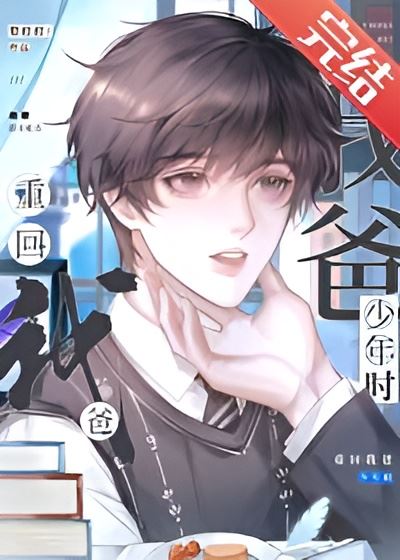
... Read More
So this little ceramic bird whistle? It's basically the plot device of the entire chapter. Lin Wangye wakes up right at dusk, catches the night market, and immediately becomes obsessed with something stupid. The scene where he buggs Lin Shen to buy it—five yuan, by the way, which is almost insulting how cheap it is—is where I knew this wasn't just a prop. It's a tension-builder. You can feel the slow burn of annoyance radiating off Lin Shen as the whistle chirps nonstop. And then the real twist? He hides it afterward. That's not petty, that's strategic. The author is showing us that Lin Shen's love language is silent sacrifice—he buys you something, suffers through the consequences, then secretly removes the source so you never have to hear it again. Brilliant. The subplot with the glutinous rice cakes is even better. Lin Shen brings it up casually, and suddenly Lu Chengxuan—who has never in his life woken anyone up—is standing there at 5:20 AM in pitch darkness, touching someone's forehead to check for fever, completely at a loss. That's the kind of structural detail that tells you everything about a relationship without saying a word. The chopstick game at the end? ‘Who's calling who Dad?' Five rounds, Lin Wangye loses every single time. That's not just comedy—it's the chapter closing on a note of inevitable hierarchy. Some things don't change, no matter how far you travel.

Leave a comment

You must be logged in to leave comments. or
