Back to My Dad’s Youth - Reviews

Back to My Dad’s Youth
+Add to Custom List
Sort
Add review
... Read More
I have never related to a character dynamic more than Lin Shen and Lu Chengxuan's hospital scene. On the surface, they're just two guys talking — class notes, paper flowers, college plans. But read between the lines and it's a battlefield. Lin Shen is clearly trying to provoke Lu Chengxuan. Every question he asks is loaded. When Lu Chengxuan mentions his dad wants to send him abroad, Lin Shen's reaction is immediate and sharp: "So... you going?" And then the pencil lead snaps. That detail — the 0.5mm lead inching forward under pressure until it breaks — is literally his internal state externalized. He's holding it together by a thread. But here's what gets me: Lin Shen then cuts him off before Lu Chengxuan can answer, launching into this self-destructive monologue about begging his dad for forgiveness and ending up as a security guard. He's not just rejecting the idea of Lu Chengxuan leaving — he's sabotaging the conversation entirely. And Lu Chengxuan? He just keeps peeling the pear. Unshaken. Calm. Like he's heard this version of Lin Shen before and knows it's not really about the pencil or college or where he'll study. The tragedy is that both of them care deeply and neither can say it. Lin Shen pretends to sleep with his back turned to the window — where the sunlight is literally stinging his eyes — just to avoid looking at Lu Chengxuan. That is some next-level avoidance. And Lu Chengxuan folding that notebook page into a right angle to prop up the pear plate? Small gesture, huge meaning. He's still taking care of him even when Lin Shen is being difficult.
... Read More
Okay so this little scene with the bank card literally made me laugh out loud because it is SO true to life. You know those moments where everyone's trying to do the polite thing and it just goes in circles until someone actually takes responsibility? That's exactly what happens here. Shi Yuan says "you hold on to it" because he's terrified his dad will find out about the money—and honestly, after everything we know about that gambling addict father, his caution makes total sense. He started life in hell, remember? An irresponsible father, a mom crying, strangers avoiding him like he was contagious. The kid doesn't trust anyone to keep things safe because nobody ever kept anything safe for HIM. But then Lin Wangye can't hold onto it either—"I lose stuff all the time." Of course he can't. The kid grew up completely sheltered, pampered from all sides. Losing a piece of paper was probably the worst thing that happened to him. Meanwhile Lin Shen might "not be able to resist topping up my game credits." Also fair, he's a teenager. And then—BOOM. Lu Chengxuan just grabs it without a word and puts it in his pocket. No drama, no speech, just... "No problem," and goes back to his ice jelly. This man doesn't do unnecessary energy. He's the stabilizing force here, the one everyone subconsciously trusts with the things that matter. And the way the other three immediately look at him like "yep, yeah, that's the one"—that's not written with words, that's built through behavior. Four boys from completely different worlds and Lu Chengxuan is the vault.
... Read More
"I'm not an orphan... I have a dad who loves me very much." This line. THIS LINE. I have not stopped thinking about it since I finished reading. Four words — no, one sentence — and suddenly everything about Lin Wangye clicks into place. He wasn't in an orphanage because he had no family. He was there because of some legal technicality, probably connected to Lu Chengxuan's family arrangement. But the fact that he immediately corrects Shi Yuan, that he needs to say this out loud, that he wraps his arm around Shi Yuan's waist while saying it — it's so vulnerable and so honest. This whole scene is about the difference between having people and having a home. Lin Wangye lives with Lu Chengxuan's family. He has food, shelter, safety. But he told Shi Yuan himself that it's not the same — being under someone else's roof, feeling like a burden, one wrong move away from being unwanted. Meanwhile, Shi Yuan has lost everyone who ever made him feel like he belonged. And somehow, in this hospital room, they're giving each other what neither of them has had in a long time. The way the author handles the transition from grief to embarrassment is also genius. Lin Wangye goes from full-on wailing to this mortified childlike whine about blowing a snot bubble, and it's so human. Real people don't just cry and then stop. They cry, they make a mess, they get embarrassed, they hide their face. The author doesn't romanticize this. He lets Lin Wangye be ugly-crying and then let him be mortified about it. But here's what I can't get out of my head: when Lin Wangye nuzzles into the blanket and says "but I like being with you" — that's not just friendship. That's the beginning of something, and both of them know it. Shi Yuan doesn't understand it yet, but I sure as hell do. This warmth, this familiarity, this safety — it's the foundation of something that's going to change everything for both of them.
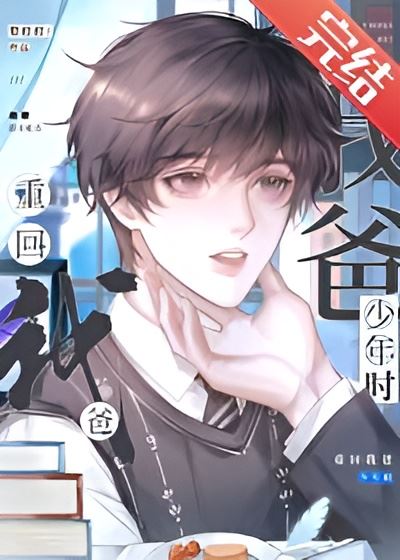
... Read More
Qingsen Internet cafe. Cold wind. Twenty-five dollars left on the card. These aren't background details—they're the world breathing. The author drops us into a specific moment in time where the digital revolution is already reshaping lives, but the physical world remains stubbornly real. Ningchang's 'industry winter' isn't just economic backdrop; it's a atmospheric condition that seeps into every scene. You can feel it in the chill outside the cafe, in the cramped staff dorm, in the way Lin Wangye stares at that off-white ceiling trying to map out a future. The setting does incredible work. That internet cafe counter where Lin Shen casually leans—it's a liminal space between generations. The cashier girl knows his balance, calls him 'Brother' with practiced familiarity. This is a community built around screens and cigarettes, a refuge for people whose lives are happening elsewhere. Meanwhile, Lin Wangye's side of the story unfolds in domestic spaces (the dorm room, the memory of Shi Yuan's apartment) that feel more isolated despite their intimacy. And the visual contrasts! The dim room with only moonlight reflecting off the window glass during the birthday scene versus the harsh fluorescent lighting of the internet cafe. The sparkling pendant against dark fabric against skin—that image is so precisely crafted. Even the business world gets painted with texture: the 'completely contrasting color schemes' of promotional posters, the press releases that 'exposed each other's discount strategies.' This isn't just corporate rivalry; it's visual warfare made manifest. What I love is how the environment reflects internal states without being heavy-handed. Lin Wangye's chaotic thoughts mirror the cluttered mental landscape he's navigating. Lin Shen's practical focus on the twenty-five yuan balance shows his grounded nature. The worldbuilding here serves character and theme simultaneously—it's sophisticated without being pretentious. The author trusts us to pick up on these environmental storytelling cues and connect them to the emotional arcs.
... Read More
There's this recurring question hanging over everything in these chapters: what actually makes a family? The entire subplot about the DNA test, the peer's hair, the mystery of who provided which sample — it's all circling around this idea that biology isn't destiny. Lin Wangye shares a surname with the Lin family but not the blood. Meanwhile Lin Qianqian, who clearly cares for him deeply, has zero biological claim but shows up with warm clothes anyway. The paper bags become this perfect symbol — tangible proof that chosen family actions speak louder than genetic tests. And then there's the whole location hunt running parallel. Lin Wangye keeps looking for the right place, the right fit, and Lin Shen keeps shutting him down until he understands something fundamental: you can't just assume space equals belonging. The university district sounds right on paper but it's a ghost town for a quarter of the year. It's about understanding the actual rhythms of people, not just the theory. Both storylines are asking the same question in different ways — where do you belong, and how do you know when you've found it? Dr. Bai's final thought about what circumstances would drive someone to use a friend's hair for paternity testing? That's the author leaving us with this haunting question about secrecy, about what families hide, about the spaces between who we are and who we pretend to be.
... Read More
I am NOT okay. That line. I keep replaying it in my head. Lin Shen just says it so casually, lying on Lu Chengxuan's back, chin on his shoulder, and it hits like a truck because it's so quietly devastating. This is a man who has never been carried. Who has always had to carry himself. And he says it without even seeming to fully process what he's admitting. "You know, this is the first time in my life someone's ever carried me like this." Just drops it there while being physically supported. THE CHOSEN ONE. And then Lu Chengxuan doesn't even respond—just keeps walking, and Lin Shen is apparently used to the silence because "after all these years, silence from him was nothing new." But here's the thing that wrecked me: at the end, when they're back at the hotel and Lin Shen is trying to send everyone away so he doesn't ruin their trip, that's when it really lands. He still feels like a burden. He still thinks he has to push people away. And Lin Wangye basically says "exactly that kind of person" without words. I needed a minute.
... Read More
I need to talk about Lin Shen because something about him kept nagging at me through these chapters. On the surface he's all bravado — cracking jokes, offering to be Fu Xuexue's bodyguard, throwing punches like a action hero. But then he drops this line about his dad arranging HIS sister's engagement behind her back, and suddenly everything clicks into place. He's basically living the same nightmare as Fu Xuexue, just on the other side of the privilege spectrum. He benefited from the son-preference system, but he also watched it destroy his little sister. And when he says "If I ever have a daughter, I'm wiping out every yellow-haired punk within a five-hundred-meter radius," Lu Chengxuan literally turns his head. That quiet look? I thought my heart stopped. It was like Lu Chengxuan somehow knew exactly what Lin Shen was protecting against — not just random thugs, but the whole system. And Lin Wangye, bless him, just absolutely losing his mind over Fu Xuexue's parents treating her like property. He's the emotional canary in the coal mine — reacts first, thinks later, pure heart. Meanwhile Shi Yuan is over there being eerily calm, shielding Lin Wangye without a word when the second ambush hits. These four are such a weird little family and I love them.
... Read More
Okay I need to talk about this moment where Lin Wangye screams "HELP ME! DAD!" at the top of his lungs and I literally fell out of my chair laughing. This boy is in full panic mode, dragged by cops like a puppy, and his immediate brain goes to... calling LIN SHEN his dad?! Who is seventeen years old?? The fact that he still said it though tells me everything I need to know about who this kid is—he's desperate, he's got no one, and in that split second he grabbed the only person who'd shown him kindness and called them family. That's actually kind of devastating when you sit with it. And Lin Shen's reaction? He froze for literally one second, asked Lu Chengxuan if HE heard that too (like he needed validation), then absolutely charged in. Not cool, not calculated—just full throttle. "YOUR DAD'S HERE!" bro was so proud. Then he tried to bribe the cop with his student ID like that's how anything works. I was wheezing. The headbutt moment between them at the end though—Lin Wangye bumping his head against Lin Shen's while laughing? That's the kind of unguarded physical closeness that says more than any dialogue ever could. These two are already building something real. Lu Chengxuan's suffering in the background feeling increasingly like a third wheel and I am HERE for it.
... Read More
Okay, so Lin Wangye just went FULL DRAMATIC in the cafeteria. He drops this 'let's swear an oath, the three of us' like it's nothing, right? And BOTH of them just... ignore him? Lin Shen is pretending to check for a fever while Lin Wangye is over here channeling his inner Liu Bei. The irony is absolutely killing me. "Which of the three had a good ending?" Lin Shen asks, completely destroying the moment. TWO WERE BEHEADED. BRO. You're comparing yourself to a guy who got decapitated. But here's what actually surprised me—the bigger plot reveal isn't the oath fail, it's everything Lin Wangye figured out sitting there. He realized that his dad didn't expand the sports field out of rivalry with Lu Chengxuan at all. The renovation idea came from Lin Shen first, then they drifted apart, and Lu Chengxuan independently decided to renovate the cafeteria. Which means—his dad wasn't trying to one-up Lu Chengxuan. He was JOINING him. Fulfilling some promise they made back then. That changes EVERYTHING about how Lin Wangye understood his father's motivations. The entire framework of his grudge or his understanding of his dad's pride just crumbles.
... Read More
I need to just sit with this for a moment. "Xiao Lin doesn't have parents to protect him. If I say I's his father, I'm his father. I won't let him suffer!" — Lin Shen saying this while simultaneously being convinced by Lu Chengxuan to not mess with the kids because they might not have even done anything yet? The man is a walking contradiction and I love him for it. He's so fiercely protective of Lin Wangye, this younger brother figure who clearly looks up to him, and the way he immediately goes from "my beautiful Xiao Lin" to worried big bro mode is everything. But then the real emotional gut-punch comes later when Lin Shen asks Lu Chengxuan if he was scared. Not about himself, not about anything trivial — he's thinking about Lu Chengxuan's safety, his mental state, even while dealing with his own drama. And Lu Chengxuan's internal monologue? The images flashing like a revolving lantern, the regret of being even a minute late? He never says any of that out loud. He just murmurs "Mm" at the end. The restraint in this chapter is insane. These two have this deep, unspoken understanding and the author doesn't need to spell it out. Lin Shen can handle it, Lu Chengxuan believes in him, and that's enough for both of them. That's the kind of emotional beat that stays with you long after you close the book.
... Read More
Let me just say this author understands how to deploy exposition without making me want to set the book down. We get dropped into a hospital room, a leg cast, an apple, and gradually—SO gradually—I start realizing that Lin Wangye isn't just some cheerful transfer student visiting a classmate. The clues are everywhere if you look for them. His internal calculation about money—'back in his past life, he wouldn't have thought twice about spending that on a single meal'—that's not foreshadowing, that's a FULLBLOWSPOILER disguised as casual narration. This guy has lived before. Or remembers having lived before. And whatever happened in that previous iteration has fundamentally reshaped how he sees the world, including how he sees money, work, and Shi Yuan himself. Then the 'happy puppy' line hits and time literally reverses in the narrative. Not metaphorically—the text says time 'slammed on the brakes and hurtled backward.' This isn't a flashback device, this is the story itself bending around a memory. The structure tells us that Lin Wangye's emotional trigger isn't internal reflection, it's an actual temporal event. Something is happening to him, physically, when he hears that phrase. And then the big reveal about Shi Yuan's mother dying in a fire? That's not just emotional damage for drama. That's plot information that connects to something bigger. A fire. A past life. An esports training regimen that stripped away spoiled rich kid habits. None of this is random. The narrative is building toward something, and it's doing it by letting these revelations land one after another like dominoes. The hospital scene functions as both a quiet character moment AND a plot detonation. That's craft.
... Read More
I need to talk about Lin Wangye because this passage absolutely wrecked me in the best possible way. The moment that hit me hardest wasn't even the love letter reveal — it was the quiet reflection right before it. The author gives us this beautiful, devastating paragraph about Lin Wangye's nature: 'But everyone's soul is painted in different colors. Lin Wangye's is soft and emotional. His natural instinct to help is easily triggered by the excited, nervous, and shy glances of a girl handing him a love letter outside a supermarket.' That's it. That's the whole thesis of who he is. He can't NOT help people. Even when he's exhausted, even when he's been running around all day carrying other people's feelings, he still delivers every letter because he can't bear to let someone's hope go unacknowledged. And the tragicomic irony? He delivers this girl's letter to the WRONG person, and instead of being angry, he's just… devastated. Lying on his desk, grabbing his hair, unable to speak. Not because he's mad at her for writing it, but because now she has hopeless expectations and he's the one who has to deal with the aftermath. This is also where the Lin Shen bromance really shines. The guy is literally watching his friend suffer and instead of helping, he's clapping and cheering like 'high moral standards, impressive' at Lu Chengxuan's rejection speech. But then when Lin Wangye gets humiliated, Lin Shen is the one calling him a 'little scumbag' while heartbroken — which is somehow both mean and protective at the same time. And Lin Wangye running out to 'clear things up' only to run straight into the math teacher? That's not just comedic timing, that's the author saying 'your emotional crisis is about to be interrupted by your worst fear.' It's almost cruel how perfectly it lands. I keep thinking about how Lin Wangye's softness is both his greatest strength and his greatest vulnerability in this story. He cares too much. He helps everyone. And the world keeps using that against him. But I also can't imagine him any other way. That's why we root for him. The scene ends with him opening his math textbook like a general preparing for war, and I just… I can't. The commitment to suffering is impressive.

Leave a comment

You must be logged in to leave comments. or
