When Two Alphas Meet, One’s an Omega - Reviews

When Two Alphas Meet, One’s an Omega
+Add to Custom List
Sort
Add review
... Read More
This chapter is SO much deeper than a school sports meet, and I think that's what makes it linger. The central image — Jian Songyi running with his eyes CLOSED, guided only by Bai Huai's voice — is one of the most potent pieces of symbolism I've encountered in this book. What does it mean? Trust without sight. Faith without proof. Choosing to believe in someone else when your own senses are failing you. That's not just a racing strategy, that's a philosophy of relationships. And then the synchronized finish. First place and last place touching the ground simultaneously. The crowd erupts not because someone WON but because nobody LOST. The book keeps coming back to this idea — that real victory isn't about domination, it's about showing up together. The line that hit me hardest: "The so-called good friends, who will never hold each other back, will pay for each other, but also will support each other to achieve better." Pay for each other. Support each other. These are reciprocal commitments, not hierarchy. Jian Songyi's speech afterwards ties it all together thematically: "I'll say it because I am Jian Songyi, and it has nothing to do with whether I am an Alpha or not." Identity declared on his own terms, not assigned by biology or society. The whole book has been building toward this moment where the characters refuse to play by the categories the world tries to force onto them. Even Li Ting — the rival who DNF'd — leaves pale and silent. His defeat isn't physical, it's ideological. He can't compete with people who've already redefined what winning means.
... Read More
There are so many symbols in this chapter that I keep noticing new ones every time I reread it. The milk candy. Bai Huai "stuffing" it into Jian Songyi's mouth like he's been doing since childhood. Sugar as love language — practical, immediate, almost humiliating in its efficiency. Jian Songyi can barely think but he still finds the energy to be sassy. Even when he's physically weakest, his wit is his armor. But who's armor is it for? Bai Huai or himself? 0101. The password. Jian Songyi suspects it's his birthday but frames it as just another thing to question. Because questioning is safer than knowing. If he asks Bai Huai directly, he might get an answer that changes everything. So instead he types and deletes and types and deletes, trapped in the same loop from three years ago. The cedar tree is the big one though. A living thing that Jian Songyi planted to replace something that was taken. When it died, he didn't buy another one. He just… stopped. And now Bai Huai is back, and the dead cedar is gone, and Jian Songyi is standing in the same spot he was standing in three years ago, unable to send a message he's been drafting in his head a thousand times. The text from Wang Hai operates as a different kind of symbol — it's the past itself, knocking on the door. "I heard something from my brother about Bai Huai before he went to Beicheng." Information as weapon. Information as hope. Information as the thing that could finally break the cycle of silence. And that ending image — Bai Huai watching the typing indicator, smiling, knowing Jian Songyi wants to ask something but pretending not to — it's the perfect symbol for their entire relationship. Two people communicating through absence, through what they DON'T say, through the gaps between messages sent and deleted. "The heart is weak, from the time he asked the question: 'Are you secretly in love with me' From there, the thick hard rock layer struggled but something eventually sprouted." Sprouted. Like the cedar. Like feelings. Like grief. Everything grows in this book, even when it shouldn't.
... Read More
What I love about this chapter is how the stakes are entirely internal but somehow feel massive. There's no battle, no villain, no external threat — just two boys standing at a wishing tree with secrets they won't share. Bai Huai's wish is for Jian Songyi to love him. That's the entire stake. If he fails, he loses the person who makes him happy. If Jian Songyi finds out, he might never know if the feelings are real or just pity. So he hides it. Jian Songyi's stake is different but equally personal. He buys something from an old monk, something he calls a "superstitious gadget," and keeps it hidden. Whatever his wish is, it's tied to Yu Ziguo apparently — or is it? The text says he bought it FOR Yu Ziguo, but why would he keep it secret from Bai Huai if it's just a gift? Something doesn't add up, and that uncertainty is what makes the tension work. The author never explains what either of them wished for, and honestly, that's the right call. The mystery itself IS the conflict. We're left wondering: Will their wishes come true? Will they ever tell each other? What happens when the secrets collide? Even smaller conflicts carry weight — like Bai Huai's fear that his father won't want him as a son if he asks for blessings, or the tension of almost getting caught skipping school. The author masters the art of making mundane moments feel charged with meaning.
... Read More
I keep coming back to the strawberry milk detail. It's mentioned almost casually — just one line in a list of grievances — but it's the most devastating symbol in this entire chapter. Consider what it represents: something small, sweet, everyday. The kind of thing you'd share with someone you care about. And Bai Huai couldn't even get more than a sip. Not because it was scarce, but because Jian Songyi never thought to offer. The pattern repeats. The math homework thrown at him — literally thrown, not handed — represents a boundary crossed so casually it became invisible. The planetarium promise broken for a hospital visit — this one is actually justified, but the fact that Bai Huai absorbed it without resentment is what matters. These aren't grand betrayals. They're the tiny, accumulated disappointments that build a history between two people. The anonymous post itself is a symbol of how public narratives flatten private complexity. Someone out there wrote "scum guy" and turned years of ambiguous friendship into a moral fable with clear villains and victims. But inside that story, there's no villain. There's just two people who never learned how to talk to each other honestly. Jian Songyi's online crusade to defend Bai Huai's reputation is deeply ironic — he's fighting strangers to protect a version of Bai Huai that doesn't match the reality of how he's actually treated him. He wants to be the hero in the public story while remaining unconscious in the private one. And Bai Huai, with those screenshots, is saying: stop performing for people who don't know us. Just look at what actually happened.
... Read More
I need to just sit with this one image for a moment: "after the time that passed them by on the bench, the road they're now walking unto has already piled up a thin layer of leaves. Thus, each of their steps made this rustling sound." That's it. That's the tweet. This is the kind of writing that makes you put the book down and just stare at the wall. The author doesn't need a paragraph of description — just leaves, footsteps, silence, two people walking side by side after something unspoken happened between them. The seasonal detail does so much heavy lifting. It implies time has passed, that this isn't the first time they've walked this path together, that the habit survived whatever fracture happened between them. And then the contrast with the classroom scenes the next day — Xu Jiaxing pinching his own arms to check if reality, Yang Yue and Xu Jiaxing whisper-fighting in the corner, the perfunctory applause for Yu Ziguo — it all feels so lived-in. Nanwai as a private school, the poverty alleviation student system, the hierarchy between Class One and Class Five, the Alpha/Beta/Omega social dynamics subtly woven into student gossip. The world feels dense without ever stopping the story to explain itself. You learn the rules by watching people navigate them.
... Read More
Okay so this chapter is absolutely delicious. Bai Huai literally rips off his exam paper after just one look—no page answered—and sprints down the corridor because he senses something's wrong with Jian Songyi. The tension builds like this: Li Ting catches a whiff of Omega pheromone, suspects someone's there, knocks on the cubicle door, and Bai Huai shows up right when Jian Songyi needs him most. That moment where Jian Songyi squeezes Bai Huai's fingers twice through the partition? CHILLS. Absolute chills. And then the examiners outside complaining about Bai Huai handing in early while all this drama is happening behind closed doors—that's brilliant ironic layering. The plot moves from suspicion (Li Ting wondering if there's an Omega) to confirmation (Bai Huai knowing exactly who is there) to crisis (the induced pheromone attack) to relief (getting the inhibitor). Each beat lands perfectly. But what really sold me is how the author uses the bathroom setting—usually comedic or awkward—to create genuine intimacy and danger simultaneously. Seven empty cubicles and Li Ting just HAS to queue here. Classic plot convenience that somehow works because it creates maximum vulnerability for our Omega lead.
... Read More
I need to talk about this one scene where Bai Huai goes into the bathroom, locks the door, and basically falls apart. This is the most revealing moment in the entire passage and I keep thinking about it. Here's this person who just spent the night holding back every instinct his body is screaming at him, watching Jian Songyi sleep, and when he thinks no one can see him — he's leaning over the sink, knuckles white, veins showing, trying to compose himself. "The human body is simple and honest." What he's feeling isn't some romantic notion. It's visceral. Every cell wants to mark him, occupy him, plunder him. And the person doing this to him doesn't even know what he's doing. That line hit me so hard. The restraint written in the corners of his eyes. He could do something. He has the strength, the proximity, the biological urge. He chooses not to. Instead he comes out, plays it cool, hands Jian Songyi blockers like nothing happened, and pretends he's just some capable person who happens to have a connection to the mom. The power dynamic between these two is fascinating because it keeps flipping. On paper, Bai Huai is the protector. In reality, he's the one losing control. And Jian Songyi? He's completely unaware, still seeing Bai Huai through this lens of Alpha strength and convenience, calling him "Brother Huai" like it's nothing.
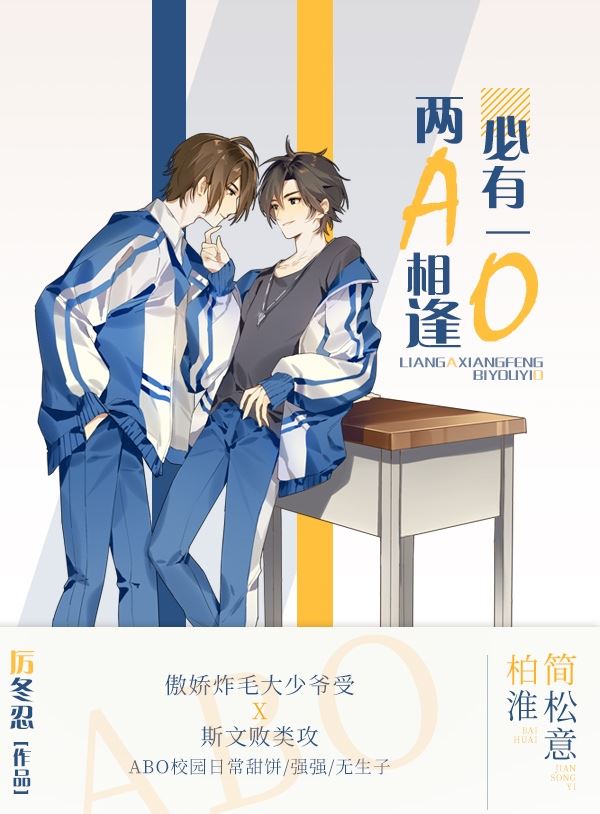
... Read More
The environmental details in this chapter are actually incredible when you slow down and notice them. Right after the big confession moment, the narrative gives us this beautiful snapshot: "The fragrance of osmanthus has been somewhat cold while the wutong leaves fall in circles. Then there are the fireworks blooming on National Day in the distance, which also seemed to wither. It was occasionally noisy, but as soon as it was through, it made the silence of the night more obvious." This is cinema-level scene setting. The osmanthus scent (which apparently is their thing), the falling leaves creating this melancholic autumn feeling, distant fireworks that briefly light up the sky and then fade — all of this mirrors the emotional state of the scene perfectly. They've just had this enormous emotional breakthrough and now there's this quiet aftermath. The cold fragrance of osmanthus vs the warmth of their interaction. The fleeting fireworks vs the permanence of what Bai Huai is offering. And that silence afterward that becomes even more pronounced. I could see this as a film scene — close-up on their faces, then a slow pull-back revealing the night sky, fireworks popping in the distance, leaves swirling around them. The setting isn't just backdrop here, it's emotionally resonant.
... Read More
I need to talk about how the author structured this entire scene because the pacing is absolutely masterful and I'm still recovering. We start outside the bathroom with this long, lazy conversation between two teachers smoking cigarettes. It's unhurried. Almost comedic. And then we cut to inside the stall and time EXPLODES. A century passes in that small cubicle. The author literally uses the teachers'闲聊 as a metronome—the longer they talk, the more agonizing each second becomes for Jian Songyi, who is literally counting sweat drops falling in slow motion. And here's the thing: just when you think it's going to resolve, the author pulls back. The teachers leave, tension releases slightly, and then BAM—'What's the last time?' drops like a hammer. The structure follows this wave pattern: build tension (teachers chatting), peak tension (sweat drop, holding still), release (they leave), false resolution (inhibitor administered), then ANOTHER spike (the thrice comment). It's almost cruel how the author strings this along. The chapter break itself is genius too. Ending on 'Did you manage to finish y'—trailing off mid-sentence—means you HAVE to turn the page. The author knows exactly when to stop and when to stretch. And that transition from the exam room to Chapter 42? Instant tonal whiplash in the best way possible.
... Read More
OK so let's talk about what's ACTUALLY at stake here because on the surface this is just "boys argue over grades" but underneath the floor is literally on fire. The central conflict isn't academic rivalry. It's identity exposure. Comment 85 lays it out with terrifying precision: "Did Jian Songyi differentiate already? Is there proof of Alpha pheromone on him? Why did they share a room in the military training camp? Why did they go to the hospital all of a sudden? Isn't he afraid of gender exposure?" Every single one of these questions is a loaded gun pointed at Jian Songyi's throat. If he's not actually an Alpha, everything he's built — his dominance, his reputation, his entire position in the social hierarchy — collapses. And Bai Huai knew. Bai Huai HELPED him. In the hospital. During that fight with Huang Fuyi where Jian Songyi was "obviously not used to the pheromone oppression of Alphas. Had it not been for Bai Huai's help, he would have been crushed to death." So who is actually protecting whom? The monthly exam rankings are a distraction. The real bet is whether Jian Songyi's secret survives exposure, whether Bai Huai's silence was loyalty or manipulation, and whether their entire relationship was built on a foundation that could shatter if the wrong person asks the wrong question. I am NOT OK with this level of sustained tension
... Read More
There's so much happening beneath the surface in these chapters and I want to dig into it. The dice game isn't just entertainment—it's a metaphor for how fate works in these characters' lives. They don't control the outcomes. Yu Ziguo keeps winning questions, forcing truths out of people who'd rather stay silent. Jian Songyi keeps rolling sixes and somehow ends up drinking everyone's share. Fate is stacking the deck against honesty. And then there's the drinking itself—Bai Huai says he'll answer before the alcohol takes over, as if sobriety equals truth and intoxication equals deception. But isn't that backwards? The drunk Bai Huai is the one who almost confesses something real. The sober Bai Huai deflects with jokes and asks for the next round. The alcohol becomes this strange truth serum that everyone fears. And Bai Huai's line about children not smoking or drinking—that's not just flirtation, is it? It's him asserting some kind of protective ownership over Jian Songyi while simultaneously crossing a line he shouldn't. The whole setup of this KTV night is a pressure cooker where all the suppressed feelings get forced to the surface through games and alcohol and proximity. What's really being questioned here isn't just "who does Bai Huai like"—it's whether any of these people actually know themselves. Jian Songyi thinks he's upset about betrayal but is it jealousy? Or is it fear of losing his place in Bai Huai's life? The author doesn't answer these questions and that's exactly the point.
... Read More
I'm going to be honest with you — dialogue is where I usually bounce off books. Too many authors write every character with the same voice and it becomes exhausting. But this? This is different. Yang Yue sounds like a real person. Her transition from 'the stupid guy next to me is Xu Jiaxing' to 'at least I am the former second' is so naturally self-deprecating and performative at the same time. You can hear her in your head. She's the kind of person who talks faster than she thinks and then laughs at herself before anyone else can. Yu Ziguo's dialogue is the masterpiece here. 'My grandfather is a fortune teller. I have learned that the school bully with a peach blossom eyes and the most handsome man in school... will be a thing.' That sentence structure — slightly formal, slightly naive, deliberately dramatic — it's performing simplicity. Every word is chosen. Even his apology afterwards ('Please don't be angry') has a rhythm that feels rehearsed. Is he actually this awkward or is this his armor? Jian Songyi's lines are short, controlled, and each one reveals more by what he's NOT saying. 'It's alright. I am not angry at all. I don't blame you. I am blaming myself for having peach blossomed eyes.' Four sentences. Each one shorter than the last. The pacing of his dialogue mirrors his tightening composure. He's not breaking. He's becoming a statue. Bai Huai says almost nothing and it's devastating. 'Bai Huai bowed his head and smiled slightly. It's alright. I am not angry either.' Same words, different energy. Where Jian Songyi's apology is defensive, Bai Huai's is... something else. Observant? Amused? Complicit? And Lao Bai — oh god, Lao Bai. His dialogue is pure exhausted teacher energy. 'If you sharpen your knives, then you'll all be able to chop the firewood.' The author gives him actual wisdom wrapped in frustration and it works because it sounds like something a real teacher would say at 7am on a Monday.

Leave a comment

You must be logged in to leave comments. or
