When Two Alphas Meet, One’s an Omega - Reviews

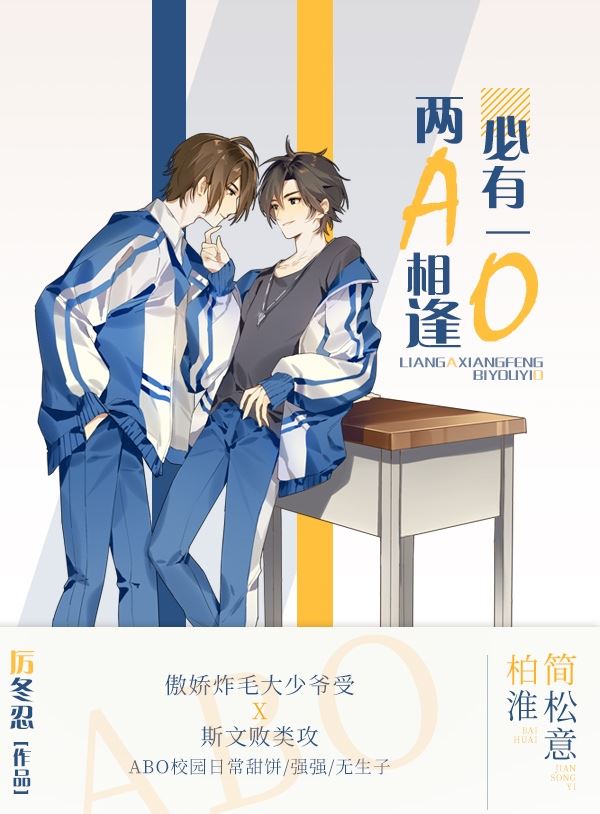
When Two Alphas Meet, One’s an Omega
+Add to Custom List
Sort
Add review
... Read More
I need everyone to understand that I have read the phrase 'he blocked the edge of the bed with his long leg' approximately four hundred times and it has not stopped making me feel things. Jian Songyi is curled up on the edge of a thin mattress, feverish and miserable, and Bai Huai—stoic, controlled Bai Huai—responds by physically shielding him from falling off. He wraps an arm around him to pass on coolness. He catches himself stealing a breath from wild rose petals. This is not subtle. This is a man who has been starving himself for what feels like years and finally allows himself one taste. The most devastating line in the entire passage might be the simplest: 'Maybe the feelings—the love I've hidden all this time when I was young is just like this.' Just like that. No dramatic confession, no orchestral swell. Just a quiet admission that his restraint and his indulgence are the same thing. That every moment of holding back IS the expression of feeling. And then Jian Songyi, half-asleep, instinctively buries his face toward Bai Huai's glands again. He doesn't even know he's doing it. His body remembers before his mind catches up. God, I can't—
... Read More
The structural genius of this chapter is that it never lets the reader breathe in one emotional state for too long. It's like the author knows exactly how slippery the attention span is and keeps throwing in curveballs. Let me trace the rhythm: we open mid-conversation with Mrs. Tang crying—immediate emotional hook. Then we get the dark comedy beat of her proposing to buy an Alpha husband. Then the pivot to serious territory with the pheromone blockers and the decision to hide his gender. Then the domestic comedy of the cooking scene. Then the romantic tension of the WeChat notification at the end. Every shift is earned. None of it feels random. The author uses Mrs. Tang as the metronome—her emotional state changes constantly, and the pacing follows her lead. When she's devastated, the prose slows down and lingers on her tears. When she's scheming, the dialogue speeds up and becomes sharper. When she's cooking, everything becomes sensory and warm. The chapter has three distinct movements, and each one serves a different narrative purpose: setup (the revelation), complication (the decision to hide), and respite (the family dinner). But the real pacing masterstroke is the ending. After all that emotional weight, the chapter closes on something almost trivial—an unread message. The red dot. It's the literary equivalent of leaning back in your chair and exhaling. The tension doesn't resolve; it just... pauses. And that pause is what makes you want to read the next chapter immediately. The author understands that sometimes the most powerful story beat isn't a climax—it's a breath held mid-sentence.
... Read More
These two are absolutely unhinged together and I love it. Look at how they talk to each other—it's all barbed wire wrapped around something else entirely. "You're lucky this time" from Jian Songyi, and Bai Huai just smirks back like "that may be a little too difficult for you." Who talks like that? Nobody except people who have been circling each other for literal years. The eye contact moment where Jian Songyi breaks it first is SO telling. He's the one who claims he never looks at his report card because he ALWAYS wins, and yet here he is, obsessively comparing every subject breakdown with Bai Huai. The guy memorized their score differences down to individual subjects—English, Math, Chinese. That's not rivalry, that's obsession dressed up as competitiveness. And then Bai Huai's response about trying new methods so he wouldn't end up on top again? That's not arrogance. That's someone who's been watching Jian Songyi so closely that he's adjusting his own performance just to keep the game interesting. Meanwhile Jian Songyi just wants to prove he's better, and Bai Huai is playing 4D chess while he's playing checkers. Their relationship is a goddamn minefield and every exchange could be the one that detonates everything.
... Read More
The stakes here aren't life or death; they're identity and connection. The central conflict is internal: Jian Songyi vs. his own confusing feelings, Bai Huai vs. his fear of rejection. But it manifests externally through tiny, high-risk interactions. When Jian Songyi says 'not being brothers anymore,' the stakes skyrocket. He's not just discussing a label; he's touching the foundation of their entire world. What happens if that foundation cracks? The fear of drift is the fear of annihilation. Xu Jiaxing's sports meeting plea introduces a lower-stakes conflict—reluctance vs. obligation—but it serves to raise the emotional stakes for the main pair. Bai Huai's participation isn't about athletics; it's about showing up, about stepping into a shared space with Jian Songyi. His final imagined scenario reveals the ultimate stakes: intimacy. A kiss isn't just a physical act; it's a point of no return. If they cross that line, they can't go back to being 'just brothers.' Every interaction is a gamble. Jian Songyi gambles by confessing his panic. Bai Huai gambles by imagining a future together. The tension is maintained not through external threats but through the sheer weight of what's unsaid. They're not fighting enemies; they're fighting their own caution, their own fear of hurting each other. And that's what makes it so compelling. The audience knows the cost of inaction is slow decay, while the cost of action is potentially catastrophic transformation. Every glance, every delayed response, every imagined kiss is a move in a high-stakes game where the prize is everything and the loss is everything.
... Read More
I need to talk about the dialogue in this chapter because it's absolutely elite. Yu Ziguo literally says "Wow! Master Bai! I can't believe you would say such a long sentence just for us! Do you know that this is the first time you have taken the initiative to say more than ten words to me since we met?" And honestly? Same. Bai Huai's sarcasm is my love language. The banter between these two is so natural it hurts. Like: "It can't be helped. Someone here is too mute to speak because they're starving. Starving because that certain someone didn't choose to eat earlier." Jian Songyi throwing shade at Bai Huai for not buying the red cloth and now here he is, paying fifty yuan, and then using it as an excuse. And Bai Huai's response? Pure deadpan. "Are you talking about me?" After Jian Songyi tells him to be more romantic. The man refuses to engage on any emotional level and yet has been hiding his wish in his pocket this entire time. Also, the WeChat group chat reveal where Xu Jiaxing broadcasts "I made a group except for Bai Huai! Come and have a look." with actual fanfare? That's next-level friendship energy. And Bai Huai just... accepts it. His response is literally three dots. He doesn't even deny it. The dialogue keeps shifting tones too — one moment they're being deeply tender at the cemetery, the next they're bickering like an old married couple over QR codes and IQ taxes. That's the author's voice at its best. It knows when to be soft and when to be sharp, and it never stays in one register for too long.
... Read More
The setting details in this chapter are doing so much heavy lifting without anyone noticing. "Because of drowsiness, his waist ever so slightly slid showing a sense of tenacity and softness. With his legs loosely crossed with each other, anyone could tell how slender he is. Along his elongated neck and abrupt Adam's apple." This isn't just description. This is worldbuilding through gaze. We're being positioned as observers watching Jian Songyi sleep, and the camera lingers exactly where Bai Huai's eyes linger. The bench, the shade of the tree, the training ground outside all these frame the scene like a movie—a lazy afternoon in deep mountains where nothing urgent is happening, but everything important is unfolding quietly. And the environment itself becomes hostile in the most mundane way. "Since they are deep in the mountains, there are many trees and plants that surround them. Not to mention the fact that the air is wet. Because of these, the insects are rampant." This is a military training camp, not a luxury resort. The text mentions Bai Huai wanting to make love to his "high-grade velvet quilt" and a "two-meter wide custom cushion" back home. The contrast between that domestic comfort and this outdoor suffering is almost comedic—but it also grounds the story in a physical reality. These kids are tired. They're sore. They're sleeping on benches while pink bumps eat them alive.
... Read More
There's this one scene where Jian Songyi leans in to smell Bai Huai's wrist and I literally stopped breathing. The description hits different. Cold white skin, pale blue blood vessels visible like rivers under ice, and then this pine forest scent covered in thick snow. Not just any perfume—something that feels ancient, clean, dangerous. The author doesn't just tell us it smells good, they make you feel why Jian Songyi is so mesmerized. It's not about the scent itself, it's about what the scent represents: intimacy, closeness, a boundary being crossed without either of them admitting it. And then the chair scraping against the wooden floor when Bai Huai pulls away. That sound. I could hear it. The shrill noise echoing in the silence after Jian Songyi's moment of vulnerability. It's such a small detail but it does so much work. The physical space between them becomes this tangible thing you can feel. One second they're close enough to share breath, the next there's an entire room's distance between them. The car scene later is equally loaded. Rain, missing umbrella, the Bentley parked outside like it's waiting for drama. And then Bai Huai just there in the back seat with a lunch box like he owns the space. The ordinary becomes extraordinary when these two are involved. A simple car ride transforms into this charged silence where everything unsaid hangs heavier than anything spoken.
... Read More
This chapter is a masterclass in controlled pacing. It opens fast—with dialogue, conflict, flirtation. Bai Huai is being unbearable, Jian Songyi is fleeing, and the energy is high. Then Yang Yue arrives like a tornado and completely disrupts the rhythm. She's comic relief, yes, but she also serves as a pressure valve. After the romantic tension peaks, we get a laugh, and then the scene slows down to a nap. But here's what I love—the nap scene should be boring. It could be. Instead, the author uses it for the chapter's most important emotional beat. Bai Huai protects Jian Songyi from insects. He sacrifices his own comfort. He lets Jian Songyi rest on his body instead of the pillow. And Jian Songyi, in his sleep, reaches for Bai Huai's leg. The text says "his fingertips brushed ever so lightly from the roots of Bai Huai's leg" and then Bai Huai places his hand over Jian Songyi's ear and sighs with relief. That's the ending. No cliffhanger. No dramatic declaration. Just two guys sleeping on a bench in the middle of nowhere, and something unspoken passing between them. The pacing here is deliberate—the slow slide from high-energy comedy into quiet intimacy mirrors exactly how relationships actually develop. Not with fireworks. With pillow betrayals and defensive button-unbuttoning and pretending it's all just fair exchange.
... Read More
The symbolism in this passage is so deliberate it almost hurts. That leaf falling onto Jian Songyi's shoulder—first it's just autumn, then it's fate, then it's Bai Huai reaching for it and their fingers almost touching. The leaf chooses where to land, and so do people. That's not subtle by accident. And the cigarettes! Jian Songyi buying them because he wants to feel something—anything—to numb the discomfort inside him. "The legendary substance that can bring excitement will be able to shed light on his dying dull life." But smoking doesn't save him. Bai Huai taking the cigarette away from him is basically a metaphor for the entire dynamic: Bai Huai won't let him self-destruct, even when Jian Songyi desperately wants to. Then there's the recurring image of cold—Jian Songyi's "already cold heart," the September chill, the air conditioner freezing whatever warmth might try to grow. Cold is the physical manifestation of his emotional state, and Bai Huai is the only source of heat, which makes him both dangerous and necessary. But my favorite symbolic thread is that line—"It is not only in June and July that the foliage is luxuriant and green. Right, it's fine. Everything is fine and beautiful." That desperate repetition. That's not optimism. That's a person trying to convince themselves that broken things can still be beautiful. And the leaves falling anyway.
... Read More
Omg thank you for picking this up!
... Read More
I hope you get to enjoy :))
... Read More
Thank you for picking this up!

Leave a comment

You must be logged in to leave comments. or
