When Two Alphas Meet, One’s an Omega - Reviews

When Two Alphas Meet, One’s an Omega
+Add to Custom List
Sort
Add review
... Read More
Okay so this section had me laughing out loud because the plot is genuinely twisting in these delightful directions. Bai Huai's "after-training service" excuse? Absolute comedy gold. The man is scheming from the top of his head to the tip of his fingers, and Jian Songyi is too dumbstruck to even be mad about it. But here's what's clever about the narrative structure: the author uses the father's interruption as a mini-climax that simultaneously deflates the romantic tension AND shifts the power dynamic. Just when Bai Huai was being all tender and mysterious, boom — Dad walks in, the whole mood shatters, and suddenly Jian Songyi looks like the disheveled mess while Bai Huai is pristine in those goddamn gold glasses. That contrast isn't accidental storytelling; it's a deliberate plot choice that reinforces how Bai Huai always stays two steps ahead. And then — and this is the part that made me actually gasp — Bai Huai slips the milk candy into Jian Songyi's pocket before leaving. A physical callback to their childhood, to that old jar with the scratched paint. The narrative is layering past and present so skillfully here. The candy isn't just a sweet; it's a plot device that connects the five-year-old Bai Huai to the present schemer. Everything feels intentional. The Eagle Base military training setup at the end is another plot thread being woven in. Director Peng Minghong as "the devil," the assessment requirement, the students bracing for their epitaphs — it's setting up what's clearly going to be a major upcoming arc. The good news/bad news structure (no evening self-study but early morning bus ride) is classic comedic pacing that keeps the chapter moving. So many threads at once: romantic scheming, childhood nostalgia, family comedy, and an impending military training arc. The plot density in just these few chapters is impressive. It doesn't feel rushed at all; every beat serves multiple purposes.
... Read More
Okay so this whole arc with the anonymous forum post is actually brilliant plot construction. On the surface it's a petty gossip thread about Bai Huai being labeled a scum guy, but the real payoff comes when it spirals into something way more personal. The author sets up this false conflict — everyone thinks the post is about Bai Huai's romantic misdeeds, and Jian Songyi throws himself into defending him online — but then the reveal flips everything. Those 'scumbag stories' weren't fictional gossip at all. They were actual memories, just twisted and stripped of context. The strawberry milk? It was Jian Songyi's favorite. The math homework? He made Bai Huai do it. The planetarium date he canceled? Because he ended up in the hospital. Every accusation against Bai Huai was actually evidence of how Jian Songyi treated him, and Bai Huai just... let it slide for years. The structure here is a classic misdirection followed by emotional reckoning. We spend the whole chapter watching Jian Songyi perform righteousness online while completely missing that the whole thing circles back to their own shared past. And Bai Huai? He's been sitting quietly, collecting screenshots, knowing exactly what he's doing. That ending line — "you interest me" — before he sends over the evidence isn't just a quip. It's the moment the entire power dynamic between them shifts on paper.
... Read More
You know, I keep coming back to this one moment near the end of the staircase scene, and I can't quite shake it. Bai Huai stops. Just freezes. And Jian Songyi notices immediately, turns around, walks back up to him, and asks what's wrong. It's so casually written, almost offhand, but when I reread it, I realized everything about their entire relationship is packed into that simple action. Throughout the military training, Jian Songyi never lets Bai Huai fall behind. When Bai Huai struggles with the first obstacle, he doesn't hesitate. When they face impossible odds, he keeps going. And now, standing at the bottom of those stairs, Bai Huai admits something vulnerable: he's scared of diarrhea, scared of being uncomfortable, scared of breaking his own carefully maintained composure in a place that feels unfamiliar and slightly gritty. It's such a small fear, but it's real, and the fact that he voiced it to Jian Songyi — not to Yang Yue who would've made fun of him endlessly, not to Xu Jiaxing who might've been politely concerned — tells you everything about who they are to each other. And Jian Songyi's response? "Then you shouldn't go." So practical. So Jian Songyi. But then Bai Huai says the thing that actually breaks my heart: "How can I not go down if you've already gone down?" He's not afraid of the stairs. He's afraid of descending into this rough, unfamiliar world without Jian Songyi beside him. What follows is just two sentences of description, but they're doing more emotional work than entire chapters of exposition could: "Bai Huai smiled and reached over Jian Songyi's shoulder. Then they walked side by side every step of the way." Side by side. Every step. That's not romance in the traditional sense — there's no confession, no grand gesture, no dramatic turning point where everything changes. It's something quieter and, I think, more powerful. It's the kind of love that shows up when your friend hesitates at the bottom of a dark staircase and pulls you along because he won't let you walk alone. The wind snapping the withered vine as they walk past — that image stuck with me too. Something breaking. Something ending. But they keep walking anyway. I thought about how the text introduces this new chapter title right after: "I Coax You, You Coax Me." And I realized — that's the whole emotional arc of this entire passage. Bai Huai coaxes Jian Songyi to try the street food stall. Jian Songyi coaxes Bai Huai down the stairs. It's a mutual pulling, a shared reluctance, a refusal to let the other person face anything alone.
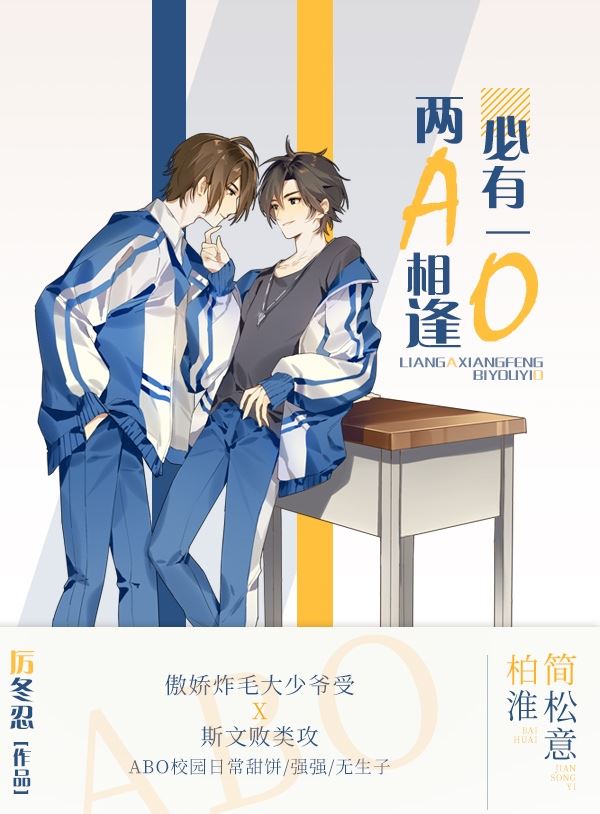
... Read More
I NEED TO SCREAM. The I think I may like you moment was everything. EVERYTHING. Let me explain why this wrecked me. Jian Songyi has spent literally years telling Bai Huai he hates him, that he doesn't like him, that they can't be together. And now here he is, voice soft, admitting vulnerability in the most awkward but genuine way possible. The narrative says it was enough to drain all his blood instantly, leaving him asphyxiated, brain dead, defenseless. Not an exaggeration — I was equally breathless reading this. What made it even more powerful is that Jian Songyi doesn't just say it casually. He stumbles through it, worries about pheromones vs genuine feelings, worries about responsibility, worried he's being selfish. This is someone who has been conditioned to believe his own worthlessness creeping into his romantic honesty. And Bai Huai's response? "I'm glad you said that." That's it. That's all. No pressure, no demands, just acceptance. The way this scene builds from tension to vulnerability to a kind of quiet triumph made my heart do things. Also the osmanthus fragrance and wutong leaves detail at the end of that confession moment? The universe itself seemed to pause.
... Read More
The dialogue in this sequence is sharp enough to draw blood. Look at how Jian Songyi speaks versus how Bai Huai speaks—they're completely different registers even when saying similar things. Jian Songyi's lines are urgent, repetitive, almost panicked: 'Then there must be something! Show me quickly. I want to see who will be receiving your help.' He circles back to the same points, each iteration more desperate than the last. Bai Huai, meanwhile, is almost eerily controlled. His responses are short, almost mechanical: 'No.' 'Oh, yes.' 'Well, that's right.' The contrast is deliberate and brilliant. And then that monologue about 'international practice' with 0101, 0000, and 1111—that's not how a real person talks, and that's exactly why it works. It's Bai Huai retreating into absurd rationality because the emotional truth is too dangerous to name. The translator also did a solid job here preserving the tonal register; the awkwardness of the English phrasing actually enhances the character voice rather than detracting from it.
... Read More
This is a masterclass in emotional subtext. The romance here isn't in grand declarations but in the terrifying vulnerability of almost-saying. Jian Songyi's panic is a raw, honest portrait of someone who has accidentally stumbled onto a truth too big to contain. He knows something has shifted, but he can't articulate it, so he latches onto the one concrete fear he has: losing his brother. The metaphor used is perfect: 'the fire of the candle jumping through a windowpane in the darkness.' It's hazy, ambiguous, waiting for a chance coincidence to pierce the paper. That's their love life. The emotional high of this passage isn't a kissed hand or a confessed feeling; it's the shared, silent understanding that they're both awake that night, thinking about each other. Look at the sensory details that anchor the emotion. Jian Songyi can't taste his rice. The food becomes ash because his mind is elsewhere. Bai Huai's internal monologue is a symphony of 'what ifs'—he imagines coaxing Jian Songyi, imagines the kiss, imagines the aftermath. It's tender, sweet, and profoundly lonely because it's happening entirely in his head. The most devastating moment is the quiet after the sports meeting agreement. Xu Jiaxing leaves, the noise dies down, and we're left with Bai Huai looking through the DV. In that stillness, the weight of his secret love is almost physical. The emotional journey here isn't forward momentum; it's depth. We're not moving toward a climax; we're sinking deeper into the ache of two people who are perfectly matched yet painfully cautious.
... Read More
The imagery in this chapter is surprisingly cinematic. Start with the silk pajamas slipping off—already a loaded image, vulnerability dressed as comfort. Then the morning light through the window, Bai Huai reading at the desk with transparency of sun filtering through the pages. There's this one detail that got me: the bathroom has NO HEAT. Cold. And Bai Huai came out with wet hair. So he went in there to splash water on his face, to cool down, to compose himself. Jian Songyi assumes the worst—'thousands of children and grandchildren buried in my bathroom'—but really? The other guy was fighting the same battle. The author doesn't spell that out. You have to connect the dots yourself. That cold bathroom is the emotional core of the entire chapter compressed into one sentence. And then Bai Huai comes out wearing yesterday's clothes instead of the fresh ones Jian Songyi laid out. That's not carelessness. That's avoiding a moment. Every detail is a door that's been deliberately closed.
... Read More
I have to talk about this duo. The text casually drops "tacit understanding with Lu Qi Feng for years" and honestly that one phrase does so much heavy lifting. These two have history—deep, comfortable, almost telepathic chemistry that reads as friendship but feels like something far more foundational. Watch how Jian Songyi immediately notices when Lu Qi Feng is frowning and asks if he's alright? That's not surface-level buddy stuff. That's someone who tracks another person's micro-expressions like it's second nature. And then there's Lu Qi Feng standing ready to throw hands alongside him when Huang Fuyi's goons step up. The onlookers literally wonder if these two will tear each other apart—but no, they're a unit. The text says Lu Qi Feng keeps two groups from warring, implying he's the glue between Jian Songyi and Huang Fuyi's faction. That makes him the most important stabilizing force in this entire conflict. But what really got me is how Jian Songyi positions himself. He won't fight in front of Omegas and little girls. Not because he's weak—it's because he has lines. He likes letting others lose on the court, but he won't cross into outright brutality when vulnerable people are watching. That's a man who performs restraint as a choice, not as a limitation. His control IS his power. And honestly? That makes him infinitely more interesting than any brute-force Alpha could ever be.
... Read More
The opening image of this passage is so cinematic it should be in a film. Sunlight filtering through hospital white gauze curtains, creating rippling circles on the room. There's something almost sacred about how the author frames this mundane hospital setting. It's not dramatic or gothic — it's clinical and warm at the same time. And then the scent takes over, transforming the space from a medical room into something charged and intimate. The worldbuilding here is done through sensory detail rather than exposition dumps. We learn about Omegas and Alphas, about pheromones and compatibility percentages, about Northern European blocker technology, all through the natural flow of conversation and observation. The medical setting matters because this is where Jian Songyi is at his most vulnerable — post-differentiation, sick, disoriented — and the hospital's sterile environment contrasts sharply with the wild, untamed rose scent filling the room. Even the smaller details carry weight: the porcelain blue of Bai Huai's dark circles, the water dripping from his hair onto his collarbone, the bottle with the bird illustration on it. The author trusts the reader to understand the world without being told directly.
... Read More
The way these two hate each other is the most romantic thing I have ever encountered in my entire life. Like genuinely. Every insult, every challenge, every provocation— it's all just courtship in disguise and they don't even know it. But the real gut punch came at the end when Jian Songyi actually considered showing empathy. He saw the messages from Zhuo Luo, learned about Bai Huai's past, and his first instinct was... wait, should I care? Should I reach out? And then he immediately shut himself down: "Bai Huai is a pure animal. He doesn't deserve to be shown kindness whatsoever." BRO. You literally just texted him first. You initiated the conversation. You're not ready to face whatever's underneath this person, so you're deciding for him that he doesn't deserve your compassion? That line broke me because it's so painfully honest about how fear masquerades as cruelty. And Bai Huai's cold one-word reply—"Bored"—when Jian Songyi actually tried to be vulnerable enough to ask what's going on? That's not just dismissive, that's someone who's built walls so high they don't even remember why they built them in the first place. The ache between these two is going to be devastating when it finally cracks open. I can feel it in my bones.
... Read More
I need to talk about the symbolism in this chapter because it's hiding in plain sight and if you don't catch it you'll miss the entire point. The wonton. Let me start there. "Innocent wonton" becomes this recurring motif—not just in this scene but as a symbol for everything between these two boys. The wonton is harmless on the surface. It has parsley, which Jian Songyi dislikes, but Bai Huai removes it without being asked. The wonton is照顾 (care) disguised as a casual meal. And when Jian Songyi calls it an "innocent wonton," he's naming something he can't directly acknowledge: that Bai Huai pays attention to him. That he remembers small details. That this act of kindness exists in a relationship that's framed entirely as rivalry. The glasses are another symbol I can't stop thinking about. Bai Huai wears glasses with no prescription. Why? On the surface, it's a character quirk—a pretentious academic accessory. But underneath, it's about PERFORMANCE. Bai Huai is performing the role of the intimidating transfer student, the top scorer, the cold genius. The glasses are part of his costume. And Jian Songyi, who sees through it ("he would have the urge to teach him how to look at people"), is the only one who notices the performance. This makes them mirrors for each other—both wearing masks, both seeing through the other's. Then there's the exam paper itself as symbol. Clean, tidy, with "clear and beautiful writing." This isn't just about handwriting—it's about ORDER versus CHAOS. Jian Songyi operates on intuition and speed. Bai Huai operates on precision and control. Their rivalry isn't just about who's smarter; it's about two fundamentally different ways of being in the world colliding. And the tragedy (the delicious tragedy) is that neither can win because they're measuring the same thing differently. The betting on spicy gluten by the classmates is also symbolic in a way that's almost funny. These kids are reducing a profound academic and personal rivalry to gambling entertainment. "Place your bets on who scores higher in Science!" But beneath the humor, it reflects something true about how society views intense relationships—they're always being observed, categorized, and commodified. Even these boys' quiet moments together are being turned into content for their peers. And what about the rain? Rain appears twice and each time it's a barrier and a bridge. It keeps Jian Songyi from going to the canteen. It forces proximity. It creates the conditions for the quiet classroom scene where everything important happens without either of them saying a word. Rain in Chinese literature is never just weather—it's emotion that hasn't been named yet. And neither of these boys has named anything.
... Read More
The atmosphere in these chapters is genuinely cinematic. Let me paint the scene: late autumn night, dim light, mist rolling in. Wang Shan in his wheelchair on a slate road. The sound of wheels rolling over stone while he delivers the most devastating confession about unrequited love. It reads like a film scene. 'The slightly self-deprecating voice, accompanied by the sound of wheels running over the slate road, gradually dissipated in the night, leaving only a cavity of frustration.' — This line alone is worth the price of admission. The night swallows his words. Nothing but emptiness remains. Then Bai Huai stepping out of the mist into the dim light to find Jian Songyi. The visual of him gently rubbing the corners of Jian Songyi's eyes asking 'How come Brother Song still has red eyes?' when Jian Songyi just witnessed someone else's pain and his own friend's secret all at once — the layered emotional weight of that moment is incredible. The sketchbook itself is described with such tactile detail — old water stains, mud, binding about to tear. You can literally feel how fragile this object is, how barely it survived. It's stained with time and memory and still managed to carry everything. And the Alpha/Omega worldbuilding detail about 'an insurmountable iron wall' between two Alphas — that's not just worldbuilding, that's the emotional architecture of the entire conflict. Society literally won't allow what they feel.

Leave a comment

You must be logged in to leave comments. or
