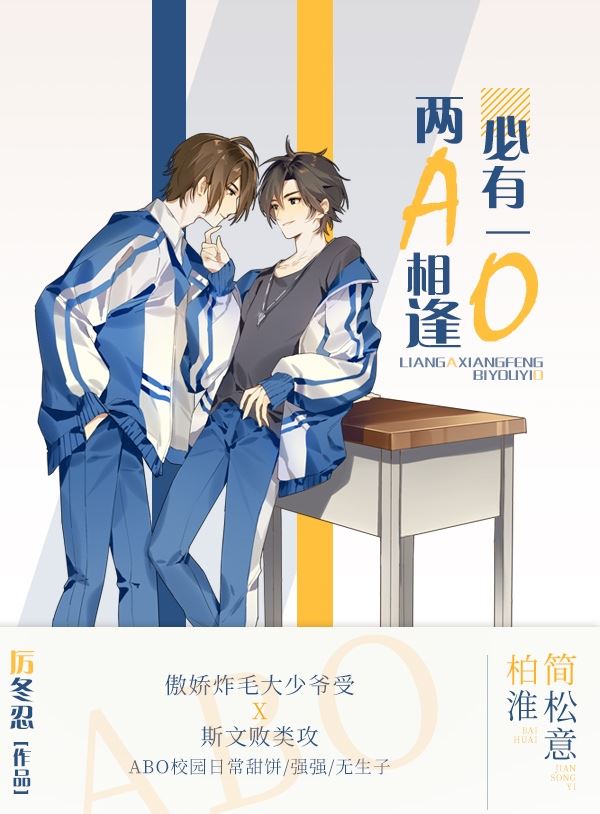
"The alley fell into a dead silence, and the taste of wild roses was stubborn and arrogant, resisting the powerful snowstorm and refusing to yield."
That single sentence contains the entire thematic thesis of this novel and I'm not even being dramatic about it.
Wild roses = Jian Songyi. Arrogant, beautiful, thorny, stubborn, refusing to bend even when everything is crushing him. Snowstorm = Bai Huai. Cold, powerful, overwhelming, beautiful in its own terrifying way. And they're locked in this alley together, neither yielding, and the silence between them is louder than any argument.
But what's fascinating is that neither of them is really fighting the other. They're fighting something else entirely — the world that put them in this position, the biology that makes Jian Songyi vulnerable, the fear that keeps both of them from being fully honest. The pheromones, the heats, the marking — these aren't just plot mechanics, they're metaphors for intimacy itself. The terrifying vulnerability of needing someone, of being physically unable to hide your state from them, of having your body betray your pride.
Bai Huai's refusal to mark Jian Songyi is actually about something deeper than control. It's about wanting Jian Songyi to choose him freely, without biological compulsion clouding the decision. "I want you to remember this very pain you are feeling right now." The pain becomes a teacher, a marker more permanent than any bite. He's trying to build something real between them, not just satisfying an instinct.
And Jian Songyi's admission at the end — that he acted out of love, not recklessness — completes the symbolic loop. The wild rose wasn't being stubborn for no reason. It was protecting something precious, even if its methods were flawed.
This book keeps pretending to be a romance while actually being about trust, vulnerability, and the courage it takes to let someone see you at your weakest. The ABO framework is just the language they use to say it.