When Two Alphas Meet, One’s an Omega - Reviews

When Two Alphas Meet, One’s an Omega
+Add to Custom List
Sort
Add review
... Read More
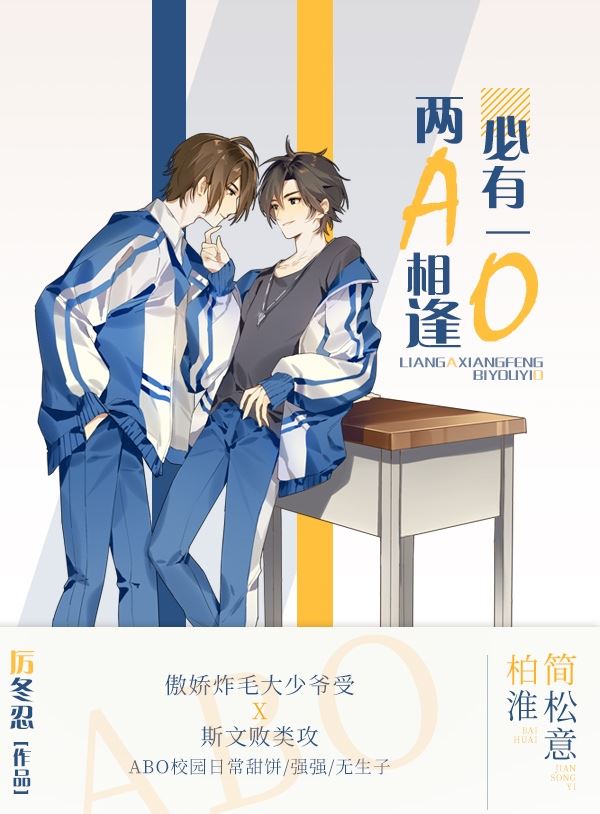
The structure of this chapter is deceptively simple. It follows a single morning, almost in real time, and yet it manages to compress an enormous amount of emotional weight into what reads like twenty minutes of screen time. Let me walk through it. It opens with sleep. Jian Songyi is unconscious, vulnerable, dependent. Bai Huai is awake, watching, protecting — Lu Qi Feng literally blocks the hallway so no one disturbs them. This is the quiet before everything. Then the wake-up: sudden, physical, embarrassing. Jian Songyi realizes what happened, bolts upright, hides behind his hat. The pacing here accelerates. Short sentences. Quick actions. He stands, he runs, he tidies his appearance. The text even says he shook his arms a little, as if shaking off the moment. Then the scene shifts to the Omega class area, and the tempo slows down again. Zhuo Luo appears with his big plastic bag full of food, bouncing on his feet, doing all that inner monologue about being the lucky leprechaun. The chapter breathes here. We get the humor, the warmth, the comedy of errors with the mosquito repellent. And then, just when we think it is over, Zhuo Luo delivers the sun metaphor. The pacing arrests completely. The chapter stops moving and sits with us in that stillness. What is brilliant about this structure is how the author uses physical distance to measure emotional proximity. Jian Songyi runs toward the Omegas to escape the moment with Bai Huai. He comes back empty-handed but overloaded with other people's stuff. He has given away his connection to Zhuo Luo in exchange for nothing but obligations. Bai Huai watches him return and asks who did you rob. The question is funny, but it is also true. Jian Songyi robs himself every day to keep everyone else fed.
... Read More
The dialogue in this passage is deceptively casual. On the surface, Jian Songyi and Bai Huai sound like two people who know each other well — the bickering, the teasing, the comfortable silences. But read it closely and every line is doing double duty. When Jian Songyi says "Get on your knees and receive the reward," he has no idea how ambiguous that sounds. He's half-delirious from fever and speaking without filtering, which is exactly when the truth comes out. And Bai Huai's responses are equally layered. "After all, who told you to call me Brother Huai?" — this isn't just a joke. It's a veiled acknowledgment that their relationship exists in a gray zone he's carefully not naming. The mother's entrance provides comic relief but also reveals something important: Jian Songyi's instinctive comfort with his mother contrasting with his careful wariness around Bai Huai. And that exchange about the blockers — "What kind of Alpha are you hiding Omega blockers?" — Jian Songyi is genuinely curious, not suspicious. He's still operating under the assumption that Bai Huai is an Alpha, which makes his eventual discovery infinitely more dramatic. The author's dialogue writing is sharp, naturalistic, and full of subtext.
... Read More
Okay so let's talk about how this whole plotline unspooled because honestly it's the most satisfying slow burn setup I've read in months. It starts with Li Ting—a literal observer character, which is such a clever narrative choice because he's the audience surrogate—and he spots a red imprint on Bai Huai's collarbone. ONE imprint. And suddenly you have this entire underground forum theory about a secret romance between Bai Huai and the 'male god' Jian Songyi. The way the author strung together broken beads of information is masterful: junior high friendships, a fight with Wang Shan, an Omega smell in the toilet, an early paper submission. Each fact is tiny, almost dismissible, but together they form an irrefutable case. Then the forum explodes, someone posts a screenshot, and Bai Huai himself debunks it—but the damage is done because now Jian Songyi knows about the phone, the password, everything. And that ending where Bai Huai leans against the wall and can't breathe? That's not just a chapter close, that's a plot landmine going off. The author built this entire house of cards on speculation and then detonated it with two words: '0101.' Every reader who thought they understood the story just had the ground shift under them. Brilliant.
... Read More
"Let's eat first. I'm starving to death. You can rest assured that you can eat boldly. I'll feed you." I REPEAT: I FEEL NOTHING. This is the single most devastatingly sweet thing I have ever read and I need a moment. Let me process this. So earlier, we see Jian Songyi being flustered and embarrassed by Bai Huai's directness in the bathroom scene — he's blushing like a tomato, internally screaming about promises and feelings. Then we cut to this high-stakes confrontation with his future father-in-law, where Bai Han is essentially running through every possible way to undermine and control Bai Huai's independence. Financial dependence. Social positioning. Authority dynamics. It's a masterclass in psychological pressure. And Jian Songyi's response? Not anger. Not deflection. He basically says: "Fine. If money is the metric, then I am the provider now. You're done here." But he wraps it in warmth. "Let's eat first, I'm starving." He makes it sound casual, almost playful, like he's not dismantling his boyfriend's entire power structure mid-meal. This is the kind of love language that makes me want to crawl into the screen and shake both of them. Bai Huai, meanwhile, just watches this unfold with what the text calls an "indulgent smile." He knew. He KNEW what Jian Songyi was going to do. The phone call they had the night before — the compromise, the agreement — means Bai Huai came to this exact scenario prepared. And he let Jian Songyi have this moment. Let his person stand up for him in public when Bai Han was being particularly insufferable. That's not weakness. That's trust. I'm not okay. Neither is Bai Huai. We're all just sitting here eating dim sum and pretending we're fine.
... Read More
The external conflict in this chapter is almost a joke—gossip posts, deleted messages, other people's opinions. But the INTERNAL conflict? That's where the real stakes live. Jian Songyi's entire angry tirade isn't really about the post. It's about fear. 'You have avoided me for just a few gossip?' Translation: I am terrified that you don't want me and I'd rather scream at you than ask gently. And Bai Huai knows this. He absorbs the anger, laughs it off, offers dinner, picks fishbones, and never once addresses the actual fear underneath. That's the conflict that will define this story—the two of them circling the same truth from opposite directions. The stakes are escalating too. We now know there's a world with Alphas and Omegas, that people are talking about them, that Bai Huai is actively managing perception. The line 'I can't be with an Alpha. But then there's also the fact that I can't be with an Omega' suggests their relationship exists in a space that society might not have room for. That's not just romantic tension—that's structural tension. Every sweet moment is shadowed by the question of whether this can actually survive. And yet. And yet they're still eating dinner together under warm light. That's the gamble. That's the risk. That's why I keep reading.
... Read More
I re-read the part where Bai Huai thinks about touching Jian Songyi's hair and honestly I had to put the book down for a second. 'There's something wrong with it. The name of the disease is you. There is no cure. But will always be as sweet as pie.' THIS IS THE QUOTE OF THE CENTURY. I AM DEAD. The author just wrote the most devastatingly tender internal monologue and dressed it up like a joke. Bai Huai is sitting there, watching this angry, beautiful disaster of a person eat his birthday noodles, and his entire emotional response is just... affection. Unconditional, patient, deeply felt affection. And Jian Songyi has no idea. He thinks the physical contact is annoying. He swats Bai Huai's hand away. But the reader KNOWS. That's the torture of this romance, isn't it? The person who needs to hear it the most is the person least likely to recognize it. Then there's the dinner scene—just two people at a table, warm light, Jian Songyi eating like a starved wolf and Bai Huai carefully curating his bowl. That's love language right there. Pick the bones out of the fish. Don't let him pour soup on his rice. The chapter ends with Bai Huai casually dropping that he can't be with an Alpha or an Omega, which I'm sure is meant to sound dismissive but reads as profoundly lonely to anyone paying attention. He's building walls and calling them strategy.
... Read More
So Bai Huai gets upset at dinner, excuses himself to go to the bathroom, and walks up the stairs. And Jian Songyi immediately clocks it. Of course he does. He knows that look — that "nothing happened but everything is wrong" face. And instead of letting Bai Huai disappear into his quiet suffering routine like he always does, Jian Songyi chases him down the stairs and absolutely LOSES it. This scene is a masterclass in escalating emotional conflict. Jian Songyi starts playful — "Are you going to the restroom and not come back? Then you'd tell me that you have diarrhea..." — and you can feel the shift happening. He takes a deep breath and says: "Bai Huai, I am seriously telling you now. I am angry." And then the dam breaks. What makes this scene hit so hard is the layering of conflicts. On the surface, it's about Bai Huai hiding his pain. But dig deeper and there's the Beicheng incident — three years of silence, no calls, no WeChat messages, not even replying to New Year greetings. There's the old trauma of Bai Huai locking himself in his room for days at a time. And there's Jian Songyi's rawest line, the one that made me grip my phone: "I understand that we didn't have a good relationship back then so it's all good…" NO. It's not all good. And he knows it. The past still has teeth. The stakes here are enormous but they're internal stakes — not life or death, but something almost more terrifying. The fear of being left behind. The fear that your friend will keep shutting you out. Jian Songyi pleads: "So if something happens to you in the future, will you stop thinking about hiding without even talking to me? Just inform me if you are unhappy today, if you were unhappy yesterday, or if you feel like you're going to be unhappy tomorrow. Just please tell me and let me fucking coax you." COAX HIM. He wants to COAX Bai Huai. That word choice is everything. And Bai Huai looking down at him — five centimeters taller but Jian Songyi is the one standing firm, hands on hips, chest rising and falling, kicking stones impatiently — this is the moment where the entire emotional architecture of their relationship shifts. Bai Huai can't hide anymore. Not from this. Not from someone who loves him this loudly. I was NOT okay. My heart was pounding. This conflict resolution — or rather, the attempt at it — is the kind of thing that makes novels worth reading.
... Read More
Okay so Yu Ziguo walks in and everyone is already writing him off as stupid because of how he introduces himself, right? And then he drops this absolute bomb that Jian Songyi and Bai Huai are basically destiny-bound because his grandfather taught him to read faces? Like bro, you don't just walk into a room full of alphas and casually ask if two of them are a couple. But here's the thing that made me actually sit up — Yu Ziguo isn't stupid at all. He's an OMEGA. He was deliberately playing dumb. That changes EVERYTHING about how I read his earlier interactions. When he said sorry with 'intentional regret in his eyes and the scream of pity towards the two of them,' I went back and re-read that section and it hit completely different. He wasn't being naive, he was assessing the battlefield. And then there's the military training subplot that just dropped like a nuke. Five days at Eagle Base? For third years who are already drowning in exam pressure? The class is howling like ghosts and honestly I can't blame them. But more importantly — this is clearly going to force all these characters into close quarters under extreme conditions. Every school story with military training ends with either someone getting injured dramatically or some confession happening under stress. I'm already predicting disaster. The one-point difference in scores between Jian Songyi and Bai Huai is also doing SO MUCH narrative heavy lifting. It's not just a detail, it's the entire thesis of their rivalry. Every interaction between them is going to be filtered through this obsessive competition. Lao Bai literally sighing at Jian Songyi's Chinese paper while looking at Bai Huai's full marks — that contrast is the author telling us everything we need to know about who these boys are and what they're measuring themselves against.
... Read More
I have to talk about the differentiation scene because WOW. The way the author builds this sequence is masterful. It starts with physical sensation — the neck twitching, the pain growing stronger, the cold all over, the burning in the lower abdomen. Then it escalates: lips dry, throat sore, fever setting in, legs giving out when he tries to stand. The prose gets more fragmented as Jian Songyi's consciousness fragments. Short sentences. Broken thoughts. He can't even hold his phone. The phone rings three times and he can't answer it. And then — the door opens. And the description shifts completely. From heat and pain to something that feels like snow. "He felt as if he was wrapped in snow, and the burning and pain were gently soothed." This is such a precise sensory shift. The world goes from unbearable to bearable in a single breath because Bai Huai is there. I also love the school scenes with all the side characters operating as Greek chorus. Yang Yue and Xu Jiaxing whispering about poison, the Ice Cream Xiaoyuanzi text thread — these moments of levity ground the ABO worldbuilding in something that feels like actual high school life. The world feels lived-in because even the absurd details (a fan club president who threatens war over girlfriend fans) are treated with complete sincerity by the characters. The home environment matters too. Jian Songyi's house is described in terms of solitude — he's alone, the phone ringing into silence, Mrs. Tang sleeping downstairs. But Bai Huai knows the password. This isn't a break-in in the traditional sense; it's a violation of boundary that feels more like arrival. Someone who knows where you live AND your security code showing up at 2 AM during a medical emergency — that's intimacy disguised as intrusion. The window scene is another moment that stays with me. Bai Huai lying in bed, looking at the opposite window, thinking about all this — the failed bet, the unwanted popularity, the requests he can't fulfill. Just a quiet moment of a boy realizing he keeps accidentally hurting the person he's supposed to be competing with. The darkness of the room, the distant window, the silence — it's cinematic in the best way. The author doesn't over-describe anything. Every sensory detail serves the emotional beat. The fever heat, the snow-cool pheromones, the dry throat, the struggling breath — it's all there, and it all means something.
... Read More
I keep thinking about Wang Shan's rant — all that hatred about fate, privilege, being born into a good family versus not. On the surface it's the conflict of the chapter, right? The bully type who confronts the popular kid. But honestly? It felt almost... small next to what these characters are carrying. Jian Songyi could have just ignored Wang Shan. He walked away. He didn't even stay to win the argument — he just delivered two surgical strikes and left. The first one was defensive (reincarnation is my skill, deal with it), the second was OFFENSIVE and it cut deep: "The livelihood of your family is bought with your brother's two legs. Now you are the only one in the family who has a full-functioning body. Can't you try and live like a man?" That's not just a comeback. That's Jian Songyi seeing the real wound underneath Wang Shan's anger and poking it directly. And then walking away without looking back. He even admits to himself afterward: "I think that he is not cool at all, but he really hates Wang Shan." This guy who usually keeps his composure just lost it internally because something personal was triggered. But here's the thing that raises the stakes beyond this classroom drama — Bai Huai's internal monologue reveals the deeper conflict. He's been hurting quietly, digesting everything inside, becoming a loner. His "unlucky days" are the real backdrop against which Wang Shan's petty jealousy looks almost comedic. The author is telling us that the real tension isn't about some kid being bitter — it's about whether Bai Huai can keep holding himself together, and whether Jian Songyi can be the anchor that keeps him from drifting further away. And then the cemetery. Twelve years of absence. A dead husband neither of them knew could be replaced. That's the real stakes. Not who gets the top grades or who looks down on whom. Who gets to keep the people they love from disappearing completely.
... Read More
I keep coming back to that ending. You know the one — the rain, the umbrella, Bai Huai asking Jian Songyi to hold it higher, and then... nothing. The prose just cuts off right there. It's maddening. It's perfect. Because everything that happens between those two boys — the whole semester of not-saying-anything, the forced car rides, the passive-aggressive 'call me daddy' moment — it all leads to this quiet little scene where they're sharing an umbrella in the rain and Bai Huai is letting his shoulder get wet because he won't ask for more. And Jian Songyi, who can dismantle an Alpha's knee in three seconds flat, is walking so slowly they might as well be in a period drama. The lin yuanyuan subplot is the emotional pressure cooker here. Huang Fuyi cornering her in the bathroom — the way the text describes her as having 'eyes accounted for half of her face with tears trickling' — it's brutal but it sets up Jian Songyi's entire protective instinct. And the delicious irony? He saves her, makes her leave first, and then it's just the two of them in that narrow space. He's being heroic, sure, but you can feel the shift. Once she's gone, he crouches down to Huang Fuyi's level and pulls his hair. That's not just justice anymore. That's performance. That's dominance. That's someone making sure nobody forgets what happens when you cross him. But then back in the hallway, Bai Huai is already at the door with his backpack on. He waited. He didn't say anything about the fight, didn't ask questions. Just stood there like he always does. And when Jian Songyi offers to share the umbrella with this ridiculous 'you're going to owe me for this,' it's so painfully tender I actually had to put the book down. The CP energy between these two is simmering under every single interaction. Bai Huai never reacts the way Jian Songyi wants him to. He doesn't get scared, doesn't get angry, just... observes. And that drives Jian Songyi absolutely insane in the best way. Who else can reduce a boy who can break people's joints to walking slowly through rain while holding an umbrella?
... Read More
The pheromone系统在 this text isn't just worldbuilding flavor—it's the central metaphor for everything about power, control, and vulnerability. Let me unpack this. Jian Songyi is described as "not completely differentiated yet," which means he's not yet affected by pheromone interference. The text treats this as both a disadvantage (he's still an Omega) and an advantage (he can fight without his judgment being clouded by chemical signaling). He occupies a liminal space—too powerful to be dismissed, not yet fully classified to be accepted. That in-betweenness defines his entire existence in this story. Then there's the line about pheromones: "The more excited the emotion is, the stronger the pheromone gets. The more intense the body movement is, the stronger the pheromone gets. And then there's also the fact that to some extent, it naturally leaks." This is brilliant. Pheromones here represent the impossibility of hiding your true nature. No matter how controlled Jian Songyi tries to appear—cold, composed, refusing to fight in front of Omegas—his body betrays him. His very biology leaks what he refuses to speak. The Alphas on court are literally radiating their aggression into the air, and the Omegas and girls watching are breathing it in whether they want to or not. The whole ABO structure becomes a commentary on how society forces identity upon people before they've chosen it themselves. Differentiation hasn't happened, but everyone already knows how to treat him. He's judged, provoked, targeted—all for a category he hasn't fully entered yet.

Leave a comment

You must be logged in to leave comments. or
