Surviving as a Fox Beast in an Abusive Novel - Reviews

Surviving as a Fox Beast in an Abusive Novel
+Add to Custom List
Sort
Add review
... Read More
Let me just say this upfront: the stakes in these chapters are TIGHT and I was genuinely worried about the fox. Like, actual physical worry. When Dori is flopping onto the cushion after his tantrum, already drained from two steps and a tail flick, and Haewon is shouting about raw beef while Dori is trying not to throw up—the tension between survival and dignity is exhausting to read. On the personal level, Dori's conflict is razor-sharp. He knows the original story. He knows what happens to the fox. He knows Haewon will help him escape and then... disappear. The text says it plainly: "having read the story, he couldn't bring himself to use this young man for survival when he knew everything." That's an incredibly sophisticated moral conflict. It's not "should I escape or not"—it's "should I save myself at the cost of someone else's life, knowing exactly how it ends?" And the fact that Dori is too weak to even mount a proper escape plan because he's literally starving makes it even more agonizing. But the political stakes are what elevate this from personal drama to empire-level tension. No empress. No heir. Only two brothers left. The throne built on spilled blood. The ministers already maneuvering, sneaking children into the palace, trying to secure positions while the emperor is distracted. Every conversation between Haban and Yoon Gak carries the weight of succession. When Haban says "not only your position, but your life would be at risk," he's not bluffing—this is a world where familial love and political survival are mutually exclusive. And then there's the Haban-Dori conflict, which operates on three levels simultaneously: emotional (does the emperor care about the fox?), physical (will the fox survive neglect?), and narrative (will Dori follow the original story's plot or break free?). All three are unresolved and all three are escalating. The cliffhanger with the flipped bowl isn't just comedic—it's the moment where Dori's last act of defiance (refusing the raw meat) leads to chaos. What happens next? Does he starve? Does he eat? Does Haban find out? The stakes have never been clearer or higher.
... Read More
Let me just say this scene is cinematic as hell. You have Haban descending from his horse, his face hidden in backlight—"only the sharply defined jawline beneath the shadow was visible, and it looked chillingly cold." The author could have just said 'Haban looked scary' and moved on but no, they painted the WHOLE picture. Wind tugging at his garments, the fox's fur shimmering white, those molten golden eyes meeting his gaze. And the setting itself—the imperial hunting grounds, the mountain, the net circles around the base. This isn't just 'a forest.' The fact that Haban conducted a thorough search of the entire mountain using only his MEMORY of where something should be tells you everything about his desperation. He's been looking for something his entire life and this white fox might be the answer. Then you cut to the physician's room—"a bitter scent soon filled the room," rare herbs, the moonstone-like lamp in the corner. The contrast between the cold outdoor hunt scene and the warm (if tense) indoor medical scene is masterful. You can feel the temperature change between rooms. The author isn't just describing places, they're making you LIVE in them.
... Read More
I need everyone to pause and appreciate the absolute tragedy of Dori's internal monologue right here. This man is literally being held captive by the most dangerous person in the novel world, and his brain is going "actually... he's really handsome?" "Every feature was exquisite. Especially those jet-black eyes, even darker than the raven hair he had desperately wished for in his past life!" The fact that he's assessing HABAN'S PHYSIQUE while trapped in a cage like it's a normal Tuesday is both hilarious and heartbreaking. He's been through so much in his previous life — poverty, hardship, probably loneliness — and here he is, in a body that isn't even human, finding himself drawn to the very person who in the original story will make his life a living hell. And then the tail. OF COURSE the tail betrays him. "His excited tail puffed up and wagged lightly." Dori is literally a fox who cannot control his own body language around the man he should be terrified of. The disconnect between his brain ("he's dangerous, run") and his body ("look at those nice eyes") is peak comedy and peak tragedy simultaneously. But beneath all the humor, there's something genuinely tender here. Dori spent his whole life never having anything, never having anyone, and now here's this terrifying emperor who feeds him, cares for him (in his own twisted way), and happens to look like a romance novel cover model. The fact that Dori is at least considering "maybe I should indulge a little" shows how starved he is — not just for food, but for connection, for safety, for someone to choose him. The romance hasn't even started properly and I'm already emotionally compromised.
... Read More
'Foxes loved the cold. They loved it so much they rolled around in the snow bare-bodied.' That opening line—quoted from the original novel within the novel—is doing SO much heavy lifting. On the surface, it's just establishing lore about foxes. But read it alongside Dori's situation and it becomes devastating. Foxes love the cold. Dori is a white fox in a red village. He doesn't just endure the cold—he belongs to it. While every other fox is warm in their fur, socialized, celebrated, married off to suitable partners, Dori is the one who rolls in the snow unbothered because he has nowhere else to be. The cold isn't punishment; it's home. And that's the tragedy—the world rejected him so thoroughly that rejection became his natural habitat.
... Read More
The color symbolism in this opening is so deliberate it's almost aggressive. Dori is white in a village of red foxes. The reader is pale in a world of dark-haired, dark-eyed people. Both exist in spaces where their very bodies mark them as outsiders. The white fur isn't just a physical trait — it's a metaphor for the kind of difference that can't be hidden, can't be disguised, can't be tolerated by a community that values uniformity. But here's the thing: the cover of the original novel shows Dori as beautiful. 'A snowy white mountain in the background, with a white fox sitting gracefully.' The white is meant to be admired, romanticized even. But inside the story, that same whiteness is what makes Dori unwanted. The contradiction is the point — beauty and difference are treated as separate things by the characters in the story, but the narrative knows they're the same thing. The ice motif is also significant. Dori sees his reflection in frozen water — the white fox looking back at him. Ice is both beautiful and dangerous, and it's the boundary between states (solid/liquid). Dori is in a similar state of transition: between human and fox, between reader and character, between the original story's fate and a new possibility. The stolen items — the blue silk robe and the emperor's bracelet — these are symbols of status and identity. Dori is literally wrapping himself in borrowed authority, trying to construct a person he's allowed to be. The fact that these are the exact items that get him caught is poetic justice: you can't escape your designated role by wearing someone else's clothes. And the den itself — cracked bowl, dwindling food, dry leaves — mirrors Dori's internal state. It's a space of survival, not living. But Dori chooses to stay and fight rather than flee further. The den becomes a starting point, not an ending. What really ties all this together is the question the story keeps asking: what makes someone worthy of happiness? Dori's whiteness shouldn't disqualify him. The reader's appearance shouldn't disqualify them from love. The story seems to be arguing that worth isn't earned through conformity — it's inherent, and the tragedy is that the world refuses to see it.
... Read More
I need to talk about the visual storytelling here because WOW. The author paints this scene with such deliberate color contrast that it practically films itself in your head. You've got Hori's RED wedding robe against Wonwoo's BLUE, and then—bam—Dori in all-white fur standing on a grey rock, looking like a ghost haunting his own sister's happiness. The contrast isn't accidental. Red means celebration, life, warmth. White on Dori? It's isolation. Purity turned into a curse. 'White fur is pretty too…' he thinks, and it's one of the saddest sentences in the entire text because he's not vain—he's just lonely, and he knows his whiteness marks him as different, as unlucky.
... Read More
I genuinely did not expect to feel this anxious reading about a fox and a lunchbox. But when Haban said "You starve it. Until it's on the brink of death, it must be made to bow to the one who feeds it," something in my chest tightened. Because this isn't just about food. This is about CONTROL. This is about power. Haban isn't threatening to hurt Dori physically — not directly, anyway. He's threatening to weaponize Dori's最基本的生存需求 against him. Starvation as psychological domination. And the worst part? The author has made us understand WHY Dori reacts so violently to this threat. "There had never been enough food at the orphanage. The most favored or strongest kids always got fed first, and by the time food reached him, all that remained was a pitiful tray with bird-sized portions." This backstory detail — dropped almost casually — transforms the entire conflict. It's not just an emperor threatening a prisoner. It's a man who grew up watching others eat while he went hungry, now facing the person who controls his food supply, wielding that power like a weapon. The stakes are primal and personal. Dori lunging at the food cart, spreading his legs to guard what's beneath him — that image is devastating. He forgot all about watching the windows, all about strategy, because FOOD IS LIFE and Haban just proved he holds the leash. The external conflict (fox vs. emperor) is obvious. But the internal conflict — Dori's trauma around scarcity clashing with his need to survive in a world where one man controls everything — is where the real tension lives. And Haban? He's not even fully aware of what he's tapping into. He's operating on instinct and cruelty, while Dori is fighting battles from a childhood he thought he'd left behind.
... Read More
Why a white fox? In the novel's world, white animals are revered as auspicious—symbols of longevity, fertility, prosperity. But a WHITE FOX has never been discovered before. It's literally unprecedented. Which makes me think: what if the white fox represents something that shouldn't exist in this story? Something that breaks the cycle. Dori came from outside the novel. He's an anomaly in the most literal sense. And Haban, who has spent his life surrounded by people who use him or fear him, finds something that defies all categorization. The Emperor who can command armies and execute subjects on a whim is completely disarmed by a creature he cannot control, cannot predict, cannot even fully understand. There's a recurring image here of smallness and vulnerability—the fox is 'exceptionally small,' 'barely hanging on,' its bones and skin stuck together from starvation. And yet THIS is what Haban chooses to protect. Not a weapon, not an ally, not a political asset. A tiny trembling thing that could do absolutely nothing to help itself. I keep coming back to that orphanage flashback. 'If someone ever truly loved me, I'd give them everything I have without regret.' He never met that person. But maybe the fox is his version of that impossible thing—an existence that chose to stay, that didn't run, that didn't betray him. Or maybe it's something else entirely. Either way, the symbolism is doing heavy lifting and I'm not ready for it to be over
... Read More
'Be happy, please just be happy.' That's what Dori says in the original novel, right before everything falls apart. And I swear to you, when I read that line in context, I actually felt something crack open in my chest. Let me explain why this hit differently. The story isn't just about a fox who gets abused by an emperor. It's about two people — one fictional, one real — who recognize each other across the boundary of worlds. The reader wakes up as Dori not because of some grand destiny, but because while reading that tragic ending, they thought: couldn't he at least have been happy at the end? And then — literally the next moment — they ARE Dori. Their wish was so genuine, so desperate, that it pulled them into the story. That's not a typical isekai setup. That's love. The reader loved Dori enough to become him. There's this moment where the transmigrated Dori is crouched in the snow, touching his own fox face, slapping himself to check if it's real, and getting tearful when even the slap feels soft because he's a fox now. 'Kyain!' comes out as a beast cry instead of a human scream. That detail — the loss of human voice, the inability to even cry properly — it's devastating. He's trapped in a body that can't express human emotion the way he wants to. But then he makes the choice. Instead of panicking, instead of wishing to go home (though he clearly does), he decides: 'As long as his baby was happy, that's all that mattered.' That switch from victim to protector is one of the most powerful moments I've read this year. This person didn't transmigrate to save the world. They transmigrated to save ONE character from suffering. And the parallel with the real reader's life — albino, abandoned at birth, never adopted, always standing out in the wrong way — makes it feel personal. Dori isn't just some fictional fox. Dori is every person who ever felt too different to belong anywhere. I'm already emotionally compromised and we haven't even reached a single romantic interaction yet. This story is playing 4D chess with my feelings and I am NOT ready.
... Read More
I've been thinking about this symbol all day and I genuinely believe the white fox represents something much deeper than just a transmigration victim. Let me try to unpack it. First—the bracelet. It's described as "a ring-shaped clasp split in the middle, thick and obviously heavy." A ring that's split. That's not accidental symbolism. It's a bond that's broken, a commitment that's incomplete, a circle that can't close. Haban wears it but it's fractured—just like his ability to connect with anyone, including Dori. The fact that he offers it to Dori "if you turn into a human" reveals everything: Haban wants Dori to be something OTHER than what he is right now. He can't accept the fox as the fox—he needs transformation, completion, a fix. Then there's the fox's starvation. Dori refuses chicken, duck, pork—"what do you expect me to do?!" He's a sentient being trapped in an animal body, forced to eat raw meat he doesn't want, and the ultimate irony is that he's being punished for having tastes. The fox's pickiness isn't frivolous—it's the last assertion of personhood. When Haewon says "you're dizzy because you haven't eaten anything," the tragedy is that Dori IS eating, he's just eating the wrong things. He's being sustained but not nourished, kept alive but not cared for. The political symbolism is equally rich. Yoon Gak—the playboy, the one who drinks and sleeps and avoids responsibility—is the only brother left. The throne passes to the irresponsible one because all the responsible ones are dead. That's not just plot device, that's commentary on how power selects the most unworthy candidates. And the ministers sneaking their children into the palace while the emperor is distracted by his fox? The pursuit of power continues whether anyone is watching or not. "They say pets resemble their owners." When Jipyeong thinks this, it's the author winking at us. The fox is thin, neglected, defiant, stubborn, precious—and so is Haban. The Emperor and his fox are both trapped in roles they didn't choose, both starving for something they can't name.
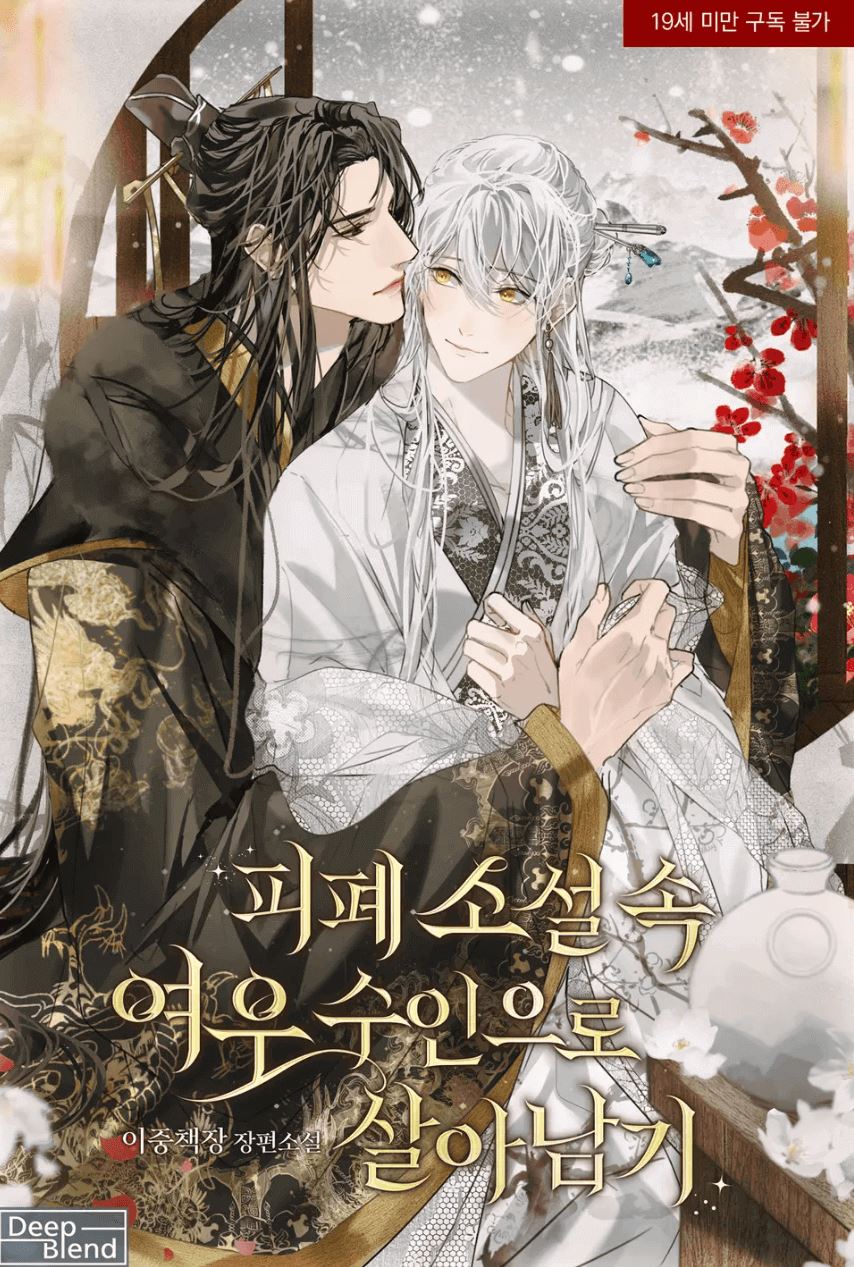
... Read More
There's so much running beneath the surface of these chapters that the surface reading completely misses. The most obvious symbol is Dori's white fur. In a village of red foxes, he's literally and visually different. The text keeps emphasizing this: ‘A cursed white fox as a mate? Know your place.' The curse isn't just a plot device—it's the village's way of marking him as Other, as less worthy, as someone who doesn't belong. But ‘cursed' is the village's word. The text itself seems to suggest that his difference is what gives him the capacity to see through the narrative, to question his reality. The mate bond itself is rich symbolism. In the original novel, it's supposed to be a romantic union between Wonwoo and Hori. But in this version, Wonwoo wants it with Dori. The mate bond represents fate, destiny, the idea that certain connections are preordained. By trying to force it, Wonwoo is trying to rewrite destiny itself. And Dori's resistance—his ability to stay lucid during the attempted bonding—is a rebellion against that predetermined fate. The burning of the novel is perhaps the most potent symbol in these chapters. When Dori throws the book into the fire and watches it turn to ash, he's not just destroying a physical object. He's rejecting the narrative that defined his existence. But here's the haunting question the text raises: if the story is burned, what replaces it? The answer, apparently, is chaos. Because without the script, Wonwoo's behavior becomes even more unpredictable. There's also the recurring motif of doors and thresholds. Paper sliding doors, wardrobe doors, the village boundary. Dori is always passing through doorways, always on the threshold between one state and another. The final image of the open paper door with snow blowing in—that's not just atmospheric. It's the threshold he's about to cross. Freedom or danger, he hasn't decided which yet.
... Read More
Up until Chapter 14, the conflict in this story felt manageable. Dori was an outcast, yes, but he had routines, small victories, and the safety net of knowing the original plot. He could navigate danger because he had a map. That map is now gone. The failed mate bond attempt in Chapter 16 fundamentally changes the stakes. Before this, Dori's main threat was social rejection and economic precarity. Now he has a literal enemy who knows his every move, who has been reading his thoughts through the novel, who is willing to physically force himself on Dori in the groom's own wedding house on his wedding day. Let me stress how bad this is. Wonwoo is the groom. He is marrying Hori. And he is attempting to mate with Dori in a locked room minutes before the ceremony. This isn't a rival; this is the person closest to Dori, the person who was supposed to be his family, weaponizing intimacy and trust. The physical stakes are enormous too. The text makes clear that the mate bond, once fully formed, is ‘unbreakable until death.' Even the partially completed bond has effects—it leaves a mark, it creates a connection. Dori barely escaped that. And Wonwoo's response to being interrupted wasn't to retreat; it was to stare at Dori and promise ‘Even if you run, I'll come for you.' Meanwhile, Dori's economic situation is desperate. His bundle—the money he'd saved his entire life for—is gone. He has patched clothes, worn-through socks, and a few coins. The village that was supposed to be his home has now become actively hostile. And the one person who might have protected him, the elder, is complicit in the system that marks Dori as cursed. What makes this conflict so compelling isn't just the danger—it's the uncertainty. In the original novel, Dori gets cast out and rises to power. But that script is burned. Wonwoo is improvising. Hori is suspicious. The village elders are scheming. Dori is flying blind, and every choice he makes now could be his last.

Leave a comment

You must be logged in to leave comments. or
