Surviving as a Fox Beast in an Abusive Novel - Reviews

Surviving as a Fox Beast in an Abusive Novel
+Add to Custom List
Sort
Add review
... Read More
Okay so the scene where Haewon gets caught feeding Dori is absolutely wild and I keep going back to it. Think about it: Haewon sneaks into the fox's cage with jerky, the fox is trying to protect him by hiding evidence, and THEN Haban just walks in like… what? This isn't some dramatic confrontation scene from the original novel. This is something ELSE entirely. And the way Haban reacts—"losing one wouldn't make much difference"—is either a death threat or something else I can't quite place yet. Then Physician Woo steps in, and Haban SMASHES a teacup because someone dared to lecture him? The tension here is insane. It builds from "hey this is cute" to "OH NO WE'RE ALL GOING TO DIE" in literally three beats. The author really knows how to escalate. Also, the subplot with the missing grain is cooking in the background—geumhu casually dropping that half the relief grain disappeared while Haban's off playing in the mountains. Two storylines running parallel and I'm waiting for them to collide. That's good craft, honestly. The plot isn't just following the original novel's beats anymore; it's branching into something messier and more interesting.
... Read More
Let's just address the absolute audacity of Wonwoo here. The man comes to Dori in the middle of the night clinging to him saying 'our love won't change' while already planning to marry someone else. Meanwhile Dori's just sitting there thinking 'you said the exact same crap in the original story too.' The fact that Wonwoo keeps showing up even after Dori actively avoids him? That's not persistence, that's obsession. And the worst part? Wonwoo genuinely seems confused why Dori is upset. He's playing this sweet, sympathetic character while clearly manipulating every single person in that village. But here's what messes with me - does Wonwoo actually love Dori or does he just love having control? The way he physically picks Dori up and carries him away while Dori is trying to bite him is such a vivid image of their power dynamic. One moment Dori's furious, the next he's trembling in a freezing room counting his meager savings. That emotional whiplash is devastating.
... Read More
Let me be very clear about what's at stake here, because this story doesn't mess around. On the surface: Dori is a fox beastman who escaped an abusive emperor and gotten caught. If Haban decides to torture him or kill him, that's the immediate threat. The original novel established exactly what happens when Haban decides to 'spend the night' with Dori — and it's not something anyone should have to endure. So the stakes are literally life and death, and not just physical death but the destruction of someone's body and spirit. But there's a second layer of stakes that the transmigration adds: if Dori changes the plot too dramatically, what happens to the original Dori's soul? Or worse — what if changing things makes everything WORSE? The story hasn't made this clear yet, but it's a legitimate tension. Every choice Dori makes now could have catastrophic consequences. Then there's the emotional stakes, which are honestly the heaviest. Dori (the transmigrated one) carries the memories of both himself and the original character. He knows what happened to the real Dori — abandoned by family, betrayed by his first love, violated nightly by a tyrant, and dying alone while fleeing. His motivation isn't just survival. It's preventing a specific, known trauma from happening again. That's a heavier burden than most protagonists carry. The external conflict is clear: Dori vs. the palace, vs. Haban, vs. the original plot. But the internal conflict is where this story lives or dies. Can Dori maintain his hope when everything in the narrative seems designed to crush it? The original novel ended in tragedy. The reader experienced that tragedy and wished desperately for something better. Now THAT wish has become reality, and reality is still dangerous. What makes me truly invested is that the story has already shown us the worst-case scenario — the abuse, the death, the loneliness — and we're watching someone try to outrun it. The suspense isn't whether bad things will happen (they clearly will), it's whether Dori can find a way through them without losing himself. And honestly? That's a question I need an answer to.
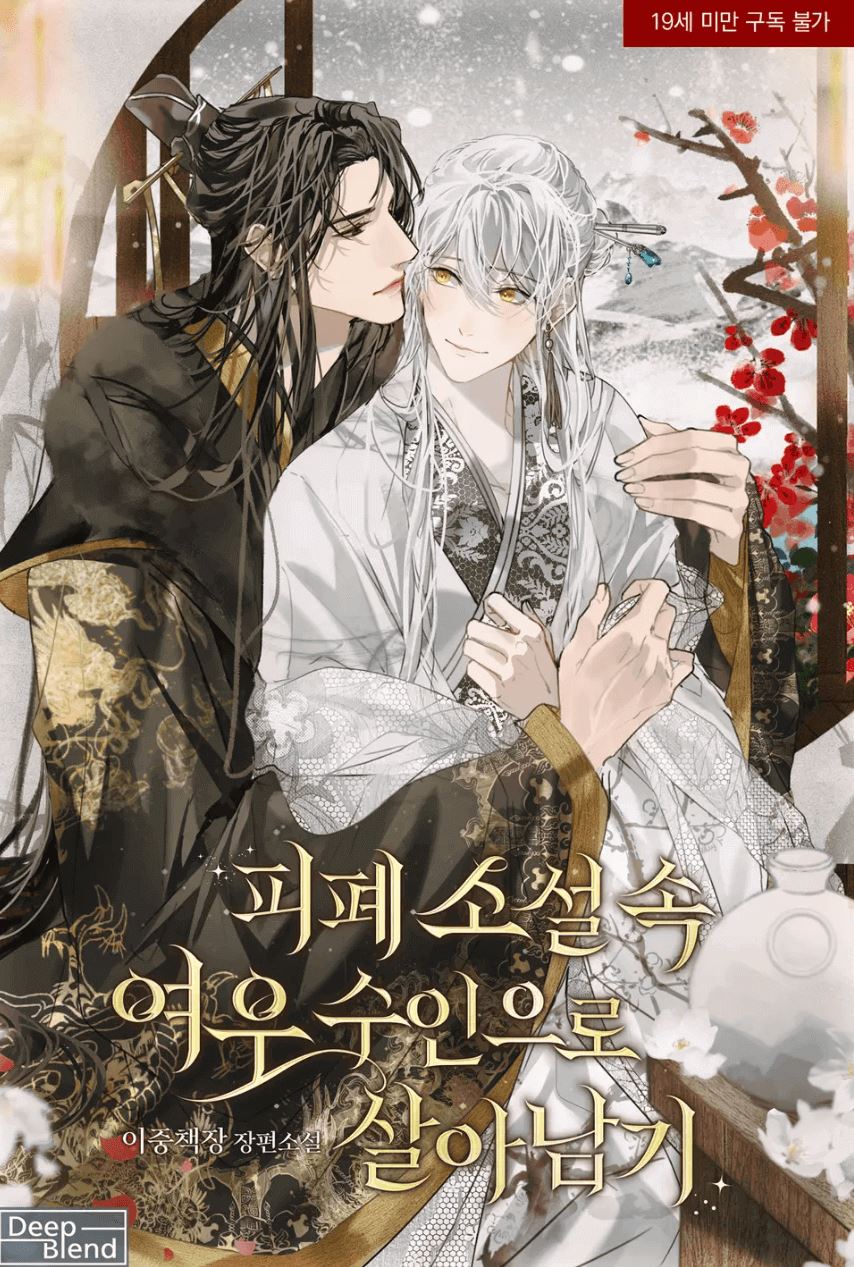
... Read More
The author knows exactly what they're doing with the pacing here. We open with Wonwoo's warning, move into Dori's internal panic about his tail and the elder, then we get that brutal scene where Hori literally shoves Dori aside to get to Wonwoo. No transition, no mercy. Just cold reality. And then we cut to Dori alone in his freezing room. The contrast is everything. From confrontation to isolation in one scene break. Then the chapter moves into planning mode - Dori figuring out his escape strategy, remembering the gold tortoises, thinking about his dream house. It's almost peaceful there, right? A brief moment of hope. And then BAM - 'It felt like this back then too.' The orphanage memory hits and suddenly we're right back in that anxious bed, staring at the ceiling the night before everything changes. The structure mirrors Dori's emotional arc perfectly. Up, down, calm, dread, repeat. By the time we hit the final line about the uninvited guest arriving, my heart was racing. The author lets silence and solitude do the heavy lifting sometimes, and that's when it hurts the most.
... Read More
I need everyone to understand what just happened. Haban, a man whose entire emotional range throughout the novel has been 'cold stare' and 'kill them,' reaches out and strokes the fox. With his HAND. Not a weapon, not a gesture of threat—actually touches it gently. And then immediately pulls his hand back like HE'S the one who got burned. This man grew up in an orphanage where the director's son specifically targeted him because he was different. 'If someone ever truly loved me, I'd give them everything without regret.' That line hit me like a truck. He's been waiting his entire life for someone to want him—not use him, not hurt him, just WANT him. And then he finds a white fox, a creature that doesn't exist in his world, and something in it reminds him of... what? Hope? Innocence? A version of himself that could be loved? Meanwhile Dori is over there thinking 'please don't eat me please don't eat me' and Haban is over there having an existential crisis triggered by fluffiness. Their dynamic is so hilariously mismatched and I can't stop thinking about it. The real question is: what happens when Dori reveals he's actually human inside? How does Haban process the fact that the thing he's been protecting is also something that could betray him?
... Read More
Okay so I need to talk about this sequence because the plot mechanics here are absolutely brilliant. Dori wakes up, realizes he's in the palace cage, sees the lunchbox, and makes the SINGLE WORST DECISION possible — he steals and eats the emperor's lunch. Like bro, think about the irony here. He's a fox who survived long enough to get caught again by snake venom instead of arrows, and his first act of agency in this new timeline is basically petty theft from the most dangerous person in the world. But then — and this is where the author really flexes — Haban catches him. Not just catches him, he CONNECTS the dots. The untouched raw meat, the sauce-stained snout, the defensive posture. That single line "Do you know how to easily tame a disobedient beast?" sent absolute chills through me because it's not just a threat, it's a statement of intent. The author is clearly setting up some kind of power struggle or conditioning dynamic, and I'm already sweating for Dori. The parallel to the original novel is doing a lot of heavy lifting too. In the source material, Haban destroyed Dori completely. But here, something feels different — that flicker in Haban's eyes that Dori notices, the fact that he doesn't immediately resort to violence like he would have before. Is this change real? Or is it just more elaborate cruelty? The author isn't telling us yet and I am HERE FOR IT. Also the Haewon subplot is fascinating on a structural level. He's this insecure young disciple stuck babysitting the emperor's pet while everyone watches him, and he literally couldn't keep a secret to save his own neck. Every time the plot tightens around Dori, it's because someone else failed to protect him. That's good chain-link storytelling — consequences ripple outward.
... Read More
I need to talk about Wonwoo because this man is a fucking nightmare and also the most interesting character in this story. The original Wonwoo, as described in the novel-within-a-novel, was apparently just a typical abusive male lead who married Hori and discarded Dori. But this Wonwoo? He's been quietly rebellious the entire time. He refuses to follow the script. He's been trying to form a mate bond with Dori instead of Hori. And his methods range from manipulative to terrifying. Look at this moment in Chapter 16: Wonwoo comes to Dori's room at 2 AM, touches his face, and thinks ‘If he'd just been this obedient from the start, I might not have considered throwing him away.' That is such a deeply messed-up thought to have and the narration presents it without any moral judgment from Wonwoo himself. He genuinely sees Dori as an object to be possessed. But here's what's interesting—the text keeps showing us glimpses of something softer underneath. Like when he says ‘I wasn't planning to rush it like this, but it won't take long.' There's a hint of hesitation, of wanting to do this properly. And after Hori interrupts, when the half-formed mate bond fades, Wonwoo's look back at Dori says ‘Wait. Even if you run, I'll come for you.' Is that devotion? Obsession? Love? The text won't let us settle on any single interpretation. And Dori! His relationship with Wonwoo is so complicated. He went from being a naive, devoted character in the original novel to someone who recognizes the danger and fights back. That scene where he grabs Wonwoo's dick during the mating attempt—his instinct wasn't to bite or claw, it was to distract. That's smart. That's survival. The dynamic between them has shifted from abuser-victim to something far more dangerous: two people who know each other's secrets, both operating with incomplete information, both trying to control the narrative.
... Read More
The stakes in this story just escalated so hard I had to put it down. Let's catalog what everyone stands to lose: Haewon—his life, obviously, since he's a disciple in a palace where the emperor kills people who open their mouths. Dori—his life, his freedom, possibly his humanity if turning human is the only way out. Haban—his throne, his authority, his grip on an empire that's literally stealing from its own starving people. Geumhu—his family (arranged marriage looming, hasn't seen his parents in days), his conscience, possibly his head if he fails to recover the grain. And Physician Woo—well, he already lost thirteen disciples and he's the last one standing, which is either tragic or foreboding. The tension maintenance is phenomenal because the author never lets you forget that ANY of these characters could die at any moment. Haban's calmness is MORE terrifying than rage would be. When he says "lose one wouldn't make much difference" about Haewon, the casualness is what makes your blood run cold. The grain subplot adds societal stakes on top of personal ones—this isn't just about one fox and one physician, it's about an empire on the brink. And the cliffhanger with Haewon trembling, Dori buried in his shoulder, Haban's face growing cold and stony… I NEED to know what happens next.
... Read More
OK so the pacing in these chapters is absolutely masterful and I need to explain why because it's one of those things that just WORKS even if I can't fully articulate it. The chapter opens with Dori noticing the bracelet and within three paragraphs we've gone from a quiet moment of desire to a full-blown threat about skinning. That's not rushed—that's efficient storytelling. The author knows exactly how much space each emotional beat needs. Haban offers the bracelet (warmth), Dori wavers (conflict), Haban threatens to skin him (violence), Dori panics (fear)—and we've established the entire dynamic of their relationship in under 200 words. That's compression at its finest. Then the scene shifts to Yoon Gak coming home drunk and the pacing deliberately SLOWS DOWN. We get the full stumble, the awkward hair-raking, the halfhearted dusting-off, the respectful hand-over-stomach bow. It's almost comedic in its leisureliness. But here's the genius—it's not filler, it's contrast. After the intense Haban-Dori scene, we need to breathe. Yoon Gak's scene lets us exhale before the next pressure wave hits. And then—BAM—the emperor asks about marriage and succession. The pacing accelerates again but in a different way. It's not action-pacing, it's CONVERSATION pacing. Each exchange between Haban and Yoon Gak layers on more stakes: no empress, no heir, brothers dead, throne at risk. The dialogue moves faster and faster until Yoon Gak is suddenly being dragged to his teacher despite still being wasted. The Dori-forget-Haban section is where the pacing really shines. We jump forward in time—"Dori didn't see Haban for quite some time"—and suddenly we're in a new emotional register. The isolation, the starvation, Haewon's desperate attempts to feed the fox. This is where the chapter earns its emotional weight. The slow decline of the fox mirrors the slow decline of whatever chance Dori had with Haban. And the cliffhanger? Perfect. Dori flailing his paws, the bowl flipping, rolling across the floor—cut to black. I immediately opened the next chapter.
... Read More
'Hori in her red wedding robe and Wonwoo in his blue one filled Dori's eyes.' That single image carries more weight than most entire chapters. Think about it—same village, same fox kind, and yet Hori gets everything and Dori gets nothing. She's the beloved daughter, the one who 'formed a union with the village's finest fox,' while Dori is the 'unlucky fox brat' whose very presence makes people hurl fist-sized stones.
... Read More
The temperature imagery in this section is absolutely relentless and I'm obsessed with it. Dori is freezing while Hori sleeps on warm silk. The 'black snow' that actually looks pitch dark because it's falling so hard. The Elder's study described as having books crammed inside like a prison cell. Everything about Dori's environment screams exclusion and coldness, while the red foxes bask in warmth and privilege. But the real symbolism is deeper than weather - it's about belonging. Dori can't transform properly, his ears pop out when he's flustered, his tail betrays his emotions. In a world where fitting in means survival, his very body is a betrayal. And that jade ring Wonwoo gave him? A symbol of a promise that was never meant to be kept. The gold tortoises from his dead mother represent something else entirely - legacy, inheritance, the things he's allowed to keep. Each object carries weight. The whole novel seems built around this question: who gets to belong, and at what cost?
... Read More
Can we just take a moment to appreciate Dori's internal narration? This man is in an imperial prison in a fox body and his thoughts read like a Reddit thread from someone who's seen too many web novels. "What courage had possessed me?" — classic dramatic pause mid-panic. "Wait, maybe Haban has changed, too? Maybe he's become super gentle and kind?" — absolutely delusional hope in the face of overwhelming evidence to the contrary. "Since I've already decided to make Dori happy, let's build him a sanctuary" — bro you're the one being caged, who made this decision? The contrast between his internal voice and the actual dialogue is what makes the prose sing. When Dori speaks (or rather, squeaks), it's terrified and minimal. But inside his head? He's roasting everyone. He's analyzing. He's making plans. He's having full romantic epiphanies about a man who just threatened to starve him. Haban's dialogue, on the other hand, is surgical. Every line is short, imperious, loaded with unspoken threats: "Open it." "That's enough." "Do you know how to easily tame a disobedient beast?" "You starve it." No elaboration. No justification. Just command and consequence. The author has given these two characters completely opposite communicative styles — Dori overthinks everything internally while speaking little, and Haban speaks minimally while doing maximum damage with minimum words. And Haewon! Sweet boy who yelps about the lunchbox and stammers through every sentence. His dialogue sounds exactly like someone who's been bullied their whole life and is now being watched by everyone to see if he'll fail. The natural panic in his speech is genuinely touching.

Leave a comment

You must be logged in to leave comments. or
