Surviving as a Fox Beast in an Abusive Novel - Reviews

Surviving as a Fox Beast in an Abusive Novel
+Add to Custom List
Sort
Add review
... Read More
Let me just say this: the sensory details in this section are *chef's kiss*. The way the author describes Dori's environment while he's trapped — the thick iron bars, the soft red silk cushion stuffed with cotton, the yellow tassels rustling with every step — it creates this surreal contrast between luxury and imprisonment that perfectly captures Dori's situation. "Thick iron bars enclosing all sides. Thump, thump. When he tapped the bars with his front paws, a solid sound rang out." That opening line alone sets the tone. It's claustrophobic without being overtly dark or gothic. It's just... there. Unmoving. Unbendable. Like Dori's fate at this point in the story. And then there's the moonlight scene that the author flashes back to — "Bluish moonlight illuminated the pale naked body" — which is genuinely cinematic. I could see this as a film frame: the cold blue light, the white fox curled up, the shadow of Haban looming over him. The contrast between the ethereal beauty of that image and the horror of what's happening in it is exactly the kind of visual storytelling that makes this novel special. The imperial palace itself feels enormous and indifferent. Dori can hear conversations muffled through walls, see people rushing past, but he's isolated in this gilded box. The scale of the palace mirrors the scale of his powerlessness within it. Meanwhile, the food — the yellow pumpkin porridge, the lukewarm milk, the finely blended apples — all described with almost tender detail, which makes the later moment when Haban threatens to take it all away hit so much harder. The world feels alive in a way that's both beautiful and threatening, and that's exactly what keeps me turning pages.
... Read More
The way this author writes settings is incredible, honestly. The wedding day scenes are the perfect example. On one level, it's a joyous celebration—the red foxes swarming like clouds, adults rolling up their sleeves, tying aprons, preparing food. There's this warm, communal energy that feels lived-in and real. But then you have Dori, this white fox who is literally the only character of color in a village of red foxes, watching from behind a paper door, hiding in a mother-of-pearl wardrobe looking for his stolen money. The contrast between the vibrant celebration outside and his desperate, silent search inside is devastating. The text describes Hori stepping down from her red palanquin in wedding robes embroidered with gold thread, and the crowd's collective gasp of admiration. ‘How stunning she looks. The groom looks dependable too. They make a perfect pair.' This is the scene the original novel built toward, and it's rendered with such warmth and detail that it almost feels like you'd want to be there—except you know exactly who this happiness excludes. And then there's the scene inside Dori's room when Wonwoo confronts him. The text is so visceral: Wonwoo's warm breath against his ear, the grip on his wrists, the scent of him, the way Dori can feel his heartbeat, his breathing. This isn't just romance writing—that would imply consent and mutual desire. This is written with the sensory detail of romance but the emotional reality of threat. The cold sweat, the trembling pupils, the vision buzzing. It's horrifying and beautifully written at the same time. The final image of snowflakes blowing through the open paper door as Dori prepares to leave is such a干净 transition. Winter. Cold. Departure. It's poetic without being pretentious.
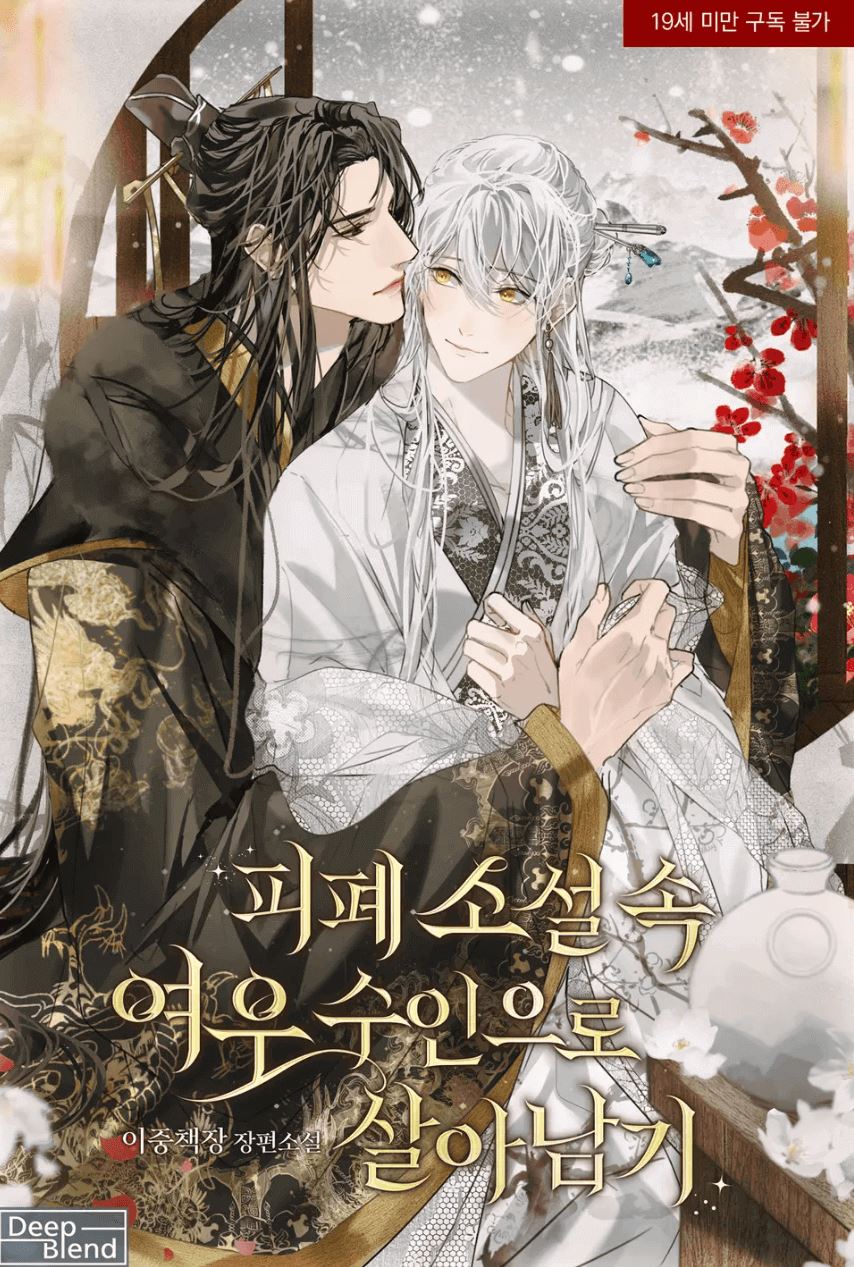
... Read More
'This is it! The place where he meets Haban!' The moment Dori realizes he's stumbled into his own canonical meet-cute with the future abuser—and he has NO IDEA how to avoid it—that's peak tension. Because here's the thing: in the original story, Dori sleeps on that rock, Haban finds him, takes him to the palace, and his life spirals into misery. Dori knows this. WE know this. And yet by running ahead of schedule, he's somehow made things WORSE instead of better. He's not dodging fate; he's tripping over it.
... Read More
Let me just say: I read these seven chapters in one sitting and I did not sleep. The pacing here is absolutely ruthless in the best way. Chapter 14 starts almost casually—Dori's daily life, some background about the village festival preparation, Wonwoo visiting at 2 AM. It feels like setup. But the author is laying groundwork, and every small detail starts echoing later. Wonwoo's weird comments about Dori being ‘too quiet' suddenly make sense. The elder's hostility has a reason. Everything is connected. Then Chapter 15 delivers the meta-twist—that Dori is a character in a novel. This is the structural pivot point of the entire story so far. The pacing here is brilliant because the revelation doesn't come as a single explosion; it comes in layers. First we see Wonwoo reading. Then Dori finds the novel. Then he reads it and realizes his entire life is scripted. Then he burns it. Each beat compounds the previous one. Chapter 16 is where the tension really tightens. The confrontation between Dori and Wonwoo, the failed mate bond attempt, Hori's interruption—all of this happens in what feels like a single breathless scene. The author uses Hori's knocking as a ticking clock. Every line of dialogue is charged with the knowledge that she could walk in at any moment. And that ending! Dori packing his meager belongings, the stolen money gone, the unresolved threat of Wonwoo's gaze, the snow blowing through the door. It's a perfect cliffhanger that doesn't feel manufactured. Every element that's been building—Dori's desire to leave, Wonwoo's obsession, the fragility of Dori's position—converges here. The author understands that suspense isn't about what happens next; it's about making you feel the weight of everything that could go wrong. And these chapters make everything feel like it could go wrong.
... Read More
'His Majesty is too much, really. Forcing me to wake a sleeping fox? What's wrong with letting him sleep another day or two?' I'm not okay. Haewon is the best character and I will die on this hill. While everyone else around Haban is either terrified into silence or scheming for power, Haewon is just a tired guy being forced to baby-sit a fox and he SOUNDS like it. The casual complaint, the mumbling about ingredients, the way he literally talks to the unconscious fox like it can understand him—'Fox, aren't you going to wake up?' 'Aren't you hungry?' Compare that to Haban's dialogue, which is almost entirely short commands: 'Catch him.' 'Step aside.' 'Call the carriage.' The contrast between these two men is so sharp it hurts. One speaks in violence and order, the other in complaints and food. And Dori's internal voice? Pure modern internet human stranded in a fox body. 'Did I get too immersed in the book?' 'Next time, I should be more careful about choosing what to read.' The humor of a 21st-century office worker treating transmigration like a bad Netflix recommendation is honestly perfect.
... Read More
I need to talk about the rain scene because the author genuinely wrote something cinematic and I can't look away from it. Haban finishes memorials, steps outside, and there's this drizzle falling—"the leaves, soaked with rainwater, gleamed green. The scent of damp soil hung in the air." In a story where people are literally starving to death from spring famine, this moment of natural beauty hits so different. The empire's foundation is agriculture. Rain = survival. And yet here's this emperor who can't even control his own storehouses while the people below him go hungry. The contrast between the poetic description and the grim reality underneath is masterful. Earlier, the image of the bowl spilling on the floor, "the meat, now splattered on the floor, oozed blood," with Haewon crying in the background—that's visceral. You can smell it. You can see the red on the stone. And then there's the study scene with Haban, the attendant grinding ink so cautiously because the emperor's mood is unpredictable. The texture of those moments makes the palace feel like a real place with real consequences, not just a backdrop. Even small details like Geumhu's pale skin and dark circles tell you everything about his life without the author spelling it out.
... Read More
Okay so this bracelet moment between Haban and Dori is actually kind of... touching? Like, I know everyone says Haban is abusive but hear me out. He notices Dori looking at the bracelet—this thick, heavy, obviously expensive thing—and his immediate reaction is to offer it. "If you turn into a human, I'll give it to you." That's not just random cruelty, that's someone who notices what the other person wants and tries to give it to them, even if he does it in the most Haban-like roundabout way. And then Dori's internal monologue is hilarious. He's like "In novels, things like that are worth entire mansions" but also remembers that just for looking human he was despised and suffered endlessly. The whole "No way!" followed by scrunched nose refusal—that's not pride, that's terror masquerading as dignity. He's been through hell with this guy and still wavers because part of him wants the gift and part of him knows it's a trap. Then Haban immediately pivots from gift-giver to "I might as well skin you and make use of your pelt." That's the thing about this relationship—it swings between genuine warmth and absolute menace so fast you can't tell which one is real. Or maybe they're the same thing at this point. The office dynamic is also fascinating. Ten days since the fox woke up and Haban hasn't searched the mountain. Why? Is he avoiding Dori? Or is he angry that Dori isn't transforming properly? The fact that the chancellor is smiling now while the nobles are nervous tells us everything about the political pressure Haban is under. He's got this fox he can't seem to get rid of and can't seem to keep, and everyone around him is watching. "Creeeak, bang! Click!" After that, Dori doesn't see Haban for quite some time. So the emperor locks himself in his office, hunts every day like a man possessed, and leaves a fox alone in some corner. That's not indifference—that's the behavior of someone who's upset and doesn't know how to handle it. Haban is terrible at emotions, sure, but he's also clearly affected by this fox in ways he won't admit.
... Read More
Can we just take a moment to appreciate how efficiently this story establishes its power dynamics? Like, Haban literally catches Dori stealing HIS silk robe and HIS bracelet and he doesn't even yell. He just stands there in the dark like a predator who already won and is just enjoying the moment before the kill. The scene where Dori accidentally says 'Haban' instead of 'Your Majesty' — I literally gasped. That's not just a slip, that's a death sentence in that palace. And Haban's reaction? Completely unreadable. He doesn't punish Dori for the disrespect. He just... watches. That's somehow worse. But here's what haunts me: Haban is introduced through the original novel's trauma scenes. We don't meet him as a person — we meet him as a violation. Every description of him comes filtered through Dori's memory of suffering. 'He wore nothing but a cruel smile.' That one line does more work than pages of description ever could. And then there's Dori himself. The moment he transmigrates, everything flips. He's not just reacting to Haban anymore — he's protecting the original Dori from suffering. The parallel between the real-life reader (albino, abandoned, never chosen) and Dori (white fox among red foxes, rejected by father and twin) is so intentional it aches. They're two sides of the same coin, merged into one body. The father-elder scene in Chapter 3 is where things get interesting. Dori watches his own father name his twin brother Hori as the successor, and then hear Hori say 'I also think Hori is the only one who could be my mate.' Wait — so the elder was talking about marrying Hori to Wonwoo? Or is it a mutual thing? I need clarity because this family dynamic is already toxic and it's only Chapter 3. Wonwoo is described as this handsome guy with 'a tiger's snout and a horse's mouth' — which, honestly, is a wildly unfair description from Dori's POV, but also fair because this guy abandoned Dori for Hori. The betrayal that already happened in the original novel is sitting right there, and now Dori knows exactly who the enemies are before they even know he exists. Also — twin brothers. One white, one red. The white one is cast out, the red one gets everything. This isn't just a fantasy trope, this is literally mirroring the reader's own experience of being different and unwanted. I'm invested whether I want to be or not.

Leave a comment

You must be logged in to leave comments. or
