Surviving as a Fox Beast in an Abusive Novel - Reviews

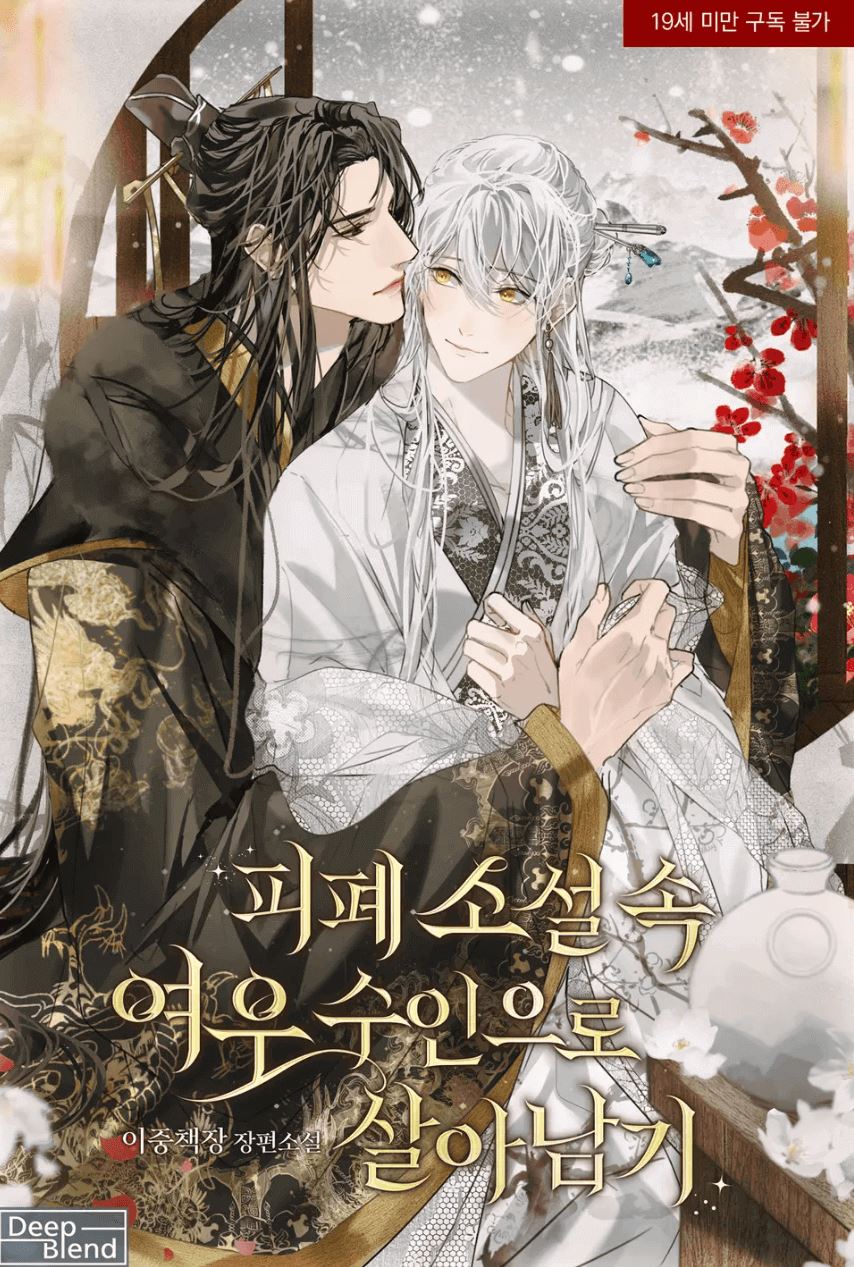
Surviving as a Fox Beast in an Abusive Novel
+Add to Custom List
Sort
Add review
... Read More
I need to talk about how the narrative voice shifts between the original novel's text and the transmigrated protagonist's inner monologue, because it's doing SO much work. When the story presents the original novel's content — those horror scenes between Haban and Dori — the language is blunt, visceral, almost clinical in its cruelty. Short sentences. No poetry. Just impact. Like: 'Every place he struck ached like being punched from the inside.' That's not lyrical. That's brutalist prose, and it fits perfectly because the original novel was trying to shock readers into discomfort. But then you switch to the transmigrated Dori's perspective and the voice changes completely. It's softer, more observant, more tender. 'The cold touch of the accessories on bare skin felt unfamiliar.' 'The place where the hairpin was stuck prickled.' These are sensory details that show someone actually LISTENING to their body, rather than just enduring it. The language itself becomes an act of reclaiming the body. And the dialogue between characters? The elder and Hori's conversation is fascinating because it's so casual. 'I also think Hori is the only one who could be my mate.' Said so casually, like it's a routine thing, like Dori doesn't exist in that equation at all. That casual cruelty cuts deeper than any shouted insult could. Wonwoo's introduction through dialogue is also notable. Even though we barely hear him speak, the elder's description of him — 'the handsome man with a gentle look' — creates this image of someone who appears kind but will ultimately betray Dori. The gap between appearance and reality is established through how others describe him, not through his own words. That's smart characterization. The narrator's voice during the transmigration realization is also worth noting. The internal panic — 'Wait, vivid?' — followed by the methodical testing (slapping himself, checking sensation) — it reads like someone trying to logic their way out of impossibility. That voice is so relatable. It's not a hero's voice. It's a regular person's voice, which makes the transformation feel more earned. Also: the comments from the original novel's readers feel so real. 'Are you mocking your readers?' 'Just order chicken instead, folks.' This meta-layer of internet culture adds authenticity to the framing device.
... Read More
Okay so I need to talk about this scene where Wonwoo confronts Dori because the Elder literally just called Hori 'my child' and Dori 'that child' while looking at him like he smelled something rotten. And wonwoo is basically like 'back off, that kid is off-limits'??? But here's the thing that got me - earlier Wonwoo was telling Dori he understood everything from his perspective and then immediately follows up with 'you're the only one I truly love' while getting engaged to Dori's own sister. The manipulation is SO layered. He's using Dori's empathy as a weapon, then pivoting to romance to keep him hooked. The whole setup of the elder punishing Dori by isolating him while Hori gets warm silks and a wedding is such a clean cause-and-effect chain. Every beat connects. I love how the author ties up loose ends while simultaneously creating new problems - you think Dori's situation can't get worse? Oh honey.
... Read More
Let me just say this outright: this story is absolutely about power and who gets to decide what life is worth. Dori the fox—whether he's a transmigrator, a beast, or something in between—represents the completely powerless individual in a system designed to grind people down. He's trapped in a cage, gagged, fed scraps, at the mercy of an emperor who could kill him over jerky or spare him for reasons no one understands. But here's the thing that keeps me up at night: Haban himself is also caged. He was a deposed crown prince. He's emperor in name but surrounded by rats in his own storehouses, ministers criticizing him behind his back, Physicians with loyalty to disciples instead of the throne. Who's really trapped? The recurring motif of hunger runs through everything—Dori starving in his cage, the northern regions starving from the spring famine, the missing grain filling someone's belly somewhere. Hunger as metaphor for every kind of lack: lack of power, lack of trust, lack of control. And then there's the mirror scene with the water droplets reflecting warm yellow light—beauty persisting even in a decaying system. That's the whole novel right there.
... Read More
Let's talk stakes because this is where it gets dangerous. Dori has ONE shot to leave this village and it has to happen right after the wedding. If he fails, he's stuck. If he gets caught, he's dead or worse. And we just learned that if his transformation isn't perfect when he becomes an adult, the foxes will use that as an excuse to drive him out permanently. The wedding isn't just a romantic event - it's his escape window. Every day he waits increases the risk. Plus there's Wonwoo, who's apparently become more obsessive the more Dori distances himself. Remember the bronze band in the original becoming a white jade one? That's not romance, that's escalation. And don't even get me started on Hori - the girl who threw stones at him and whose tail just smacked his face. These people are ALL threats. The fact that Dori is still plotting, still remembering his mother's gold tortoises, still dreaming about a small house with chickens? That takes some kind of strength. I'm on the edge of my seat just reading about it. What happens when he finally steps outside those walls?
... Read More
"You have no idea how worried I am…" This line wrecked me. Like, Haewon is this naive guy who probably shouldn't even be alive in this world, yet he's the one crying over a fox he's supposedly just supposed to take care of. And Dori? Dori is the one who ends up comforting HIM. The roles are flipped so hard. Dori's internal monologue—'I should conserve my strength if I'm going to escape later'—but then he still gently taps Haewon's knee when Haewon starts sobbing? That fox is a mess and I love him for it. Their dynamic is this weird little bubble of tenderness in a world that wants them dead. Meanwhile, Haban and Geumhu's relationship is just *chef's kiss*. Geumhu has been working nonstop, hasn't been home in three days, his mother is probably waiting at the gate, and Haban's response is basically "just move your office here then." And Geumhu swallows his complaint instead of pushing back. There's this unspoken layer of care underneath all their bickering that the text never states outright but you can FEEL it. "That stingy bastard. Crazy freak…" Dori muttering insults at Haban out of hunger while simultaneously being protected by the same man he's cursing—this is comedy gold with a side of genuine emotional complexity.
... Read More
Okay so this whole chapter is basically Dori discovering that everything he thought was real isn't. First he finds out his brother isn't actually his brother—they're just same-sex cousins, not even adopted. Then he discovers that this entire fox village is just a novel, and he's living inside it. And THEN the big one hits: Wonwoo has been reading the same book, knows the original plot, and has been acting against it on purpose. The layering here is wild. It's not just a reversal; it's a full structural collapse of everything Dori understood about his world. The original plot supposedly has Wonwoo marry Hori, abandon Dori, and Dori gets cast out crying. But Wonwoo's been subverting it. He's been pretending to follow the script while quietly sabotaging it. And now he's actively trying to form a mate bond with Dori instead, which completely derails the storyline. What's fascinating is how the text reveals this gradually. First Dori notices Wonwoo's behavior feels off, then he sees the novel on Wonwoo's desk, then he has to choose whether to keep reading it or burn it. The meta-narrative about being a character in a book is handled without feeling heavy-handed. The story doesn't just tell us Dori is fictional—it shows us through his dawning horror and confusion. And then that ending—Wonwoo attempting to force the mate bond on their wedding night, Hori knocking on the door, and Dori instinctively grabbing Wonwoo's dick to make him stop. What. A. Moment. The original author set up this revenge fantasy where Dori gets cast out and later rises to power, but Wonwoo's personal rebellion has derailed every single plot point. I am not ready for what happens next.
... Read More
This section is absolutely brutal in the best way. You start with Dori watching his sister Hori's wedding, all red silks and blue silk, the whole village throwing stones at him when he appears—and then within the span of two chapters, it pivots from 'watch the wedding from afar and cry' to 'I'm being hunted by the emperor and almost got shot.'
... Read More
Okay so let me walk through why this pacing hits so hard, because I genuinely think the author is playing 4D chess with the reader's attention span. Chapter 7 opens at the wedding—slow, observant, almost languid. We're outside looking in. Dori is sniffling, watching, not participating. The prose here breathes. You feel the cold snow, the distance, the ache. Then he runs. And suddenly the pace SHIFTS. Every sentence shortens. Every paragraph gets tighter. 'Tak, tatak! Tat, tat!' — you can hear the hooves, you can feel your own heart rate climbing just reading it.
... Read More
I need to talk about how this whole setup is a narrative trap, because once I figured it out, I couldn't unsee it. The story starts with Dori already in crisis — escaping the palace with stolen goods, getting caught by the emperor, and the reader is immediately hit with those horror-scenes from the original novel. It's brutal, it's explicit, it's designed to make you want to throw the book across the room. And then — BAM — we cut to the actual transmigration moment. The reader of the original novel, an albino orphan who felt that same rejection Dori felt, falls asleep reading the cursed book and wakes up inside it as Dori himself. That transition is so smooth I genuinely had to re-read to figure out when the perspective shifted. One minute we're inside Dori's fox body in the palace, the next we're with this poor guy in his bed reading the novel, and then — back to Dori again. The narrative layers are stacked like an onion made of trauma and determination. What really gets me is how the plot repositions itself. The original novel is described as a brutal tragedy where Dori dies fleeing — and the moment our protagonist transmigrates, the entire story changes. He's not here to survive the plot. He's here to "lay down the grandest, most luxurious path of flowers" for Dori. That line though — that's not just a goal, that's a declaration of war against the author's original ending. The pacing is honestly masterful. The first chapter throws us into pure dread, Chapter 2 shifts into survival mode, and then Chapter 3 opens with Dori making a decision that feels both desperate and oddly hopeful. He goes from terrified prey to someone who just decided to rewrite his own story. That turn happens so fast but it's earned — the reader's empathy was built during those nightmare sequences. I'm also curious about the meta layer. The original novel within the novel got 1-star reviews, people called the author insane, and the transmigration happens almost like cosmic karma. Did Dori get saved because the reader's wish was so strong? Or is there something else going on? Either way, I want to see how this plays out when Dori actually starts interfering with events that were supposed to be fixed.
... Read More
Okay so I need to talk about this moment because it genuinely made me sit up. In the original novel, this part where Dori gets captured—there is no capture. He gets killed. Or he dies running. Something brutal. But here? Haban says 'catch him without injury.' AND HE MEANS IT. Like, the guy literally just beheaded a guard for looking at him sideways two seconds earlier, and now he's worried about the fox's fur getting scratched? What is happening here. And then the whole fainting bit! Dori literally passes out from fear and haban doesn't even kill him—he orders Physician Yun to come, wraps him in cloth, carries him himself. This is a man who once watched his mother die and never forgave the world for it, and here he is cradling a fox like it's something precious. The plot is completely derailing from the source material and I am HERE for it. Also side note: the part where Dori's inner monologue goes 'did I die? is this my one stroke of luck?' while simultaneously realizing he's still trapped inside the book? Chef's kiss. The author has him oscillating between 'I'm a fox now' and 'oh god I'm still in this abusive novel universe' and it's both hilarious and genuinely stressful to read.
... Read More
I have to talk about the atmosphere in these chapters because it's genuinely impressive. The author doesn't just describe rooms—they describe the WEIGHT of the palace. When Yoon Gak stumbles back at noon, coat draped lazily, garment ties undone, eyes on the ground—that's not just a hangover description, that's a portrait of someone using pleasure as armor. The contrast between his sloppy appearance and the sharp, formal world he's moving through is so vivid I can practically hear the silk rustling. And the fox cage scene! "White fur, pretty golden eyes, a small black nose. That adorable fox was being secretly fed just enough to avoid notice." The visual of this nearly starved white fox, so thin it looks like it could disappear, curled up in some remote corner of the palace—it's heartbreaking and beautiful at the same time. Haewon's rolled-up sleeves, the linen clothes, the exhaustion in his posture when he's shouting about feeding instructions... you can see every detail. The political atmosphere is equally rich. The emperor locked in his office, the chancellor smiling like a flower, the nobles keeping their nerves sharp—that's a palace holding its breath. You can feel the tension in the corridors, the whispered conversations, the way everyone is walking on eggshells around a ruler who's suddenly withdrawn. There's this one image that sticks with me: Haban clicking his tongue at his brother's pitiful state, arms folded loosely, brow twitching and furrowed. The physicality of it—the tight jaw, the crossed arms, the furrowed brow—says so much about a man who cares deeply but expresses it through irritation and control. And then the clouds drifting puffy over the rooftops resembling "a fox crouching at his feet." That simile is chef's kiss. The empire itself is mirroring the fox's trapped posture. The sensory details are everywhere—the smell of alcohol and incense on Yoon Gak, the blood gleaming red on the raw meat, the clatter of bowls flipping, the grrrrgle and kkiing sounds of a fox in distress. This world feels lived-in and breathing.
... Read More
"His possession was a person who just happened to have ears and a tail. He had once hoped that time might turn the fox into a human — that perhaps it might wake up as one. That foolish fantasy was clearly delusional." I read this paragraph three times. THREE TIMES. Because what the author just did with Haban's characterization was absolutely devastating and I am not okay. Think about this: in the original novel, Haban wasn't just some cartoon villain who enjoyed cruelty. He HOPED. He genuinely believed that this animal he'd captured might wake up as a human — might become a person he could connect with. And when that didn't happen, when the fox remained just a fox, something in him broke. The cruelty wasn't born from sadism, it was born from frustration and grief and a profound loneliness that curdled into something poisonous. And now here comes Dori — or rather, the soul inside Dori's body — who KNOWS all of this. Who knows that Haban's past self had that hope. And Dori is sitting there thinking "Wait, maybe if I play along, if I let him think this is what he wants..." The relationship dynamic is so much more layered than "abusive emperor and victim." Haban remembers the old fox as trembling, submissive, terrified. But THIS fox — Dori — glares back at him. Defiant. Hungry. Clever. And that difference is going to tear Haban's carefully constructed emotional armor apart, piece by piece. I can feel it. Haewon on the other hand... sweet anxious Haewon who is terrified of his own shadow but still brings the fox his lunch every day. Their dynamic is almost accidentally wholesome in a world full of predators.

Leave a comment

You must be logged in to leave comments. or
