Spring is the Plan of Life - Reviews

Spring is the Plan of Life
+Add to Custom List
Sort
Add review
... Read More
The pacing in this chapter is absolutely ruthless and I mean that in the best way possible. Let me break down why this works so well. It OPENES with violence—no warning, no slow build, just Yao Jinxi getting knocked back and immediately in danger. The author doesn't waste a single word on setup; we're dropped into the nightmare mid-stream. Then the assault scene plays out with this frantic, breathless energy—Yao Jinchen's fanatical kissing, the wrestling, the bite that draws blood. My heart was pounding reading this. And then—the shutter door crashes down and Wu Yang appears. And somehow, the pacing COMPLETELY flips. It goes from chaotic and fast to slow and almost meditative. Wu Yang cleaning up, making tea, checking Yao Jinxi's forehead, the banging on the door that eventually stops. This contrast is intentional and it's brilliant. The author lets us breathe after the terror, which makes the emotional aftermath hit even harder. There's this one moment where the banging stops and Wu Yang just sits with Yao Jinxi in silence—that silence is louder than anything before it. And the chapter ends mid-dialogue with 'Why is it that you always see me...' and it cuts off! The unfinished sentence is such a perfect structural choice because Yao Jinxi himself doesn't know how to finish that thought. Should he say 'protect me'? Should he say 'see through me'? The ambiguity mirrors his actual emotional state. This chapter is a masterclass in how to use pacing as emotional storytelling.
... Read More
The stakes in this chapter are doing SO MUCH WORK. Let me break down what's actually at risk here because on the surface it looks like a family drama beat but underneath it's threatening to upend everything. First layer: Yao Jinxi's emotional safety. He just had a breakthrough moment with Wu Yang—apologizing, being honest about his temper, suggesting Wu Yang come over for tea. This is relationship progress. And then his brother shows up and immediately destabilizes everything. The fact that Yao Jinxi's expression turns to resignation rather than joy tells you everything you need to know about what kind of relationship he has with this person. Second layer: Wu Yang's position. He's essentially an intruder in a family moment he wasn't invited to. He tries to play it cool with his professional smile, says he's Yao Jinxi's "friend"—that hesitation is deliberate, it leaves room. Is he testing whether Yao Jinxi will correct him? Will he claim more? Will he deny it? The silence is deafening. Third layer, and this is the one that keeps me up at night: Xia Ruonan. The whole car conversation was about Yao Jinxi losing his temper over her, and now her presence is echoed in this brother's hostility. What if Yao Jinchen also knows about Wu Yang and Yao Jinxi's situation? What if the mother knows? What if this brother is being used as a weapon by people who want to keep them apart? The text says Wu Yang's gaze settles on Yao Jinchen with suspicion. He still doesn't know what happened in Yao Jinxi's family. That ignorance is going to cost him. I can feel it.
... Read More
Okay, can we just talk about how DIFFERENT these two sound when they talk? Because the author has carved out such distinct voices for them and I am HERE for it. Yao Jinxi's dialogue is ALL deflection. Even in moments that should be serious, he finds a way to make it slightly absurd. His go-to move is pointing blame with a spoon—'It's all your fault'—while eating porridge. He's performing normalcy. When Wu Yang starts explaining about not answering phone calls, Yao Jinxi immediately pivots: 'Wait, wait... I didn't want to ask about your entanglement with her. What does this have to do with me?' He's so transparently trying to change the subject, and yet—AND YET—he's the one who asked the real question in the first place. The author writes: 'He felt awkward with Wu Yang explaining the situation like a man trying to justify himself to his wife.' This man cannot hide his feelings to save his life, and that's what makes him so endearing. Wu Yang, on the other hand, has two speeds: playful teasing and devastating honesty. Before the big confession, he's making Yao Jinxi collect ketchup packets like they're precious artifacts. 'Well, you can have them all.' 'What? Do you want me to go back and get you a few more packets?' This is flirtation disguised as teasing, and it's so subtle you almost miss it. But then—'I can't control myself.' And the shift is instantaneous. The playful guy is gone, replaced by someone raw and exposed. The most powerful exchange in the entire chapter is probably this: 'Have you come to terms with it?' Yao Jinxi asks. 'Didn't I already tell you that Jin Xiaoxiao has a boyfriend?' Wu Yang replies. Short. Sharp. Wu Yang dodging the emotional question with logic, and Yao Jinxi seeing right through it. The dialogue here does SO MUCH work. Wu Yang IS coming to terms with it—he says so himself—but he can't admit it out loud, so he deflects with facts. And Yao Jinxi knows this. He sighs and says '...Fine, no problem' but we know he doesn't believe that answer either. I also love how the author uses silence as dialogue. Wu Yang's long pause before revealing his depression, Yao Jinxi's trembling hands, the whispered 'It's okay'—all of these non-verbal moments carry as much weight as any spoken word. The translator's note at the start practically screams: this conversation matters. And the chapter title 'As It Turns Out' frames everything that follows as a revelation, making each line of dialogue feel like it's been building toward this moment. The author's narrative voice is restrained, almost detached, which makes the emotional moments hit harder. There's no overwriting, no purple prose—just clean, precise sentences that let the characters' words do the work. And when Wu Yang finally says 'But I still wanted to die,' it lands with the force of a freight train precisely BECAUSE the author spent the whole chapter building toward it through everyday conversation.
... Read More
I need to talk about ONE SPECIFIC MOMENT in this chapter because it is absolutely masterclass pacing. Wu Yang says 'After being with you, I haven't called her again.' And then—nothing. Just silence. A long, heavy silence. And I was SITTING THERE like, what does that mean? Who is 'her'? What's going on? The author could have just told us immediately, right? But instead, they let the reader's imagination do the work. And Yao Jinxi's imagination is NOT kind. He's over there thinking about creepy late-night phone calls, wondering if this is a hobby or some kind of emotional entanglement. The author even explicitly states: 'labelling someone as creepy didn't sit well with Yao Jinxi.' He's trying SO HARD not to assume the worst, and we feel every second of that tension. Then Wu Yang drops the DEPRESSION BOMB. 'Because I have depression.' And I swear, the way the author writes Yao Jinxi's reaction—'almost spat out his porridge'—I literally laughed out loud because that is SO realistic. That's exactly what you do when your brain can't process what just hit you. You choke on your food. But then—plot twist—the pacing DOESN'T slow down. If anything, it ACCELERATES. Wu Yang goes from zero to full trauma dump in what feels like seconds: the car accident, his mother dying, wanting to die, all of it compressed into this rapid-fire confession. The author doesn't let us rest. It's overwhelming on purpose. You're supposed to feel like Yao Jinxi, like you're being hit with wave after wave of information and you can barely catch your breath. And here's the thing—I think the author knew exactly what they were doing with the structure. The chapter opens with casual banter (the ketchup packets!), builds tension through Yao Jinxi's internal confusion, then hits you with the emotional payload, and ends on this incredibly soft note: 'Everything suddenly made sense.' The whole chapter is basically one long exhale after holding your breath. But I also want to mention something about the chapter transitions. The author uses those translator notes strategically—not just as Easter eggs but as structural signposts. That first note ('It's not the girl that is important to him. YJX. It's you.') literally tells us what this chapter is about before we even read it. And then the title 'As It Turns Out' confirms it. We're not in the dark—we know something big is happening. The question is just HOW it unfolds, and the pacing delivers on that promise beautifully. Oh, and the ending. It just... stops. 'Yes,' Wu Yang says, and that's it. Chapter ends. No resolution, no dramatic callback, just Wu Yang confirming that he's improved. It's almost anticlimactic in the best way. Like, yes, he's getting better, but we both know this is a long road. The author doesn't wrap it up neatly, and I respect that so much.
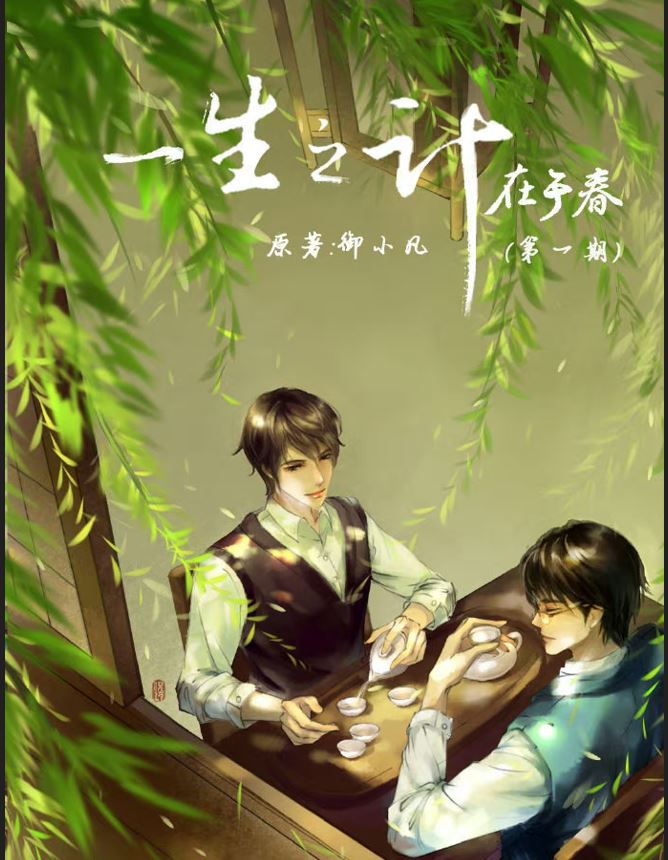
... Read More
Okay so this section is doing SO MUCH heavy lifting with foreshadowing and I'm obsessed. The biggest plot bomb dropped here is that revelation about Yao Jinxi never going to college despite clearly being incredibly well-read. Xia Ruonan just accidentally spills this in the car like it's nothing but Wu Yang? He catches it immediately. That moment when he says 'he told me he didn't go to college' — you can feel the intrigue clicking into place. Wu Yang doesn't just accept this at face value. The author writes: 'It was like having an intriguing puzzle before him. One that could only be unravelled step by step to reveal a grand prize.' CHILLS. This is such a smart narrative choice because Wu Yang HAD the means to dig deeper — he already hired someone for Jin Xiaoxiao — but consciously chooses NOT to. That's character definition through action. He wants Yao Jinxi to tell him himself. That says everything about his approach to their relationship. Meanwhile, Xia Ruonan's subplot about moving out and avoiding Wang Peng adds another layer of tension. She's hurt, she's planning, and she's completely oblivious to the romantic undercurrents happening right in front of her. The author even adds a translator note that literally says 'If I'm Xia Ruonan, I'll already be shipping them…like aggressively.' The structure here is brilliant — dual narrative threads running parallel, one emotional and one mysterious, and they're both simmering.
... Read More
This whole scene takes place in this one cafe — you have the tea, the fruit tea, the strawberry mousse cake, the welcoming chime at the entrance. It sounds low-key on paper but the atmosphere is absolutely electric. The author doesn't go overboard with description and honestly that is what makes it work. You don't need a paragraph about the color of the walls when theSUBTEXT is doing all that heavy lifting. What I love is how the setting mirrors the mood. Afternoon tea — something delicate, leisurely, almost romantic — is the backdrop for what is essentially a territorial standoff between two men who both care about the same woman. Strawberry mousse cake for the ladies, fruit tea for skincare. The narrator even mocks this internally: "Which guy would drink this fruit tea for beauty and skincare?" And yet here they are, three people in a cafe, eating cake and drinking tea while emotions run way below the surface. Wu Yang's entrance is described in this slow, deliberate way — the chime rings, he looks around, he walks toward them. The narrator has been building him up through Xia Ruonan's stories and then BOOM he appears and Yao Jinxi's first thought is basically: damn, he's hot. Not just good-looking, but handsome enough that the description needs to go beyond mere compliments. It's like the narrator had to recalibrate her entire vocabulary in real time. The whole scene feels cinematic in the best way — quiet on the surface, buzzing underneath.
... Read More
The stakes in this chapter are deceptively simple on the surface—family reconciliation, right? But dig a little deeper and the emotional risk is enormous. Yao Jinchen has spent YEARS building Yao Jinxi into this figure of hatred. Not just anger, but full-blown moral condemnation. He hated him, hated Wu Yang, hated their mother for being part of the reason he became who he was. That's not a light thing to carry. And now he's calling after all this time, having confessed to their mother, and what does he have to lose? He has everything to lose. "If you want to hate me, it's justified." That's not a plea for forgiveness—that's someone bracing for impact. He expects the worst. He's rehearsed this moment in his head a thousand times and in every version, Yao Jinxi delivers the final judgment. What makes this conflict so compelling is that the author refuses to give us a clean resolution. Yao Jinxi doesn't say "I forgive you" or "It's all okay." He says something far more honest: "I've been confused and disappointed by you. But I never thought about hating you." The hatred died on its own. That's more devastating than any angry confrontation could have been. It means all those years of Yao Jinchen's manufactured resentment were fighting a ghost. His brother had already moved on. And the stakes aren't just emotional—they're temporal. This is happening WHILE THEY'RE ON TRIP. In the middle of what should be a relaxed, joyful moment. The phone call interrupts their photo-sorting, their banter, their closeness. Reality intrudes on paradise. And then, to make it worse, the balcony incident forces them back into public awareness after a deeply private moment. The external conflict (Yao Jinchen's return, the upcoming Chinese New Year gathering) is simmering in the background, but the real tension is internal: can these two brothers actually rebuild something, or is this just another temporary ceasefire? Yao Jinxi's invitation feels genuine, but we've been hurt before in this story. That's what keeps the stakes high even in a scene that appears to be resolving.
... Read More
There's this recurring idea in this passage about distance—not just physical distance but emotional distance—and it's everything. The whole scene with Yao Jinchen is built around the image of them walking away from each other. First Yao Jinxi walks past him, then gradually increases the distance. There's no dramatic turning around, no final words that could be misinterpreted as hope. The line "Just as time continued to pass. There was no turning back" hits different because it's not poetic filler—it's the entire thesis of this arc. Yao Jinxi spent so long trying to fix things, to understand, to hold onto the brother he used to have. And now he's just... done. The resignation is palpable but also liberating. I also want to talk about the teahouse return. Going back to the place where everything started with Wu Yang, after the most emotionally honest conversation they've had—there's something deeply symbolic about returning to a safe space after confronting toxicity. Wu Yang's final line about the resignation procedures being approved is almost casual, but it mirrors what just happened with Yao Jinxi: officially letting go of something that was draining him. The theme here is clear—sometimes love means recognizing when someone is bad for you and choosing yourself anyway. Yao Jinxi isn't cruel, he says so himself: "Every time I reflect on myself, I feel that I am right." He's not denying his own goodness to make space for Yao Jinchen's behavior anymore.
... Read More
So Yao Hong drops this bomb about them having a child and I need a minute. Like, she's been dancing around this topic her whole life — clearly uncomfortable, clearly worried, clearly loving these boys — and then one lunch she just BLASTS through it with "consider adopting an orphan." Not even a buildup. Just boom, right there at the dinner table like she's asking if they want more potatoes. And Wu Yang's reaction? He just... places a shrimp in Yao Jinxi's bowl. No words. Just that tender smile and "Gan Ma, don't worry. We'll lead a good life." The shrimp thing. I REPEATEDLY READ THAT LINE. It's such a small gesture but it says everything — he's not arguing, he's not defensive, he's just reassuring this woman who is clearly struggling to figure out how to love something she doesn't fully understand. And the craziest part? She notices. She notices how naturally he moves around her kitchen, how he cleans dishes without being asked, and her tension EASES. That's the whole arc right there — a mother moving from worry to acceptance through the sheer force of watching her son's partner treat him well. The scene where she watches them in the kitchen and thinks about "children and grandchildren bringing good fortune" while glancing at the closed bedroom door? Chef's kiss. She wants a big happy family. She's just not sure how to get there without losing the son who's been quiet this whole time. That glance toward the bedroom — that's the emotional gut-punch of the whole chapter.
... Read More
I need to talk about pacing because this chapter is doing something really clever with time. The Network Department meeting lasts 'over half an hour.' Thirty-five minutes of Wu Yang waiting in a car, of Yao Jinxi stewing, of Xia Ruonan completely unaware. The author could have rushed this — had Wu Yang get the information instantly and spring into action — but instead they let the minutes accumulate. And each minute feels heavier. Then the phone call. One conversation. Xia Ruonan says maybe four lines total across the entire call, and we don't even hear what the other woman says. But it takes up the emotional center of the chapter because it's the point of no return. After that call, nothing can be undone. After the call comes the long silence. The author doesn't fill it with drama or explanation. Just... sitting. Crying. Numbness. Water bottles. A doorbell. Food. It's almost boring on the surface, which is exactly why it works. Real trauma doesn't have a soundtrack. The chapter ends with Yao Jinxi about to say something and then... 'I'm okay...' followed by the text cutting off mid-sentence. That trailing edge is deliberate. The author is refusing to give closure, refusing to resolve the emotional tension. Which means when you close this chapter, you're still sitting in that hotel room with them. Some might say this drags. I'd say it breathes. There's a huge difference.
... Read More
I need to talk about Wu Yang because this chapter utterly destroyed me. The metaphor about damp moss absorbing sunlight that doesn't directly shine on him isn't just poetic decoration—it's the thesis statement for his entire character. Think about it: Wu Yang has built a life on observation and adaptation. He sold tickets, sold insurance, survived Shanghai by reading people. But Yao Jinxi represents something he can't purchase or negotiate: unguarded joy. When Yao Jinxi cheers at the concert, face flushed, voice hoarse after two hours, Wu Yang doesn't just watch—he envies. And that envy isn't petty; it's ache. The relationship dynamics here are so beautifully asymmetrical. Yao Jinxi, oblivious to the depth of Wu Yang's fixation, offers him water, suggests he come over, plays games alone when upset. Meanwhile, Wu Yang meticulously tracks missed calls, remembers conversations from weeks ago, chooses which voices matter enough to return. Their interaction at the concert entrance is a masterpiece of unspoken language. Wu Yang hands over money without being asked, brings water, finds better seats—all gestures that communicate care without vulnerability. Yao Jinxi accepts these gifts as friendship, never noticing the hunger behind them. The shift happens in small moments: Wu Yang deciding not to return calls during the concert because the moment with Yao Jinxi takes priority, then calling anyway at midnight when he can't stay away. That contradiction IS Wu Yang's character in a nutshell. He builds walls, then tests them. He admires from shadows, then steps into direct contact. And Yao Jinxi? He's sunlight by nature—warm, bright, missing the nuances of shade. When he groggily answers the phone and jokes about being called by a pimp, he's still in his default mode of easy camaraderie. But something has shifted. The power dynamic has tilted. Wu Yang holds the information now; he knows what Yao Jinxi's voice sounds like half-asleep. This relationship is a slow burn that suddenly has matches struck nearby. I'm already writing fanfiction in my head about what happens next.
... Read More
So the chapter is called 'Three Cups of Tea' and we've only seen the setup—but I have a feeling that title is going to hit different once we get to the end. Right now the chapter functions as this beautiful bridge between the phone call and the actual confrontation. Notice the structure: it opens with chaos (the 3am call, the insomnia, the anxiety), moves through resistance (Yao Jinxi trying to push back), transitions into action (going downstairs, making tea), and then lands on this weird liminal space where nothing is resolved but everything has shifted. The yin hour explanation is basically the author winking at us—'everything has come to an end and a new start is possible.' That's not subtle foreshadowing, that's the author literally telling us a turning point is happening. Also the Xia Ruonan callback is doing double duty here: it establishes that Yao Jinxi has a history of dealing with people's emotional crises, which means Wu Yang coming to him at 3am is both consistent and significant. Something happened to push Wu Yang past his breaking point. And honestly? I have theories. Lots of them. The fact that this chapter doesn't give us answers but makes us care SO much about finding them is exactly what good plotting looks like.

Leave a comment

You must be logged in to leave comments. or
