I need to discuss the cinematography of this chapter because the author is clearly thinking in visual terms and I am not equipped to handle this level of craft.
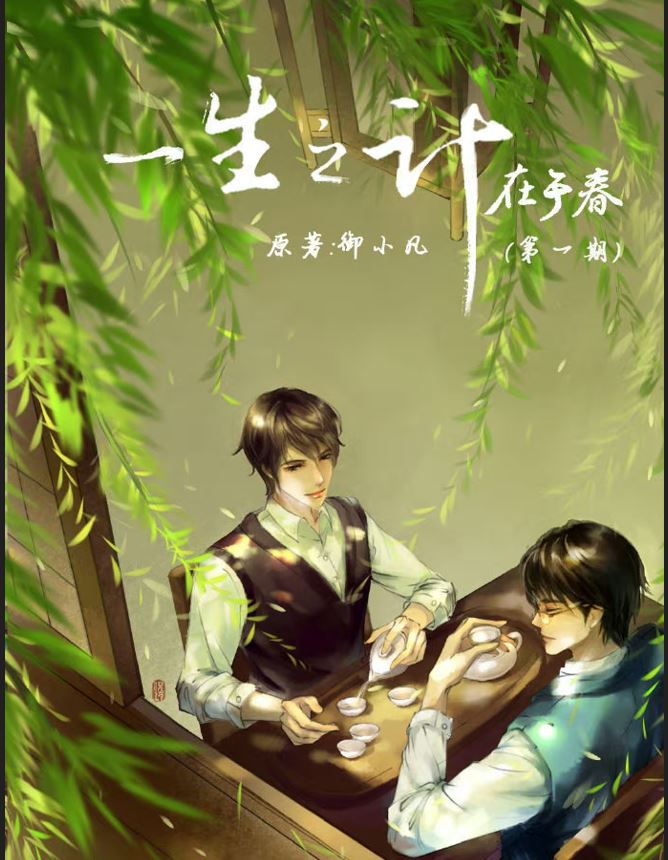
We open in a tea shop—already a great choice of setting because tea shops are inherently social spaces where conversations unfold slowly, where silence between sips carries weight. Yao Jinxi is sharing his deepest trauma and the environment is just… quiet. Normal. People probably ordering oolong in the background while he talks about cutting his wrist. That contrast is intentional and it's brilliant.
Then we move to the car. And this is where the visual language becomes almost cinematic. Wu Yang driving. Yao Jinxi in the passenger seat. The red light stopping them. Wu Yang leaning over—Yao Jinxi's POV, we see his eyes WIDEN, he thinks something is about to happen, and then it's just a seatbelt. Click. Done. Wu Yang retreating back to his side of the car, gaze fixed ahead, expressionless.
The author gives us this moment from Yao Jinxi's perspective only, which means we're trapped inside his confusion and hope and disappointment. We don't get Wu Yang's face. We don't get his thoughts. We get the silhouette of him against the windshield, the sound of the engine, the red light turning green—and then Wu Yang driving away from that moment just like he drove away from the conversation.
The company arrival is handled with this efficient, almost documentary realism. Twenty minutes. A few missed calls. Yao Jinxi's eyebrows furrowing deeper with each unanswered ring. The author doesn't embellish this part—we're meant to feel the anxiety through the mechanics of the scene: the phone not connecting, the growing silence, the mounting worry.
And then Yao Jinxi grabs Wu Yang's arm. 'Click.' The seatbelt again. Now it's Yao Jinxi who's performing the gesture of care, and Wu Yang who's accepting it passively. The roles have reversed, and neither of them acknowledges it.
What makes these scenes work so well is the author's restraint. There are no sweeping descriptions of landscapes or elaborate environmental details. The world is rendered in functional, precise strokes—a tea shop, a car, a red light, a company building—and the emotional power comes entirely from what happens within those spaces. The settings exist to frame the characters, not to compete with them.
But that car scene? I saw it in my head like it was already filmed. The lighting. The proximity. The sudden intimacy and then the abrupt retreat. I could watch that scene play out on screen and I would not be surprised if it became one of the most quoted moments from this entire novel.
The author understands that sometimes the most powerful settings are the ones where two people are trapped together, moving forward, unable to escape what's happening between them.