Spring is the Plan of Life - Reviews

Spring is the Plan of Life
+Add to Custom List
Sort
Add review
... Read More
This chapter does something I love — it starts with what feels like a throwaway domestic scene and then slowly opens up into something with real narrative weight. Wu Yang heating up food, Yao Jinxi watching him eat, the whole thing reads like a slice-of-life interlude. But then Xia Ruonan walks in and the ground shifts. The pacing here is masterful because the author lets us sit in the discomfort. Yao Jinchen's arrival isn't dramatic, it's just... there. And that's worse. The author doesn't need car crashes or confrontations to create tension — just one person showing up and ruining a carefully maintained equilibrium. The scene where Yao Jinchen rushes out calling himself a grown man is perfectly paced comedy relief right before the real emotional bomb drops. And that ending — Yao Jinxi's hands pausing on the tea set, the incomplete thought about their mother being busy — it's a micro-cliffhanger. Not a dramatic 'to be continued' but that quiet, 'something important just happened and we all felt it.' The author trusts us to sit with that discomfort instead of rushing to fill it in.
... Read More
"Do you want to go back home?" This question hit me like a freight train. Xia Ruonan asked Yao Jinxi this exact same question years ago when he was already in pieces, and he brushed it off with a joke because he didn't want to burden her. And now, with Wu Yang, he just... crumbled. "Yes." One word. That's all it took. This man had been holding it together for so long, building walls around every soft part of himself, and Wu Yang just asks one gentle question and the whole thing comes down. I literally had to pause the chapter because my chest actually hurt. What makes this even more painful is that Wu Yang doesn't try to fix it or offer empty solutions right away. He just holds his hand. He stays there. And then later, after Yao Jinxi breaks down completely, Wu Yang asks him to go to the hospital—because of course he does, he's practically caretaking while Yao Jinxi is having an emotional breakdown. But then he follows up with the rabies joke and I swear to god Wu Yang is the best partner ever. He knows exactly when to be serious and when to make Yao Jinxi laugh so he doesn't drown in it. The chemistry between these two isn't just romantic tension, it's this deep, quiet understanding. Wu Yang sees Yao Jinxi—the real him, the broken parts—and he doesn't flinch. He just says "Don't worry. There will be a way." And somehow, impossibly, Yao Jinxi believes him.
... Read More
There's something almost cinematic about how this chapter frames its scenes. Let me break down the visual language. It opens in a car — enclosed, controlled, air-conditioned — under a 'scorching sun.' That contrast immediately tells you something: the outside world is hostile and hot, but inside this car there's a fragile bubble of comfort. And Wu Yang is the one who controls the bubble. He tells Yao Jinxi 'don't turn off the air conditioning' like it's the most important instruction in the world. Then they move to the hotel. Floor one, elevator, VIP status at the front desk — it's all very precise, very controlled. Room 1707 and 1708, side by side. Identical layout. This isn't accidental detail; it's the author building a parallel between Wu Yang's isolated space and the couple's shared space. Same room, different occupancy. He's close enough to help but far enough to respect boundaries. The meal arriving on a two-tiered serving trolley — that specific detail. It's so mundane, so hotel-lobby-in-General, and yet it grounds the whole emotional scene in reality. Real people cry in real hotels and eat real meals delivered on carts. The darkest visual in this passage is probably Xia Ruonan's hand on her face, tears streaming, alternating between crying and numbness. It's described almost clinically: 'She would cry for a while and then drift into a state of numbness, only to resume crying shortly after.' That cycle — that's not just description, that's the emotional landscape rendered in physical terms. And the ending with the sky gradually darkening? Classic. Time passing unnoticed because grief doesn't care about your schedule. The lights coming on at the end feels like the chapter itself is exhaling.
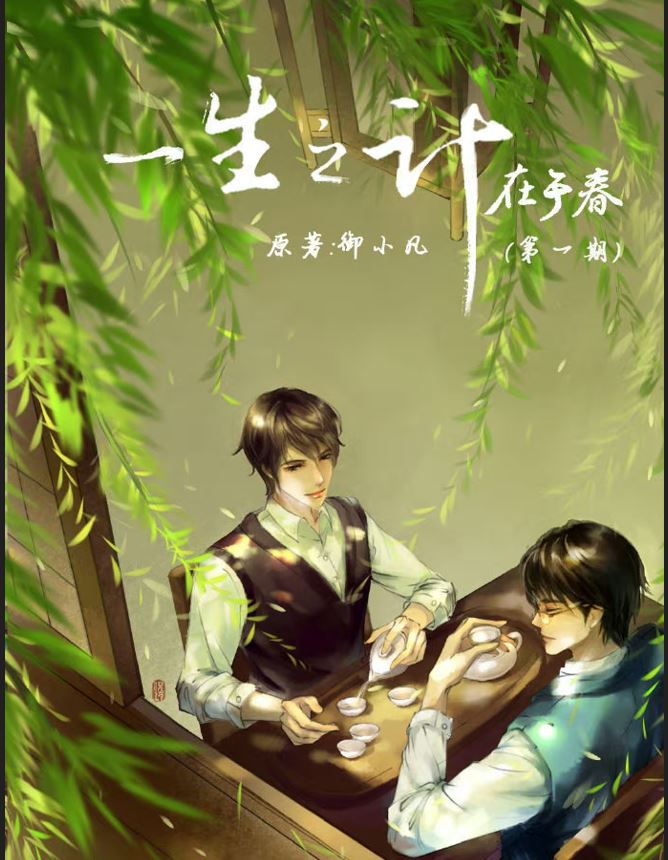
... Read More
There's this recurring theme I keep noticing - the word "stubborn" gets used like five times in these chapters, and it's clearly meant to describe Wu Yang. But it's also describing Yao, in a way. Both of them are refusing to take no for an answer: Wu Yang refusing to let Yao dismiss his help, Yao refusing to accept Uncle Yan's matchmaking. The parallel is almost structural. The tea itself feels symbolic. Wu Yang keeps bringing up tea - "ask your friend what kind of tea they need and how much." Tea is Yao's world, his livelihood, his identity. By asking about tea, Wu Yang is essentially saying: let me enter your space. Let me contribute to what matters to you. And Yao's response - "If you really want to help, ask your friend what kind of tea they need" - is this bizarre negotiation where he's accepting help but framing it as a transaction. There's also this moment where Wu Yang thinks about how he usually "didn't pay much attention to others' appearances" but now finds Yao "rather good-looking." The author doesn't resolve this thought - Wu Yang just... shifts topics. But the symbolism is clear: something is shifting in Wu Yang's perception. The person he's been helping has become someone he's looking at. Not just looking out for, but actually looking. And the title itself - "Spring is the Plan of Life" - which translates to something about how the beginning of things determines everything that follows. These chapters feel like spring. Everything is starting to thaw, plans are being made, the ice is breaking. Wu Yang's persistence isn't just about business; it's about planting seeds for something that might actually bloom.
... Read More
Okay so let's talk about how this author handles pacing, because it's doing something really specific and I appreciate it. The chapter opens with what could've been a massive dramatic beat — Yao Jinxi mentioning He Qi — and instead of leaning into it, the author just... doesn't. "I didn't mean that kind of trouble. I meant… Well, anyway, don't worry about me." End of conversation. That's it. That's the whole move. The ghost of a past relationship mentioned and immediately sidestepped, and somehow this restraint is MORE powerful than any dramatic confrontation could've been. Then we cut to: weekend hangouts. Cherry picking. Business proposals about tea packaging. Concert tickets. Nothing explodes. No one screams. And yet I'm completely hooked. This is the art of the slow burn — the author understands that tension doesn't require crisis. The tension here is in what's NOT happening. Wu Yang noticing Yao Jinxi's expressions. Yao Jinxi deflecting questions about his romantic life. Xia Ruonan's desperate matchmaking energy building up against both of their complete obliviousness. Every scene is a quiet accumulation of moments that add up to something enormous, and the author has the confidence to let it add up without rushing to the crescendo. The structure moves from intimate (tea shop one-on-one) to observational (narrator explaining their weekend pattern) to external (concert tickets arriving like a plot device from fate). It's a nice rhythm — small, reflective, then nudging forward. The concert setup at the end is a classic narrative push: something new entering the frame, a potential third space where these two might finally be forced into a different kind of interaction. My only complaint? I want MORE He Qi. But that's not a pacing problem, that's a "I need this book to be longer" problem.
... Read More
Yao Jinxi's voice is one of the most distinct character voices I've encountered. Everything about how he speaks—the casual deflections, the deadpan philosophical drops, the way he pivots from Buddhist doctrine to 'Live to eat and wait for death' like it's a weather report—tells you everything about who he is without a single narration tag explaining it. Let's talk about some lines because I NEED to: 'I haven't slept all night. So it's only natural to want to sleep, right?' — delivered with 'not much enthusiasm,' as if hosting an existential all-nighter is just another Tuesday. 'Even drinking a cup of tea presents nine difficulties, not to mention the journey of life itself' — this is the kind of thing that would be pretentious from anyone else but from Yao Jinxi it's just... accurate? He's genuinely saying life is hard but doing it while preparing tea like a monk who also runs a shop. 'Live to eat and wait for death' vs whatever the original calligraphy was supposed to say — this is the funniest bit of character writing. Someone commissioned art with profound words, Yao Jinxi replaced the sentiment with pure nihilism and now it's hanging on his wall. And Wu Yang's voice is equally distinct—halting, self-questioning, unable to articulate feelings ('you're like tea' being the most Wu Yang thing ever). Their dialogue dynamic is perfect: one talks in complete paragraphs with philosophical depth, the other stumbles through fragmented honesty. Together they create this rhythm that feels completely natural, like eavesdropping on two real people in a tea shop at 4am.
... Read More
'Beneath the swaying tree shadows, the two shared a kiss. It's another year. And the spring sun is warm.' I've read this paragraph four times and it still hits different every single time. The author could have gone big here—crowds, music, some dramatic confession—but instead chose nothing. Just tree shadows, sunlight, and two people who've been through hell. It's minimalist storytelling at its finest. The hospital discharge scene before that also deserves mention: 'Wu Yang and Yao Jinxi walked side by side out of the hospital gate, feeling a sense of rebirthing.' The word 'rebirthing' is doing so much work there. They didn't just leave a hospital—they left behind the version of themselves that was afraid of dying. And then the wedding scene! The remote church in the countryside, flowers in full bloom in spring, the garden, the grassy path. It's a complete sensory experience. You can feel the spring air, see the delicate small church, hear the rustling leaves. The author uses setting as emotional punctuation—hospital sterile and confined, then open spaces full of light and color. Even the ridiculous detail about the church being impossibly far away serves the mood: it's their choice, their little sanctuary, worth the navigation headaches. This is how you write atmosphere without a single purple adjective.
... Read More
There's one image in these chapters that I CANNOT unsee. Yao Jinxi standing at the entrance of his tea shop with a backpack on, waiting for Wu Yang to honk the horn. The text literally compares him to 'a student waiting for a field trip.' After 26 years of building this small business, of creating his own independent world, he shows up looking like a kid about to go on an excursion with someone who's basically taking him away from everything familiar. The tea shop itself matters more than you'd think. It's his domain, his routine, the place where he faces down Yao Jinchen every day after work. That's the whole visual motif — Yao Jinchen standing across the street, not coming in, just LOOMING until closing time. The tea shop is both sanctuary and battleground. And now Wu Yang is yanking him out of it. The physical descriptions are surprisingly sharp for what's essentially domestic fiction. The tea spilling when Wu Yang says 'City L.' The trembling hand. The paleness on Yao Jinxi's face. These aren't decorative details — they're the author telling us everything through body language instead of exposition. The world feels lived-in because the author trusts us to READ the small things rather than spelling everything out.
... Read More
Okay so Wu Yang basically DROPS a nuclear bomb on Yao Jinxi's life in these chapters. First he visits City L UNANNOUNCED, meets his mom, and THEN asks Yao Jinxi to join him. No consultation, no prep time, just straight into the deep end. I respect the boldness but also... bro, Yao Jinxi literally said his mom threatened to BREAK HIS LEGS if she ever saw him again. That's not a casual family reunion, that's a hostile environment. The setup is brilliant though. Wu Yang frames it as 'an opportunity to show vulnerability' — which is genuinely good advice from a plot perspective because it forces Yao Jinxi to confront what he's been running from. The whole arc about the brother is also cooking in the background. Wu Yang deliberately avoids bringing up Yao Jinchen when talking to the mom, which shows he understands the strategic landscape. One wrong move and BOTH relationships could explode. Also that bit where Wu Yang says 'I met your mother. Although she wasn't very receptive at first...' — the casual way he reports this after already doing it is chef's kiss. Like, 'oh yeah I just went to your hometown and confronted your trauma for you, no big deal.' The tension here is immaculate. Can't wait to see what happens next.
... Read More
yao jinxi's voice is genuinely one of my favorite narrative voices in this entire series. he's sharp but warm, sarcastic but never cruel, and he has this way of deflating tension with humor that feels completely organic. look at this exchange: "do you do the same for wu yang?" "oh, wu yang is more proactive. he takes the initiative to admit mistakes first," yao jinxi winked at her. this is three lines that accomplish so much. first, it tells us wu yang's personality without exposition. second, it shows how yao jinxi talks about the person he loves—casually, affectionately, like it's the most natural thing in the world. third, it gives xia ruonan a reason to laugh right before her wedding. this is what best friends do. and the narrator's voice? it slips into these moments of pure poetry without announcing itself: "for some reason, before his eyes, memories of their journey from when they first met until now flashed through his mind." then later: "they gained something, sacrificed something, and healed each other. it might sound ordinary. but like everyone else in the world..." the author isn't afraid to get sentimental, but it never feels unearned because the dialogue before it is grounded and human. the contrast between yao jinxi's casual banter and the narrator's lyrical moments creates a rhythm that pulls you deeper into every scene.
... Read More
I need to talk about this line because it wrecked me: 'You're the one who shouldn't misunderstand!' Yao Jinchen suddenly shouted. THIS is the turning point of the entire conversation and honestly the entire book up to this point. Everything before this was Yao Jinxi framing the narrative — 'it was my fault for leading you astray,' 'don't treat me like I'm a brainless child,' 'we're still the closest people.' He's been doing the emotional labor of defining what their relationship IS, and Yao Jinchen finally flips the script. The dialogue here is so layered. Look at how Yao Jinxi talks — always calm, always trying to reason, always the bigger brother. 'How old are you already? I can give you the benefit of the doubt for what happened during your junior high days.' He's being condescending and he doesn't even realize it. He thinks he's being generous. But Yao Jinchen's voice — it starts measured, almost casual, talking about the US program. Then it cracks. 'Wasn't it just that one mistake back then?' The vulnerability there is palpable. And then the crescendo: 'What do you know?! Where did you get the right to say that I 'misunderstand' what I feel about you?' The shift from shouting to murmuring is what gets me. He works himself up, gets furious, falls off the bed, and then just... deflates. The anger runs out and what's left is just pain. That's how real trauma conversations go. Not in big dramatic declarations but in these crumbling moments where the person can't even stay angry because they're too exhausted. The author's voice here is incredibly disciplined. No narration telling us how sad this is. Just dialogue and physical beats, and we FEEL it.
... Read More
I have to talk about the sensory world-building in these chapters because it's doing a lot of heavy lifting. The arcade scene is pure atmosphere - "Even before reaching the elevator, they could hear the commotion and various music from above." You can hear it, right? That wall of sound pulling them upward. And then the visual: two adults surrounded by students, "laughing so hard he couldn't catch his breath," completely unselfconscious. The author doesn't waste words here but manages to make it feel cinematic. Yao Jinxi posing with the gun like a pro, raising an eyebrow, and immediately getting killed. The comedy timing in that physical description alone made me snort out loud. But honestly? The tea shop scene is where the worldbuilding really shines. "Yao Jinxi's graceful and composed movements coupled with his handsome face were pleasing to the eye." This is Wu Yang's POV, and the fact that he's suddenly noticing Yao's appearance for the first time? The narrator even flags it: "Why would a man think another man is good-looking? Wu Yang didn't delve into that thought for now." NO, you delved right into it and then immediately pivoted to business. Classic deflection. And the hospital scene with Yan Zhaowen - the teapot being put down, the wrinkled forehead, the theatrical indignation. It's all so domestic and specific. This isn't a polished restaurant or a fancy venue; it's a doctor's office with a teapot and an old man who won't take no for an answer. The hotpot restaurant ending, with its 2 yuan parking fee and haggling, grounds everything in this beautiful, mundane reality. These characters live in a world that feels actual.

Leave a comment

You must be logged in to leave comments. or
