Resonance Lust: Omegaverse - Reviews

Resonance Lust: Omegaverse
+Add to Custom List
Sort
Add review
... Read More
Can we just talk about how Kouki handles this whole situation for a second? The officer is giving Amane the dirtiest looks, basically calling him out like 'this guy doesn't belong here' and what does Kouki do? He doesn't get angry. He doesn't flex his authority. He just says 'I'll vouch for him' in this cool, matter-of-fact way. That's actually really telling about who Kouki is. Now contrast that with Mizutani, the tailor. This guy is introduced with SUCH specific details—ascot tie, arm bands, slicked-back silver-grey hair, round reading glasses, neatly groomed moustache. He's clearly an Alpha by appearance but the narration immediately signals that he's different. 'There wasn't a trace of the typical Alpha arrogance.' Kouki even prefaces it by saying Mizutani is 'well-known, but mostly as an eccentric, mind you.' And the handshake moment! Amane is literally taking pills to suppress his condition, there's still risk in shaking hands with an Alpha during heat period, and he still goes through with it because refusing would be 'unnatural.' But also—he's testing something. The text says: 'Amane wanted to confirm the difference between Kouki and other Alphas. He wanted to verify whether the resonance heat truly occurred only in his interactions with Kouki.' Nothing happened with Mizutani. No electric shock, no resonance. And the text says 'As he reaffirmed that Kouki was indeed special to him.' That right there is the core of their relationship dynamic. Every other Alpha in this world is basically a biological threat, but Kouki is the exception. The one safe harbor. It's both romantic and kind of heartbreaking when you think about it—Amane has to actively test whether someone is safe for him, and the fact that the test only passes with Kouki says everything about their bond. Mizutani's reaction after the handshake is also great—'With such a handsome figure, it'll be worth coordinating your outfit.' Immediately pivoting to the suit like nothing happened, completely unbothered by the Alpha/Omega dynamic. That's the eccentric energy the chapter is building toward.
... Read More
Let me be honest—when Chapter 1 ended with Amane telling the narrator to live for him too, I was wrecked. I sat there for a solid minute just processing. And then Chapter 2 starts with this calm, almost clinical explanation of the three-gender system and I'll admit my first reaction was mild whiplash. We go from raw grief to sociology lecture in one paragraph. But here's the thing—I think that shift is intentional and it actually serves the story. Chapter 1 shows us the emotional consequence of this world. Chapter 2 explains the mechanical reason why it exists. By the time you finish the prologue, everything that happened in Chapter 1 makes even more sense and hurts even more. The hospital turning them away wasn't random cruelty—it was systemic design. The underground doctor wasn't a choice, it was a necessity. This structure makes the world feel inevitable rather than coincidental. The pacing within chapters is also controlled well. The prologue moves from broad societal explanation down to personal history—starting with the Alpha/Beta/Omega framework, narrowing to Stray Omegas, then zooming in on Amane's mother, and finally arriving at young Amane being read to. That funnel approach keeps you engaged because each section feels like it's building toward something personal. I was ready to skip the exposition at first but by the end I couldn't look away. There's a cliffhanger energy to the prologue's ending—even though we know Amane survived that first fever, the narrative is making it clear this is just the beginning of his struggle.
... Read More
This whole revelation hit me like a freight train. Kouki spends the entire scene pouring out his heart about this faceless detective—the one with the gentle voice and solid build who pulled him out of that frozen confinement at six years old—and you just sit there knowing exactly who it is. Amane knows. We know. But Kouki? Kouki is staring at the lighter in Amane's hand, trying to process that his entire life purpose, the person who shaped his dreams, is already gone. What wrecked me most was the irony stacking on top of irony. Kouki wanted to become a detective to honor a dead man. Now he's standing next to that dead man's partner, and worse—he's falling for him. The narrative literally says it: 'the highest wall he couldn't overcome was also his saviour.' Your hero is your obstacle. Your hero is the reason you became who you are, but also the ghost sitting between you and the person you actually want. That's not just dramatic, that's genuinely tragic. And Amane—Odagiri's former partner—watching this unfold. He gives Kouki the lighter, a piece of his dead mentor, like he's handing over a fragment of his own irretrievable past. But internally? He's crumbling. 'Deep in Amane's heart, Odagiri—his permanent partner who would never return—remained.' He can't let go. And now this kid who looks up to that same dead man is looking at HIM, and Amane doesn't know how to exist in that space without feeling like he's betraying his mentor or replacing him. The emotional geometry here is so painfully complex.
... Read More
Let me just say this out loud: the dialogue in these chapters is SO natural it hurts. Amane doesn't monologue. He doesn't give speeches. He asks questions that feel exactly like what a caring partner would ask when their person is sharing something terrifying. "A kitchen knife?" — three words that carry so much weight because they show he's tracking every detail, trying to understand the full scope of what Kouki endured. Kouki's voice is equally distinct. When he's recalling the kidnapping, his dialogue becomes more measured, more careful — like he's retelling something he's rehearsed a thousand times in his head but still can't tell without his voice catching. "That's probably what happened" — he's not entirely sure about the chemical cloth because it's been decades and he was a child. That hesitation makes him feel real. But the real masterstroke is how the author uses narrative voice to create this intimate atmosphere. The entire kidnapping sequence is framed as a conversation — we're not getting a dramatic action scene, we're getting two people sitting together, one talking and one listening. This is storytelling as therapy. The author trusts us to sit with the discomfort, to let the horror build through quiet revelation rather than explosive action. The kidnapper's own words — "Don't underestimate me!" and "How could privileged Alphas like you understand the suffering of someone struggling at the bottom!" — are deliberately melodramatic and that's the point. This isn't a refined villain. This is a frustrated, mentally ill man lashing out, projecting his entire worldview onto a helpless child. His dialogue is ugly and raw and that ugliness makes Kouki's trauma even more unjust. And the translator's note about bowing vs. handshakes? Classic worldbuilding through dialogue context. The author doesn't stop the story to explain Omegaverse social norms — they weave it into character interaction and let readers infer the meaning. Smart writing.
... Read More
"To Kouki, who had grown up here, living in such a palace was normal." That single sentence hit me in the chest and I had to re-read it twice. This is the entire thesis of their relationship in one line. The most devastating thing about this chapter isn't some dramatic confrontation or romantic confession — it's the quiet, almost boring observation that for Kouki, emerald-domed towers and crystal chandeliers are just Tuesday. And yet here he is, driving a regular car, bringing Amane along, trying to bridge a gap that exists not because they don't like each other but because the world itself is built differently for them. The hand-extension moment gave me actual butterflies. Kouki stops, turns around, and reaches back — not to pull him closer, not to do anything dramatic, just... to escort him. As if saying "I see you hesitating, and I'm not leaving you behind." And Amane's internal response? Just a deep sigh. Not romantic, not rejecting — exhausted. He's already burdened by this weight of knowing they come from different universes, and Kouki's gesture is both beautiful and painful because it's so simple and so impossible at the same time. Then there's the champagne thing. Kouki pushing drinks on him — "This champagne is from a winery in our family's business network. It's delicious. I want you to enjoy the party, Honjou-san." Read that again. He's offering his WORLD to someone who can't accept it. It's not even conscious about it, which makes it worse. He genuinely just wants Amane to enjoy himself, and the fact that he doesn't realize how insulting that must feel — being offered the luxury of a world you'll never belong in — that's the tragedy of their dynamic right there.
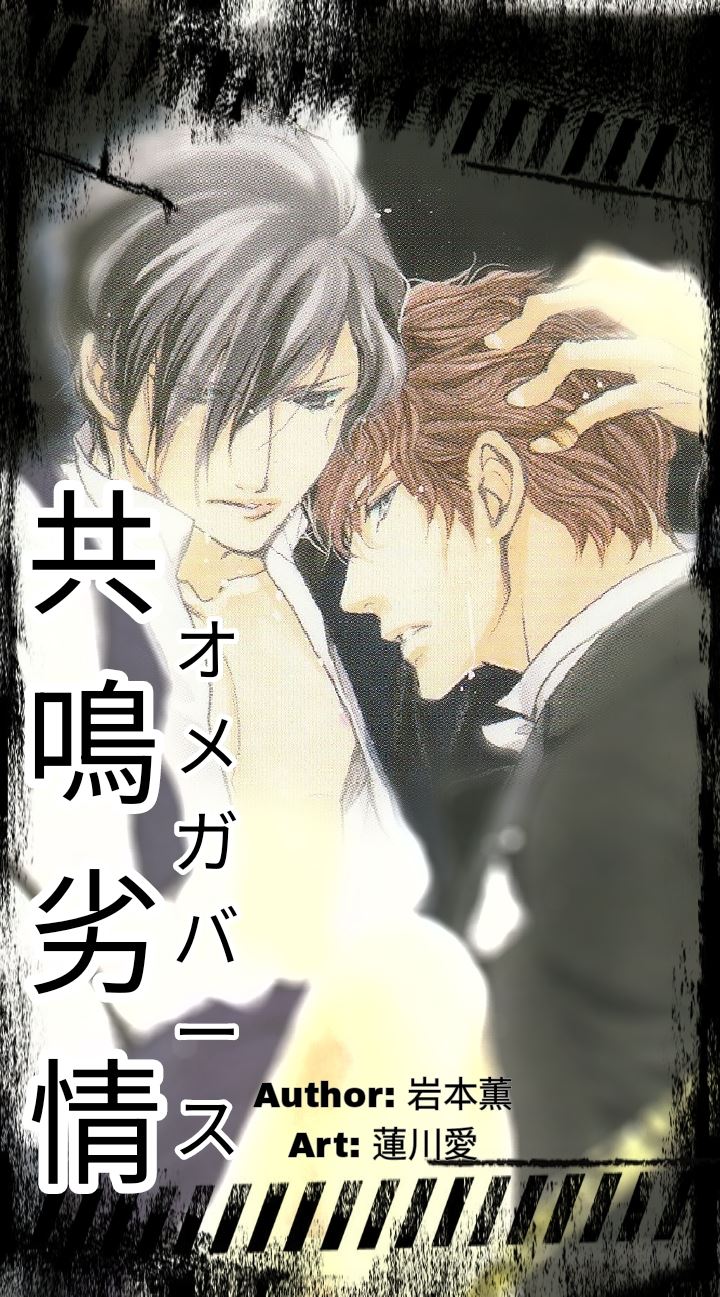
... Read More
Okay so Amane is basically living the most high-stakes secret life ever and I am HERE for it. This guy has been posing as an Alpha detective for SEVEN YEARS while secretly being a Stray Omega with no national ID. That's not just risky, that's a walking ticking time bomb wrapped in a three-piece suit. What's fascinating is how the plot layers this central tension with everything else. The worldbuilding about the caste system isn't just background flavor—it's actively shaping every decision he makes. He took the pills, survived his first heat alone in a back-alley doctor's office, and then somehow passed the police exam. The fact that he even mentions 'the nun who believed his false story' tells me there's a whole backstory here I haven't fully gotten yet, but I'm already invested. Then you throw Kariya Kouki into the mix. A top-five Alpha family member who literally skipped the elite bureaucratic track to become a street detective? That's not just a character quirk, that's a plot device waiting to explode. Because obviously this guy is going to be the one who finds out, right? It's only a matter of time before the mask slips. The pacing works really well too—the exposition about omegas being barred from life-and-death professions hits hard early on, then we get the reveal that Amane is already INSIDE that system as a hidden omega. It's like the author is saying 'here's why this is impossible' and then immediately showing us someone who made it anyway. Very clever structural choice.
... Read More
Can we appreciate how much these two characters say without saying anything? The entire vibe between Amane and Kouki is built on omission and deflection. 'I'm free anyway' — nope, you're not. 'It's an old story. We broke up before I entered the police academy.' — you're still texting her. 'Doesn't matter and I'm not interested,' Amane cuts in, and honestly? That's the most honest thing either of them has said all chapter, and he doesn't even know he's talking about himself. Mizuki's dialogue is equally loaded. 'Thanks for coming even though you're tired' — she knows exactly why he's coming and it's not for her. 'Anzu, don't dirty the suit. His clothes are incredibly expensive!' — deflection through humor, classic Mizuki. And then the business card bit? 'She's a top actress. You're a detective. Both of you are very good at your jobs.' Smooth. So smooth it hurts. Every character in this passage is performing, and the narrative voice barely hints at it. The translator's note about Honjou always thinking Kariya is a player is the only moment the fourth wall breaks, and it's perfectly timed—right after the door-holding gesture. This author trusts the reader to read between lines.
... Read More
I keep coming back to this line: "It started this morning." Four words. That's all it takes to shatter the entire scene. The casual delivery, the irritation in Amane's voice, the way he doesn't even turn to look at Kouki when he says it—like he can't bear to see the other man's face right now. But then Kouki's reaction is everything. He goes from frustrated and grabbing arms to quiet comprehension, his Adam's apple bobbing, his eyes narrowing. The author writes: 'Don't make that lewd face, you damn brat!' and I wheezed out loud. This man is trying to maintain professional boundaries in his own apartment while his partner is physically reacting to his pheromones and he's STILL worried about keeping things appropriate. The dark humor here is so well-calibrated. It's not just tension—it's frustration, embarrassment, reluctant attraction, and genuine concern all woven together. And the narrative voice? Purely from Amane's perspective, and it's BRILLIANT. We get his internal swearing ('stupid dog', 'damn brat') alongside his genuine care and fear. The author lets us hear every judgmental, flustered thought while also showing us that Amane took the suppressant first thing in the morning—that he's trying. He's trying so hard. And that's what makes the voice so compelling. We're not just watching a romance build; we're inside the head of someone fighting a battle on multiple fronts.
... Read More
Okay so the pacing in these chapters is weirdly good for something that could easily become a blur of investigation beats. You've got exposition dumps—Kouki's backstory on Kourogi, the Alpha caste system explanation, the whole police station vs. private investigation tension—and yet none of it feels like it's stopping the momentum. The author knows how to bury information inside action instead of delivering it in lectures. The party invitation sequence moves at a clip: Kouki contacts his brother, they wait thirty minutes, the reply comes through, Amane clenches his fist and says yes. Thirty seconds of page time for what would be a week of phone calls in a slower novel. And then—boom—immediately pivots to the t-shirt crisis. Which, on the surface, seems like a comedy beat inserted for levity. But it's actually smart pacing. It gives the reader a breath after the tension of "the target walked into the trap" while simultaneously raising the stakes of the upcoming party. What if Amane shows up looking like himself and blows the whole operation? That's suspense disguised as a wardrobe problem. The chapter ending on the car ride through the wealthy district is also a great structural choice. It's a transition scene that does triple duty: worldbuilding, character moment, and mood shift. We're literally driving toward the party, toward the confrontation, and the scenery changes to match. Classic technique, executed without any visible seams.
... Read More
The stakes in this chapter shifted so violently I almost couldn't breathe. One moment Kouki is opening up, sharing something tender and personal at a party, and the next—his entire raison d'être is crumbling around him. His hero is dead. The man he's been chasing across seventeen years doesn't exist anymore. And the living man standing next to him, the one he's developing feelings for, is permanently tethered to that dead man. What makes this so devastating is how quiet the moment is. There's no explosion, no dramatic music. Just Amane saying 'he's no longer in this world' and Kouki's entire identity fracturing in real time. 'Suddenly, he felt a disorienting sense of loss as if he had lost sight of his goal, making him feel unsteady on his feet.' This is trauma layered on top of trauma—a six-year-old boy's kidnapping, seventeen years of building a life around avenging that memory, and now the foundation is gone. But the external conflict is just as sharp. Amane is hiding something huge—he was Odagiri's secret Stray Omega partner, and that history shapes everything he can and cannot say. He's protecting Kouki while simultaneously pushing him away. And Kouki, despite being warned 'please don't act alone,' is already starting to move toward Amane in ways that ignore that boundary. The tension isn't just romantic; it's about loyalty to a dead man, self-preservation, and the impossible question of whether loving someone means letting them grieve alone or pulling them closer.
... Read More
Okay so I need to talk about the way this chapter handles the aftermath because honestly it's so much more interesting than the setup. The whole resolution through evidence is satisfying—the recording, the mini-camera, the voice confession—but what actually grabbed me was the plastic surgeon's confession letter. Like, reading those clinical details about him poisoning Aya's milk tea while wearing leather gloves 'because his skin is sensitive' is the kind of thing that makes you sit up straight. The fact that he groomed her, got her to trust him, built a fake relationship over months... and all while she was vulnerable. That's nasty in a way that doesn't even need explicit scenes to be horrifying. But here's what I appreciated most—the chapter doesn't pretend justice was served. The detective's note at the end practically says 'yeah we got confessions but these rich alphas are probably gonna walk.' That's such a grounded take. This isn't a universe where one raid fixes systemic rot. The clinic is suspended, the agency replaced, but the author clearly wants us to sit with the fact that it's 'a long road before the three suspects are tried and sentenced.' The line 'It might be a futile struggle. But if they gave up, it would be the end' basically IS the thesis of this whole book. They know the system is rigged. They know powerful alphas will likely escape consequences. But they fight anyway. That's the plot engine right there—not 'will they catch the bad guys' but 'will they keep fighting even when winning is uncertain.'
... Read More
I need to talk about the emotional complexity in this bathrom scene because honestly it wrecked me in the best way. Let's start with the scent. The text describes Kouki's fragrance as "a faint, sweet fragrance" and Amane immediately recognizes it as Alpha pheromones. But here's the thing - pheromones in this universe aren't just biological triggers, they're emotional accelerants. When Amane catches that scent, his body reacts before his mind can catch up. The shiver down his neck, the sudden awareness of proximity, the way he has to hold his breath - this is involuntary response layered over conscious resistance. And Kouki? Kouki is fighting the same battle from the other side. He's mid-heat, which should make him reckless, but instead he's being CAREFUL. "Carefully ensuring his hands didn't make direct contact with his skin." This is an Alpha in his most instinct-driven state exercising incredible restraint because he cares about crossing boundaries. That's not just discipline - that's respect. That's affection disguised as professionalism. The emotional whiplash in this scene is extraordinary. Amane goes from self-loathing (calling himself counterfeit junk) to flustered attraction (pheromone-induced shivers) to calculated manipulation (using Kouki's jealousy for his mission) all within minutes. And Kouki? He goes from helpful partner to possessive growl to conflicted silence. Both characters are emotionally exposed here, even if neither would admit it. But the moment that absolutely destroyed me was when Amane deliberately provokes Kouki's jealousy. "Thanks, I got my confidence back" - said with that dark, wicked grin. He KNOWS what he's doing. He KNOWS that pushing Kouki's buttons serves his mission. But is there any part of him that doesn't want to push those buttons? The text doesn't say, and that uncertainty is the whole point. The romantic tension here isn't built on grand declarations or dramatic confessions. It's built on near-touches, half-spoken thoughts, the space between words. "I don't want you to go" - three words that carry the weight of an entire emotional confession. And Amane's response? Deflection wrapped in gratitude. Classic avoidant behavior that makes you want to shake him. This is what good Omegaverse writing does - it takes biological imperatives and turns them into emotional complexity. The pheromones aren't just plot devices; they're metaphors for feelings that can't be controlled.

Leave a comment

You must be logged in to leave comments. or
