Qing Gu - Reviews

Qing Gu
+Add to Custom List
Sort
Add review
... Read More
Okay I need to talk about this moment in the kitchen because my entire body went hot reading it and I don't even know why. Shen Jianqing asking whether everyone from the city is as good-looking as Li Yuze is — is — the most innocent, devastating compliment I have ever encountered in fiction. Like this boy has literally never received this kind of attention and he's so genuinely curious about it that he blurts it out without any romantic framing whatsoever. And then when he leans down closer and his eyes are clear and clean without any impure desire at all, and Li Yuze can count his eyelashes and the kitchen is so stuffy it makes him breathless — the author writes that moment with such restraint and it hits like a truck. This isn't a calculated flirtation. This is someone who has been alone for too long, who doesn't know how to navigate social situations with people who aren't him, and who just... wanted to say something nice and didn't know how else to do it. What broke me was the internal monologue right before it. Li Yuze thinking about how his own father used to scold him for being lazy while Shen Jianqing had to grow up alone in the mountains. The contrast between their lives, the guilt that comes with realizing you took things for granted — that's the emotional core of this entire passage. Li Yuze feels it, the reader feels it, and then Shen Jianqing completely diffuses the tension by asking about good-looking people. The ending where someone calls out from outside the door, 'What are you two doi...' — and it cuts off right there — I literally gasped. Who is it? Is it one of the other friends coming to interrupt this incredibly vulnerable moment? Is it building toward something worse? My heart is not okay.
... Read More
I need to just sit with this for a second. Ah-ma, dying, knowing she's dying, and what does she think about? Not her grandchild. Not her life's work. She thinks about the urn. She's been keeping Ah-ba's ashes for YEARS, talking to them, holding them close, whispering about the beautiful days they shared. And then on her deathbed, she points at that urn and says 'I want to be with Ah Yuan, not separated.' That's it. That's the last thing she wants to communicate to the person she's leaving behind. She doesn't say 'live well' or 'don't forget me.' She says don't let us be apart. The narrator understands immediately and promises to keep the ashes safe, to help her find him again. And only THEN does Ah-ma seem to remember she has a living grandson, grabs his wrist, and begs him never to love Gu. What a devastating final gift—her last wish isn't for herself but for her grandson's future. The narrator thinks her worries are unnecessary, that there are other ways to keep someone you love. And that's where my chest tightened. Because the narrator doesn't see the parallel. They don't see that Ah-ma's love for Ah-ba and their own love for Li Yuze might lead to very different places. One is tender reunion across death. The other is already becoming a cage.
... Read More
I need to talk about how the author controls the pacing here because it's honestly unsettling in the best way. The chapter opens with grief—slow, weighted, deliberate. Ah-ma dying, the urn, the final words. You're given space to breathe with the sadness. And then, almost casually, the narrator pivots. 'But I thought Ah-ma's worries were unnecessary.' Like, boom, we're now in the narrator's head and the tone shifts from elegy to something much darker. The description of first seeing Li Yuze starts almost poetic—beautiful person, clear liquid, soft rosy lips—but it accelerates fast. 'Unprecedented stir in my blood, as if it was about to boil!' The sentences get shorter, more frantic. By the time we hit the foot-stomping ceremony scene, the pacing is breathless with jealousy. 'Why wouldn't he look at me? Was I uglier than her?' Then the narrator walks away and the pace slows again for this moment of self-questioning: 'Why am I getting angry over a stranger? I never felt this way even when my Ah-ma died.' That comparison between love and grief as the two most overwhelming experiences in their life? Chilling. Then we cut to the backstory with the leader and suddenly the pacing changes completely—it's more analytical, more calculating. The narrator is thinking strategically about power and inheritance. It's a different kind of tension, slower but sharper. And that ending line about 'new toys' feels like the lid popping off a pressure cooker. The author doesn't let you settle into any one emotion before yanking the rug out. It's exhausting and I couldn't put it down.
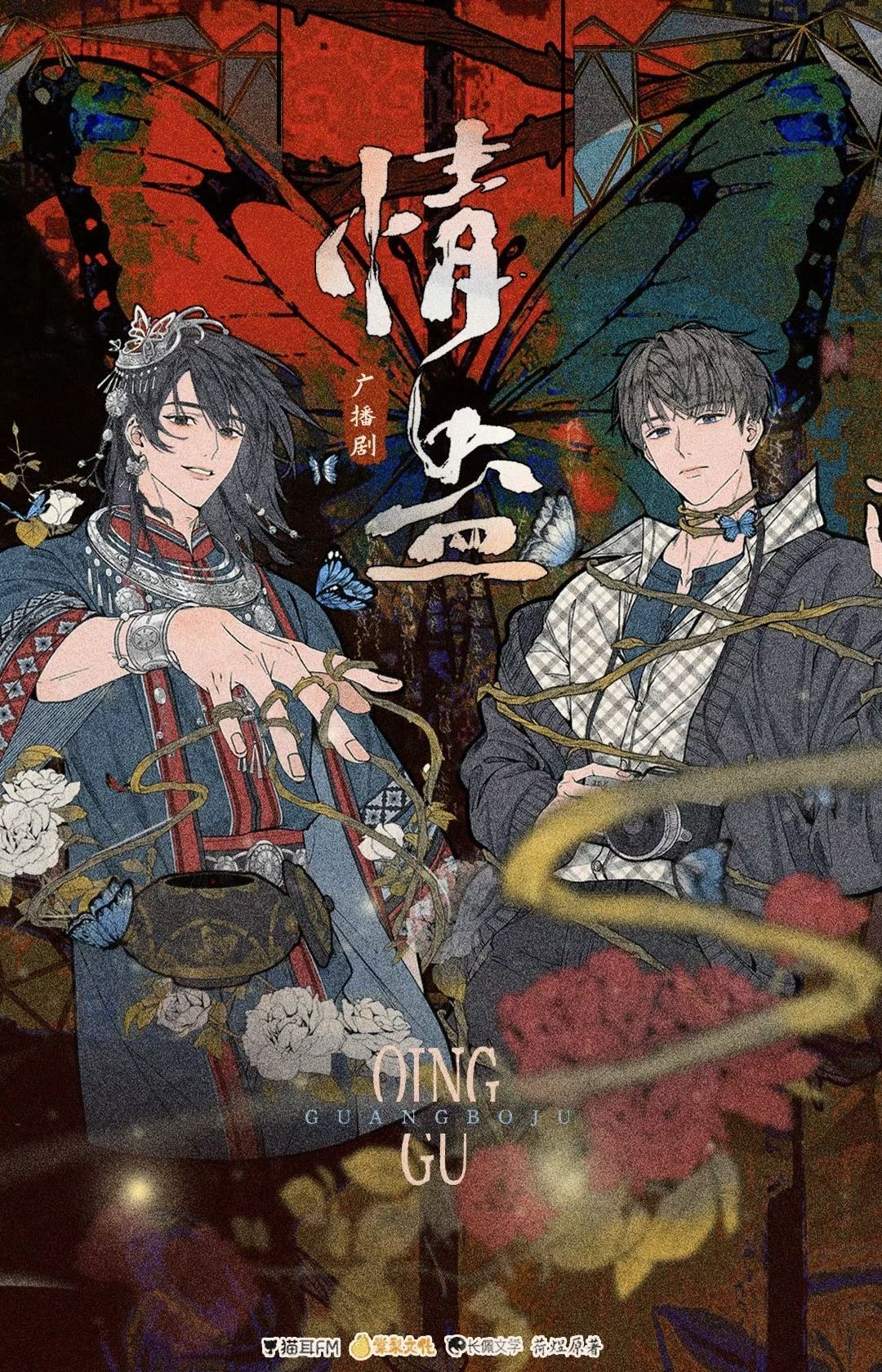
... Read More
The structure of these chapters is doing something I can't quite put my finger on. Everything feels deceptively normal — class, walking by the lake, coming back to the apartment — but there's this undercurrent of dread the whole time. 'I had never felt two days pass so quickly; every minute and every second felt like a countdown.' That one sentence changes the entire mood. None of these moments are just moments anymore. They're borrowed time. The Zhang Xu encounter is basically the first actual plot event — he recognizes Shen Jianqing's name, he makes that knowing look, he drops 'our Ah Ze' like a grenade. And then later, suddenly, he has these red rashes all over his arms. 'How did this happen? You were fine in class.' Now it's just… hanging there. Unanswered. Is it an allergy? Or something else? The story isn't telling us, and that's what makes it so unsettling. What I love is how the plot doesn't announce its turns. It just quietly rearranges everything around you. One page you're watching a variety show, the next you're wondering why someone from a Miao village is hiding his hands. The story trusts you to connect the dots.
... Read More
Okay, let me just say this — the pacing in this section is MASTERCLASS level tension building. It starts at a thousand miles per hour with physical struggle, then does something I rarely see: it stops. Completely. Shen Jianqing leaves the room. The door closes. And then... nothing. Just footsteps. Just waiting. The author writes: "They say death itself isn't terrifying; what's terrifying is the process of waiting for death." This isn't just a quote dropped for effect — this is the structural thesis of the entire scene. The real horror isn't what happens next. It's the space between what just happened and what might happen. That empty room becomes a pressure chamber. And then — ding-a-ling-a-ling. The camera turns on. The sound cuts through the silence like a knife. I actually jumped reading this. The mechanical, almost cheerful ringing of the camera contrasts with everything that's been building, and suddenly the scene pivots from physical threat to psychological violation in one beat. What's brilliant about the structure here is the escalation map: physical struggle → silence/waiting → the camera reveal → the slow approach → the casual unbuttoning of a shirt → the whispered threat about leaving something behind. Each beat raises the temperature without breaking rhythm. There's no dragging, no filler, no false breaths. The chapter knows exactly what it's doing. The ending — cut off mid-sentence about camera pictures turning into paper — is a classic cliffhanger that also thematically resonates. Photography, memory, evidence, permanence. It's the perfect note to end on because it suggests the violation has layers we haven't even seen yet.
... Read More
Okay so the way Li Yuze reacts in that kitchen scene is absolutely everything. He just bolts—like physically flees—because Xu Zirong shows up and suddenly his brain short-circuits. You can feel the panic radiating off the page. And Shen Jianqing's reaction? The text literally says he looked at Xu Zirong 'like I'd stolen something from him.' Chilling. But then later when they're at the bridge and Qiu Lu tries to touch those ribbons, Shen Jianqing grabs her wrist hard enough to leave a red mark, and Li Yuze instinctively steps between them. Not away from Shen Jianqing, toward him. Into his space. That's not fear, that's protection. Or maybe it's just really bad boundary awareness fueled by whatever unresolved tension is simmering between them since Chapter whatever-it-was. Meanwhile Xu Zirong is just... watching? Lovingly? Painfully? He calls out the obvious but also backs down when Qiu Lu tugs his sleeve. Smart man. The dynamic here is a triangle of loyalty, suspicion, and probably unacknowledged feelings, and I'm here for the chaos. Wen Linyu's quiet question—'would you stay?'—feels like it's aimed directly at Li Yuze even though she's speaking to the group. And his answer? 'I wouldn't have such a choice.' What does that even mean?? Is he saying he has no agency? Or that staying would be the natural outcome if circumstances forced it? Either way, the subtext is screaming. Also the food scene? Classic domestic tension builder. Sharing a meal with someone who might secretly hate you while pretending to be polite is such a rich vein for character development. Shen Jianqing smiling 'happily' after they compliment his cooking while internally plotting something I can't yet see—that's the kind of duality that makes you re-read passages three times. Who do I trust? Who am I rooting for? Who's lying? All I know is my heart rate during this chapter was unacceptable.
... Read More
I have been thinking about this metaphor all day and I cannot get it out of my head. The reference to张爱玲's 'red rose and white rose' trope is right there in the text — the mother who was once the romantic ideal, the passionate opera singer who couldn't tolerate being second place, who became 'a mosquito's bloodstain, a blemish, a crazy woman' in the eyes of the man she loved. This isn't just backstory, this is the novel's entire thesis on love and power. Wang Yurong is what the father chose instead — the woman who doesn't demand to be first, who can be admired from a distance without ever challenging his centrality. She's the white rose who doesn't want to be the red rose. But the novel seems to be asking: is that virtuous, or is it just safer? The pregnancy is symbolic too — Wang Yurong carrying the father's heir, the future that belongs to the obedient wife. Yueze is the past, the reminder of the passionate mistake. He represents everything the father wants to move beyond. And the father's attempt to arrange Yueze's marriage to Professor Ye's daughter — it's another cycle. He's trying to control who his son loves the same way he controlled his own marriage narrative. The daughter is presumably another 'virtuous' choice, another safe option rather than a real one. The novel keeps coming back to this question: what happens to the people who loved passionately in a world that rewards compliance? Yueze's mother got exiled. Yueze is being groomed for the same fate — useful, connected, but never truly wanted.
... Read More
I've been sitting with the sachet from Shen Jianqing and I think it might be the most important object in this entire passage. On the surface, it's a practical plot device—it scares away the snake. But symbolically? It represents every unspoken connection between these two characters that the protagonist kept refusing to acknowledge. They'd previously rejected Shen Jianqing, avoided him, but he gave them something anyway. A small gift. No conditions. And now that same gift is the only thing standing between them and death in the dark. The imagery around it is also worth noting: "dry grass seemed to be pressed together, giving it a crisp feel." There's something almost ceremonial about it. It's not just herbs—it's crafted. Intentional. And the snake's reaction to it suggests this knowledge has cultural weight beyond what we've been shown so far. Then there's the darkness motif. The cave is described as pitch black multiple times, and each time the protagonist wakes, the darkness feels heavier. But Shen Jianqing appears backlit—"a tall figure... in the bright opening." Light framing. Messianic imagery, possibly intentional. The protagonist thinks of him as a gentle presence, a moon in the dark sky, and now he returns literally from light into darkness to find them broken. Whether this is redemption or manipulation remains to be seen, but the symbolic setup is rich. The sachet, the darkness, the fever, the return from light—this passage is layered with meaning that I think will pay off big later.
... Read More
Okay so this section is wild because it's basically the calm after the storm, but that doesn't mean it's boring at all. We find out Xu Zirong got better — like, actually better — from whatever parasite thing had its way with his brain. The doctor confirmed the shadow on his cerebellum is shrinking. He's walking without crutches now, showing off like a kid. But here's the thing that stuck with me: he's not the same Xu Zirong. The boisterous energy he used to have when joking around with Qiu Lu? Gone. The guy who'd shout "Isn't it better if I go and drink?" has been replaced by someone quieter, more introspective. It's like the story is telling us that survival changes you, and not always in a feel-good way. Then Qiu Lu's situation comes up, and it's genuinely unsettling. Her head shadow is also shrinking, but she's not stable — her mind goes fuzzy sometimes, she lapses back into that confused state. The doctor's explanation is brutal: long-term oxygen deprivation from the shadow caused brain cell death. This means even though they're recovering, they've been permanently marked by whatever happened to them. It's not a clean narrative where the heroes bounce back and life goes on. The story refuses to give us that comfort. And then there's Shen Jianqing mentioned in passing — he promised to cure them, and somehow the Gu insects are involved in all this. The fact that he's not even in this scene but his presence is everywhere... that's some serious narrative foreshadowing happening here. The author is laying groundwork for something big without being obvious about it, which I genuinely appreciate.
... Read More
Okay so let me just say — the escape sequence in these chapters is absolutely relentless. Li Yuze finally gets a glimmer of hope with Wan Ying's help, and then WHAM, Shen Jianqing comes back and everything pivots. The way the author structures this entire ordeal is chef's kiss. First there's the setup with Wan Ying warning him, then the waiting game where footsteps get closer and closer ("tap-tap, thump-thump-thump" — I literally held my breath reading that part), then the explosive moment where Li Yuze swings that chair. And here's what really gets me: he hits Shen Jianqing HARD, checks for a pulse, and still feels sorry for him. That's the plot twist nobody sees coming — even after being terrorized, Li Yuze's first instinct isn't pure vengeance, it's panic that he might've killed someone. Then Shen Jianqing grabs his robe like a wounded animal and Li Yuze has to physically pry those fingers off one by one. Brutal. The author never lets you forget that these two are bound together somehow, even as Li Yuze runs into the forest shouting about freedom.
... Read More
I need to talk about this one line because it's been haunting me: "I never regret anything I do." The narrator asks, almost involuntarily, whether Shen Jianqing regrets getting those injuries for the medicine. And Shen Jianqing doesn't even hesitate. Chuckles softly, says it like it's the most obvious thing in the world. Do you understand how complicated that makes everything? The narrator has been trying SO hard to emotionally distance themselves—telling themselves repeatedly that Shen Jianqing chose this, it wasn't their fault, they don't need to feel guilty. But then they see those scars spread across his back, the one that nearly exposed bone, and all those walls crumble. They start imagining him falling from that cliff. Were they afraid? Did they regret it in that moment? And the answer is no. Not even for a second. That should make the narrator feel respected or moved or whatever a healthy person would feel. Instead it wrecks them. Because if Shen Jianqing never regrets it, then what does that make the narrator's careful emotional boundaries look like? Like a joke. Like they've been telling themselves stories to avoid feeling the weight of being someone's reason for survival. The bath scene is equally revealing. Shen Jianqing manipulates his way into physical closeness, and the narrator knows it, sees through it, steps back—and yet still boils the water and wrings out the cloth. They keep choosing to stay close despite every warning signal. Who's actually in control here? Shen Jianqing certainly thinks so. But the narrator's complicity suggests something more tangled than either of them probably wants to admit.
... Read More
Can we just appreciate the visual framing here because WOW. Wan Ying appears in that doorway with the crimson sky behind her—"the setting sun over the mountains, and tired birds returning to their nests. And all that boundless beauty was contained in the shallow curve of her dimple." That is CINEMATIC. Like, I literally saw this as a shot in my head. The contrast between the vast natural beauty outside and this cramped, dark room where the protagonist is trapped is so intentional. And earlier, the food scene—glutinous rice cake that tastes like chewing wax because his anxiety has destroyed his senses. That detail about taste disappearing is such a visceral way to show his psychological state without saying "he was stressed." The Miao village setting feels lived-in with specific cultural touches: the cured meat, the ethnic flavor of the dishes, the broken-chinese dialogue that still communicates warmth despite the language barrier. But what really sells the worldbuilding is how the environment mirrors the protagonist's mental state—the darkness swallowing him bit by bit at the end, the cold seeping into his bones. The setting isn't just backdrop; it's an active participant in the mood.

Leave a comment

You must be logged in to leave comments. or
